Éteres
Os éteres são compostos orgânicos que contêm um grupo funcional éter, caracterizado por um átomo de oxigênio ligado a dois radicais hidrocarbonetos. Esses compostos são valiosos na síntese e servem como solventes em várias reações químicas. Na CymitQuimica, oferecemos uma seleção de éteres de alta qualidade para apoiar suas aplicações de pesquisa e industriais, garantindo resultados confiáveis e eficazes. Nossa gama de éteres atende a diversos requisitos laboratoriais, desde experimentos de rotina até pesquisas avançadas.
Foram encontrados 40902 produtos de "Éteres"
Ordenar por
Pureza (%)
0
100
|
0
|
50
|
90
|
95
|
100
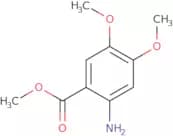
Methyl 2-amino-4,5-dimethoxybenzoate
CAS:<p>Methyl 2-amino-4,5-dimethoxybenzoate is a synthetic molecule that interacts with the human serum and alters the frequency shift of its photophysical properties. The skeleton of this molecule is hydrophobic, which leads to membrane potential changes in mitochondria. The transients of this molecule are encapsulated by a membrane and it has shown to have an effect on mitochondrial membrane potential. Methyl 2-amino-4,5-dimethoxybenzoate also shows fluorescence lifetime effects and can be used as a probe for measuring mitochondrial membrane potential.</p>Fórmula:C10H13NO4Pureza:Min. 95%Cor e Forma:PowderPeso molecular:211.21 g/mol1-Bromo-3,4,5-trimethoxybenzene
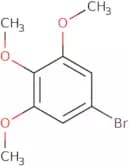
CAS:1-Bromo-3,4,5-trimethoxybenzene is a brominated molecule that is used in the synthesis of other organic compounds. It inhibits protein synthesis by inhibiting the production of ribosomes and is toxic to cancer cells. It has been shown to have inhibitory properties against the growth of k562 cells, which are leukemia cells. The mechanism by which 1-bromo-3,4,5-trimethoxybenzene inhibits protein synthesis is not fully understood. However, it has been found that this compound inhibits DNA polymerase activity and prevents RNA polymerase from transcribing genetic information from DNA to mRNA. This may be due to its ability to act as a diazonium salt or an n-dimethyl formamide substrate. In addition, 1-bromo-3,4,5-trimethoxybenzene can be hydrolyzed into trimethoxybenzene and bFórmula:C9H11BrO3Pureza:Min. 98 Area-%Cor e Forma:PowderPeso molecular:247.09 g/mol5-Iodo-2,3-dimethoxybenzoic acid
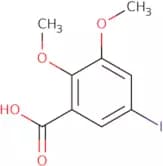
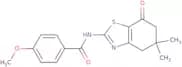
CAS:<p>5-Iodo-2,3-dimethoxybenzoic acid (5IMB) is a synthetic chemical that is used as a radiolabeled substrate for the synthesis of dopamine. The 5IMB is a substrate for the enzyme monoamine oxidase, which converts it to 5-hydroxyindoleacetic acid (5HIAA). The intensity of the signal emitted by 5IMB increases with the increase in concentration of dopamine. It can be used as a positron emission tomography (PET) tracer for dopamine receptors in the brain. The kinetic and uptake properties of 5IMB are different in various regions of the brain, such as striatum and caudate putamen. This difference can be measured using high-performance liquid chromatography (HPLC) and flow rate.<br>5IMB has been shown to have anti-oxidant properties due to its ability to scavenge peroxide radicals.</p>Fórmula:C9H9IO4Pureza:Min. 98 Area-%Cor e Forma:PowderPeso molecular:308.07 g/molN-(5,5-dimethyl-7-oxo(4,5,6-trihydrobenzothiazol-2-yl))(4-methoxyphenyl)formamide
CAS:<p>Please enquire for more information about N-(5,5-dimethyl-7-oxo(4,5,6-trihydrobenzothiazol-2-yl))(4-methoxyphenyl)formamide including the price, delivery time and more detailed product information at the technical inquiry form on this page</p>Pureza:Min. 95%4-Ethoxy-3-methoxycinnamic acid
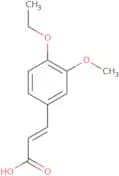
CAS:<p>4-Ethoxy-3-methoxycinnamic acid (4EMC) is a metabolite of propionic acid. It is produced by the fungus Phanerochaete chrysosporium when it is grown on lignocellulose. 4EMC can be cleaved from its ester bond with benzyl alcohol and vanillyl alcohol to produce vanillyl, benzyl, and ethanol. These products are then further metabolized to produce other compounds such as acetaldehyde, acetic acid, and butanol. 4EMC also inhibits the enzyme catalysed that converts propanol to butanol in cultures of P. chrysosporium</p>Fórmula:C12H14O4Pureza:Min. 95%Cor e Forma:PowderPeso molecular:222.24 g/mol2-(2,4-dichlorophenoxy)-N-(2-(3,4-dimethoxyphenyl)ethyl)ethanamide
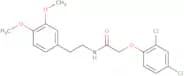
CAS:Please enquire for more information about 2-(2,4-dichlorophenoxy)-N-(2-(3,4-dimethoxyphenyl)ethyl)ethanamide including the price, delivery time and more detailed product information at the technical inquiry form on this pagePureza:Min. 95%3-(3-Hydroxy-4-methoxyphenyl)propionic acid
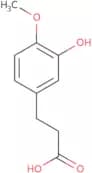
CAS:<p>3-(3-Hydroxy-4-methoxyphenyl)propionic acid is a dihydrochalcone that is found in lettuce. It can be used as an aglycone or with one or more sugar molecules to form glycosides, which are found in many plants. 3-(3-Hydroxy-4-methoxyphenyl)propionic acid has been shown to have a low bioavailability and to inhibit the activity of bile acids. 3-(3-Hydroxy-4-methoxyphenyl)propionic acid can be found in wastewater treatment systems, where it may act as an ecosystem pollutant. In addition, this compound shows antimicrobial properties and has been used for the treatment of wastewater.</p>Fórmula:C10H12O4Pureza:Min. 95%Cor e Forma:White Off-White PowderPeso molecular:196.2 g/molN-(2-Indol-3-ylethyl)(4-(trifluoromethoxy)phenyl)formamide
CAS:Please enquire for more information about N-(2-Indol-3-ylethyl)(4-(trifluoromethoxy)phenyl)formamide including the price, delivery time and more detailed product information at the technical inquiry form on this pageFórmula:C18H15F3N2O2Pureza:Min. 95%Cor e Forma:PowderPeso molecular:348.32 g/mol3,5-Dimethoxycinnamic acid methyl ester
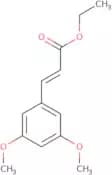
CAS:<p>Please enquire for more information about 3,5-Dimethoxycinnamic acid methyl ester including the price, delivery time and more detailed product information at the technical inquiry form on this page</p>Fórmula:C12H14O4Pureza:Min. 95%Peso molecular:222.24 g/mol3,4,5-Triethoxybenzoic acid
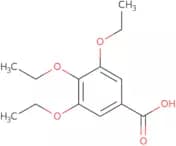
CAS:<p>3,4,5-Triethoxybenzoic acid is a synthetic compound that has been shown to have neurotoxic effects in animal studies. It has been shown to inhibit the dephosphorylation of amyloid fibrils and activation energy for polymerization. 3,4,5-Triethoxybenzoic acid also causes teratogenic effects in animals at high doses. This compound is used as a reagent for the synthesis of amyloid fibrils and has been shown to have an effect on the inhibition of phosphodiesterase activity.</p>Fórmula:C13H18O5Pureza:Min. 95%Cor e Forma:PowderPeso molecular:254.28 g/mol2-(2-Bromo-4-methoxyphenyl)acetic acid
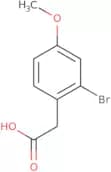
CAS:2-(2-Bromo-4-methoxyphenyl)acetic acid is a versatile building block that is used as a research chemical, reaction component, and reagent. It is also used as a speciality chemical and complex compound. This compound has the CAS number 66916-99-2.Fórmula:C9H9BrO3Cor e Forma:SolidPeso molecular:245.07 g/mol2,2'-Dimethoxybiphenyl
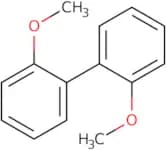
CAS:<p>2,2'-Dimethoxybiphenyl is a thermoplastic that is exothermic, making it useful in the production of polyketones. It can be used as a linker to form covalent bonds with monomers and polymers. 2,2'-Dimethoxybiphenyl has been used as a monomer to produce polyethers and polyesters. This compound has many chemical stability properties, which makes it suitable for use in polymer synthesis. It also can react with nucleophiles such as amines to form ether linkages. 2,2'-Dimethoxybiphenyl has kinetic properties that are faster than those of other ketones but slower than those of other ether-linked compounds. The activation energy for its reaction is low, making it an effective monomer for polymerization reactions.</p>Fórmula:C14H14O2Pureza:Min. 95%Cor e Forma:PowderPeso molecular:214.26 g/mol3-(4-Ethoxybenzoyl)acrylic acid
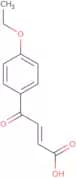
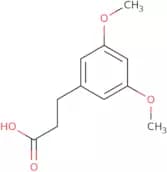
CAS:<p>3-(4-Ethoxybenzoyl)acrylic acid is a chemical that belongs to the group of reagents. It can be used in research involving organic synthesis as a building block and as an intermediate. 3-(4-Ethoxybenzoyl)acrylic acid can also be used to synthesize complex compounds or fine chemicals. The product is high quality, easy to use, and has many uses. This compound is a versatile building block that can be used to make many different compounds.</p>Fórmula:C12H12O4Pureza:Min. 95%Cor e Forma:PowderPeso molecular:220.22 g/mol3-(3,5-Dimethoxyphenyl)propionic acid
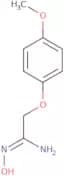
CAS:<p>3-(3,5-Dimethoxyphenyl)propionic acid is a metabolite of the drug aminorex that has been found to be a potent cannabinoid receptor agonist. It is an oxygenated analogue of 3,5-dimethoxyamphetamine and is synthesised by demethylation of aminorex followed by alkylation of the resulting 3-(3,5-dimethoxyphenyl)propionyl chloride with methanol. The compound has been found in rat microflora and human intestinal contents.</p>Fórmula:C11H14O4Pureza:Min. 95%Cor e Forma:PowderPeso molecular:210.23 g/molN-Hydroxy-2-(4-methoxyphenoxy)ethanimidamide
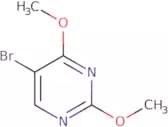
CAS:Please enquire for more information about N-Hydroxy-2-(4-methoxyphenoxy)ethanimidamide including the price, delivery time and more detailed product information at the technical inquiry form on this pageFórmula:C9H12N2O3Pureza:Min. 95%Cor e Forma:PowderPeso molecular:196.2 g/mol5-Bromo-2,4-dimethoxypyrimidine
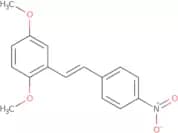
CAS:5-Bromo-2,4-dimethoxypyrimidine is a compound that functions as a potent inhibitor of L-glutamic acid amidohydrolase. This enzyme is essential for the synthesis of gamma-amino butyric acid (GABA) and glutamine, which are neurotransmitters in the central nervous system. 5-Bromo-2,4-dimethoxypyrimidine inhibits the formylation of l-glutamic acid to glutamate by inhibiting the enzyme L-glutamate formate lyase. It also inhibits herpes simplex virus type 1 (HSV1) replication by preventing viral DNA polymerization. 5-Bromo-2,4-dimethoxypyrimidine has been shown to be an effective inhibitor of chloride ion transport in some bacteria. The compound also shows photochromism when exposed to ultraviolet light or visible light under certain conditions. 5BROMO 2, 4 -DIMFórmula:C6H7BrN2O2Pureza:Min. 95%Cor e Forma:PowderPeso molecular:219.04 g/moltrans-2,5-Dimethoxy-4'-nitrostilbene
CAS:<p>Trans-2,5-dimethoxy-4'-nitrostilbene is a molecule that belongs to the class of polycyclic aromatic compounds. It is used as a versatile building block in organic synthesis, and is also an intermediate for the production of other compounds. Trans-2,5-dimethoxy-4'-nitrostilbene has been shown to be effective in the preparation of various pharmaceuticals such as diazepam and chloramphenicol. It is also used in research chemicals and speciality chemicals. The structure of trans-2,5-dimethoxy-4'-nitrostilbene can be described as a bicyclic compound with two phenyl rings joined by an oxygen bridge. Trans-2,5-dimethoxy-4'-nitrostilbene has CAS No. 552938 4 and molecular weight of 268.81 g/mol.</p>Fórmula:C16H15NO4Pureza:Min. 95%Cor e Forma:PowderPeso molecular:285.29 g/mol3,3'-Dimethoxybenzidine dihydrochloride
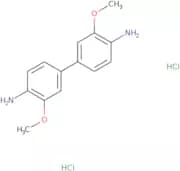
CAS:Produto Controlado<p>3,3'-Dimethoxybenzidine dihydrochloride is a fluorogenic probe that has been shown to have activity index in the range of 0.1-0.5, which makes it suitable for use as a fluorescent dye in biological samples such as human serum or cerebrospinal fluid. 3,3'-Dimethoxybenzidine dihydrochloride can be used in histological studies for the detection of cell lysis and cardiac disease activity. It has also been shown to cause liver lesions when administered orally to rats.</p>Fórmula:C14H16N2O2•(HCl)2Pureza:Min. 98 Area-%Cor e Forma:PowderPeso molecular:317.21 g/molNelotanserin
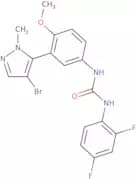
CAS:<p>1-[3-(4-Bromo-1-methyl-1H-pyrazol-5-yl)-4-methoxyphenyl]-3-(2,4-difluorophenyl)urea is the active ingredient in a drug that is used to treat chronic schizophrenia. It has been shown to have both antipsychotic and antidepressant properties. The drug works by blocking the 5HT2A receptor, which inhibits the effects of serotonin on heterocyclic amines at the postsynaptic membrane. This causes hyperpolarization of the membrane, which blocks neurotransmitter release and prevents further transmission of signals. It also blocks the H1 receptor, which decreases histamine release and reduces inflammation in the brain.</p>Fórmula:C18H15BrF2N4O2Pureza:Min. 95%Cor e Forma:PowderPeso molecular:437.24 g/mol3-Hydroxy-4-methoxy-2-nitrobenzaldehyde
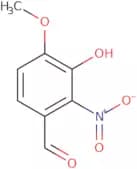
CAS:3-Hydroxy-4-methoxy-2-nitrobenzaldehyde is a ternary complex that has been adsorbed onto the surface of an ion exchange resin. The adsorption process occurs through the formation of hydrogen bonds between the hydroxyl groups on the resin and the hydroxyl groups on the molecule. This complex is also soluble in chloroform, which may be due to its ability to form hydrogen bonds with itself and other molecules. The 3-hydroxy group on this molecule has been shown to react reductively with nitrophenol, forming a nitroso derivative. 3-Hydroxy-4-methoxy-2-nitrobenzaldehyde has been used as a template for the microbiological assay of azides and quinones.Fórmula:C8H7NO5Pureza:Min. 95%Peso molecular:197.14 g/mol