Éteres
Foram encontrados 40906 produtos de "Éteres"
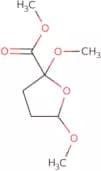
Methyl tetrahydro-2,5-dimethoxy-2-furancarboxylate
CAS:Methyl tetrahydro-2,5-dimethoxy-2-furancarboxylate is a sterically bulky molecule with a nitrogen atom in the ortho position. It has been used for the synthesis of various heterocyclic compounds. The steric bulk of methyl tetrahydro-2,5-dimethoxy-2-furancarboxylate prevents it from being substituted easily. This can be demonstrated by the refluxing of methyl tetrahydro-2,5-dimethoxy-2-furancarboxylate in benzene. The steric bulk also causes electron density to be distributed around methyl tetrahydro-2,5-dimethoxy-2-furancarboxylate, which creates a conjugated system.Fórmula:C8H14O5Pureza:Min. 95%Cor e Forma:Colourless To Pale Yellow Clear LiquidPeso molecular:190.19 g/mol3-Ethoxy-4-hydroxyphenylnitroethene
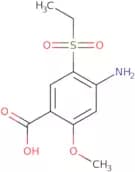
CAS:3-Ethoxy-4-hydroxyphenylnitroethene is a fine chemical with the CAS number 90922-85-3. It is a versatile building block that can be used for research, as a reagent, or as a speciality chemical. This compound has many applications in synthesis due to its high quality and complex nature. It is also an intermediate in the production of other compounds.Fórmula:C10H11NO4Pureza:Min. 95%Cor e Forma:PowderPeso molecular:209.2 g/mol2-Methoxy-4-amino-5-ethylsulfonyl benzoic acid
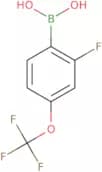
CAS:2-Methoxy-4-amino-5-ethylsulfonyl benzoic acid is a synthetic chemical that is used in wastewater treatment. It is also used as a precursor for the production of other chemicals, such as thiocyanates, peroxides, and bromoethanes. 2-Methoxy-4-amino-5-ethylsulfonyl benzoic acid can be produced by the reaction of hydrochloric acid with thionyl chloride. It reacts with aluminium to produce an acylation reaction that produces 2,2'-dithiodiethanol (DTE). The DTE can be reacted with an organic compound to produce a variety of products, including salicylic acid or bromoethanes.Fórmula:C10H13NO5SPureza:Min. 95%Cor e Forma:PowderPeso molecular:259.28 g/mol2-Fluoro-4-trifluoromethoxyphenyl boronic acid
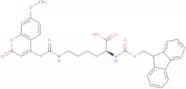
CAS:2-Fluoro-4-trifluoromethoxyphenyl boronic acid is a fine chemical that has been used as a building block in organic synthesis. It is also a versatile intermediate, which can be used for the preparation of complex compounds. The compound is soluble in methanol, ethanol, and THF. It has a CAS number of 503309-10-2 and was first synthesized in 1960.Fórmula:C7H5BF4O3Pureza:Min. 95%Cor e Forma:White PowderPeso molecular:223.92 g/molN-alpha-Fmoc-Nepsilon-7-methoxycoumarin-4-acetyl-L-lysine
CAS:N-alpha-Fmoc-Nepsilon-7-methoxycoumarin-4-acetyl-L-lysine is a fluorogenic molecule that is synthesized by the solid phase method. It is an analog of lysine, which is a bioactive amino acid. This compound binds to copper and exhibits fluorescence emission at 585 nm when excited at 488 nm. N-alpha-Fmoc-Nepsilon-7-methoxycoumarin-4-acetyl-L-lysine can be used as a substrate for bone growth in vitro and in vivo. It can also be used as a labeling reagent for bone tissue, such as bone sections or cells. It has been shown to produce osteogenic activity in vitro and in vivo.Fórmula:C33H32N2O8Pureza:Min. 97 Area-%Cor e Forma:PowderPeso molecular:584.62 g/mol2,4-Dibromoanisole
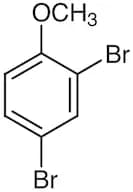
CAS:Fórmula:C7H6Br2OPureza:>98.0%(GC)Cor e Forma:White to Light yellow to Light red powder to crystalPeso molecular:265.935-Ethoxy-2(5H)-furanone
CAS:5-Ethoxy-2(5H)-furanone is an oxidation product of 5-ethoxy-2(5H)-furanone. It has an isomeric, stereospecific, regiospecifically, and a tautomeric relationship with furfural. 5-Ethoxy-2(5H)-furanone can be produced by the oxidation of furfural with boron trifluoride etherate in the presence of iodosobenzene. The reaction mechanism involves the addition of hydrogen peroxide to the boron trifluoride etherate to form hydroperoxydiborane. This compound then reacts with iodosobenzene to produce 5-ethoxy-2(5H)-furanone and 2,5-dihydroxybenzaldehyde. The reaction produces a mixture of diastereomers that contain different numbers of carbon atoms due to the regiospecific
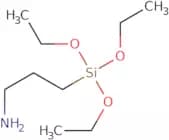
Fórmula:C6H8O3Pureza:Min. 95%Cor e Forma:PowderPeso molecular:128.13 g/mol3-Aminopropyltriethoxysilane
CAS:3-Aminopropyltriethoxysilane is a liquid that has a phase transition temperature of -88.3°C. It is soluble in water at 1 g/L and in ethanol at 0.1 g/L. 3-Aminopropyltriethoxysilane has been shown to inhibit the production of prostaglandin E2 and leukotrienes by inhibiting cyclooxygenase activity in red blood cells, which may be due to its ability to chelate metal ions such as iron or copper. 3-Aminopropyltriethoxysilane also inhibits the production of prostaglandin E2 and leukotrienes by inhibiting cyclooxygenase activity in red blood cells, which may be due to its ability to chelate metal ions such as iron or copper. The compound also inhibits the production of prostaglandin E2 and leukotrienes by inhibitingFórmula:C9H23NO3SiPureza:Min. 97 Area-%Cor e Forma:Colorless Clear LiquidPeso molecular:221.37 g/mol2,3,4-Trimethoxybenzylamine
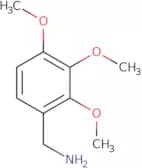
CAS:2,3,4-Trimethoxybenzylamine is a versatile chemical that can be used as a building block for complex compounds. It has been shown to react with methanol and ammonia to produce 2,3,4-trimethoxyaniline. This chemical can also be used as a reagent or speciality chemical in research and synthesis.Fórmula:C10H15NO3Pureza:Min. 95%Peso molecular:197.23 g/mol1-Cyclopropyl-6,7-difluoro-1,4-dihydro-8-methoxy-4-oxo-3-quinolinecarboxylic acid
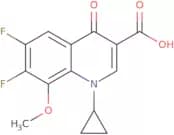
CAS:Moxifloxacin is an analog of the antibiotic quinolone. It is a prodrug that is hydrolyzed in vivo to its active form, moxifloxacin. Moxifloxacin has been shown to be effective against a variety of bacteria, including methicillin-resistant Staphylococcus aureus (MRSA), Mycobacterium tuberculosis and Mycobacterium avium complex. The reaction yield for the synthesis of moxifloxacin is very high, with an industrial production capacity in excess of 500 tons per year. Impurities are not usually found in the final product due to the use of methyl alcohol as a solvent during the reaction process. The drug has discoloring properties and deuterium atoms are often substituted for hydrogen atoms on the molecule to make it more stable. Deuterium atoms can be easily identified by mass spectrometry analysis. MoxifloxacFórmula:C14H11F2NO4Pureza:Min. 95%Cor e Forma:PowderPeso molecular:295.24 g/molbeta-2'-Methoxynaphthoflavone
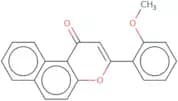
CAS:beta-2'-Methoxynaphthoflavone is a fine chemical that is useful as a scaffold for complex compounds, as a building block for speciality chemicals, and as an intermediate in the synthesis of research chemicals. It can be used in pharmaceuticals, agrochemicals, and other industries. beta-2'-Methoxynaphthoflavone has been found to be a versatile building block with high quality that can be used to synthesize a variety of compounds. This compound also has the ability to react with other chemicals such as ammonia or amines.
Fórmula:C20H14O3Pureza:Min. 95%Peso molecular:302.32 g/mol2-(2-Methoxyphenyl)-4,5-diphenylimidazole
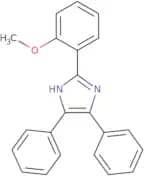
CAS:2-(2-Methoxyphenyl)-4,5-diphenylimidazole is a molecule with a dihedral angle of -115.1° and an asymmetric synthesis. It has antimicrobial activity against Escherichia coli, Staphylococcus aureus, and Bacillus subtilis. This compound also inhibits the synthesis of thromboxane A2 by blocking the 5-azaindole binding site on platelets and prolongs bleeding time in rats. 2-(2-Methoxyphenyl)-4,5-diphenylimidazole has been shown to be an antiplatelet drug that blocks the binding site of rilmenidine and imidazoline on platelets and reduces platelet aggregation. It also binds to the pyrazole ring of tautomers as well as hydrogen bonds to carbonyl groups on phenyl groups.Fórmula:C22H18N2OPureza:Min. 95%Cor e Forma:PowderPeso molecular:326.39 g/mol2-Chloro-3,4-dimethoxybenzylamine HCl
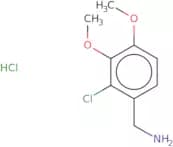
CAS:2-Chloro-3,4-dimethoxybenzylamine HCl is a fine chemical that can be used as a building block to synthesize new compounds. It is also a useful intermediate in the production of pharmaceuticals and other organic chemicals. 2-Chloro-3,4-dimethoxybenzylamine HCl has been used as a reaction component for the synthesis of various complex compounds. This compound has been shown to have high purity and quality.Fórmula:C9H12ClNO2·HClPureza:Min. 95%Peso molecular:238.11 g/mol1-(3-(Trifluoromethoxy)phenyl)-2-nitroethene
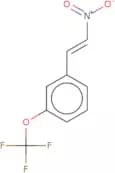
CAS:1-(3-Trifluoromethoxy)phenyl)-2-nitroethene is a fluorinated aromatic compound that can be used as a building block for synthesis of pharmaceuticals, research chemicals, and other specialty chemicals. It is an intermediate that can be used in the production of other compounds. This compound may be used in pharmaceuticals to treat bacterial infections and inflammatory diseases. 1-(3-Trifluoromethoxy)phenyl)-2-nitroethene may also be utilized as a reaction component for synthesizing other organic compounds. It is soluble in solvents such as benzene, ether, chloroform, and acetone.Fórmula:C9H6F3NO3Pureza:Min. 95%Peso molecular:233.14 g/mol11-Ethoxycarbonyldodecanoic acid
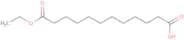
CAS:11-Ethoxycarbonyldodecanoic acid is a high quality, useful intermediate, and versatile building block. It has been shown to be an efficient reagent for the synthesis of complex compounds. 11-Ethoxycarbonyldodecanoic acid can be used as a speciality chemical or research chemical in the production of fine chemicals, as well as in the synthesis of useful scaffolds and building blocks. This compound is also a reaction component that can be used in the production of many different types of products.Fórmula:C14H26O4Pureza:Min. 95%Cor e Forma:PowderPeso molecular:258.35 g/mol5-Methoxy-2-nitrophenylamine
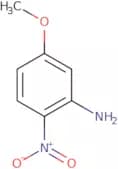
CAS:5-Methoxy-2-nitrophenylamine (5MN) is a synthetic compound. It has been shown to produce an inhibitory effect on Alzheimer's disease and Leishmania infantum by inhibiting the formation of amyloid beta (Aβ) and leishmanicidal alpha-ketoglutarate, respectively. 5MN has also been observed to stabilize supramolecular structures in magnetic resonance spectroscopy experiments. This chemical is synthesized from 4-amino-3-nitrophenol and methylamine by reacting them in the presence of sodium hydroxide and sulfuric acid under refluxing conditions. The reaction products are analyzed using FTIR spectroscopy, as shown below:Fórmula:C7H8N2O3Pureza:Min. 95%Cor e Forma:PowderPeso molecular:168.15 g/mol4-Methoxy-2,3,5-trimethylpyridine
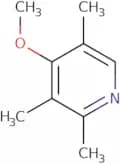
CAS:4-Methoxy-2,3,5-trimethylpyridine is an efficient hydrogenolysis catalyst that can be used for the synthesis of ethers from alcohols. It is a member of the methoxides family and can be produced by condensation of chloroform with acetaldehyde and formaldehyde. 4-Methoxy-2,3,5-trimethylpyridine inhibits palladium chloride from catalyzing hydrogenation reactions. The compound also has an inhibiting activity against acidic amines and n-Oxides. Its high yield makes it useful in organic synthesis as a precursor to diethyl malonate.Fórmula:C9H13NOPureza:Min. 95%Cor e Forma:Colourless To Yellow LiquidPeso molecular:151.21 g/mol3-(Trifluoromethoxy)phenol
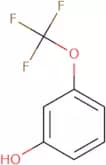
CAS:3-(Trifluoromethoxy)phenol is a drug that has been shown to function as an amide and a biomolecular. It has also been used in the development of drugs for depression, but it is not known whether it is effective in humans. 3-(Trifluoromethoxy)phenol binds to the cation channel of the NMDA receptor, which may be related to its antidepressant properties. The compound has been shown to have a radiotracer effect on positron emission tomography (PET). 3-(Trifluoromethoxy)phenol yields positrons when it undergoes deamination. This reaction is catalyzed by enzymes such as acetylcholine esterase, choline oxidase, and monoamine oxidases.
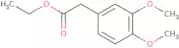
Fórmula:C7H5F3O2Pureza:Min. 95%Cor e Forma:Clear LiquidPeso molecular:178.11 g/molEthyl 2-(3,4-dimethoxyphenyl)acetate - 90%
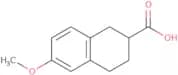
CAS:Ethyl 2-(3,4-dimethoxyphenyl)acetate is a synthetic molecule that has been observed in the gas phase. It has been shown to have antibacterial activity and significant antifungal activity. Ethyl 2-(3,4-dimethoxyphenyl)acetate was also found to be resistant to amines, which are organic compounds that can be found in many types of bacteria. The antibacterial properties of ethyl 2-(3,4-dimethoxyphenyl)acetate may be due to its ability to cleave bonds with chloride ions and its conformational studies.Fórmula:C12H16O4Pureza:Min. 95%Cor e Forma:PowderPeso molecular:224.25 g/mol6-Methoxy-1,2,3,4-tetrahydronaphthalene-2-carboxylic acid
CAS:6-Methoxy-1,2,3,4-tetrahydronaphthalene-2-carboxylic acid (MTN) is a polyphenol that has been shown to be effective against Alzheimer's disease in vitro and in vivo. MTN is able to bind to the polymerase chain reaction (PCR) product of APP and inhibit it from binding to heme oxygenase. MTN also prevents the accumulation of amyloid plaques by inhibiting the formation of beta-amyloid protein. MTN binds to thioflavin T and can be used as a fluorescent probe for immunofluorescence staining. MTN also inhibits the expression levels of APP and PS1 proteins in APP/PS1 transgenic mice by modulating the activity of transcriptional factors such as CREB.Fórmula:C12H14O3Pureza:Min. 95%Cor e Forma:PowderPeso molecular:206.24 g/mol