Éteres
Os éteres são compostos orgânicos que contêm um grupo funcional éter, caracterizado por um átomo de oxigênio ligado a dois radicais hidrocarbonetos. Esses compostos são valiosos na síntese e servem como solventes em várias reações químicas. Na CymitQuimica, oferecemos uma seleção de éteres de alta qualidade para apoiar suas aplicações de pesquisa e industriais, garantindo resultados confiáveis e eficazes. Nossa gama de éteres atende a diversos requisitos laboratoriais, desde experimentos de rotina até pesquisas avançadas.
Foram encontrados 40729 produtos de "Éteres"
Ordenar por
Pureza (%)
0
100
|
0
|
50
|
90
|
95
|
100
11-Ethoxycarbonyldodecanoic acid
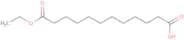
CAS:<p>11-Ethoxycarbonyldodecanoic acid is a high quality, useful intermediate, and versatile building block. It has been shown to be an efficient reagent for the synthesis of complex compounds. 11-Ethoxycarbonyldodecanoic acid can be used as a speciality chemical or research chemical in the production of fine chemicals, as well as in the synthesis of useful scaffolds and building blocks. This compound is also a reaction component that can be used in the production of many different types of products.</p>Fórmula:C14H26O4Pureza:Min. 95%Cor e Forma:PowderPeso molecular:258.35 g/mol3-Methoxyphenylmethylcarbinol
CAS:<p>3-Methoxyphenylmethylcarbinol is a hydrogen tartrate that can be used as an intermediate in the Friedel-Crafts reaction. It is also an imine, which is formed when a nitrogen atom of an amine reacts with a carbon atom of formaldehyde. 3-Methoxyphenylmethylcarbinol has been shown to have stereoselective properties in the Friedel-Crafts reaction, which means that only one product is produced from two reactants. In this case, the hydrogen tartrate and phosphorus oxychloride are reacted to produce oxone and chloride compounds. The selectivity of 3-methoxyphenylmethylcarbinol can be increased by adding triphosgene or dimethylamine to the reaction mixture. This compound dissociates easily into its component parts and can be regenerated by adding ethyl formate or ferrocene.</p>Fórmula:C9H12O2Pureza:Min. 95%Cor e Forma:PowderPeso molecular:152.19 g/mol2-Chloro-4-(trifluoromethoxy)aniline
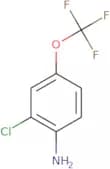
CAS:<p>2-Chloro-4-(trifluoromethoxy)aniline is a chemical reagent that is used in organic synthesis. It has a variety of uses including as a building block for complex compounds, an intermediate for the synthesis of other chemicals, and a reagent for the production of pharmaceuticals. 2-Chloro-4-(trifluoromethoxy)aniline is also useful in research to study the mechanism of certain reactions. The high quality and versatility of this compound make it a speciality chemical with many applications.</p>Fórmula:C7H5ClF3NOPeso molecular:211.57 g/mol2-Amino-4,5-dimethoxybenzamide
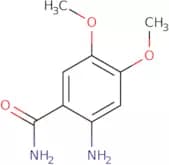
CAS:<p>2-Amino-4,5-dimethoxybenzamide is an anticancer agent that inhibits the epidermal growth factor receptor tyrosine kinase. It binds to the linker region of the epidermal growth factor receptor and prevents autophosphorylation. 2-Amino-4,5-dimethoxybenzamide has shown in vitro cytotoxic activity against testicular cancer cells and acute lymphoblastic leukemia cells. 2-Amino-4,5-dimethoxybenzamide is a synthetic compound that has been shown to have bioisosteric properties with other growth factors such as epidermal growth factor.</p>Fórmula:C9H12N2O3Pureza:Min. 95%Cor e Forma:PowderPeso molecular:196.2 g/mol1-Methoxy-4-methylcyclohexane (cis- and trans- mixture)
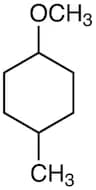
CAS:Fórmula:C8H16OPureza:>98.0%(GC)Cor e Forma:Colorless to Almost colorless clear liquidPeso molecular:128.22Methyl 3,5-dibromo-2-methoxybenzoate
CAS:<p>Methyl 3,5-dibromo-2-methoxybenzoate is a fine chemical that is useful as a scaffold for the preparation of a variety of compounds. It is also used as an intermediate in the synthesis of pharmaceuticals and research chemicals. Methyl 3,5-dibromo-2-methoxybenzoate can be used as a reaction component to generate complex compounds with high purity and quality. This compound has been classified as a speciality chemical and may be reclassified due to its usefulness in research.</p>Fórmula:C9H8Br2O3Pureza:Min. 95%Peso molecular:323.97 g/mol1-(5-Chloro-2-methoxyphenyl)piperazine HCl
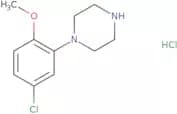
CAS:Produto Controlado<p>1-(5-Chloro-2-methoxyphenyl)piperazine HCl is a fine chemical that belongs to the group of research chemicals. It is used as a reagent, speciality chemical and intermediate in organic synthesis. 1-(5-Chloro-2-methoxyphenyl)piperazine HCl is an effective building block for complex compounds, which can be used in reactions involving acetals, amides, nitriles, sulfones, sulfonamides and imines. This compound also has versatile building blocks and is a useful scaffold in organic synthesis.</p>Fórmula:C11H16Cl2N2OPureza:Min. 95%Cor e Forma:Off-White PowderPeso molecular:263.16 g/mol(2-Hydroxy-5-methoxyphenyl)acetone
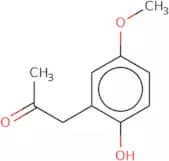
CAS:<p>(2-Hydroxy-5-methoxyphenyl)acetone is a fine chemical that belongs to the group of complex compounds. It can be used as an intermediate for research chemicals, as well as a useful scaffold or building block. This compound can be converted into other useful compounds through reactions with alcohols, amines, or ketones. (2-Hydroxy-5-methoxyphenyl)acetone is also used in the synthesis of speciality chemicals and reaction components for pharmaceuticals.</p>Fórmula:C10H12O3Pureza:Min. 95%Peso molecular:180.2 g/mol3,5-Dimethoxy-4-methylbenzoic acid methyl ester
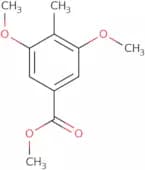
CAS:<p>3,5-Dimethoxy-4-methylbenzoic acid methyl ester (DMMBME) is a synthetic compound that is used as an immunogen to generate antibodies against fungal proteins. DMMBME is specifically used to identify the presence of bryoria and australian fungi in plants. The chemical structure of DMMBME can be oxidized by depsidones, which leads to the production of reactive oxygen species that are believed to be responsible for the oxidative coupling of target proteins. This reaction can be catalyzed by a number of enzymes such as nidulin, which is found in plant roots.</p>Fórmula:C11H14O4Pureza:Min. 95%Cor e Forma:PowderPeso molecular:210.23 g/molN-α-Fmoc-Nε-7-methoxycoumarin-4-acetyl-L-lysine
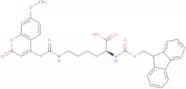
CAS:<p>N-alpha-Fmoc-Nepsilon-7-methoxycoumarin-4-acetyl-L-lysine is a fluorogenic molecule that is synthesized by the solid phase method. It is an analog of lysine, which is a bioactive amino acid. This compound binds to copper and exhibits fluorescence emission at 585 nm when excited at 488 nm. N-alpha-Fmoc-Nepsilon-7-methoxycoumarin-4-acetyl-L-lysine can be used as a substrate for bone growth in vitro and in vivo. It can also be used as a labeling reagent for bone tissue, such as bone sections or cells. It has been shown to produce osteogenic activity in vitro and in vivo.</p>Fórmula:C33H32N2O8Pureza:Min. 97 Area-%Cor e Forma:PowderPeso molecular:584.62 g/mol2-(2-Bromo-1,1,2,2-tetrafluoroethoxy)-1,1,1,2,3,3-hexafluoro-3-(pentafluoroethoxy)propane
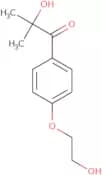
CAS:Fórmula:C7BrF15O2Pureza:>98.0%(GC)Cor e Forma:Colorless to Almost colorless clear liquidPeso molecular:480.962-Hydroxy-4'-(2-hydroxyethoxy) -2-methylpropiophenone
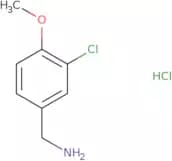
CAS:<p>2-Hydroxy-4'-(2-hydroxyethoxy)-2-methylpropiophenone is a reactive chemical substance that has been shown to have significant cytotoxicity and biological properties. It is used in the treatment of cervical cancer and has been shown to inhibit the growth of cancer cells. This compound is found in a number of commercial products, including sunscreens and hair dyes, but its use may be limited due to its photochemical reactivity. The structure of 2HEPP was determined using nuclear magnetic resonance (NMR) spectroscopy and mass spectrometry. The chemical formula for 2HEPP is C10H14O3. It has a molecular weight of 192.22 g/mol and an empirical formula of C10H14O3. 2HEPP is soluble in methanol, acetone, ether, chloroform, benzene, ethanol, ethyl acetate, diethyl ether, and aceton</p>Fórmula:C12H16O4Pureza:Min. 95%Cor e Forma:White PowderPeso molecular:224.25 g/mol3-Chloro-4-methoxybenzylamine hydrochloride
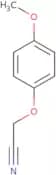
CAS:<p>3-Chloro-4-methoxybenzylamine hydrochloride is a quinoline derivative that inhibits the activity of phosphodiesterase 5, an enzyme that breaks down cGMP in the brain. This drug has been shown to increase levels of cGMP and decrease levels of low energy (i.e., low ATP) in synaptosomes. 3-Chloro-4-methoxybenzylamine hydrochloride may be useful for the treatment of Alzheimer's disease, as it has been shown to improve cognitive function and memory in animal models. The mechanism of action is not fully understood but may involve inhibition of cholinergic neurotransmission or activation of nitric oxide synthase.</p>Fórmula:C8H10ClNO•HClPureza:Min. 95%Cor e Forma:PowderPeso molecular:208.08 g/mol2-(4-Methoxyphenoxy)acetonitrile
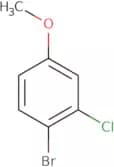
CAS:<p>2-(4-Methoxyphenoxy)acetonitrile is a chemical compound that is used to synthesize acetobromoglucose. It undergoes transformation and condensation reactions with acetobromoglucose to form 4-methoxyaceto bromoglucose.</p>Fórmula:C9H9NO2Pureza:Min. 95%Peso molecular:163.17 g/mol1-Bromo-2-chloro-4-methoxybenzene
CAS:<p>1-Bromo-2-chloro-4-methoxybenzene is a polychlorinated bromoarene. It is used as a precursor to produce the hydroxamic acid, 1-bromo-2,4-dichlorobenzene. This compound has been shown to be a powerful inhibitor of bacterial growth in activated sludge and soil bacteria. It also inhibits plant growth and has been used as an herbicide. The synthesis of this compound starts with acetonitrile and phenol, which are heated together to produce the desired product in high yields. The solvents are then removed by vacuum distillation or crystallization.</p>Fórmula:C7H6BrClOPureza:Min. 95%Peso molecular:221.48 g/mol3-Ethoxy-4-hydroxyphenylnitroethene
CAS:<p>3-Ethoxy-4-hydroxyphenylnitroethene is a fine chemical with the CAS number 90922-85-3. It is a versatile building block that can be used for research, as a reagent, or as a speciality chemical. This compound has many applications in synthesis due to its high quality and complex nature. It is also an intermediate in the production of other compounds.</p>Fórmula:C10H11NO4Pureza:Min. 95%Cor e Forma:PowderPeso molecular:209.2 g/mol2-(2,2-Diethoxyethyl)-1,3-propanediol
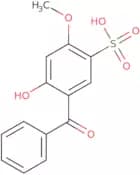
CAS:Fórmula:C9H20O4Pureza:>88.0%(GC)Cor e Forma:Colorless to Light yellow clear liquidPeso molecular:192.262-Hydroxy-4-methoxybenzophenone-5-sulfonic acid
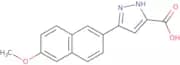
CAS:<p>2-Hydroxy-4-methoxybenzophenone-5-sulfonic acid is a diazonium salt that can be used as a reference standard to measure the microbial metabolism of aromatic compounds. It is stable in air and light, but can undergo photolysis in solution. The monosodium salt form of 2-hydroxy-4-methoxybenzophenone-5-sulfonic acid has been shown to have acute toxicities for fish, rats and rabbits. This compound also has photochemical properties that make it useful for surface methodology, such as determining the degree of hydrophobicity of various types of surfaces. Hydrochloric acid is needed for the preparation of this compound.</p>Fórmula:C14H12O6SPureza:Min. 95%Cor e Forma:White To Yellow SolidPeso molecular:308.31 g/mol5-(6-Methoxynaphthalen-2-yl)-1H-pyrazole-3-carboxylic acid
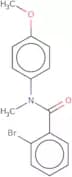
CAS:<p>5-(6-Methoxynaphthalen-2-yl)-1H-pyrazole-3-carboxylic acid is a fine chemical that is used as an intermediate in research, development and production of pharmaceuticals. It can be also used as a reagent and speciality chemical, as well as a reaction component and useful scaffold when combined with other molecules. This compound has been found to be stable in air and water, which makes it easy to handle. 5-(6-Methoxynaphthalen-2-yl)-1H-pyrazole-3-carboxylic acid has CAS No. 1257877-12-5.</p>Fórmula:C15H12N2O3Pureza:Min. 95%Cor e Forma:Off-White PowderPeso molecular:268.27 g/mol2-Bromo-N-(4-methoxyphenyl)-N-methylbenzamide
CAS:<p>2-Bromo-N-(4-methoxyphenyl)-N-methylbenzamide is a fine chemical that is used in the synthesis of other chemicals. It is also a reagent and a speciality chemical, which can be used as a reaction component or as an intermediate in the synthesis of other compounds. 2-Bromo-N-(4-methoxyphenyl)-N-methylbenzamide can be used to make a wide variety of compounds, including polymers and pharmaceuticals. This compound has been shown to be useful for the synthesis of polycarbonates, polyurethanes, polyesters, polyamides, and polystyrenes.</p>Fórmula:C15H14BrNO2Pureza:Min. 95%Peso molecular:320.18 g/mol