Éteres
Foram encontrados 40904 produtos de "Éteres"
2-(2,2-Diethoxyethyl)-1,3-propanediol
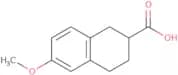
CAS:Fórmula:C9H20O4Pureza:>88.0%(GC)Cor e Forma:Colorless to Light yellow clear liquidPeso molecular:192.266-Methoxy-1,2,3,4-tetrahydronaphthalene-2-carboxylic acid
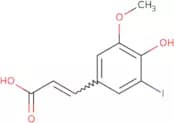
CAS:6-Methoxy-1,2,3,4-tetrahydronaphthalene-2-carboxylic acid (MTN) is a polyphenol that has been shown to be effective against Alzheimer's disease in vitro and in vivo. MTN is able to bind to the polymerase chain reaction (PCR) product of APP and inhibit it from binding to heme oxygenase. MTN also prevents the accumulation of amyloid plaques by inhibiting the formation of beta-amyloid protein. MTN binds to thioflavin T and can be used as a fluorescent probe for immunofluorescence staining. MTN also inhibits the expression levels of APP and PS1 proteins in APP/PS1 transgenic mice by modulating the activity of transcriptional factors such as CREB.Fórmula:C12H14O3Pureza:Min. 95%Cor e Forma:PowderPeso molecular:206.24 g/mol3-(5-Iodo-4-hydroxy-3-methoxy)cinnamic acid
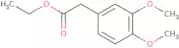
CAS:3-(5-Iodo-4-hydroxy-3-methoxy)cinnamic acid is a chemical compound that can be used as a starting material for synthesis of complex compounds. It is a white solid with a melting point of about 100°C, and it is soluble in water. This product is an excellent reagent for the synthesis of new chemicals, and it has been widely used as a reaction component in organic syntheses. 3-(5-Iodo-4-hydroxy-3-methoxy)cinnamic acid also has antibacterial properties.Fórmula:C10H9IO4Pureza:Min. 95%Peso molecular:320.08 g/molEthyl 2-(3,4-dimethoxyphenyl)acetate - 90%
CAS:Ethyl 2-(3,4-dimethoxyphenyl)acetate is a synthetic molecule that has been observed in the gas phase. It has been shown to have antibacterial activity and significant antifungal activity. Ethyl 2-(3,4-dimethoxyphenyl)acetate was also found to be resistant to amines, which are organic compounds that can be found in many types of bacteria. The antibacterial properties of ethyl 2-(3,4-dimethoxyphenyl)acetate may be due to its ability to cleave bonds with chloride ions and its conformational studies.Fórmula:C12H16O4Pureza:Min. 95%Cor e Forma:PowderPeso molecular:224.25 g/mol3-Methoxybenzenamine
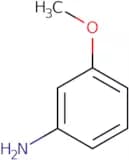
CAS:3-Methoxybenzenamine is a molecule that can be synthesized by an asymmetric reaction. It has carcinogenic potential and is classified as a chemical substance. 3-Methoxybenzenamine reacts with hydrochloric acid to form hydrogen chloride gas and methoxybenzene. The hydroxyl group on the molecule reacts with l-tartaric acid to form an ester, which then undergoes hydrolysis to produce 3-hydroxybutanoic acid. This reaction also produces water, which may result in a decrease of the concentration of the reactants. 3-Methoxybenzenamine can also react with amines to form quaternary ammonium salts, which are highly soluble in water and have a high detection sensitivity.
Fórmula:C7H9NOPureza:Min. 95%Cor e Forma:Clear LiquidPeso molecular:123.15 g/mol1-Bromo-2-chloro-4-methoxybenzene
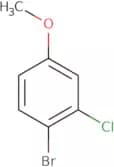
CAS:1-Bromo-2-chloro-4-methoxybenzene is a polychlorinated bromoarene. It is used as a precursor to produce the hydroxamic acid, 1-bromo-2,4-dichlorobenzene. This compound has been shown to be a powerful inhibitor of bacterial growth in activated sludge and soil bacteria. It also inhibits plant growth and has been used as an herbicide. The synthesis of this compound starts with acetonitrile and phenol, which are heated together to produce the desired product in high yields. The solvents are then removed by vacuum distillation or crystallization.
Fórmula:C7H6BrClOPureza:Min. 95%Peso molecular:221.48 g/mol3-(Trifluoromethoxy)iodobenzene
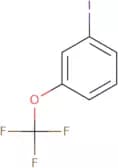
CAS:3-(Trifluoromethoxy)iodobenzene is a reagent for organic synthesis that has a high quality and versatile reactivity. It can be used in the preparation of useful scaffolds, which are novel and useful building blocks. 3-(Trifluoromethoxy)iodobenzene is also a useful intermediate for the synthesis of complex compounds. 3-(Trifluoromethoxy)iodobenzene has been shown to have antioxidant properties and can be used as a fine chemical.Fórmula:C7H4F3IOPureza:Min. 95%Cor e Forma:Clear LiquidPeso molecular:288.01 g/mol3-Ethoxy-4-hydroxyphenylnitroethene
CAS:3-Ethoxy-4-hydroxyphenylnitroethene is a fine chemical with the CAS number 90922-85-3. It is a versatile building block that can be used for research, as a reagent, or as a speciality chemical. This compound has many applications in synthesis due to its high quality and complex nature. It is also an intermediate in the production of other compounds.Fórmula:C10H11NO4Pureza:Min. 95%Cor e Forma:PowderPeso molecular:209.2 g/mol3-Methoxy-4-(difluoromethoxy)benzaldehyde
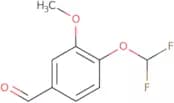
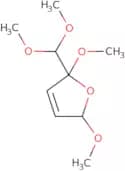
CAS:3-Methoxy-4-(difluoromethoxy)benzaldehyde is a chemical compound that has been found to have anti-tumor properties. It inhibits tumor cells by inducing cell apoptosis. 3-Methoxy-4-(difluoromethoxy)benzaldehyde induces apoptosis in human carcinoma cells, with optimal activity at doses of 10 micromolar and higher. This chemical can be used as an anti-tumor agent because it shows no genotoxic effects, and has high yield with a low toxicity profile. When this compound is exposed to UV radiation, the formation of reactive oxygen species (ROS) increases the rate of cell death. 3-Methoxy-4-(difluoromethoxy)benzaldehyde also has anti-inflammatory properties, which may be due to its ability to inhibit prostaglandin synthesis.Fórmula:C9H8F2O3Pureza:Min. 95%Cor e Forma:Colourless To Pale Yellow LiquidPeso molecular:202.15 g/mol2,5-Dihydro-2,5-dimethoxy-2-dimethoxymethylfuran
CAS:2,5-Dihydro-2,5-dimethoxy-2-dimethoxymethylfuran is a chemical compound that belongs to the group of reagents. It is used as a reaction component in organic synthesis and has been shown to be a useful scaffold for the development of new compounds. 2,5-Dihydro-2,5-dimethoxy-2-dimethoxymethylfuran is also a versatile building block for complex compounds and fine chemicals.Fórmula:C9H16O5Pureza:Min. 95%Peso molecular:204.22 g/mol3-Chloro-4-methoxybenzoic acid
CAS:3-Chloro-4-methoxybenzoic acid is a hydroxamic acid that is synthesized by the reaction of 3-chloro-4-methoxybenzaldehyde with hydroxylamine. It has anticancer activity and can inhibit the growth of cancer cells. 3-Chloro-4-methoxybenzoic acid has a low potency, which means that it needs to be used in high concentrations in order to be effective as an anticancer agent. The drug is also structurally similar to sorafenib, but has less potent anticancer activity.
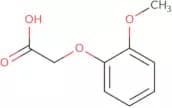
Fórmula:C8H7ClO3Pureza:Min. 95%Peso molecular:186.59 g/mol(2-Methoxyphenoxy)acetic acid
CAS:2-Methoxyphenoxyacetic acid is an organic compound that is used as a plant growth regulator and insecticide. It belongs to the group of phenoxyacetic acids and has a molecular weight of 152.2 g/mol. The chemical formula for 2-methoxyphenoxyacetic acid is C8H10O3. This compound is used as a control agent in pest control, where it is applied to crops to prevent damage from insects and mites. 2-Methoxyphenoxyacetic acid can be synthesized by reacting 5-carboxyvanillic acid with methanol in the presence of an oxidizing agent such as potassium permanganate or hydrogen peroxide. This chemical can also be prepared by oxidation of syringyl alcohols with chromium(VI) oxide in the presence of a reducing agent such as sodium bisulfite. 2-Methoxyphenoxyacetic acid can be detectedFórmula:C9H10O4Pureza:Min. 95%Cor e Forma:PowderPeso molecular:182.17 g/mol8-Methoxycarbonyloctanoic acid
CAS:8-Methoxycarbonyloctanoic acid is a fatty acid derivative that has been found to be a potent inhibitor of platelet aggregation. It exhibits anti-platelet activity in human pathogens and in the model system studied. The mechanism of this inhibition is not clearly understood, but it may involve the inhibition of the enzyme ns3 protease or an interaction with the cell membrane. 8-Methoxycarbonyloctanoic acid has also shown antibacterial efficacy against human pathogens such as Escherichia coli, Pseudomonas aeruginosa, Klebsiella pneumoniae, and Bacillus cereus. This drug also inhibits bacterial growth by binding to DNA-dependent RNA polymerase, thereby preventing transcription and replication. The high frequency of human activity has been shown using a patch-clamp technique on human erythrocytes. This active form is metabolized through a number of metabolic transformations, including hydrolysis by esterases or glucuronFórmula:C10H18O4Pureza:Min. 95%Cor e Forma:White/Off-White SolidPeso molecular:202.25 g/mol8-Methoxycarbonyloctanol
CAS:8-Methoxycarbonyloctanol (8MCO) is a fatty acid molecule that has been shown to have significant inhibitory activities against Streptococcus pneumoniae in human serum. 8MCO is a synthetic molecule that can be synthesized from galactose and chloride. It has been found to have a molecular weight of 190.08 g/mol, melting point of -2°C, and boiling point of 217°C at 1 mmHg. 8MCO is soluble in water, methanol, and ethanol. This molecule can be used as an analytical tool for the detection of fatty acids by gas chromatography-mass spectrometry (GC-MS). It also exhibits enzymatic activity when incorporated into enzyme preparations such as esterases and lipases. 8MCO contains functional groups such as carbonyl (-CO), hydroxyl (-OH), carboxylic acid (-COOH), ether (-O-) and alcohol (-
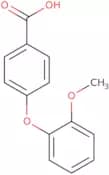
Fórmula:C10H20O3Pureza:Min. 95%Cor e Forma:Clear LiquidPeso molecular:188.26 g/mol4-(2-Methoxyphenoxy)benzoic acid
CAS:4-(2-Methoxyphenoxy)benzoic acid is a white crystalline solid with a melting point of 50°C. It is soluble in water, ethanol, ether, and chloroform. 4-(2-Methoxyphenoxy)benzoic acid has been used as a starting material for the synthesis of pharmaceuticals such as carbamazepine (Tegretol). The compound has two methoxy groups on the phenyl ring that are susceptible to nucleophilic attack by strong bases. This reaction occurs at room temperature and can be reversed by heating the solution to 150°C. The compound also undergoes polycondensation reactions when heated in the presence of an oxidizing agent.
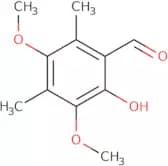
Fórmula:C14H12O4Pureza:Min. 95%Cor e Forma:White PowderPeso molecular:244.24 g/mol2-Hydroxy-4,6-dimethoxy-3,5-dimethylbenzaldehyde
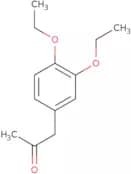
CAS:2-Hydroxy-4,6-dimethoxy-3,5-dimethylbenzaldehyde is a versatile building block that can be used in research chemicals, reagents, and speciality chemicals. It is also a useful building block that can be used as a reaction component or scaffold for high-quality compounds. This chemical has been shown to have antihistamine properties with applications in treatment of allergies and asthma.Fórmula:C11H14O4Pureza:Min. 95%Cor e Forma:PowderPeso molecular:210.23 g/mol3,4-Diethoxyphenylacetone
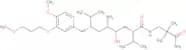
CAS:3,4-Diethoxyphenylacetone is a chemical compound that is used as a building block for research and as an intermediate in the synthesis of other chemicals. This compound is also used as a reagent. 3,4-Diethoxyphenylacetone has CAS number 93635-48-4.Fórmula:C13H18O3Pureza:Min. 95%Peso molecular:222.28 g/mol5-Amino-N-(3-amino-2,2-dimethyl-3-oxopropyl)-4-hydroxy-2-isopropyl-7-[4-methoxy-3-(3-methoxypropoxy)benzyl]-8-methylnonanamide fumar ate
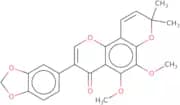
CAS:5-Amino-N-(3-amino-2,2-dimethyl-3-oxopropyl)-4-hydroxy-2-isopropyl-7-[4-methoxy-3-(3-methoxypropoxy)benzyl]-8-methylnonanamide fumar ate is a drug that inhibits the activity of angiotensin II, which is a hormone produced by the body. It is used as monotherapy for treatment of hypertension. 5AMINO has been shown to be effective in lowering blood pressure when administered alone and has been shown to be well tolerated. For this drug, the most frequently reported adverse reactions are nausea and dizziness. This drug should not be taken with other antihypertensive drugs or nonsteroidal antiinflammatory drugs such as ibuprofen (Motrin®). In addition, patients with diabetes should monitor their blood sugar levels carefully while taking this medication.Fórmula:C30H53N3O6Pureza:Min. 95%Cor e Forma:PowderPeso molecular:551.76 g/mol5-Methoxydurmillone
CAS:5-Methoxydurmillone is a rotenoid that is found in many plants, including the seeds of the plant Ferruginea. 5-Methoxydurmillone has been shown to have anti-inflammatory properties and can be used to treat inflammatory diseases such as arthritis. It also inhibits the production of superoxide radicals and nitric oxide, which are important mediators of inflammation. 5-Methoxydurmillone has been shown to inhibit protein synthesis in bacteria, but not mammalian cells.
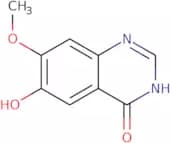
Fórmula:C23H20O7Pureza:Min. 95%Peso molecular:408.4 g/mol6-Hydroxy-7-methoxy-3,4-dihydroquinazolin-4-one
CAS:6-Hydroxy-7-methoxy-3,4-dihydroquinazolin-4-one is an amination of chloropropane and morpholinyl with 3-chloro-4-fluoroaniline. It cyclizes to form a quinazolinone. This compound was synthesized in order to produce a cytotoxic agent for cancer treatment.Fórmula:C9H8N2O3Pureza:Min. 95%Cor e Forma:PowderPeso molecular:192.17 g/mol3-(Ethoxycarbonylamino)phenothiazine
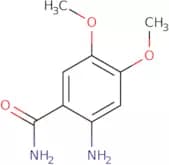
CAS:3-(Ethoxycarbonylamino)phenothiazine is a chemical compound that belongs to the group of speciality chemicals. It is an intermediate for the synthesis of other compounds and can be used in the production of fine chemicals, reagents, and complex compounds. 3-(Ethoxycarbonylamino)phenothiazine has been shown to have a high reactivity and is useful as a building block in organic chemistry. This product also has versatile uses in research, which includes drug discovery and development.Pureza:Min. 95%2-Amino-4,5-dimethoxybenzamide
CAS:2-Amino-4,5-dimethoxybenzamide is an anticancer agent that inhibits the epidermal growth factor receptor tyrosine kinase. It binds to the linker region of the epidermal growth factor receptor and prevents autophosphorylation. 2-Amino-4,5-dimethoxybenzamide has shown in vitro cytotoxic activity against testicular cancer cells and acute lymphoblastic leukemia cells. 2-Amino-4,5-dimethoxybenzamide is a synthetic compound that has been shown to have bioisosteric properties with other growth factors such as epidermal growth factor.
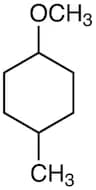
Fórmula:C9H12N2O3Pureza:Min. 95%Cor e Forma:PowderPeso molecular:196.2 g/mol1-Methoxy-4-methylcyclohexane (cis- and trans- mixture)
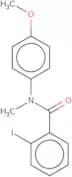
CAS:Fórmula:C8H16OPureza:>98.0%(GC)Cor e Forma:Colorless to Almost colorless clear liquidPeso molecular:128.222-Iodo-N-(4-methoxyphenyl)-N-methylbenzamide
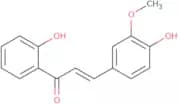
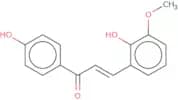
CAS:2-Iodo-N-(4-methoxyphenyl)-N-methylbenzamide is a versatile building block that can be used in research and as a reagent. It is a high quality chemical and useful as a building block or intermediate for the synthesis of more complex compounds. This chemical is also a useful scaffold for the synthesis of more complex molecules.Fórmula:C15H14INO2Pureza:Min. 95%Peso molecular:367.18 g/mol4',2-Dihydroxy-3-methoxychalcone
CAS:4,2-Dihydroxy-3-methoxychalcone is a fine chemical that is useful in the synthesis of various pharmaceuticals and other chemicals. It is a versatile building block that can be used as a reaction component or intermediate in the synthesis of complex compounds. 4,2-Dihydroxy-3-methoxychalcone has been shown to be a high quality reagent for use in the synthesis of speciality chemicals and research chemicals. This compound is also useful as a scaffold for the development of new drugs.
Fórmula:C16H14O4Pureza:Min. 95%Peso molecular:270.28 g/molBis(2-bromoethyl) Ether
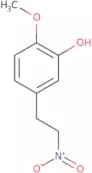
CAS:Fórmula:C4H8Br2OPureza:>98.0%(GC)Cor e Forma:Colorless to Yellow clear liquidPeso molecular:231.921-(3-Hydroxy-4-methoxyphenyl)-2-nitroethane
CAS:1-(3-Hydroxy-4-methoxyphenyl)-2-nitroethane is a chemical intermediate that can be used in the synthesis of other compounds. It is a fine chemical with many potential uses, as well as being a versatile building block for organic synthesis. As an example, 1-(3-Hydroxy-4-methoxyphenyl)-2-nitroethane can be used to synthesize the drug erythromycin. This chemical has been shown to have antihistamine and antiinflammatory properties.Fórmula:C9H11NO4Pureza:Min. 95%Peso molecular:197.19 g/mol4-Fluoro-3-methoxytoluene
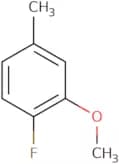
CAS:4-Fluoro-3-methoxytoluene (4FMET) is a polymeric organic compound that has an index of refraction of 1.5. It is soluble in common solvents, such as chloroform, acetone and ethanol, but insoluble in water. 4FMET can be used as a copolymerization additive to improve the chemical stability of polymers and plastics. It also has antibacterial properties that are due to its ability to disrupt bacterial membranes and inhibit protein synthesis. 4FMET is FDA approved for use in ophthalmic solutions that transmit ultraviolet light, such as UV-A or UV-B radiation.Fórmula:C8H9FOPureza:Min. 95%Cor e Forma:Clear LiquidPeso molecular:140.15 g/mol[3-Methyl-4-(2,2,2-trifluoro-ethoxy)-pyridin-2-yl]-methanol
CAS:[3-Methyl-4-(2,2,2-trifluoro-ethoxy)-pyridin-2-yl]-methanol is a synthetic organic compound that is used in the synthesis of other organic compounds. It can be purified by filtration or gasification and recrystallization.Pureza:Min. 95%Cor e Forma:Powder3,3'-Dimethoxyazoxybenzene
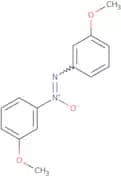
CAS:3,3'-Dimethoxyazoxybenzene is a nitroarene that has electron-donating properties. It reacts with primary amines to form azoxy groups in the presence of alkoxide. 3,3'-Dimethoxyazoxybenzene can be used for the synthesis of nitrophenyl and aniline derivatives by reaction with nitroarenes, alcohols, or amines. It can also serve as a photoreduced molecule in mechanistic studies.
Fórmula:C14H14N2O3Pureza:Min. 95%Peso molecular:258.27 g/mol2-[(4-Chlorophenyl)-2-pyridinylmethoxy]-N,N-dimethylethanamine maleate salt
CAS:Produto Controlado2-[(4-Chlorophenyl)-2-pyridinylmethoxy]-N,N-dimethylethanamine maleate salt (DCLM) is a controlled-release preparation of an antihistamine that is used for the relief of allergic symptoms. It is a prodrug that is hydrolyzed to 2-[(4-chlorophenyl)-2-pyridinylmethoxy]ethanol (DCPEM) in vivo. DCLM has been shown to be effective against viruses and has been found to have receptor activity in human serum. The drug can be administered either orally or by injection. DCLM has also been shown to suppress allergic symptoms in vitro with LC-MS/MS analysis.
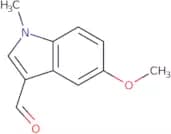
Fórmula:C20H23ClN2O5Pureza:Min. 95%Cor e Forma:White To Off-White SolidPeso molecular:406.86 g/mol5-Methoxy-1-methyl-1H-indole-3-carbaldehyde
CAS:5-Methoxy-1-methyl-1H-indole-3-carbaldehyde is a synthetic compound that has been shown to inhibit the growth of human tumour cells in vitro. This compound is a regioisomeric mixture of two enantiomers, with the (S) isomer being the more potent inhibitor. The (R) isomer was found to be less active against human tumour cells and may have an antimicrobial activity. 5-Methoxy-1-methyl-1H-indole-3-carbaldehyde has been shown to be bioreductive towards electron donors such as NADPH and glutathione. It also inhibits dt diaphorase and aerobic metabolism in human tumour cells.Fórmula:C11H11NO2Pureza:Min. 95%Cor e Forma:Off-White PowderPeso molecular:189.21 g/mol5,7-Dimethoxyindole
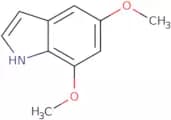
CAS:5,7-Dimethoxyindole is a potent inhibitor of the enzyme oxidase. 5,7-Dimethoxyindole has been shown to inhibit the growth of a number of fungi, including Phytophthora infestans and Cryptococcus neoformans. The molecular modeling studies have shown that this molecule can form an H-bond with the acceptor in the active site of the enzyme and prevent access by substrate. This inhibition has been shown to be competitive with respect to ferrous ions and noncompetitive with respect to other cofactors. 5,7-Dimethoxyindole also inhibits integrase enzymes, which are involved in DNA integration during viral replication. 5,7-Dimethoxyindole was found to bind to a pharmacophore model for integrase inhibitors and formylation reactions. This compound is also magnetic due to its high electron density at the methoxy group.
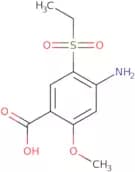
Fórmula:C10H11NO2Pureza:Min. 95%Cor e Forma:PowderPeso molecular:177.2 g/mol2-Methoxy-4-amino-5-ethylsulfonyl benzoic acid
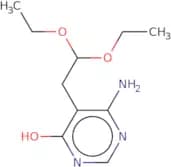
CAS:2-Methoxy-4-amino-5-ethylsulfonyl benzoic acid is a synthetic chemical that is used in wastewater treatment. It is also used as a precursor for the production of other chemicals, such as thiocyanates, peroxides, and bromoethanes. 2-Methoxy-4-amino-5-ethylsulfonyl benzoic acid can be produced by the reaction of hydrochloric acid with thionyl chloride. It reacts with aluminium to produce an acylation reaction that produces 2,2'-dithiodiethanol (DTE). The DTE can be reacted with an organic compound to produce a variety of products, including salicylic acid or bromoethanes.Fórmula:C10H13NO5SPureza:Min. 95%Cor e Forma:PowderPeso molecular:259.28 g/mol6-Amino-5(2,2-diethoxyethyl)-4-hydroxy pyrimidine
CAS:6-Amino-5(2,2-diethoxyethyl)-4-hydroxy pyrimidine is a reagent that is used in the synthesis of various chemical substances. It is a versatile building block and can be used as an intermediate for the production of fine chemicals. 6-Amino-5(2,2-diethoxyethyl)-4-hydroxy pyrimidine has been shown to have high reactivity and selectivity, making it a useful scaffold for organic synthesis. This compound can be used as an intermediate for the production of complex compounds such as pharmaceuticals, agrochemicals, or perfumes. 6-Amino-5(2,2-diethoxyethyl)-4-hydroxy pyrimidine is also known to be useful in research fields such as biology and medicine.Fórmula:C10H17N3O3Pureza:Min. 95%Cor e Forma:White PowderPeso molecular:227.26 g/mol6-Methoxy-1-methyl-1H-indole-3-carbaldehyde
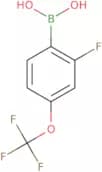
CAS:6-Methoxy-1-methyl-1H-indole-3-carbaldehyde is a high quality chemical that is used as a reagent, complex compound, useful intermediate, and speciality chemical. It is a fine chemical that has been shown to be useful as a building block in the synthesis of many other compounds. 6-Methoxy-1-methyl-1H-indole-3-carbaldehyde is also versatile and can be used in reactions involving nucleophilic substitution, reductive amination, and oxidative coupling.Fórmula:C11H11NO2Pureza:Min. 95%Cor e Forma:White PowderPeso molecular:189.21 g/mol2-Fluoro-4-trifluoromethoxyphenyl boronic acid
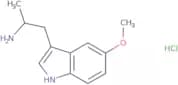
CAS:2-Fluoro-4-trifluoromethoxyphenyl boronic acid is a fine chemical that has been used as a building block in organic synthesis. It is also a versatile intermediate, which can be used for the preparation of complex compounds. The compound is soluble in methanol, ethanol, and THF. It has a CAS number of 503309-10-2 and was first synthesized in 1960.Fórmula:C7H5BF4O3Pureza:Min. 95%Cor e Forma:White PowderPeso molecular:223.92 g/mol5-Methoxy-3(2-aminopropyl)indole hydrochloride
CAS:Produto Controlado5-Methoxy-3(2-aminopropyl)indole hydrochloride is a useful reagent for the synthesis of complex compounds and a versatile building block for the preparation of speciality chemicals. It is used in the production of fine chemicals, such as reagents and intermediates. This compound also has potential use as a research chemical or as a reaction component in organic syntheses.Fórmula:C12H16N2O·HClPureza:Min. 95%Peso molecular:240.73 g/molMethyl 3,5-dibromo-2-methoxybenzoate
CAS:Methyl 3,5-dibromo-2-methoxybenzoate is a fine chemical that is useful as a scaffold for the preparation of a variety of compounds. It is also used as an intermediate in the synthesis of pharmaceuticals and research chemicals. Methyl 3,5-dibromo-2-methoxybenzoate can be used as a reaction component to generate complex compounds with high purity and quality. This compound has been classified as a speciality chemical and may be reclassified due to its usefulness in research.
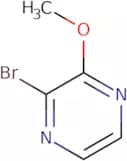
Fórmula:C9H8Br2O3Pureza:Min. 95%Peso molecular:323.97 g/mol2-Bromo-3-methoxypyrazine
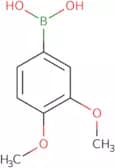
CAS:2-Bromo-3-methoxypyrazine is a chemical compound that is used as a precursor in the biosynthesis of geosmin. Geosmin, also known as 2-methylisoborneol or 2-MIB, is a volatile organic compound which has a musty or earthy smell. It is produced by some species of bacteria, including Myxobacterium and Chondromyces crocatus. It can be found in soil and water samples from areas with high levels of organic matter. 2-Bromo-3-methoxypyrazine was first isolated from cultures of M. crocatus in 1950. It can be synthesized from 3,4,5-trimethoxybenzaldehyde via bromination followed by reduction with sodium hydrosulfide. This process creates an intermediate called 2-(2'-bromoethyl)pyrazine, which undergoes methylation to create 2Fórmula:C5H5BrN2OPureza:Min. 95%Cor e Forma:White Off-White PowderPeso molecular:189.01 g/mol3,4-Dimethoxyphenylboronic acid
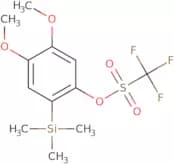
CAS:3,4-Dimethoxyphenylboronic acid is a boronate ester that has been shown to be an effective coupling partner for the Suzuki reaction. It has also been used in cancer therapy and as a photochemical probe for the study of biological properties. 3,4-Dimethoxyphenylboronic acid has been shown to demethylate DNA and inhibit methionine aminopeptidase activity. It also cross-couples with halides, such as chlorides or iodides, and activates tertiary alcohols. 3,4-Dimethoxyphenylboronic acid is soluble in organic solvents and can be used in supramolecular chemistry.Fórmula:C8H11BO4Pureza:Min. 95%Cor e Forma:White PowderPeso molecular:181.98 g/mol4,5-Dimethoxy-2-(trimethylsilyl)phenyl trifluoromethanesulfonate
CAS:4,5-Dimethoxy-2-(trimethylsilyl)phenyl trifluoromethanesulfonate is a reagent for the synthesis of propiolates. It is prepared by reacting methyl propiolate with tetrachloride, hexachloroethane, or tetrabromide in acetonitrile. The reactants are heated to reflux under argon and then cooled to room temperature. This product is an ionic liquid that can be used as a solvent. 4,5-Dimethoxy-2-(trimethylsilyl)phenyl trifluoromethanesulfonate is a zwitterion and reacts with amines to form quaternary ammonium salts. It can also be used for the synthesis of unactivated transition metal complexes by reacting it with palladium and amines.
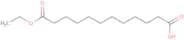
Fórmula:C12H17F3O5SSiPureza:Min. 95%Cor e Forma:Colorless PowderPeso molecular:358.41 g/mol11-Ethoxycarbonyldodecanoic acid
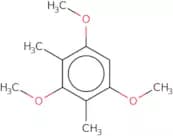
CAS:11-Ethoxycarbonyldodecanoic acid is a high quality, useful intermediate, and versatile building block. It has been shown to be an efficient reagent for the synthesis of complex compounds. 11-Ethoxycarbonyldodecanoic acid can be used as a speciality chemical or research chemical in the production of fine chemicals, as well as in the synthesis of useful scaffolds and building blocks. This compound is also a reaction component that can be used in the production of many different types of products.Fórmula:C14H26O4Pureza:Min. 95%Cor e Forma:PowderPeso molecular:258.35 g/mol2,4,6-Trimethoxy-m-xylene
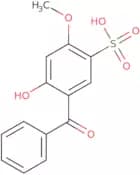
CAS:2,4,6-Trimethoxy-m-xylene is a methylated aromatic hydrocarbon that can be found in coal tar and oil. It is a stable compound that can be protonated by superacids such as arenium ion (H2SO4). The protonation of 2,4,6-trimethoxy-m-xylene leads to the formation of carbocations, which are electron deficient species. This radical cation has a resonance structure with three double bonds between carbon atoms. The resonance structure of the radical cation is stabilized by hyperconjugative interactions between the electron pair on oxygen and the empty p orbital on carbon.Fórmula:C11H16O3Pureza:Min. 95%Peso molecular:196.24 g/mol2-Hydroxy-4-methoxybenzophenone-5-sulfonic acid
CAS:2-Hydroxy-4-methoxybenzophenone-5-sulfonic acid is a diazonium salt that can be used as a reference standard to measure the microbial metabolism of aromatic compounds. It is stable in air and light, but can undergo photolysis in solution. The monosodium salt form of 2-hydroxy-4-methoxybenzophenone-5-sulfonic acid has been shown to have acute toxicities for fish, rats and rabbits. This compound also has photochemical properties that make it useful for surface methodology, such as determining the degree of hydrophobicity of various types of surfaces. Hydrochloric acid is needed for the preparation of this compound.Fórmula:C14H12O6SPureza:Min. 95%Cor e Forma:White To Yellow SolidPeso molecular:308.31 g/mol2',4-Dihydroxy-3-methoxychalcone
CAS:2',4-Dihydroxy-3-methoxychalcone is a chalcone that has been shown to have reactive properties. The compound was found to be cytotoxic to cancer cells in the presence of neutrophils, and it has been shown to inhibit the growth of t47d cells in culture. There is also evidence that 2',4-Dihydroxy-3-methoxychalcone may help regulate the microflora in the gut, which may help prevent obesity and diabetes. In epidemiological studies, 2',4-Dihydroxy-3-methoxychalcone was found to be protective against cancer, but more research is required.
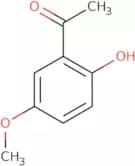
Fórmula:C16H14O4Pureza:Min. 95%Cor e Forma:PowderPeso molecular:270.28 g/mol2'-Hydroxy-5'-methoxyacetophenone
CAS:2'-Hydroxy-5'-methoxyacetophenone is a molecule that has been shown to have anticancer activity. It inhibits the production of molecules in cancer cells, such as carbonic anhydrase and nitric oxide synthase. This molecule also binds to DNA and prevents the transcription of genes involved in cell proliferation, including NF-κB DNA. 2'-Hydroxy-5'-methoxyacetophenone also has inhibitory properties on the growth of cancer cells, including MCF-7 cells.
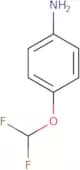
Fórmula:C9H10O3Pureza:Min. 95%Cor e Forma:Off-White PowderPeso molecular:166.17 g/mol4-Difluoromethoxyaniline
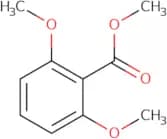
CAS:4-Difluoromethoxyaniline is an allosteric modulator for glutamate receptors. It is a chemical compound that can be used to modify glutamate receptors to act as either metabotropic or ionotropic. 4-Difluoromethoxyaniline is used in the treatment of Parkinson's disease and other movement disorders, such as dyskinesia. It has been shown that 4-difluoromethoxyaniline increases the activity of activated glutamate receptors, which leads to increased levels of the neurotransmitter dopamine in the brain. This drug may also inhibit nitric oxide production and corticotropin-releasing hormone (CRH) synthesis.Fórmula:C7H7F2NOPureza:Min. 95%Peso molecular:159.13 g/molMethyl 2,6-dimethoxybenzoate
CAS:Methyl 2,6-dimethoxybenzoate is a synthetic compound with a crystalline structure. It has been used as an antidepressant agent in clinical studies. Methyl 2,6-dimethoxybenzoate binds to the serotonin transporter and inhibits serotonin uptake. This molecule can also inhibit the reuptake of dopamine and norepinephrine by binding to their respective transporters. The compound has been shown to be effective in the treatment of depressive disorders in mice; however, it is not yet approved for use in humans. Methyl 2,6-dimethoxybenzoate is a stereoselective biphenyl that can be oriented so that its methyl group is oriented towards two hydrogen atoms on the opposite side of the plane of symmetry. This asymmetric orientation allows methyl 2,6-dimethoxybenzoate to show different properties depending on which side of the molecule interacts with other molecules. For example, when methyl 2,6-dimethFórmula:C10H12O4Pureza:Min. 95%Peso molecular:196.2 g/mol6-Ethoxypurine
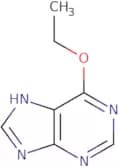
CAS:6-Ethoxypurine is a nucleoside analog that inhibits the enzyme ribonucleotide reductase, which converts ribonucleotides to deoxyribonucleotides. It is used in cell culture to measure the effects of radiation and hydrochloric acid on the production of ATP. 6-Ethoxypurine has been shown to inhibit influenza virus replication with an IC50 of 10 μM. This compound has reactive hydroxyl groups that allow it to participate in hydrogen bonding, which can be beneficial for interactions with other molecules. 6-Ethoxypurine also exhibits nucleophilic properties, which allows it to react with other chemical species and can be useful for generating new chemical compounds.Fórmula:C7H8N4OPureza:Min. 95%Cor e Forma:PowderPeso molecular:164.16 g/mol









![[3-Methyl-4-(2,2,2-trifluoro-ethoxy)-pyridin-2-yl]-methanol](/_next/image/?url=https%3A%2Fstatic.cymitquimica.com%2Fproducts%2F3D%2Fthumb-webp%2FFM38829.webp&w=3840&q=75)
![2-[(4-Chlorophenyl)-2-pyridinylmethoxy]-N,N-dimethylethanamine maleate salt](/_next/image/?url=https%3A%2Fstatic.cymitquimica.com%2Fproducts%2F3D%2Fthumb-webp%2FFC19699.webp&w=3840&q=75)