Organoborano
Os organoboranos são compostos orgânicos caracterizados pela presença de átomos de boro ligados ao carbono. Estes compostos são derivados da molécula BH3 e desempenham um papel importante em várias reações químicas, incluindo como intermediários na síntese orgânica. Na CymitQuimica, oferecemos uma ampla gama de organoboranos para apoiar suas necessidades de pesquisa e industriais. Nossos produtos são projetados para oferecer alto desempenho e confiabilidade em seus processos sintéticos.
Foram encontrados 6101 produtos de "Organoborano"
Ordenar por
Pureza (%)
0
100
|
0
|
50
|
90
|
95
|
100
N-(2-Aminoethyl)-3-aminopropylmethyldimethoxysilane
CAS:<p>N-(2-Aminoethyl)-3-aminopropylmethyldimethoxysilane is an antibacterial agent that inhibits the growth of bacteria by binding to the cell wall, thereby preventing the synthesis of proteins. It is used in dentistry and medicine as a coating for metal surfaces. This compound has been shown to be effective against Escherichia coli and Enterococcus faecalis. The optimum concentration for this compound is 1 mg/mL.</p>Fórmula:C8H22N2O2SiPureza:Min. 95%Peso molecular:206.36 g/mol3-Methyl-1H-indazol-5-yl-5-boronic acid
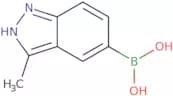
CAS:<p>Please enquire for more information about 3-Methyl-1H-indazol-5-yl-5-boronic acid including the price, delivery time and more detailed product information at the technical inquiry form on this page</p>Fórmula:C8H9BN2O2Pureza:Min. 95%Peso molecular:175.98 g/molEthylamine-boron trifluoride
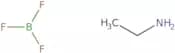
CAS:Produto Controlado<p>Ethylanine-boron trifluoride complex (EBTF) is a reactive intermediate that is used in the synthesis of epoxy resins. EBTF reacts with dibutyltin oxide to produce a boron-containing reaction product. The mechanism of this reaction has been studied using fluorescence probes and is found to be dependent on temperature and concentration. EBTF also reacts with epoxides, glycol ethers, and fatty acids to form similar products with different structures. This chemical can be used as a thermal expansion agent for coatings or as a crosslinking agent in polymers.</p>Fórmula:C2H7BF3NPureza:Min. 95%Cor e Forma:White To Off-White SolidPeso molecular:112.89 g/mol1-Methyl-3-(4,4,5,5-tetramethyl-1,3,2-dioxaborolan-2-yl)-1h-pyrazole
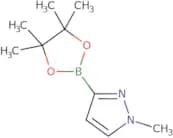
CAS:<p>1-Methyl-3-(4,4,5,5-tetramethyl-1,3,2-dioxaborolan-2-yl)-1h-pyrazole is a reagent in organic synthesis. It is an intermediate in the synthesis of pinacol esters and isomers thereof. 1-Methyl-3-(4,4,5,5-tetramethyl-1,3,2-dioxaborolan-2-yl)-1h pyrazole can be prepared by diazotization with sodium nitrite and hydrochloric acid followed by heating in an alcoholic solution of pinacol. The synthetic method for this compound has been described.br>br> The target product of this chemical reaction is pinacol ester. Pinacol esters are used as intermediates for the synthesis of many other compounds including pharmaceuticals and fragrances. Diazotization with sodium nitrite and hydrochlor</p>Fórmula:C10H17BN2O2Pureza:Min. 95%Peso molecular:208.07 g/mol(-)-B-Chlorodiisopinocampheylborane, 60% in Hexane, ca. 1.7mol/L
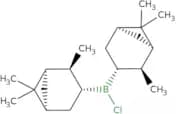
CAS:<p>(-)-B-Chlorodiisopinocampheylborane is a carbonyl group that can be used for asymmetric synthesis. It was synthesized from the reaction of chlorodiisopinocampheylborane with butyllithium and allyl bromide, followed by aqueous workup. The enantiomers were separated through thin layer chromatography on silica gel plates with hexane as the eluent. The resolution of racemic latanoprost lactol was achieved in the same manner. (-)-B-Chlorodiisopinocampheylborane is also a diketone that can be prepared from para-chloroacetophenone and sodium hydroxide in ethanol. This diketone undergoes an intramolecular cyclization to produce noradrenaline (norepinephrine) and hydrochloric acid, which can then be converted into dioxolanes or other products.</p>Fórmula:C20H34BClPureza:Min. 95%Cor e Forma:Clear LiquidPeso molecular:320.75 g/molTrichloro(1H,1H,2H,2H-heptadecafluorodecyl)silane
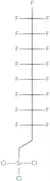
CAS:Produto Controlado<p>Trichloro(1H,1H,2H,2H-heptadecafluorodecyl)silane is a chemical substance that belongs to the group of synthetic substances. It has been shown to have antiviral properties in clinical studies. Trichloro(1H,1H,2H,2H-heptadecafluorodecyl)silane is used to synthesize thymidylate by a two-step process. The first step involves the hydrolysis of sodium hydroxide solution in the presence of hydroxide solution and chemical substances. The second step involves the reaction of synthase enzyme with waveform and water vapor to produce monolayer. This product also has antiviral activity against human pathogens such as HIV and herpes simplex virus type 1 (HSV-1).</p>Fórmula:C10H4Cl3F17SiPureza:Min. 95%Cor e Forma:Clear LiquidPeso molecular:581.56 g/mol(3-Chloropropyl)diphenylsulfonium tetrafluoroborate
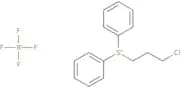
CAS:<p>Please enquire for more information about (3-Chloropropyl)diphenylsulfonium tetrafluoroborate including the price, delivery time and more detailed product information at the technical inquiry form on this page</p>Fórmula:C15H16ClS•BF4Pureza:Min. 95%Peso molecular:350.61 g/molTetrahydropyran-4-boronicacid
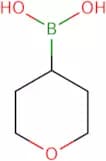
CAS:<p>Please enquire for more information about Tetrahydropyran-4-boronicacid including the price, delivery time and more detailed product information at the technical inquiry form on this page</p>Fórmula:C5H11BO3Pureza:Min. 95%Peso molecular:129.95 g/mol(2,4-Dimethylphenyl)boronic acid
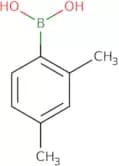
CAS:<p>(2,4-Dimethylphenyl)boronic acid is an arylboronic acid that is used in organic synthesis. The boron atom of the 2,4-dimethylphenyl group coordinates with the metal atom in the catalyst to form a stable complex. This allows for a multilayer reaction and fluorescence to occur. The activated fluorine atoms can be used to boost the reaction by adding them to the substrate and increasing the rate of oxidation. Astragalus membranaceus and rapeseed extracts have been shown to increase the rate of oxidation as well as inhibiting the formation of disaccharides. These extracts also have shown anti-inflammatory effects when tested on rats. (2,4-Dimethylphenyl)boronic acid has also been found to interact with dihydroisoquinolines, which are compounds that are structurally similar to morphine and codeine.</p>Fórmula:C8H11BO2Pureza:Min. 95%Peso molecular:149.98 g/molm-Carborane
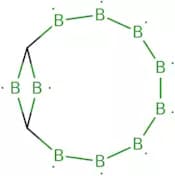
CAS:Produto Controlado<p>m-Carborane is a molecule that is composed of a chlorine atom and an aromatic hydrocarbon. m-Carborane has been shown to be an estrogen receptor modulator, which may have potential as a drug for the prevention or treatment of hormone-related diseases. This compound has also been shown to act as a fluorophore and to have high melting points. It forms hydrogen bonds with other molecules and can bind to progesterone receptors, which are found in breast cancer cells. These interactions have been studied using x-ray crystal structures and microscopy studies on MCF-7 cells.</p>Fórmula:C2H12B10Pureza:Min. 95%Cor e Forma:White powder(solid)Peso molecular:144.23 g/molE-Hexen-1-ylboronic acid
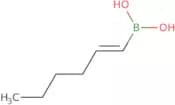
CAS:<p>E-Hexen-1-ylboronic acid is a reactive, boron-containing compound that can be used for Suzuki coupling reactions and metathesis reactions. It is also useful in the analysis of organic compounds, due to its ability to form brightly coloured complexes with metal ions. E-Hexen-1-ylboronic acid has been shown to react with chloride, reoxidant and hexane. This compound can be used as an analytical reagent for the detection of stereoselectively in a stepwise reaction. E-Hexen-1-ylboronic acid forms crystals x-ray diffraction patterns that are characteristic of a chair conformation.</p>Fórmula:C6H13BO2Pureza:Min. 95%Peso molecular:127.98 g/mol1-(difluoromethyl)-4-(4,4,5,5-tetramethyl-1,3,2-dioxaborolan
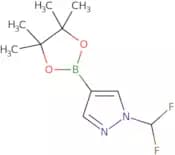
CAS:<p>Please enquire for more information about 1-(difluoromethyl)-4-(4,4,5,5-tetramethyl-1,3,2-dioxaborolan including the price, delivery time and more detailed product information at the technical inquiry form on this page</p>Fórmula:C10H15BF2N2O2Pureza:Min. 95%Peso molecular:244.05 g/molLithium tetrakis(pentafluorophenyl)borate ethyl etherate
CAS:Produto Controlado<p>Lithium tetrakis(pentafluorophenyl)borate ethyl etherate is a lithium salt of the etherate ester of pentafluorophenylboronic acid (B(C6F5)3). The complex is an electron donor and ligand, which can stabilize the high-energy intermediate state in the reaction. Lithium tetrakis(pentafluorophenyl)borate ethyl etherate reacts with magnesium to form a magnesium salt and ethylene. This product can be used as a co-catalyst for coupling reactions, such as the synthesis of cyclic compounds from alkenes.</p>Fórmula:C24BF20·(C4H10O)2·LiPureza:Min. 95%Peso molecular:760.11 g/molMesitylboronic acid
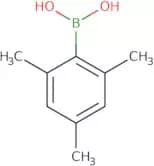
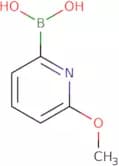
CAS:<p>Mesitylboronic acid is a divalent organoboron compound with the molecular formula CHB(O)OH. It is a white solid that is soluble in organic solvents, but not water. Mesitylboronic acid has been used for the palladium-catalyzed cross-coupling of aryl halides and vinylogous esters, yielding substituted pyridines. Mesitylboronic acid also catalyzes the Suzuki coupling reaction of aryl boronic acids and alkenes, producing substituted indoles. This compound has diagnostic applications due to its ability to form a fluorescent complex with certain metal ions. It also plays an important role in insulin resistance due to its ability to form cross-couplings with unsymmetrical boron compounds.</p>Fórmula:C9H13BO2Pureza:Min. 95%Peso molecular:164.01 g/mol6-Methoxypyridine-2-boronic acid
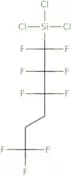
CAS:<p>6-Methoxypyridine-2-boronic acid is a boronate ligand that can be used to form coordination complexes with metals. It has been shown to interact with silver ions, which are the most effective ligands for enhancing the fluorescence of organic dyes. 6-Methoxypyridine-2-boronic acid is able to rigidify organic molecules by binding to their steric and electronic properties, making them more resistant to photodegradation. This property makes it an excellent candidate for the use in the development of fluorescent labels in analytical chemistry.</p>Fórmula:C6H8BNO3Pureza:Min. 95%Peso molecular:152.94 g/molNonafluorohexyltrichlorosilane
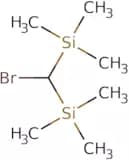
CAS:<p>Nonafluorohexyltrichlorosilane is a silicon-based surfactant that can be used as a surface treatment agent. It is hydrophilic and has excellent wetting properties. Nonafluorohexyltrichlorosilane is also an effective coagulant, which makes it useful for the treatment of wastewater containing suspended solids. This agent can be used to coat surfaces with silicon to make them more hydrophobic, making it useful in the production of photoreceptors, emulsions, and immobilized cell culture. The chemical structure of Nonafluorohexyltrichlorosilane allows it to be easily synthesized by the reaction between chlorosilanes and alcohols.</p>Fórmula:C6H4Cl3F9SiPureza:Min. 95%Cor e Forma:Clear LiquidPeso molecular:381.53 g/molBis(trimethylsilyl)bromomethane
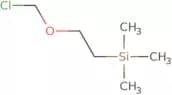
CAS:<p>Bis(trimethylsilyl)bromomethane is an alkali metal compound that is a multinuclear, crystalline solid. It has an x-ray diffraction pattern with peaks at 30, 39, and 44 degrees. The elemental analysis of the compound shows it to be composed of carbon and hydrogen. Bis(trimethylsilyl)bromomethane is a tetrahydrofuran derivative that can be alkylated or silylated with metal compounds. This compound has been shown to have coordination properties when combined with potassium. The molecular structure of bis(trimethylsilyl)bromomethane is composed of two trimethylsiloxy groups linked together by one bromine atom.</p>Fórmula:C7H19BrSi2Pureza:Min. 95%Cor e Forma:Clear LiquidPeso molecular:239.3 g/mol2-(Chloromethoxyethyl)trimethyl silane - stabilized with ca. 0.1% Diisopropylethylamine
CAS:<p>Silyl protecting group for alcohols; reagent for introducing protected C atom</p>Fórmula:C6H15ClOSiPureza:Min. 95%Cor e Forma:Colorless Clear LiquidPeso molecular:166.72 g/mol4-(Ethoxycarbonyl)phenylboronic acid
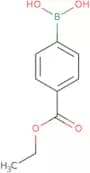
CAS:<p>4-(Ethoxycarbonyl)phenylboronic acid is a potential use for picric acid detection. It has been shown to be a chemosensor with an electrochemical impedance spectroscopy response that is sensitive to chloride ions. 4-(Ethoxycarbonyl)phenylboronic acid can be used as a linker in multigram-scale synthesis of aryl halides, and its reaction mechanism has been elucidated by crystal x-ray diffraction. The synthesis of this compound is scalable and involves the formation of an apical carboxylate from ethoxycarbonyl phenyl boronic acid and an aryl halide.</p>Fórmula:C9H11BO4Pureza:Min. 95%Cor e Forma:PowderPeso molecular:193.99 g/mol4-Isopropoxyphenylboronic acid
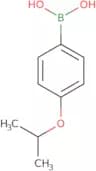
CAS:<p>4-Isopropoxyphenylboronic acid is a boronic acid that can be used as a cross-coupling partner in palladium-catalyzed cross-coupling reactions. It is synthesized by reacting 4-hydroxyphenylacetic acid with 2 equivalents of naphthoquinone diazide. The addition of the 4-isopropoxy group to the phenyl substituent increases the reactivity of this boronic acid. This compound has been used in the synthesis of rofecoxib and cyclooxygenase inhibitors, such as aspirin and ibuprofen. The presence of an electron withdrawing group on one phenyl ring enhances the reactivity of this boronic acid towards nucleophiles, such as amines or alcohols.</p>Fórmula:C9H13BO3Pureza:Min. 95%Peso molecular:180.01 g/mol