Organoborano
Os organoboranos são compostos orgânicos caracterizados pela presença de átomos de boro ligados ao carbono. Estes compostos são derivados da molécula BH3 e desempenham um papel importante em várias reações químicas, incluindo como intermediários na síntese orgânica. Na CymitQuimica, oferecemos uma ampla gama de organoboranos para apoiar suas necessidades de pesquisa e industriais. Nossos produtos são projetados para oferecer alto desempenho e confiabilidade em seus processos sintéticos.
Foram encontrados 6101 produtos de "Organoborano"
Ordenar por
Pureza (%)
0
100
|
0
|
50
|
90
|
95
|
100
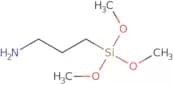
3-Aminopropyltrimethoxysilane
CAS:<p>3-Aminopropyltrimethoxysilane is a chemical that belongs to the group of aminopropyltriethoxysilanes. It is a reactive substance and is commonly used as an additive in adhesives and sealants. 3-Aminopropyltrimethoxysilane has been shown to be an efficient coupling agent for the formation of hydroxyl groups on nanoparticles, which are then used as drug carriers. The optimum concentration of 3-aminopropyltrimethoxysilane lies between 0.01 and 0.1 M, with a pH range of 6 and 8. This chemical can react with hydrochloric acid, resulting in the production of hydrogen gas; with cervical cancer cells in culture, leading to cell death; or with skin cells, causing damage to their transport properties.</p>Fórmula:C6H17NO3SiPureza:Min. 95%Cor e Forma:Clear LiquidPeso molecular:179.29 g/mol(1H-Benzo[d][1,2,3]triazol-5-yl)boronic acid
CAS:<p>Please enquire for more information about (1H-Benzo[d][1,2,3]triazol-5-yl)boronic acid including the price, delivery time and more detailed product information at the technical inquiry form on this page</p>Fórmula:C6H6BN3O2Pureza:Min. 95%Peso molecular:162.94 g/mol4-(Hydroxymethyl)phenylboronic acid
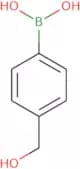
CAS:<p>4-(Hydroxymethyl)phenylboronic acid is an organic compound that has been identified as a reactive, fatty acid. It has shown antibacterial efficacy against gram-positive and gram-negative bacteria in the presence of nanogels. 4-(Hydroxymethyl)phenylboronic acid is also a cross-linking agent that can be used to form hydrogels for tissue engineering applications. This chemical is being studied as a potential treatment for inflammatory bowel disease and diabetes mellitus. 4-(Hydroxymethyl)phenylboronic acid has been shown to have anti-cancer properties by inhibiting the proliferation of cancer cells and inducing apoptosis. The molecule also undergoes structural analysis using confocal microscopy.</p>Fórmula:C7H9BO3Peso molecular:151.96 g/molTetramethylammonium triacetoxyborohydride
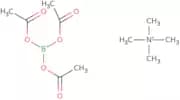
CAS:<p>Tetramethylammonium triacetoxyborohydride is a potent antagonist that binds to the active site of hydrogen-bond forming enzymes. It is used in the treatment of bowel disease, as well as other diseases such as cancer, diabetic neuropathy and inflammatory bowel disease. Tetramethylammonium triacetoxyborohydride has been shown to inhibit the growth of certain bacteria by inhibiting their ability to form hydrogen bonds. This chemical can also be used in asymmetric synthesis, which is the process of synthesizing only one enantiomer from a racemic mixture. Tetramethylammonium triacetoxyborohydride can function as an organocatalyst for this process by activating achiral substrates into chiral ones.</p>Fórmula:C10H22BNO6Pureza:Min. 95%Cor e Forma:White PowderPeso molecular:263.1 g/molε-Carotene
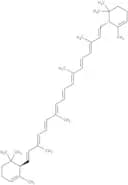
CAS:<p>Epsilon-Carotene is a carotenoid that is found in plants. It is synthesized from beta-carotene through the action of enzymes called beta-carotene ketolases. Epsilon-Carotene can be cleaved by enzymes to produce lycopene and beta-cryptoxanthin. The biosynthesis of Epsilon-Carotene has been studied in a number of clinical studies, including the effect on human tissues and the prevention of cancer. Epsilon-Carotene has also been shown to have anti-inflammatory properties, which may be due to its ability to inhibit prostaglandin synthesis.</p>Fórmula:C40H56Pureza:Min. 95%Peso molecular:536.87 g/mol2-(Dimethylaminocarbonyl)ethylboronic acid, pinacol ester
CAS:<p>Please enquire for more information about 2-(Dimethylaminocarbonyl)ethylboronic acid, pinacol ester including the price, delivery time and more detailed product information at the technical inquiry form on this page</p>Fórmula:C11H22BNO3Pureza:Min. 95%Peso molecular:227.11 g/molBoron carbide - 10um particle size
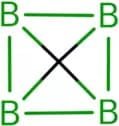
CAS:Produto Controlado<p>Boron carbide is a hard, refractory material with high melting point. It is used in the production of ceramic and as a catalyst. Boron carbide has been shown to be effective in the treatment of wastewater due to its ability to adsorb organic matter and heavy metals. Boron carbide also has thermal expansion properties that make it suitable for use in various engineering applications. Boron carbide is composed of boron and carbon atoms, which interact through steric effects. The nitrogen atoms on the surface of boron carbide particles are responsible for its reactivity with other materials, such as silicon or zirconium oxide. The kinetic energy of the reaction mechanism can be determined by examining the surface methodology of boron carbide particles with a microscope.</p>Fórmula:B4CPureza:Min. 95%Peso molecular:55.25 g/mol(5-Chloropyridin-3-yl)boronic acid
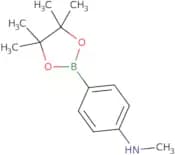
CAS:<p>Please enquire for more information about (5-Chloropyridin-3-yl)boronic acid including the price, delivery time and more detailed product information at the technical inquiry form on this page</p>Fórmula:C5H5BClNO2Pureza:Min. 95%Peso molecular:157.36 g/mol4-(N-Methylamino)phenylboronic acid pinacol ester
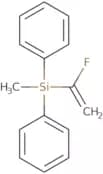
CAS:<p>Please enquire for more information about 4-(N-Methylamino)phenylboronic acid pinacol ester including the price, delivery time and more detailed product information at the technical inquiry form on this page</p>Fórmula:C13H20BNO2Pureza:Min. 95%Peso molecular:233.11 g/mol(1-Fluorovinyl)methyldiphenylsilane
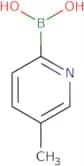
CAS:<p>1-Fluorovinylmethyldiphenylsilane is a reactive, cross-coupling reagent that is used to synthesize organofluorine compounds. It reacts with nucleophiles such as sulfoxides, peroxides, halides, and amines to form an organofluorine compound. The nucleophile can be either in the presence or absence of hydrogen peroxide as a catalyst. The product of this reaction can be a sulfoxide, peroxide, or amine. 1-Fluorovinylmethyldiphenylsilane has been shown to react with nitro groups and iodides to form organofluorine compounds. 1-Fluorovinylmethyldiphenylsilane is soluble in organic solvents such as hexane and chloroform. This reagent should not be stored in metal containers because it will react with them spontaneously.</p>Fórmula:C15H15FSiPureza:Min. 95%Peso molecular:242.36 g/mol5-Methylpyridine-2-boronicacid
CAS:<p>Please enquire for more information about 5-Methylpyridine-2-boronicacid including the price, delivery time and more detailed product information at the technical inquiry form on this page</p>Fórmula:C6H8BNO2Pureza:Min. 95%Peso molecular:136.94 g/molN-(2-Aminoethyl)-3-aminopropylmethyldimethoxysilane
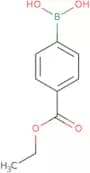
CAS:<p>N-(2-Aminoethyl)-3-aminopropylmethyldimethoxysilane is an antibacterial agent that inhibits the growth of bacteria by binding to the cell wall, thereby preventing the synthesis of proteins. It is used in dentistry and medicine as a coating for metal surfaces. This compound has been shown to be effective against Escherichia coli and Enterococcus faecalis. The optimum concentration for this compound is 1 mg/mL.</p>Fórmula:C8H22N2O2SiPureza:Min. 95%Peso molecular:206.36 g/mol4-(Ethoxycarbonyl)phenylboronic acid
CAS:<p>4-(Ethoxycarbonyl)phenylboronic acid is a potential use for picric acid detection. It has been shown to be a chemosensor with an electrochemical impedance spectroscopy response that is sensitive to chloride ions. 4-(Ethoxycarbonyl)phenylboronic acid can be used as a linker in multigram-scale synthesis of aryl halides, and its reaction mechanism has been elucidated by crystal x-ray diffraction. The synthesis of this compound is scalable and involves the formation of an apical carboxylate from ethoxycarbonyl phenyl boronic acid and an aryl halide.</p>Fórmula:C9H11BO4Pureza:Min. 95%Cor e Forma:PowderPeso molecular:193.99 g/mol(trans)-2-Cyclopropylvinylboronic acid pinacol ester
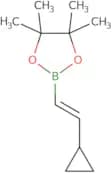
CAS:<p>Please enquire for more information about (trans)-2-Cyclopropylvinylboronic acid pinacol ester including the price, delivery time and more detailed product information at the technical inquiry form on this page</p>Fórmula:C11H19BO2Pureza:Min. 95%Peso molecular:194.08 g/molChlorodimethyl(3,3,4,4,5,5,6,6,7,7,8,8,8-Tridecafluorooctyl)-Silane
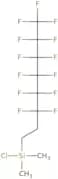
CAS:<p>Chlorodimethyl(3,3,4,4,5,5,6,6,7,7,8,8,8-Tridecafluorooctyl)-Silane is an organic solvent that can be used as a component in the synthesis of synaptic membranes. It has been shown to inhibit spontaneous activity in rat brain slices and exhibits high hydrophobicity. Chlorodimethyl(3,3,4,4,5,5,6,6) - Silane has been used for the patch-clamp technique on human erythrocytes and the immunostaining of proteins. This compound is also useful for the optimization of organic reactions and asymmetric synthesis.</p>Fórmula:C10H10ClF13SiPureza:Min. 95%Peso molecular:440.7 g/mol6-Methoxypyridine-2-boronic acid
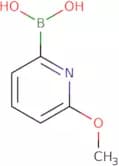
CAS:<p>6-Methoxypyridine-2-boronic acid is a boronate ligand that can be used to form coordination complexes with metals. It has been shown to interact with silver ions, which are the most effective ligands for enhancing the fluorescence of organic dyes. 6-Methoxypyridine-2-boronic acid is able to rigidify organic molecules by binding to their steric and electronic properties, making them more resistant to photodegradation. This property makes it an excellent candidate for the use in the development of fluorescent labels in analytical chemistry.</p>Fórmula:C6H8BNO3Pureza:Min. 95%Peso molecular:152.94 g/mol1-(4-Fluorophenyl)pyrazole-4-boronic acid
CAS:<p>Please enquire for more information about 1-(4-Fluorophenyl)pyrazole-4-boronic acid including the price, delivery time and more detailed product information at the technical inquiry form on this page</p>Fórmula:C9H8BFN2O2Pureza:Min. 95%Peso molecular:205.98 g/mol1-Methyl-3-(4,4,5,5-tetramethyl-1,3,2-dioxaborolan-2-yl)-1h-pyrazole
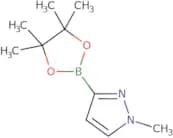
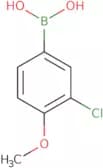
CAS:<p>1-Methyl-3-(4,4,5,5-tetramethyl-1,3,2-dioxaborolan-2-yl)-1h-pyrazole is a reagent in organic synthesis. It is an intermediate in the synthesis of pinacol esters and isomers thereof. 1-Methyl-3-(4,4,5,5-tetramethyl-1,3,2-dioxaborolan-2-yl)-1h pyrazole can be prepared by diazotization with sodium nitrite and hydrochloric acid followed by heating in an alcoholic solution of pinacol. The synthetic method for this compound has been described.br>br> The target product of this chemical reaction is pinacol ester. Pinacol esters are used as intermediates for the synthesis of many other compounds including pharmaceuticals and fragrances. Diazotization with sodium nitrite and hydrochlor</p>Fórmula:C10H17BN2O2Pureza:Min. 95%Peso molecular:208.07 g/mol3-Chloro-4-methoxyphenylboronic acid
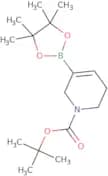
CAS:<p>Please enquire for more information about 3-Chloro-4-methoxyphenylboronic acid including the price, delivery time and more detailed product information at the technical inquiry form on this page</p>Fórmula:C7H8BClO3Pureza:Min. 95%Peso molecular:186.4 g/moltert-Butyl 3-(4,4,5,5-tetramethyl-1,3,2-dioxaborolan-2-yl)-5,6-dihydropyridine-1(2H)-carboxylate
CAS:<p>tert-Butyl 3-(4,4,5,5-tetramethyl-1,3,2-dioxaborolan-2-yl)-5,6-dihydropyridine-1(2H)-carboxylate is a chemical compound that is used as a reagent in organic synthesis. It is also used as a building block for the preparation of other compounds. This compound can be used in the synthesis of complex molecules such as heterocycles and natural products.</p>Fórmula:C16H28BNO4Pureza:Min. 95%Cor e Forma:PowderPeso molecular:309.21 g/mol

![(1H-Benzo[d][1,2,3]triazol-5-yl)boronic acid](/_next/image/?url=https%3A%2Fstatic.cymitquimica.com%2Fproducts%2F3D%2Fthumb-webp%2FFB141627.webp&w=3840&q=75)