Organoborano
Os organoboranos são compostos orgânicos caracterizados pela presença de átomos de boro ligados ao carbono. Estes compostos são derivados da molécula BH3 e desempenham um papel importante em várias reações químicas, incluindo como intermediários na síntese orgânica. Na CymitQuimica, oferecemos uma ampla gama de organoboranos para apoiar suas necessidades de pesquisa e industriais. Nossos produtos são projetados para oferecer alto desempenho e confiabilidade em seus processos sintéticos.
Foram encontrados 6101 produtos de "Organoborano"
Ordenar por
Pureza (%)
0
100
|
0
|
50
|
90
|
95
|
100
Benzopyrazine-6-boronic acidHCl
CAS:<p>Please enquire for more information about Benzopyrazine-6-boronic acidHCl including the price, delivery time and more detailed product information at the technical inquiry form on this page</p>Fórmula:C8H8BClN2O2Pureza:Min. 95%Peso molecular:210.43 g/mol(2-Chlorophenyl)boronic acid
CAS:<p>2-Chlorophenylboronic acid is a diphenyl ether that can be used as a building block for the synthesis of benzodiazepine receptor ligands. It has been shown to be an efficient nucleophile, leading to the formation of carbonyl groups in the presence of halides. 2-Chlorophenylboronic acid has also been shown to inhibit p38 kinase activity and may be useful for anticancer therapy.</p>Fórmula:C6H6BClO2Pureza:Min. 95%Peso molecular:156.37 g/mol4-(tert-Butyldimethylsilyloxymethyl)pyridine
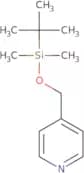
CAS:<p>4-(tert-Butyldimethylsilyloxymethyl)pyridine is a reagent that is used to prepare stoichiometric quantities of triethyloxonium ions in the presence of catalytic amounts of palladium. 4-(tert-Butyldimethylsilyloxymethyl)pyridine is also used as an anticancer agent, which may be due to its ability to inhibit cell proliferation and induce apoptosis. This compound has been shown to prevent the growth of micellar structures and reduce the rate of ester hydrolysis. It also has the ability to convert into two enantiomers, one with a hydroxyl group on the methylene carbon at position 4 and another with an alcohol group on this same carbon.</p>Fórmula:C12H21NOSiPureza:Min. 95%Cor e Forma:Yellow LiquidPeso molecular:223.39 g/molEthylammonium Tetrafluoroborate
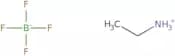
CAS:Produto Controlado<p>Ethylammonium tetrafluoroborate is an ionic liquid that is a colorless, nonvolatile liquid at room temperature. It has a melting point of -9 °C and a boiling point of 230 °C. This compound is soluble in water and organic solvents, but insoluble in diethyl ether. Ethylammonium tetrafluoroborate can be used as an electrolyte for lithium-ion batteries. The reversible oxidation reaction of ethylammonium tetrafluoroborate can be catalyzed by the addition of fluorine or carbonyl groups to the molecule. The NMR spectra of ethylammonium tetrafluoroborate show that it contains an alcohol group with a phase transition temperature near 35 °C and an activation energy near 15 kJ/mol. This compound also undergoes polymerization reactions with various types of monomers, such as vinyl acetate and methyl methacrylate,</p>Fórmula:C2H7BF4NPureza:Min. 95%Cor e Forma:PowderPeso molecular:131.89 g/mol4-Methoxybenzylboronic acid pinacolester
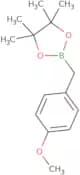
CAS:<p>Please enquire for more information about 4-Methoxybenzylboronic acid pinacolester including the price, delivery time and more detailed product information at the technical inquiry form on this page</p>Fórmula:C14H21BO3Pureza:Min. 95%Peso molecular:248.13 g/mol1H-Indazole-5-boronic acid
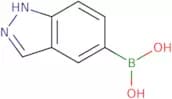
CAS:<p>1H-Indazole-5-boronic acid is a potent compound that belongs to the class of indazole compounds. It has been shown to inhibit protein phosphorylation and induce morphological changes in cells. This compound also inhibits the activity of a number of different cellular enzymes, including protein phosphatases, protein kinases, and protein tyrosine phosphatases. 1H-Indazole-5-boronic acid has been shown to be a promising lead compound for the discovery of novel inhibitors of these enzymes.</p>Fórmula:C7H7BN2O2Pureza:Min. 95%Peso molecular:161.95 g/mol4-Chlorophenylboronic acid
CAS:<p>4-Chlorophenylboronic acid is a chemical compound that is used in the industrial preparation of biphenyl. It is produced by the Friedel-Crafts reaction between chlorine and 4-methoxyphenylboronic acid. This reaction can be carried out using a variety of solvents, such as chloroform or carbon tetrachloride. The optimal reaction conditions are acidic pH values, which are achieved by adding sodium carbonate to the solution. The product can be purified by distillation or crystallization. 4-Chlorophenylboronic acid can also be used for the synthesis of organic compounds through cross-coupling reactions with organometallic reagents, such as palladium chloride and triphenylphosphine, or through asymmetric synthesis with chiral ligands like (S)-proline and 2-(diphenylphosphino)ferrocene.</p>Fórmula:C6H6BClO2Pureza:Min. 95%Cor e Forma:PowderPeso molecular:156.37 g/mol(3-Bromopropyl)trimethoxysilane
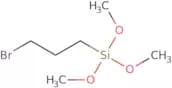
CAS:<p>3-Bromopropyltrimethoxysilane is a divalent hydrocarbon that has been used as a model compound for the study of detection methods. It has been shown to have biocompatible properties and can be used as an immobilization template molecule. 3-Bromopropyltrimethoxysilane also reacts with pyridinium ions to form complexes that are highly stable. The stability of these complexes can be attributed to the functional groups on the pyridine ring, which are more susceptible to hydrolysis than those on the silica surface. 3-Bromopropyltrimethoxysilane is a substrate for nitrate reductase enzymes, resulting in inhibition of growth at concentrations low enough not to cause cytotoxicity.</p>Fórmula:C6H15BrO3SiPureza:Min. 95%Peso molecular:243.17 g/mol4-Methoxyphenyl boronic acid
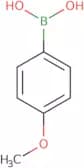
CAS:<p>4-Methoxyphenyl boronic acid is a molecule with a hydroxyl group and a boronic acid. It is synthesized by reacting biphenyl with trifluoroacetic acid in the presence of sodium carbonate and palladium-catalyzed coupling. 4-Methoxyphenyl boronic acid has shown to bind to the receptor for fatty acids, which may be due to its structural similarity to p-hydroxybenzoic acid. The protonated form of this molecule has been shown to react with an electrophilic carbon atom and an electron-deficient alkyl or vinyl halide, resulting in ring formation. This reaction is known as the Suzuki coupling reaction.</p>Fórmula:C7H9BO3Pureza:Min. 95%Cor e Forma:PowderPeso molecular:151.96 g/mol3-Methoxyphenylboronic acid
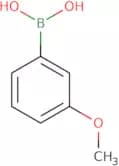
CAS:<p>3-Methoxyphenylboronic acid is a photophysical molecule that can be used as an analytical reagent in plant physiology and analytical chemistry. 3-Methoxyphenylboronic acid reacts reversibly with copper ions to form a complex. The binding constants of the copper complex depend on the pH of the solution, which can be altered by adding a phosphate derivative to the solution. This reaction was investigated using cross-coupling techniques and showed that the binding constants for this complex are dependent on the type of solvent used. 3-Methoxyphenylboronic acid has also been used to measure glucose levels in blood samples.</p>Fórmula:C7H9BO3Pureza:Min. 95%Cor e Forma:White PowderPeso molecular:151.96 g/molPeptide ε
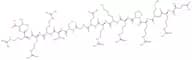
CAS:<p>Peptide epsilon is a diacylglycerol that inhibits protein synthesis. It binds to the cytosolic protein and inhibits the activity of the cytosolic protein, which is required for cell proliferation. Activated cells are then killed by apoptosis. Peptide epsilon has been shown to inhibit tubule cells by binding with the basic protein in the tubule cells and inhibiting cell proliferation. Peptide epsilon also binds with cytosolic protein and inhibits its activity, leading to inhibition of cell proliferation. This drug has been shown to be a potent inhibitor of cell proliferation in fetal bovine kidney cells and human lung cancer cells.</p>Fórmula:C83H155N39O21SPureza:Min. 95%Peso molecular:2,067.44 g/molHexamethylcyclotrisiloxane
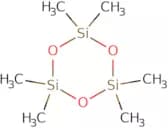
CAS:<p>Used for preparation of graft and block polymers</p>Fórmula:C6H18O3Si3Pureza:Min. 98%Cor e Forma:White PowderPeso molecular:222.46 g/mol(R)-(+)-2-Methyl-CBS-oxazaborolidine
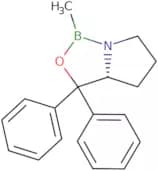
CAS:<p>(R)-(+)-2-Methyl-CBS-oxazaborolidine is a dpp-iv inhibitor that is a β-unsaturated ketone. It has been shown to inhibit the enzyme histone lysine demethylase, which may be involved in the regulation of bone mass. This compound also has a pharmacokinetic profile that is characterized by high oral bioavailability, low plasma protein binding, and rapid metabolism by liver enzymes. The reaction mechanism for this compound is based on the formation of an enolate carbanion. (R)-(+)-2-Methyl-CBS-oxazaborolidine can be synthesized with high stereoselectivity and yields from reactions with simple starting materials. This synthetic route also has a number of advantages over other methods: it does not require any protecting groups, it does not use toxic solvents such as dichloromethane or chloroform, and it can be performed in anhydrous conditions</p>Fórmula:C18H20BNOPureza:Min. 95%Cor e Forma:SolidPeso molecular:277.17 g/mol2-Chloropyridine-4-boronic acid
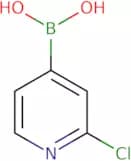
CAS:<p>2-Chloropyridine-4-boronic acid is a nicotinic acetylcholine receptor antagonist that has been shown to be effective against trypanosomiasis. It blocks the binding of acetylcholine to its receptor, which prevents the propagation of an action potential in the postsynaptic cell. 2-Chloropyridine-4-boronic acid inhibits the enzymes cyclooxygenase and prostaglandin synthase, which are involved in inflammation. 2-Chloropyridine-4-boronic acid is potent and selective for nicotinic acetylcholine receptors, but it also binds to other sites on the enzyme. The molecular modeling studies have shown that this compound has a pharmacophore that can be used as a guide for drug design.</p>Fórmula:C5H5BClNO2Pureza:Min. 95%Peso molecular:157.36 g/mol(Chlorodifluoromethyl)trimethylsilane
CAS:<p>(Chlorodifluoromethyl)trimethylsilane is a chlorinating agent that is used for the transfer of chlorine to organic compounds. The activated chlorides are converted to aldehydes, which are then reacted with terminal alkynes in the presence of sodium carbonate to produce (chlorodifluoromethyl)trimethylsilanes. This reaction produces an organosilicon compound that has been shown to inhibit certain enzymes, such as lipases and proteases. Chlorodifluoromethyl)trimethylsilane also has bioisosteres, or structural analogs, with other halogens. It can be prepared by irradiation of chlorodichloromethane at room temperature in the presence of a catalyst.</p>Fórmula:C4H9ClF2SiPureza:Min. 95%Cor e Forma:Colorless PowderPeso molecular:158.65 g/molN-α-Fmoc-Nε-allyloxycarbonyl-D-lysine
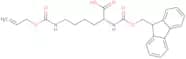
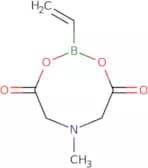
CAS:<p>N-alpha-Fmoc-Nepsilon-allyloxycarbonyl-D-lysine is a medicament that is modified with an amino group at the alpha position. It is synthesized by modification of the chain with a ganirelix acetate. N-alpha-Fmoc-Nepsilon-allyloxycarbonyl-D-lysine can be used to produce ganirelix, which inhibits the release of follicle stimulating hormone (FSH). The chemical synthesis of this drug has been shown to be successful in large scale production, and it has been shown to be effective in treating patients with prostate cancer. Impurities in this drug have been found and treated by removing the methyl ester group from the lysine residue.</p>Fórmula:C25H28N2O6Pureza:Min. 95%Peso molecular:452.5 g/molVinylboronic acid MIDA ester
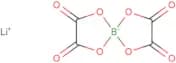
CAS:<p>Vinylboronic acid MIDA ester is a boronic ester that can be used as an additive to control weeds. It is a mixture of two diastereomers, with the vinyl group on one end of the molecule and the boron atom on the other. Vinylboronic acid MIDA ester has been shown to be more effective than methoxy for weed control, with yields of up to 100%. The addition of this compound to herbicides increases their activity against weeds, which may be due to its ability to increase the solubility of active ingredients.</p>Fórmula:C7H10BNO4Pureza:Min. 95%Peso molecular:182.97 g/molLithium bis(oxalato)borate
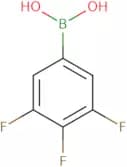
CAS:<p>Lithium bis(oxalato)borate (LBBO), also known as Lithiumbis(oxalato)borate, is a lithium salt of the borate ester. The optimum concentration for LBBO is 1-2 mol/L. LBBO is soluble in water and reacts with glycol esters to form lithium glycolates. This reaction is reversible and the equilibrium can be shifted by changing the temperature or pressure. The NMR spectra of LBBO show a peak at 3.3 ppm which corresponds to the carbon atom attached to the carbonyl group, which is indicative of an organic solution.<br>LBBO has been shown to be an electrolyte for lithium ion batteries but it has not been studied extensively because it decomposes at temperatures above 400°C and exhibits poor transport properties, limiting its application in electronic devices.</p>Fórmula:C4BO8•LiPureza:Min. 95%Peso molecular:193.79 g/mol(3,4,5-Trifluorophenyl)boronic acid
CAS:<p>The trifluorophenylboronic acid is a boronic acid that has been used in the synthesis of vitamin B12. This compound is often used as a catalyst for the Suzuki coupling reaction. It can also be used to synthesize amides and synthons. The trifluorophenylboronic acid is soluble in water, ethanol, and acetone. The pH of the solution depends on the type of base added. For example, when an amine is added to the solution, it increases to approximately 8-9. When a p-hydroxybenzoic acid is added to the solution, it decreases to approximately 2-3.</p>Fórmula:C6H4BF3O2Pureza:Min. 95%Cor e Forma:PowderPeso molecular:175.9 g/molFITC-epsilonAhx-Antennapedia Homeobox (43-58) amide trifluoroacetate salt
CAS:<p>Please enquire for more information about FITC-epsilonAhx-Antennapedia Homeobox (43-58) amide trifluoroacetate salt including the price, delivery time and more detailed product information at the technical inquiry form on this page</p>Fórmula:C131H191N37O25S2Pureza:Min. 95%Peso molecular:2,748.28 g/mol