Nitro
Os compostos nitro são moléculas orgânicas que contêm um ou mais grupos nitro (NO2). Estes compostos são amplamente utilizados na síntese de explosivos, produtos farmacêuticos e corantes. Na CymitQuimica, oferecemos uma ampla gama de compostos nitro de alta qualidade para apoiar suas aplicações de pesquisa e industriais, garantindo resultados seguros e eficazes. Nossa seleção inclui uma variedade de compostos nitro adequados para diferentes sínteses químicas e aplicações.
Foram encontrados 2516 produtos de "Nitro"
Ordenar por
Pureza (%)
0
100
|
0
|
50
|
90
|
95
|
100
2-(2-Nitroanilino)ethanol
CAS:Produto Controlado<p>Applications 2-(2-Nitroanilino)ethanol is used in the preparation of (phenylamino)quinoxalinone derivatives which has been identified as a new class of glycogen phosphorylase inhibitors.<br>References Dudash, J., et al.: Bioorg. Med. Chem. Lett., 21, 4790 (2005); Hellerstein, M., et al.: J. Clin. Invest. 100, 1305 (1994)<br></p>Fórmula:C8H10N2O3Cor e Forma:Dark Red To RedPeso molecular:182.18N,N-Diethyl-4-nitroaniline
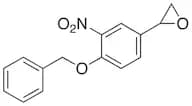
CAS:Produto Controlado<p>Applications N,N-Diethyl-4-nitroaniline<br></p>Fórmula:C10H14N2O2Cor e Forma:Light Yellow To YellowPeso molecular:194.23rac-4-Benzyloxy-3-nitrostyrene Oxide
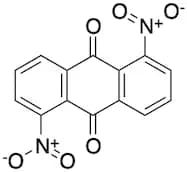
CAS:Produto Controlado<p>Applications rac-4-Benzyloxy-3-nitrostyrene Oxide (cas# 51582-41-3) is a compound useful in organic synthesis.<br>References Karellas, P., et al.: J. Med. Chem., 51, 6128 (2008),<br></p>Fórmula:C15H13NO4Cor e Forma:NeatPeso molecular:271.271,5-Dinitroanthraquinone
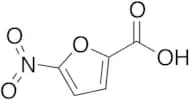
CAS:Produto Controlado<p>Applications 1,5-Dinitroanthraquinone 97% (cas# 82-35-9) is a useful research chemical.<br></p>Fórmula:C14H6N2O6Pureza:97%Cor e Forma:NeatPeso molecular:298.21Nitrofurate
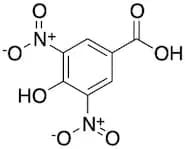
CAS:Produto Controlado<p>Applications Nitrofurate is a useful organic reagent. It is used for preparation of polycyclic small molecules.<br>References Tan, D., et al.: J. Am. Chem. Soc., 121, 9073 (1999); Lu, P., et al.: Org. Lett., 11, 5710 (2009);<br></p>Fórmula:C5H3NO5Cor e Forma:NeatPeso molecular:157.083,5-Dinitro-4-hydroxybenzoic Acid
CAS:Produto Controlado<p>Applications 3,5-DINITRO-4-HYDROXYBENZOIC ACID (cas# 1019-52-9) is a useful research chemical.<br></p>Fórmula:C7H4N2O7Cor e Forma:NeatPeso molecular:228.116Nitrobenzene
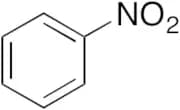
CAS:Produto Controlado<p>Applications Nitrobenzene is a compound that exhibits chromosomal genotoxicity against hamster lung cells, and has the potential to cause cancer in humans (1,2). Nitrobenzene is also used as a starting material to synthesize 4-Aminophenol (A618920) through catalytic hydrogenation (3). Drinking water contaminant candidate list 3 (CCL 3) compound as per United States Environmental Protection Agency (EPA), environmental, and food contaminants.<br> Not a dangerous good if item is equal to or less than 1g/ml and there is less than 100g/ml in the package<br>References 1. Bonacker, D. et al.: Arch. Toxicol. 2004 Jan;78(1):49-57.2. Hsu, C. et al.: J. Environ. Sci. Health. C. Environ. Carcinog. Ecotoxicol. Rev. 2007 Apr-Jun;25(2):155-843. Rode, C. et al.: Org. Proc. Res. Dev. 1999 Nov;3(6), pp 465–470<br></p>Fórmula:C6H5NO2Cor e Forma:Light YellowPeso molecular:123.114-Hydroxy-2-nitrobenzoic Acid
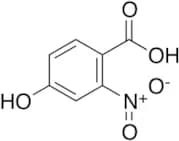
CAS:Produto Controlado<p>Applications 4-hydroxy-2-nitrobenzoic acid (cas# 74230-08-3) is a useful research chemical.<br></p>Fórmula:C7H5NO5Cor e Forma:Dark Red To Dark BrownPeso molecular:183.1182-Nitroaniline
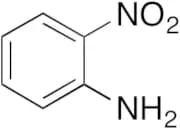
CAS:Produto Controlado<p>Impurity Albendazole Impurity 4<br>Applications 2-Nitroaniline, is the main precursor to phenylenediamines, which are converted to benzimidazoles, a family of heterocycles that are key components in pharmaceuticals. Albendazole Impurity 4<br> Not a dangerous good if item is equal to or less than 1g/ml and there is less than 100g/ml in the package<br>References Booth, G.,et al.: Ull. Encyc. Indust. Chem. (2007);<br></p>Fórmula:C6H6N2O2Cor e Forma:NeatPeso molecular:138.124-Methoxy-2-nitroaniline(2-Nitro-p-anisidine)
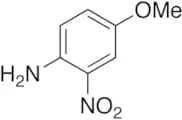
CAS:Produto Controlado<p>Applications Toxic to some wild and domestic birds and mice. Molluscicidal activity<br> Not a dangerous good if item is equal to or less than 1g/ml and there is less than 100g/ml in the package<br>References De Abreu, F. et al.; Bioorg. Med. Chem. 9, 659 (2001); Schafer, E.W. et al.; Arch. Environ. Con. Tox. 14, 111 (1985); Schafer, E.W. et al.; Arch. Environ. Con. Tox. 12, 355 (1983)<br></p>Fórmula:C7H8N2O3Cor e Forma:NeatPeso molecular:168.15N,N-Diamylnitrosamine
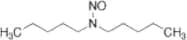
CAS:Produto Controlado<p>Applications N,N-Diamylnitrosamine (cas# 13256-06-9) is a compound useful in organic synthesis.<br></p>Fórmula:C10H22N2OCor e Forma:NeatPeso molecular:186.294-Amino-1,3-dimethyl-5-nitrosouracil x-H2O
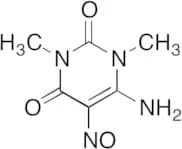
CAS:Produto Controlado<p>Applications 4-Amino-1,3-dimethyl-5-nitrosouracil is a useful building block for organic synthesis.<br></p>Fórmula:C6H8N4O3Cor e Forma:NeatPeso molecular:184.152-Nitrobenzene-1,4-diamine
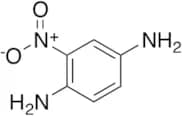
CAS:Produto Controlado<p>Applications 2-nitrobenzene-1,4-diamine (cas# 5307-14-2) is a useful research chemical.<br></p>Fórmula:C6H7N3O2Cor e Forma:NeatPeso molecular:153.14Ethyl 4-Nitrobenzoate
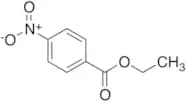
CAS:Produto Controlado<p>Applications ETHYL 4-NITROBENZOATE (cas# 99-77-4) is a useful research chemical.<br></p>Fórmula:C9H9NO4Cor e Forma:White To Light YellowPeso molecular:195.17Ethyl Nitroacetate
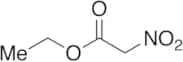
CAS:Produto Controlado<p>Applications Ethyl Nitroacetate is an ester of nitrocarboxylic acid used as an intermediate in the preparation of unsubstituted amino acids.<br>References Sidorin, G.I.: Gig. Aspe. Okhr. Zdor. Nasel., 144 (1977);<br></p>Fórmula:C4H7NO4Cor e Forma:NeatPeso molecular:133.11,3-Dinitrobenzene
CAS:Produto Controlado<p>Applications 1,3-Dinitrobenzene is used as an analyte to detect explosive environments (1), including those containing picric acid (2). Neurotoxic agent (3). Drinking water contaminant candidate (CCL3) as per United States Environmental Protection Agency (EPA). Environmental contaminants; Food contaminants.<br> Not a dangerous good if item is equal to or less than 1g/ml and there is less than 100g/ml in the package<br>References 1. ÄŒapka, L. et al.: J. Chromatogr. A. 2015 Apr 3;1388:167-73.2. Sanda, S. et al.: Chem. Commun. (Camb) 2015 Apr 18;51(30):6576-93. Maurer, L. et al.: Neurotoxicology. 2016 Mar;53:74-84<br></p>Fórmula:C6H4N2O4Cor e Forma:Light YellowPeso molecular:168.11N-(Nitrosomethyl)ethanolamine
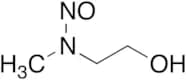
CAS:Produto Controlado<p>Applications N-(Nitrosomethyl)ethanolamine can be used to study the chemical-molecular perspective of the liver specificity of the carcinogenicity of NOCs.<br>References Yuan, J., et.al.: Chem. Res. Toxicol., 25, 2432-2442, (2012);<br></p>Fórmula:C3H8N2O2Cor e Forma:Colourless To Light YellowPeso molecular:104.112-Amino-5-nitro-2'-chlorobenzophenone
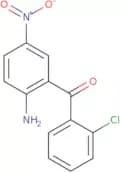
CAS:2-Amino-5-nitro-2'-chlorobenzophenone (2ACCB) is a precursor for the synthesis of 2,4,6-trichlorophenol. 2ACCB reacts with hydrochloric acid in the presence of a scrubber to produce diphenyl ether and activated 2ACCB. The reaction rate can be increased by adding sodium hydroxide solution to the reaction solution. The hydroxy group on the 2ACCB molecule can be converted to a terpene by transfer reactions with glycol esters. This compound has been used as a sterilant and disinfectant in reaction solutions containing chlorine atoms or carbonyl groups.Fórmula:C13H9ClN2O3Pureza:Min. 95%Cor e Forma:PowderPeso molecular:276.67 g/mol2,5-Dichloronitrobenzene
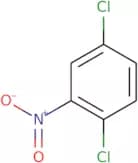
CAS:2,5-Dichloronitrobenzene is a compound that is used to manufacture dyes and pharmaceuticals. It can be synthesized from sodium carbonate, 4-tert-butylbenzoic acid, and sodium hydroxide solution. To produce 2,5-dichloronitrobenzene, the reactants are heated in a reaction vessel with a diphenyl ether as an acid catalyst. The product of this reaction is then dissolved in deionized water or water containing other solvents such as methanol or ethanol. The reaction yield is approximately 95%. The byproducts of this process include 2-chloroacetophenone and hydrogen chloride gas. 2,5-Dichloronitrobenzene reacts with sodium hydroxide solution to form 4-tert-butyl benzoic acid and sodium chloride. This reaction occurs because these compounds have polar functional groups which can form hydrogen bonds with eachFórmula:C6H3Cl2NO2Pureza:Min. 95%Cor e Forma:PowderPeso molecular:192 g/mol6-Chloro-2-nitrotoluene
CAS:6-Chloro-2-nitrotoluene is a synthetic organic compound that has been identified in environmental samples as a reaction product of chlorine and organic compounds. It has been shown to induce root formation in plants, which is related to its ability to inhibit the formation of chlorinated hydrocarbons. 6-Chloro-2-nitrotoluene can be produced by reacting nitrogen atoms with zirconium at high temperatures and low pressures, requiring an activation energy of 50 kcal/mol.Fórmula:C7H6ClNO2Pureza:Min. 95%Peso molecular:171.58 g/mol