Nitro
Os compostos nitro são moléculas orgânicas que contêm um ou mais grupos nitro (NO2). Estes compostos são amplamente utilizados na síntese de explosivos, produtos farmacêuticos e corantes. Na CymitQuimica, oferecemos uma ampla gama de compostos nitro de alta qualidade para apoiar suas aplicações de pesquisa e industriais, garantindo resultados seguros e eficazes. Nossa seleção inclui uma variedade de compostos nitro adequados para diferentes sínteses químicas e aplicações.
Foram encontrados 2516 produtos de "Nitro"
Ordenar por
Pureza (%)
0
100
|
0
|
50
|
90
|
95
|
100
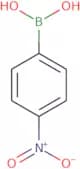
4-Nitrophenylboronic acid
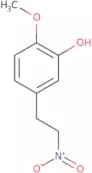
CAS:4-Nitrophenylboronic acid is a chemical compound that has been shown to inhibit the enzyme PTP1B. This enzyme is responsible for the phosphorylation of proteins and plays an important role in regulating insulin release, glucose uptake, and fat metabolism. The inhibition of this enzyme by 4-Nitrophenylboronic acid is reversible and potent. It has also been shown to have anticancer activity in vitro and in vivo, as well as cross-coupling with other boronic acids to form new compounds with different biological activities.Fórmula:C6H6BNO4Pureza:Min. 95%Cor e Forma:PowderPeso molecular:166.93 g/mol1-(3-Hydroxy-4-methoxyphenyl)-2-nitroethane
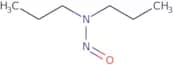
CAS:1-(3-Hydroxy-4-methoxyphenyl)-2-nitroethane is a chemical intermediate that can be used in the synthesis of other compounds. It is a fine chemical with many potential uses, as well as being a versatile building block for organic synthesis. As an example, 1-(3-Hydroxy-4-methoxyphenyl)-2-nitroethane can be used to synthesize the drug erythromycin. This chemical has been shown to have antihistamine and antiinflammatory properties.Fórmula:C9H11NO4Pureza:Min. 95%Peso molecular:197.19 g/molN-Nitrosodipropylamine
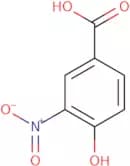
CAS:<p>N-Nitrosodipropylamine is a chemical that is used in wastewater treatment. It is found in acetate extracts of sewage sludge and has been shown to inhibit the activity of rat liver microsomes. N-Nitrosodipropylamine has been linked to cancer, and although it has not been shown to cause cancer in rats, it does have carcinogenic potential. This chemical also inhibits the activity of bacterial cytochrome P450 enzymes, which are important for regulating the synthesis of lipids, steroids, and other biologically important molecules. N-Nitrosodipropylamine has also been shown to be an anthelmintic drug, but when administered orally or intraperitoneally at high doses, it causes maternal toxicity and fetal death in pregnant rats. The use of this drug should therefore be avoided during pregnancy.</p>Fórmula:C6H14N2OPureza:Min. 95%Cor e Forma:Clear LiquidPeso molecular:130.19 g/mol4-Hydroxy-3-nitrobenzoic acid
CAS:<p>4-Hydroxy-3-nitrobenzoic acid is an antioxidant that has been studied for its potential therapeutic effects on pancreatitis. This compound is a precursor to protocatechuic acid, a molecule that helps to protect the pancreas. 4-Hydroxy-3-nitrobenzoic acid is also used in the preparation of hydroxide solution and activated carbon. The terminal half-life of this compound is approximately 15 hours, with a plasma concentration–time curve that peaks at about 2 hours after administration. The biological activity of 4-Hydroxy-3-nitrobenzoic acid can be increased by reaction with sodium hydroxide solution or 5 nitrosalicylic acid.</p>Fórmula:C7H5NO5Pureza:Min. 95%Peso molecular:183.12 g/mol5-Nitro-3-pyrazolecarboxylic acid
CAS:5-Nitro-3-pyrazolecarboxylic acid is a lead compound that has been shown to induce transcription of the gene encoding for the transcription factor, PPARγ. This molecule has also been shown to have anti-cancer and anti-diabetic properties in cellular and animal models. 5-Nitro-3-pyrazolecarboxylic acid has been observed to interact with other molecules by bonding to them or inhibiting their function. These interactions may be responsible for some of its diverse effects on metabolic disease, cancer, and transcription factors.Fórmula:C4H3N3O4Pureza:Min. 95%Cor e Forma:PowderPeso molecular:157.08 g/mol2-Nitro-4-ethylsulfonylchlorobenzene
CAS:<p>2-Nitro-4-ethylsulfonylchlorobenzene is a high quality, versatile and useful chemical. It has been used as an intermediate in the synthesis of other compounds, such as pharmaceuticals. As a reagent, it has been used to form complex compounds and to produce fine chemicals. 2-Nitro-4-ethylsulfonylchlorobenzene is also a useful scaffold for the production of research chemicals. This compound has shown potential for use in the production of speciality chemicals or as a reaction component.</p>Fórmula:C8H8ClNO4SPureza:Min. 95%Cor e Forma:PowderPeso molecular:249.67 g/mol1-(4-Carboxyphenyl)-2-nitroethene
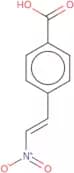
CAS:<p>1-(4-Carboxyphenyl)-2-nitroethene is a reagent that belongs to the group of speciality chemicals. It has been used as a reaction component in organic synthesis and as a building block for more complex compounds. 1-(4-Carboxyphenyl)-2-nitroethene is an effective intermediate for the synthesis of fine chemicals such as pesticides, pharmaceuticals, and herbicides. It is also used as an intermediate in the production of dyes and pigments.</p>Fórmula:C9H7NO4Pureza:Min. 95%Peso molecular:193.16 g/mol2-Fluoro-6-nitrotoluene
CAS:<p>2-Fluoro-6-nitrotoluene is a nitro compound that is used as an additive in the manufacture of pesticides. It has been shown to have addictive properties and is structurally similar to 2,4-dinitrotoluene and other nitrotoluenes. The conformational and structural stability of 2-fluoro-6-nitrotoluene has been studied using computational methods. These studies revealed that its activation energy for cyclization was about 5 kcal/mol higher than that of 2,4-dinitrotoluene. This difference in activation energy can be attributed to fluorine substitutions on the aromatic ring. In addition, it can be seen from the vibrational spectra of these two compounds that they are not identical.</p>Fórmula:C7H6FNO2Pureza:Min. 95%Cor e Forma:LiquidPeso molecular:155.13 g/mol3-Nitrophenylacetic acid
CAS:3-Nitrophenylaceticacid (3NPAA) is a nitro compound that is used as an intermediate in the synthesis of other organic compounds. It can be synthesized by reacting phenylacetic acid with nitric acid, which is then oxidized to 3-nitrophenol with potassium permanganate. The product is then reacted with acetic anhydride to produce 3-nitrophenylacetic acid. This chemical has been shown to inhibit plant physiology and chlorophyll production by binding reversibly to the protein photosystem II in plants. 3-Nitrophenylaceticacid reacts with chloride ions to form a reversible covalent bond, which may be hydrolyzed by water or alkali.Fórmula:C8H7NO4Pureza:Min. 95%Cor e Forma:PowderPeso molecular:181.15 g/mol5-Bromo-2-nitrophenol
CAS:<p>5-Bromo-2-nitrophenol is an organic compound that is used in the industrial production of drugs and dyes. It is soluble in ethanol, but insoluble in water. 5-Bromo-2-nitrophenol can be obtained by extracting it from the filtrate of a solution of potassium tert-butyl ether with aqueous ethanol. The extraction process involves adding morpholine to the solution, which is then heated and refluxed. This process yields high yields of 5-bromo-2-nitrophenol.</p>Fórmula:C6H4BrNO3Pureza:Min. 95%Cor e Forma:Yellow solid.Peso molecular:218 g/mol4-Iodo-3-nitrobenzonitrile
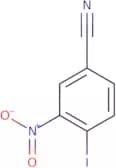
CAS:<p>4-Iodo-3-nitrobenzonitrile is a chemical intermediate that can be used to synthesize other chemicals. It is an aromatic compound with the formula CHNO. 4-Iodo-3-nitrobenzonitrile can be used as a reactive building block in organic synthesis and has shown to be useful in the preparation of complex compounds that are difficult to prepare by other methods. This chemical has been shown to have high quality and is stable at room temperature.</p>Fórmula:C7H3IN2O2Pureza:Min. 95 Area-%Cor e Forma:PowderPeso molecular:274.02 g/mol3,5-Dinitro-2-hydroxyphenylacetic acid
<p>3,5-Dinitro-2-hydroxyphenylacetic acid is a high quality reagent useful as an intermediate in the synthesis of complex compounds. It is also an important building block in the synthesis of fine chemicals and research chemicals. 3,5-Dinitro-2-hydroxyphenylacetic acid can be used in many chemical reactions due to its versatility as a building block. This compound has CAS number 51343-07-9 and is classified as a speciality chemical.</p>Pureza:Min. 95%2,3,4-Trifluoronitrobenzene
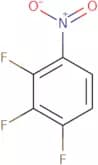
CAS:<p>2,3,4-Trifluoronitrobenzene is a chemical compound that contains fluorine and nitrogen. It can be used in the synthesis of medicines to treat cancer and autoimmune diseases. The reaction of 2,3,4-trifluoronitrobenzene with hydrochloric acid produces hydrogen fluoride and nitrous acid. Hydroxide solution is then added to the mixture, which causes a series of chemical reactions involving hydrogen ions. This process results in the formation of a factor receptor that is activated by growth factors. This activated factor receptor is then involved in eye disorders such as age-related macular degeneration and retinitis pigmentosa.</p>Fórmula:C6H2F3NO2Pureza:Min. 95%Peso molecular:177.08 g/mol3,6-Dinitro-1,8-naphthalenedicarboxylicanhydride
CAS:3,6-Dinitro-1,8-naphthalenedicarboxylic anhydride is a fine chemical that is used as a building block in the synthesis of other compounds. It is also used as a reagent and can be found in research chemicals with CAS No. 3807-80-5. 3,6-Dinitro-1,8-naphthalenedicarboxylic anhydride is versatile and has many uses as a reaction component. The compound can be used to produce complex compounds or scaffolds that are useful in research.Fórmula:C12H4N2O7Pureza:Min. 95%Cor e Forma:Beige PowderPeso molecular:288.17 g/mol4-Nitrobenzyl cyanide
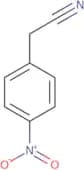
CAS:<p>4-Nitrobenzyl cyanide is a chemical compound that has been shown to have anticancer activity. 4-Nitrobenzyl cyanide inhibits acetylcholinesterase, an enzyme that is found in the synapse of certain nerve cells and breaks down acetylcholine, leading to cell death. It also has been shown to be a solid catalyst for organic reactions. Kinetic data was obtained using electrochemical impedance spectroscopy, which showed that this compound reacts with protons at a much slower rate than methyl ethyl ketone or protonated water.</p>Fórmula:C8H6N2O2Pureza:Min. 95%Cor e Forma:PowderPeso molecular:162.15 g/mol4-Acetamido-2-nitrodiphenyl sulphone
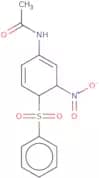
CAS:<p>4-Acetamido-2-nitrodiphenyl sulphone is a fine chemical that is used as a versatile building block for research chemicals and complex compounds. The compound can be used as an intermediate for the synthesis of other compounds and reaction components for the manufacture of speciality chemicals. 4-Acetamido-2-nitrodiphenyl sulphone has a CAS number of 914636-75-2, and its high quality makes it a useful scaffold in the development of new drugs.</p>Fórmula:C14H12N2O5SPureza:Min. 95%Peso molecular:320.32 g/mol2,3,4,6-Tetrafluoronitrobenzene
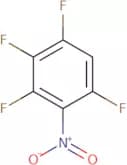
CAS:<p>2,3,4,6-Tetrafluoronitrobenzene is a fluorinated molecule that has been shown to be an excellent substrate for the hydrolysis of acetonitrile. The reaction products are a mixture of ortho and para isomers with equal amounts of 2,3,4- and 6-fluoro derivatives. The rate of the reaction is dependent on the number of water molecules present in the system. Tetramethylguanidine (TMG) can be used as a catalyst to increase the rate of the hydrolysis reaction without changing its course. The result is an increased yield with decreased time required to complete the experiment.</p>Fórmula:C6HF4NO2Pureza:Min. 95%Cor e Forma:Light (Or Pale) Yellow To Yellow LiquidPeso molecular:195.07 g/mol1,2-Dimethyl-3-nitrobenzene
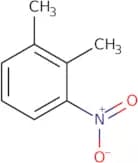
CAS:<p>1,2-Dimethyl-3-nitrobenzene is an organic compound that is a diazonium salt. It reacts with hydrochloric acid to form diazonium chloride and disulfide. The reaction vessel should be acidic in order to promote the reaction. The structural analysis of 1,2-dimethyl-3-nitrobenzene has been conducted using a model system. The structural analysis revealed that 1,2-dimethyl-3-nitrobenzene is an organic molecule with a single bond between the methyl group and the nitro group. The reaction products are nitric acid and dimethylamine hydrochloride. The reaction solution contains water, hydrochloric acid, and dimethylamine hydrochloride.</p>Fórmula:C8H9NO2Pureza:Min. 95%Cor e Forma:Yellow Clear LiquidPeso molecular:151.16 g/mol2-Nitro-1,8-naphthalic anhydride
CAS:<p>2-Nitro-1,8-naphthalic anhydride is a chemical compound that is used as a photochemical reagent. It reacts with amines to produce nitrosoamines, which are useful in the detection of dna duplexes and nucleophiles. 2-Nitro-1,8-naphthalic anhydride has fluorescence properties and is used as a photoacceptor in photophysical studies. This molecule has been shown to be stable when exposed to light and can be used for optical measurements. 2-Nitro-1,8-naphthalic anhydride is soluble in organic solvents such as chloroform or ether and insoluble in water.</p>Fórmula:C12H5NO5Pureza:90%Cor e Forma:PowderPeso molecular:243.17 g/molMethyl 4-methyl-3-nitrobenzoate
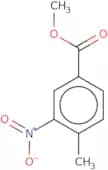
CAS:<p>Methyl 4-methyl-3-nitrobenzoate is a chemical compound with the molecular formula CHNO. It is a white solid that can be used as a reagent in organic synthesis, and is also used as a building block in organic chemistry. The CAS number for methyl 4-methyl-3-nitrobenzoate is 7356-11-8.</p>Fórmula:C9H9NO4Pureza:Min. 95%Peso molecular:195.17 g/mol2,6-Difluoro-3-nitrobenzonitrile
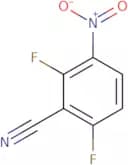
CAS:<p>2,6-Difluoro-3-nitrobenzonitrile is an aliphatic compound that inhibits the activity of monoamines by binding to the endogenously produced 2,6-difluoro-3-nitrobenzonitrile (DNFB). DNFB is a nitrosamine that has been shown to be a potent inhibitor of muscle contraction. This inhibition occurs at high concentrations and has been found in muscle cells. It has also been shown to inhibit the production of nitric oxide from monoxide or homologous nitrates, which may lead to atherosclerosis. 2,6-Difluoro-3-nitrobenzonitrile is also an amine and exhibits structural similarities with other members of this family.</p>Fórmula:C7H2F2N2O2Pureza:Min. 95%Cor e Forma:PowderPeso molecular:184.1 g/mol2,4,6-Trinitrobenzenesulfonic acid, 1% DMF solution
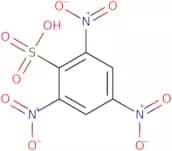
CAS:<p>2,4,6-Trinitrobenzenesulfonic acid, also known as TNBS, TNSBA orâ¯picrylsulfonicâ¯acid, is a strongly oxidising organic acid that has long been used as a reagent to determine the presence of free primary amine groups. TNBS reacts rapidly with primary amines to form highly colouredâ¯N-trinitrophenylâ¯products which can thenâ¯beâ¯analysed by colorimetry.â¯Competing hydrolysis of the TNBS reagentâ¯mayâ¯influence the assay result. The amine can be regenerated by treatment with hydrazine. This analytical technique can also be applied to thiols and hydrazides.<br>As is common with nitrated aromatic compounds, there is a risk of explosion and TNBS is typically commercially available as a solution. We also supply the 5% aqueous solution.</p>Fórmula:C6H3N3O9SPureza:Min. 95%Cor e Forma:Clear LiquidPeso molecular:293.17 g/molZ-L-tyrosine 4-nitrophenyl ester
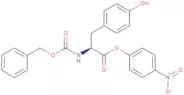
CAS:<p>Z-L-tyrosine 4-nitrophenyl ester is a synthetic, inactivated amide that binds to the active site of enzyme, preventing its enzymatic activity. It prevents the formation of clots by cleaving the clotting factors and is used in blood transfusions. Z-L-tyrosine 4-nitrophenyl ester has been shown to inhibit the synthesis of surfactant and is used as an antiseptic. This drug can be prepared by reacting L-tyrosine with nitrophenol (NO2) in the presence of a base such as sodium hydroxide or potassium carbonate, followed by purification on sephadex g-100 columns. The product is then treated with hydrostatic pressure to remove any unreacted starting materials. This drug also has a sedimentation rate of about 1.5 x 10^6 cm/s.</p>Fórmula:C23H20N2O7Pureza:Min. 95%Cor e Forma:White/Off-White SolidPeso molecular:436.41 g/mol5-Chloro-2-nitrotoluene
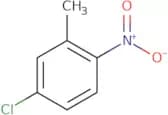
CAS:<p>5-Chloro-2-nitrotoluene is an anti-cancer drug that has been shown to be effective against a variety of cancer cell lines, including carcinoma and pancreatic cancer cell lines. 5-Chloro-2-nitrotoluene inhibits the growth of cancer cells by binding to sulfhydryl groups in cellular membranes, which prevents the release of essential building blocks for the synthesis of proteins, nucleic acids, and lipids. This compound also inhibits the activity of enzymes that are involved in the synthesis of these compounds. It has been shown to have chemopreventive effects in animal studies.</p>Fórmula:C7H6ClNO2Pureza:Min. 95%Peso molecular:171.58 g/mol2-Methyl-6-nitroaniline
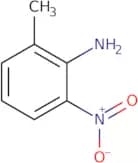
CAS:2-Methyl-6-nitroaniline is a nitro compound with the molecular formula C5H7N3O2. It is a colorless solid that can be obtained by the nitration of aniline, followed by reduction of the nitro group. 2-Methyl-6-nitroaniline can be used as a model system to study how solute molecules interact with gas and liquid phases. The solubility data of this molecule has been published in the literature and has been shown to depend on the presence of amines. This molecule has also been shown to be an environmental pollutant when it reacts with hydrogen sulfate in acidic media, forming sulfonic acid derivatives. 2-Methyl-6-nitroaniline is soluble in hydrochloric acid and acetylated, but insoluble in water or ethanol due to its polar functional groups.br> br> [[Image:2_methyl_6_Fórmula:C7H8N2O2Pureza:Min. 95%Cor e Forma:Brown PowderPeso molecular:152.15 g/mol1-(4-Cyanophenyl)-2-nitroethene
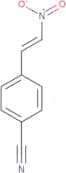
CAS:<p>1-(4-Cyanophenyl)-2-nitroethene is a reactive intermediate that belongs to the group of carboxylic acids. It is an unsaturated compound with a cinnamic acid derivative. The nitration of 1-(4-cyanophenyl)-2-nitroethene leads to the formation of 1,2-dinitrobenzene, which can be used for the synthesis of other heterocyclic compounds. This intermediate has been shown to have catalytic activity in biomolecules, including carboxylic and phenolic groups, and can be used for the synthesis of other organic compounds.</p>Fórmula:C9H6N2O2Pureza:Min. 95%Peso molecular:174.16 g/mol1-(3-Fluorophenyl)-2-nitropropene
CAS:<p>1-(3-Fluorophenyl)-2-nitropropene is a versatile building block that can be used as a reagent, speciality chemical, or a reaction component. This compound is also useful for the synthesis of complex compounds. 1-(3-Fluorophenyl)-2-nitropropene has been shown to react with various electrophiles, including carbonyl compounds and nitro compounds, to give substituted products. This chemical is classified as a high quality compound and can be used in the synthesis of pharmaceuticals and other fine chemicals.</p>Fórmula:C9H8FNO2Pureza:Min. 95%Peso molecular:181.16 g/mol1-(4-Nitrophenyl)-2-nitropropene
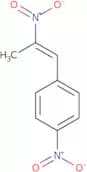
CAS:<p>1-(4-Nitrophenyl)-2-nitropropene is a chemical compound that is used as a reagent, intermediate, and building block in the synthesis of other compounds. It can be used as a precursor for the production of aniline derivatives, which are useful in the manufacture of dyes and pharmaceuticals. 1-(4-Nitrophenyl)-2-nitropropene is also useful as a scaffold for the synthesis of other compounds. It reacts with sodium hydroxide to produce sodium nitrite and 4-nitrocatechol. This compound has also been shown to be an effective way to synthesize acetic acid from acetaldehyde.</p>Fórmula:C9H8N2O4Pureza:Min. 95%Peso molecular:208.17 g/mol2,4,6-Trihydroxynitrobenzene
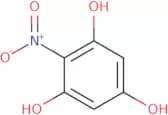
CAS:2,4,6-Trihydroxynitrobenzene is a particle that is used as a cross-linking agent. It reacts with polycarboxylic acids to form ionic or covalent bonds. 2,4,6-Trihydroxynitrobenzene is used in analytical chemistry to prepare samples for mass spectrometry analysis by laser ablation and matrix-assisted laser desorption/ionization (MALDI). This compound can be mixed with trifluoroacetic acid and activated before being immobilized on the surface of an analytical chemistry apparatus. The cross-linking reaction occurs when the sample is irradiated with light from a laser, which vaporizes some of the material and ionizes it for analysis.Fórmula:C6H5NO5Pureza:Min. 95%Peso molecular:171.11 g/mol2-Fluoro-3-nitrotoluene
CAS:<p>2-Fluoro-3-nitrotoluene is a synthetic compound that is used as a drug substance to produce other drugs. It has been shown to inhibit cardiac contractility and can be used in the treatment of cardiogenic shock. This drug also has a low degree of toxicity and can be administered in an outpatient setting. 2-Fluoro-3-nitrotoluene is not symmetrical, which means it has two different shapes or configurations. One of these configurations is more stable than the other one. 2-Fluoro-3-nitrotoluene has two possible isomers that are mirror images of each other, called enantiomers. These two isomers have opposite effects on cardiac contractility and the effect depends on the type of heart disease being treated.</p>Fórmula:C7H6FNO2Pureza:Min. 95%Cor e Forma:Yellow Clear LiquidPeso molecular:155.13 g/mol3-Bromo-2-nitroanisole
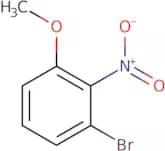
CAS:<p>3-Bromo-2-nitroanisole is a potassium channel blocker that has neuroprotective effects. It can be used for the treatment of glaucoma and hypertension. 3-Bromo-2-nitroanisole can inhibit the activity of potassium channels and act as a neuroprotective agent. The drug has been shown to have neuroprotective effects in animal models, with evidence of efficacy in humans. The drug also inhibits the production of nitric oxide, which may contribute to its neuroprotective effect.</p>Fórmula:C7H6BrNO3Pureza:Min. 95%Cor e Forma:Off-White PowderPeso molecular:232.03 g/mol5-Nitrobarbituric acid
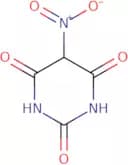
CAS:<p>5-Nitrobarbituric acid is an organic acid that is used as a pharmaceutical preparation and can be found in the form of its calcium salt. 5-Nitrobarbituric acid is a weak acid that forms a complex with orthoboric acid, calcium carbonate, copper oxide, and morphologies such as needles or prisms. 5-Nitrobarbituric acid has been used to treat different types of headache. It has also been used to treat stomach aches and pain caused by gastrointestinal ulcers. The mechanism of action for this drug remains unknown, but it may act by inhibiting the uptake of sodium ions into the cells. 5-Nitrobarbituric acid has also been shown to have physiological functions in hydration and triazine synthesis.</p>Fórmula:C4H3N3O5Pureza:Min. 95%Cor e Forma:White Off-White PowderPeso molecular:173.08 g/mol4'-Hydroxy-3',5-beta-trimethyl-beta-nitrostyrene
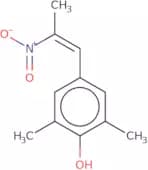
CAS:<p>4'-Hydroxy-3',5-beta-trimethyl-beta-nitrostyrene is a high quality reagent that can be used in the synthesis of complex compounds. It has been shown to be an intermediate for the synthesis of fine chemicals, as well as useful scaffold and building block in research chemicals. 4'-Hydroxy-3',5-beta-trimethyl-beta-nitrostyrene is a versatile building block that has been used in many reactions as a reaction component. CAS No. 53205-17-7</p>Fórmula:C11H13NO3Pureza:Min. 95%Peso molecular:207.23 g/mol8-Nitroguanine
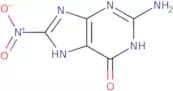
CAS:8-Nitroguanine is a reactive cell factor that can be found in the skin and other tissues. It is an endogenous product of nitric oxide, which can be formed by the reaction of nitric oxide with superoxide in the presence of peroxynitrite. 8-Nitroguanine has been shown to inhibit matrix metalloproteinase-9 activity and to have a protective effect on cells from UV radiation. 8-Nitroguanine also has been shown to be a potential biomarker for bowel disease and damage. The levels of 8-nitroguanine increase in chronic viral hepatitis and cancer tissues. This compound can also be used as an analytical method for detection of inflammation, oxidative stress, or DNA damage.Fórmula:C5H4N6O3Pureza:Min. 95%Cor e Forma:PowderPeso molecular:196.13 g/mol5-Chloro-3-nitrosalicylaldehyde
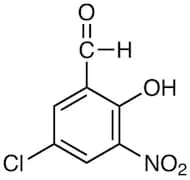
CAS:Fórmula:C7H4ClNO4Pureza:>98.0%(GC)(T)Cor e Forma:Light orange to Yellow to Green powder to crystalPeso molecular:201.565-Methyl-2-nitrobenzonitrile
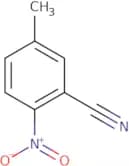
CAS:<p>5-Methyl-2-nitrobenzonitrile is a versatile building block that is used to synthesize various chemical compounds. It is a fine chemical that can be used to create reagents, speciality chemicals, and useful scaffolds for research. 5-Methyl-2-nitrobenzonitrile has been shown to be an effective intermediate in the synthesis of many complex compounds. It is also a high quality reactant that can be used as a building block for many reactions.</p>Fórmula:C8H6N2O2Pureza:Min. 95%Peso molecular:162.15 g/mol2,6-Dinitrotoluene
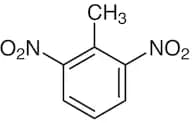
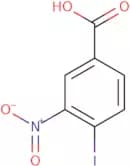
CAS:Fórmula:C7H6N2O4Pureza:>99.0%(GC)Cor e Forma:White to Orange to Green powder to crystalPeso molecular:182.144-Iodo-3-nitrobenzoic acid
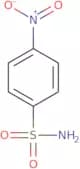
CAS:<p>4-Iodo-3-nitrobenzoic acid (4-INBA) is a nitro derivative of the aromatic acid. It is used as a chemotherapeutic agent and an intermediate in the synthesis of other drugs. 4-INBA has been shown to be cytotoxic to hamsters and inhibit cellular growth by binding to DNA polymerase and inhibiting DNA synthesis. 4-INBA also binds to RNA polymerase, inhibiting RNA synthesis and protein production, which causes cell death.</p>Fórmula:C7H4INO4Pureza:90%Cor e Forma:PowderPeso molecular:293.02 g/mol4-Nitrobenzenesulfonamide
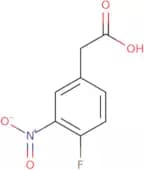
CAS:<p>4-Nitrobenzenesulfonamide is an organic compound that consists of a nitro group, a sulfonamide group, and an amine. It is the active analog of 4-dimethylaminobenzoic acid, which is used as an inhibitor of histamine release in the treatment of allergic reactions. The molecule has been shown to bind to copper ions and triflic acid and has been used as a catalyst for aziridination.</p>Fórmula:C6H6N2O4SPureza:Min. 96 Area-%Cor e Forma:White PowderPeso molecular:202.19 g/mol4-Fluoro-3-nitrophenylacetic acid
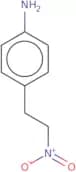
CAS:4-Fluoro-3-nitrophenylacetic acid is a chiral monomer that can be used to synthesize diphenyl ethers. The reaction requires a carbamic acid as the acid catalyst and a nucleophilic reagent, such as an amine. 4-Fluoro-3-nitrophenylacetic acid has been shown to have anti-cancer properties in vitro and in vivo. 4-Fluoro-3-nitrophenylacetic acid may also inhibit the synthesis of dihydroisoquinolines, which are important for the function of DNA polymerase. There are two strategies for synthesizing this compound: one is based on the condensation of two molecules of phenylacetaldehyde in the presence of an acid catalyst; the other employs a Lewis acid catalyst with a pyridine nucleophile.Fórmula:C8H6FNO4Pureza:Min. 95%Cor e Forma:SolidPeso molecular:199.14 g/mol1-(4-Aminophenyl)-2-nitroethane
CAS:<p>1-(4-Aminophenyl)-2-nitroethane is a high quality, reagent, complex compound that can be used as a useful intermediate in the production of fine chemicals. It is also used as a useful scaffold for the synthesis of compounds with interesting biological activities. This chemical can be used as a building block for reactions to produce versatile building blocks and reaction components for research chemicals.</p>Fórmula:C8H10N2O2Pureza:Min. 95%Cor e Forma:PowderPeso molecular:166.18 g/mol5-Chloro-2-nitrocinnamic acid
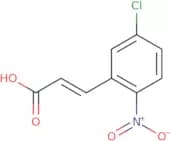
CAS:<p>5-Chloro-2-nitrocinnamic acid is a fine chemical with a CAS number of 20357-28-2. It is a versatile building block that can be used as a reaction component or intermediate in the synthesis of more complex compounds. The high purity and quality of 5-Chloro-2-nitrocinnamic acid makes it an ideal reagent for research purposes, and it can be used as a building block for the synthesis of useful scaffolds.</p>Fórmula:C9H6ClNO4Pureza:Min. 95%Peso molecular:227.6 g/mol1,4-Dinitrosopiperazine
CAS:<p>1,4-Dinitrosopiperazine is a chemical compound that has been used as an anthelmintic drug and for the treatment of cancer. It is a structural analog of piperazine, but with two nitro groups on each amine group. 1,4-Dinitrosopiperazine can be synthesized from 2,6-diamino-3-nitropyridine and formaldehyde in the presence of sodium nitrite and potassium hydroxide. The reaction mechanism is similar to that of piperazine but with a different product. 1,4-Dinitrosopiperazine can be found in urine samples and reacts with sulfhydryl groups at cysteine residues to form stable adducts. In vitro studies have shown that these adducts inhibit acetylcholinesterase activity and may be responsible for its anticancer properties. <br>1,4-Dinitrosopiperazine inhibits the growth of squamous carcin</p>Fórmula:C4H8N4O2Pureza:Min. 95%Cor e Forma:PowderPeso molecular:144.13 g/mol4,5-Dimethoxy-2-nitroaniline
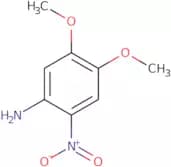
CAS:Produto Controlado<p>4,5-Dimethoxy-2-nitroaniline (DMNA) is a nucleophilic compound that reacts with glyoxylate to form formic acid. DMNA has been shown to be an effective anti-malarial agent, as it inhibits the growth of leishmania and related protozoans. The mechanism of action is not fully understood but may be due to its ability to produce reactive oxygen species. DMNA also inhibits bacterial growth in vitro by interfering with DNA synthesis and protein synthesis. DMNA has been shown to have a cytotoxic effect on mammalian cells, which may be due to the production of free radicals from its reaction with formic acid.</p>Fórmula:C8H10N2O4Cor e Forma:PowderPeso molecular:198.18 g/mol1-(3-(Trifluoromethoxy)phenyl)-2-nitroethene
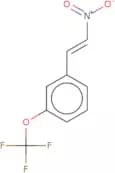
CAS:<p>1-(3-Trifluoromethoxy)phenyl)-2-nitroethene is a fluorinated aromatic compound that can be used as a building block for synthesis of pharmaceuticals, research chemicals, and other specialty chemicals. It is an intermediate that can be used in the production of other compounds. This compound may be used in pharmaceuticals to treat bacterial infections and inflammatory diseases. 1-(3-Trifluoromethoxy)phenyl)-2-nitroethene may also be utilized as a reaction component for synthesizing other organic compounds. It is soluble in solvents such as benzene, ether, chloroform, and acetone.</p>Fórmula:C9H6F3NO3Pureza:Min. 95%Peso molecular:233.14 g/mol2,6-Dinitro-1,4-phenylenediamine
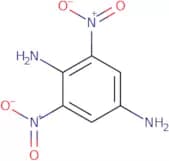
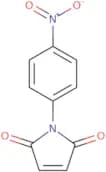
CAS:<p>2,6-Dinitro-1,4-phenylenediamine is a versatile building block that can be used in the synthesis of complex compounds. It is a high quality chemical with excellent stability and purity. This chemical is also useful as an intermediate for the synthesis of other chemicals, and as a reagent for research purposes. 2,6-Dinitro-1,4-phenylenediamine is also useful in organic chemistry as a scaffold for synthesizing important organic molecules.</p>Fórmula:C6H6N4O4Pureza:Min. 95%Peso molecular:198.14 g/molN-(4-Nitrophenyl)maleimide
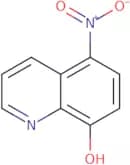
CAS:<p>N-(4-Nitrophenyl)maleimide is a nitro compound that has been shown to be an inhibitor of the enzyme phthalimidase, which catalyzes the hydrolysis of phthalimides. It inhibits the growth of marine sponges and other microorganisms by reacting with primary amino groups in proteins. N-(4-Nitrophenyl)maleimide has also been shown to inhibit the biosynthesis of DNA and RNA.</p>Fórmula:C10H6N2O4Pureza:Min. 95%Cor e Forma:White PowderPeso molecular:218.17 g/molNitroxoline
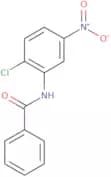
CAS:<p>Nitroxoline is a compound that inhibits the formation of iron-containing proteins and has been shown to be effective in reducing tumor growth. It has also been shown to reduce the development of resistant mutants in bacteria, as well as inhibiting the production of epithelial mesenchymal markers. Nitroxoline inhibits the polymerase chain reaction (PCR) by blocking DNA synthesis and is being studied for its potential to treat cancer. Nitroxoline was found to inhibit the proliferation of carcinoma cell lines and showed anticancer activity when combined with temozolomide treatment. Nitroxoline is not active against Gram-positive bacteria such as Staphylococcus aureus or Enterococcus faecalis, but it does have antimicrobial effects against Gram-negative bacteria such as Escherichia coli, Pseudomonas aeruginosa, Haemophilus influenzae, and Klebsiella pneumoniae. Nitroxoline can be used to clean wounds infected with</p>Fórmula:C9H6N2O3Pureza:Min. 95%Cor e Forma:PowderPeso molecular:190.16 g/molN-(2-Chloro-5-Nitrophenyl)Benzamide
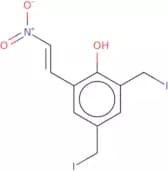
CAS:<p>Please enquire for more information about N-(2-Chloro-5-Nitrophenyl)Benzamide including the price, delivery time and more detailed product information at the technical inquiry form on this page</p>Fórmula:C13H9ClN2O3Pureza:Min. 95%Cor e Forma:PowderPeso molecular:276.67 g/mol2-Hydroxy-3,5-diiodomethylnitrostyrene
CAS:<p>2-Hydroxy-3,5-Diiodomethylnitrostyrene is a high quality chemical that is useful as a reagent and an intermediate. It has been shown to be a useful scaffold in the synthesis of complex compounds and is also used as a building block in the synthesis of speciality chemicals. The compound can be used in reactions as both a reactant and a catalyst, which makes it versatile for research purposes. This chemical reacts with ketones to form nitroalkenes and has been shown to have good activity with aromatic amines, hydrocarbons, alcohols, carboxylic acids, esters, ethers and nitriles.</p>Fórmula:C10H9I2NO3Pureza:Min. 95%Peso molecular:444.99 g/mol