Nitro
Os compostos nitro são moléculas orgânicas que contêm um ou mais grupos nitro (NO2). Estes compostos são amplamente utilizados na síntese de explosivos, produtos farmacêuticos e corantes. Na CymitQuimica, oferecemos uma ampla gama de compostos nitro de alta qualidade para apoiar suas aplicações de pesquisa e industriais, garantindo resultados seguros e eficazes. Nossa seleção inclui uma variedade de compostos nitro adequados para diferentes sínteses químicas e aplicações.
Foram encontrados 2516 produtos de "Nitro"
Ordenar por
Pureza (%)
0
100
|
0
|
50
|
90
|
95
|
100
4-Chloronitrobenzene
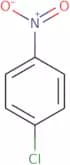
CAS:<p>4-Chloronitrobenzene is a type strain of the bacterium Nitrosomonas europaea. It has been shown to be toxic to cells in both aerobic and anaerobic culture. 4-Chloronitrobenzene inhibits the activity of hydrogenase enzymes, which are required for the reduction of molecular oxygen to water. The toxicity of 4-chloronitrobenzene is due to its ability to inhibit enzyme activity, leading to cell death. This bacterium also has the ability to use chlorinated hydrocarbons as a carbon source and cause chlorination of other biological molecules. In addition, it can reduce metal hydroxides and form metal complexes with palladium and platinum metals. 4-Chloronitrobenzene is found in soil samples that have high concentrations of chloride ions or neutral pH values. Its phase equilibrium diagram shows that this compound exists mainly in liquid form when it is at low temperature, but becomes more</p>Fórmula:C6H4ClNO2Pureza:Min. 95%Cor e Forma:SolidPeso molecular:157.55 g/mol(2S)-N’-Nitrosonornicotine
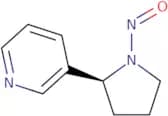
CAS:<p>(2S)-N’-Nitrosonornicotine is a tobacco-specific nitrosamine that has been shown to be carcinogenic in the experimental model. It has been found to inhibit the activity of liver microsomes, which are enzymes that break down drugs in the body. The pharmacokinetic properties of (2S)-N’-Nitrosonornicotine have been studied in rats and mice, but not humans. It has been shown that it is metabolized by methylation and ethylation, with nicotine being its major metabolite.</p>Fórmula:C9H11N3OPureza:Min. 95%Cor e Forma:Beige Slightly Yellow PowderPeso molecular:177.2 g/mol2-Iodo-4-nitroanisole
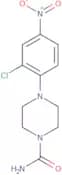
CAS:<p>2-Iodo-4-nitroanisole is a reagent that catalyzes the labeling of proteins with iodine. The reaction is anomalously slow in the presence of bovine serum albumin and results in an increase in the amount of labeled protein. This reagent can also be used to study the kinetics of reactions involving nitrous oxide. The rate of reaction is dependent on the concentration of hydrogen ions, which is why this reagent is often used in assays that have acidic conditions. 2-Iodo-4-nitroanisole can also be used to label lysine residues on proteins by reacting with nitrous oxide and dinitrogen tetroxide, which react at high rates when they are mixed together.</p>Fórmula:C7H6INO3Pureza:Min. 95%Peso molecular:279.03 g/mol4-(2-Chloro-4-nitrophenyl)piperazine-1-carboxamide
CAS:<p>Please enquire for more information about 4-(2-Chloro-4-nitrophenyl)piperazine-1-carboxamide including the price, delivery time and more detailed product information at the technical inquiry form on this page</p>Fórmula:C11H13ClN4O3Pureza:Min. 95%Peso molecular:284.7 g/mol1-(2-Nitrophenyl)-1,2-ethanediol
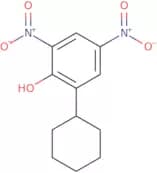
CAS:1-(2-Nitrophenyl)-1,2-ethanediol is a chemical that has been shown to inhibit the glutamate-induced increase in cytosolic Ca2+ concentration. It also prevents the loss of membrane integrity and protects against cell death by inhibiting apoptosis. 1-(2-Nitrophenyl)-1,2-ethanediol also inhibits amp-activated protein kinase activity and increases ATP production. These effects may be due to its ability to reduce intracellular Ca2+ levels and prevent Ca2+ overload in mitochondria. 1-(2-Nitrophenyl)-1,2-ethanediol has been shown to have a protective effect on isolated heart cells and ventricular myocytes from hypoxia/reoxygenation injury and is an effective model system for investigating biochemical properties of glutamate excitotoxicity.Fórmula:C8H9NO4Pureza:Min. 95%Cor e Forma:PowderPeso molecular:183.16 g/mol2-Cyclohexyl-4,6-dinitrophenol
CAS:<p>2-Cyclohexyl-4,6-dinitrophenol is a chemical that inhibits the synthesis of viral DNA. It has been shown to have minimal toxicity in animal models and may be used for the treatment of metabolic disorders, such as hepatic steatosis or hepatitis. 2-Cyclohexyl-4,6-dinitrophenol has also been shown to inhibit the toll-like receptor (TLR) pathway and induce an antiviral state in vitro. In addition, it was found to have an effect on mitochondrial membrane potential, which may explain its antiviral activity. 2-Cyclohexyl-4,6-dinitrophenol has also been shown to inhibit viral replication in cells infected with HIV and other viruses such as Hepatitis C virus.</p>Fórmula:C12H14N2O5Pureza:Min. 95%Peso molecular:266.25 g/mol1-(Bromomethyl)-2-(trifluoromethyl)-4-nitrobenzene
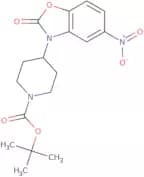
CAS:Please enquire for more information about 1-(Bromomethyl)-2-(trifluoromethyl)-4-nitrobenzene including the price, delivery time and more detailed product information at the technical inquiry form on this pageFórmula:C8H5BrF3NO2Pureza:Min. 95%Cor e Forma:PowderPeso molecular:284.03 g/moltert-Butyl 4-(5-nitro-2-oxo-1,3-benzoxazol-3(2H)-yl)piperidine-1-carboxylate
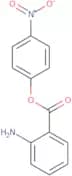
CAS:Produto Controlado<p>Please enquire for more information about tert-Butyl 4-(5-nitro-2-oxo-1,3-benzoxazol-3(2H)-yl)piperidine-1-carboxylate including the price, delivery time and more detailed product information at the technical inquiry form on this page</p>Fórmula:C17H21N3O6Pureza:Min. 95%Peso molecular:363.37 g/mol4-Nitrophenyl Anthranilate
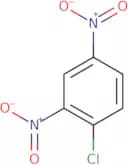
CAS:Produto Controlado<p>4-Nitrophenyl anthranilate is a potent inhibitor of serine protease. It is synthesized by reacting an anthranilate with an hydroxyl group in the presence of ultraviolet light, and can be used as a fluorescent probe. 4-Nitrophenyl anthranilate binds to the active site of serine protease, and prevents the hydrolysis of proteins by blocking the cleavage of peptide bonds at the carboxylic acid termini. This compound has been shown to inhibit human serum albumin and cell nuclei in vitro. The reaction mechanism for this compound is unknown, but it is believed that it may involve a photo-induced electron transfer mechanism.</p>Fórmula:C13H10N2O4Pureza:Min. 95%Cor e Forma:PowderPeso molecular:258.23 g/mol2,4-Dinitrochlorobenzene
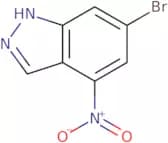
CAS:<p>2,4-Dinitrochlorobenzene is a chemical that has been shown to have an anti-allergic effect. It is used as a reagent in analytical methods for the determination of disease activity. 2,4-Dinitrochlorobenzene inhibits the production of nitric oxide (NO) and prostaglandin E2 (PGE2) by binding to reactive oxygen species (ROS). The inhibition of NO and PGE2 synthesis causes a decrease in the activation of nuclear factor kappa B (NF-κB), which leads to decreased expression of various genes that are regulated by NF-κB. 2,4-Dinitrochlorobenzene has also been shown to increase glutathione levels, which may be due to its ability to inhibit protein thiols and squamous cell carcinoma cells.</p>Fórmula:C6H3ClN2O4Pureza:Min. 95%Cor e Forma:PowderPeso molecular:202.55 g/mol6-Bromo-4-nitro-1H-indazole
CAS:<p>Please enquire for more information about 6-Bromo-4-nitro-1H-indazole including the price, delivery time and more detailed product information at the technical inquiry form on this page</p>Fórmula:C7H4BrN3O2Pureza:Min. 95%Peso molecular:242.03 g/mol(aR)-a-[[[2-(4-Nitrophenyl)ethyl]amino]methyl]benzenemethanol
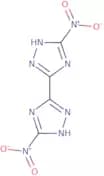
CAS:<p>(aR)-a-[[[2-(4-Nitrophenyl)ethyl]amino]methyl]benzenemethanol is a chiral, carbonyl compound that has been used in the synthesis of mirabegron. It is synthesized by reacting an amide with a hydrochloric acid salt. The product yield of (aR)-a-[[[2-(4-Nitrophenyl)ethyl]amino]methyl]benzenemethanol is high and it does not react with aluminium or amide impurities. This compound can be used for the industrial synthesis of mirabegron, which is a drug for the treatment of urinary incontinence. The reduction reaction and hydrolysis reactions are both important to this process.</p>Pureza:Min. 95%5,5'-Dinitro-2H,2'H-3,3'-bi-1,2,4-triazole
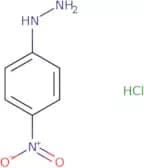
CAS:Produto Controlado<p>Please enquire for more information about 5,5'-Dinitro-2H,2'H-3,3'-bi-1,2,4-triazole including the price, delivery time and more detailed product information at the technical inquiry form on this page</p>Fórmula:C4H2N8O4Pureza:Min. 95%Peso molecular:226.11 g/mol4-Nitrophenylhydrazine hydrochloride
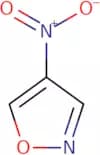
CAS:<p>4-Nitrophenylhydrazine hydrochloride is an organic compound that belongs to the class of hydrazines. It is a colorless solid that has a melting point of 202-204 °C. 4-Nitrophenylhydrazine hydrochloride is used in the synthesis of other compounds, such as trifluoroacetic acid and nucleophilic compounds. The chemical structure can be analyzed using nuclear magnetic resonance (NMR) spectroscopy, which shows that this compound contains amines and nitro groups. 4-Nitrophenylhydrazine hydrochloride is also soluble in water due to its acidic nature. This compound reacts with bases and alcohols to form salts, such as monosodium salt.</p>Fórmula:C6H7N3O2·HClPureza:Min. 95%Cor e Forma:PowderPeso molecular:189.6 g/mol4-Nitroisoxazole
CAS:4-Nitroisoxazole is a primary amino compound that has been synthesized from the reaction of nitrobenzene with ammonia. 4-Nitroisoxazole is homochiral, meaning it can exist in only one form. It has been shown to stabilize secondary and tertiary amines, which are used as building blocks for peptides, proteins, and other biomolecules. When 4-nitroisoxazole is treated with zinc powder in hydrochloric acid, an asymmetric synthesis occurs. The resulting product is an isoxazole with two different chiral centers. This process can be catalyzed by ammonium nitrate, which is a chemical reagent that can be used for industrial purposes such as fertilizer production.Fórmula:C3H2N2O3Pureza:Min. 95%Peso molecular:114.06 g/mol2-Bromo-4'-nitroacetophenone
CAS:<p>2-Bromo-4'-nitroacetophenone is a chemical compound that has been shown to be active in enzyme inhibition experiments. It has been found to inhibit the activity of histidine decarboxylase, which catalyzes the conversion of histidine to histamine, and uv absorption. 2-Bromo-4'-nitroacetophenone binds to the active site of P450 enzymes, inhibiting their catalytic activity. This compound also inhibits fatty acid oxidation by binding to fatty acid hydroxylase and hydrogen bonds with tyrosine residues in proteins. 2-Bromo-4'-nitroacetophenone is structurally similar to 2-bromoacetophenone, which has been shown to have antihistaminic properties.</p>Fórmula:C8H6BrNO3Pureza:Min. 95%Cor e Forma:PowderPeso molecular:244.04 g/molL-Tyrosine 4-nitroanilide
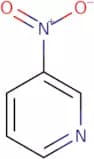
CAS:<p>Please enquire for more information about L-Tyrosine 4-nitroanilide including the price, delivery time and more detailed product information at the technical inquiry form on this page</p>Fórmula:C15H15N3O4Pureza:Min. 95%Peso molecular:301.3 g/mol3-Nitropyridine
CAS:3-Nitropyridine is a nitro compound that is used in the preparation of pharmaceuticals. It has been shown to have an inhibitory effect on HIV and other viruses, which may be due to its ability to react with nucleophilic groups. 3-Nitropyridine has also been shown to have an inhibitory effect on the human immunodeficiency virus (HIV) by reacting with the acidic group of the virus. This reaction prevents the virus from binding to cells and entering them. 3-Nitropyridine is also used as a solvent for organic reactions.Fórmula:C5H4N2O2Pureza:Min. 95%Cor e Forma:PowderPeso molecular:124.1 g/mol4-Fluoro-3-nitropyridine
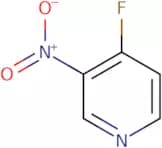
CAS:<p>4-Fluoro-3-nitropyridine is a reactive chemical that can react with alcohols, amines, and amino acids. It has been shown to have absorption spectra in the ultraviolet region of the light spectrum. 4-Fluoro-3-nitropyridine is also a pyridine derivative.</p>Fórmula:C5H3FN2O2Pureza:Min. 95%Cor e Forma:Off-White PowderPeso molecular:142.09 g/mol6-Amino-1-methyl-5-nitrosouracil
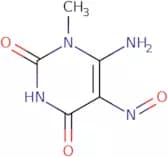
CAS:<p>6-Amino-1-methyl-5-nitrosouracil is a neutral form of the molecule that has both protonated and unprotonated forms. It is a bidentate ligand that can bind to a metal ion. The nitrogen atom in the molecule is an important part of its structure, as it contains two nitro groups and one amino group. 6-Amino-1-methyl-5-nitrosouracil has been used in techniques such as spectroscopies and dinitroso analysis. The neutral form of the molecule can be converted into its ionic form by adding either chlorine or nitrate ions to it, which causes the nitrogen atoms to be more electronegative. This conversion changes the nature of the compound, making it more acidic. Dehydration also occurs when water molecules are removed from 6-amino 1 methyl 5 nitrosourea, which causes a change in shape and shifts its properties to</p>Fórmula:C5H6N4O3Pureza:Min. 95%Peso molecular:170.13 g/mol



![(aR)-a-[[[2-(4-Nitrophenyl)ethyl]amino]methyl]benzenemethanol](/_next/image/?url=https%3A%2Fstatic.cymitquimica.com%2Fproducts%2F3D%2Fthumb-webp%2FFN75044.webp&w=3840&q=75)