Cetonas
Foram encontrados 18873 produtos de "Cetonas"
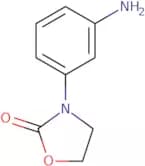
3-(3-Aminophenyl)-1,3-oxazolidin-2-one
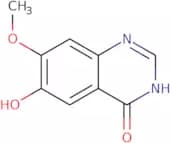
CAS:3-(3-Aminophenyl)-1,3-oxazolidin-2-one is a fine chemical that is used as a building block for more complex compounds. It has been shown to be an effective reagent for the synthesis of complex compounds and can be used as a reaction component in research. 3-(3-Aminophenyl)-1,3-oxazolidin-2-one is also useful in the production of pharmaceuticals and other specialty chemicals.Fórmula:C9H10N2O2Pureza:(¹H-Nmr) Min. 95 Area-%Cor e Forma:PowderPeso molecular:178.19 g/mol6-Hydroxy-7-methoxy-3,4-dihydroquinazolin-4-one
CAS:6-Hydroxy-7-methoxy-3,4-dihydroquinazolin-4-one is an amination of chloropropane and morpholinyl with 3-chloro-4-fluoroaniline. It cyclizes to form a quinazolinone. This compound was synthesized in order to produce a cytotoxic agent for cancer treatment.Fórmula:C9H8N2O3Pureza:Min. 95%Cor e Forma:PowderPeso molecular:192.17 g/mol3-[[3-[(Dimethylamino)carbonyl]-2-hydroxyphenyl]amino]-4-[[(R)-1-(4-isopropylfuran-2-yl)propyl]amino]cyclobut-3-ene-1,2-dione
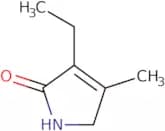
CAS:Please enquire for more information about 3-[[3-[(Dimethylamino)carbonyl]-2-hydroxyphenyl]amino]-4-[[(R)-1-(4-isopropylfuran-2-yl)propyl]amino]cyclobut-3-ene-1,2-dione including the price, delivery time and more detailed product information at the technical inquiry form on this pageFórmula:C23H27N3O5Pureza:Min. 95%Peso molecular:425.48 g/mol3-Ethyl-4-methyl-3-pyrrolin-2-one
CAS:3-Ethyl-4-methyl-3-pyrrolin-2-one is a sulfonated dione that can be synthesized from chloroformates. The product yields are high and the compound is stable to heat, light, and hydrolysis. The compound crystallizes in a single pure form and does not contain any impurities. 3-Ethyl-4-methyl-3-pyrrolin-2-one has been used as a precursor for the synthesis of various other organic compounds. It can also be used to synthesize dimers with an aryl group at the end of the molecule.
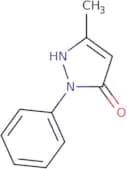
Fórmula:C7H11NOPureza:Min. 95%Cor e Forma:PowderPeso molecular:125.17 g/mol3-Methyl-1-phenyl-2-pyrazoline-5-one
CAS:3-Methyl-1-phenyl-2-pyrazoline-5-one is a drug that inhibits the production of active oxygen and has been used in clinical trials for the treatment of asthma. It belongs to the class of compounds called 1,4-benzodiazepine derivatives. 3MPP5 inhibits the activity of enzymes such as Cox2 and P450 isozymes. The most efficient method for administration is by injection. This drug has an effective dose of 0.5 mg/kg body weight, and its side effects include dizziness and headache.Fórmula:C10H10N2OPureza:Min. 95%Cor e Forma:PowderPeso molecular:174.2 g/mol1-Benzofuran-2-yl(phenyl)methanone
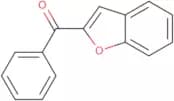
CAS:1-Benzofuran-2-yl(phenyl)methanone (1BFPM) is a benzofuran derivative. It has been shown to have significant cytotoxicity and anticancer activity, as well as radical scavenging activities. 1BFPM has been shown to inhibit glycogen synthase kinase-3, which is an enzyme that regulates the cell cycle and plays a role in tumorigenesis. This compound also inhibits the uptake of 1BFPM by cells, which may be due to its reaction with linkers in the plasma membrane or other cellular membranes.Fórmula:C15H10O2Pureza:Min. 95%Cor e Forma:PowderPeso molecular:222.24 g/mol3-Hydroxy-1-methylpyridin-4(1H)-one
CAS:3-Hydroxypyridin-4(1H)-one is a compound that belongs to the group of organic compounds called pyridines. It is a colorless, crystalline solid with a melting point of 210 °C. 3-Hydroxypyridin-4(1H)-one is soluble in ether and chloroform. 3-Hydroxypyridin-4(1H)-one forms complexes with metal ions such as copper, zinc, and nickel. The stability constants for these complexes are in the order of Cu > Zn > Ni. Potentiometric titration experiments show that the ligands are stronger bases than water and therefore react more strongly with copper ions than hydroxide ions.Fórmula:C6H7NO2Pureza:Min. 95%Cor e Forma:PowderPeso molecular:125.13 g/mol2-(2-Butoxyethyl)-1H-isoindole-1,3(2H)-dione
CAS:2-(2-Butoxyethyl)-1H-isoindole-1,3(2H)-dione is a versatile building block and intermediate with a range of chemical properties. It is a useful scaffold for the synthesis of complex compounds with different functional groups. 2-(2-Butoxyethyl)-1H-isoindole-1,3(2H)-dione can be used as an organic solvent and reaction component in organic synthesis as well as being an effective catalyst or reagent in reactions involving other chemicals. This compound has been selected by the Chemical Abstracts Service (CAS) as one of their high quality products.Fórmula:C14H17NO3Pureza:Min. 95%Cor e Forma:PowderPeso molecular:247.29 g/mol2-Benzylidenecyclohexanone
CAS:Fórmula:C13H14OPureza:>95.0%(GC)Cor e Forma:Light yellow to Brown powder to crystalPeso molecular:186.252-Chlorophenylacetone
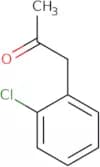
CAS:Produto Controlado2-Chlorophenylacetone is an organic chemical compound that is a substrate for enzymes. It can be used as a reagent in the synthesis of phenylacetone and other substituted phenylacetic acids, which are chiral starting materials used in the production of pharmaceuticals, pesticides, dyes, and plastics. 2-Chlorophenylacetone binds to the active site on enzymes that catalyze reactions involving ethylene, nitroethane, chloride and phenylacetone. The binding site is defined by amino acid residues at positions corresponding to glycine (G), alanine (A), and aspartic acid (D) in the enzyme's active site. 2-Chlorophenylacetone has been shown to be a powerful inhibitor of dehydrogenase activity with IC50 values of 1.5 mM for acetaldehyde dehydrogenase from yeast cells and 3.2 mM for alcohol dehydrogenase from rat liver mitochondria. In addition, itFórmula:C9H9ClOPureza:Min. 97%Cor e Forma:LiquidPeso molecular:168.62 g/mol1-Cyclohexylacetone
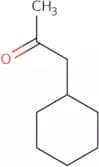
CAS:Cyclohexylacetone is a colorless liquid that is used as a solvent for the production of pharmaceutical preparations. It has been used to produce methyl ketones, which are intermediates in the synthesis of polymers and plastics. Cyclohexylacetone has also been shown to be an optimal reaction intermediate for the preparation of zirconium oxide. This compound is used as a polymerization initiator and as a fluorine-containing reagent in organic synthesis. Cyclohexylacetone can react with divalent hydrocarbons to form esters and cyclooctyl compounds.Fórmula:C9H16OPureza:Min. 95%Cor e Forma:PowderPeso molecular:140.22 g/molHydroxyacetone (stabilized with Na2CO3)
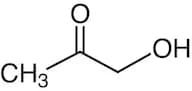
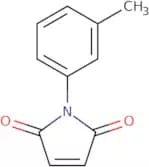
CAS:Fórmula:C3H6O2Pureza:>90.0%(GC)Cor e Forma:Colorless to Light yellow clear liquidPeso molecular:74.081-(3-Methylphenyl)-1H-pyrrole-2,5-dione
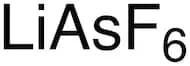
CAS:1-(3-Methylphenyl)-1H-pyrrole-2,5-dione is an anti-aging compound that has been shown to inhibit the replication of herpes viruses. It also inhibits corrosion, in particular by orthophosphoric acid. The monomer itself is useful as a viscosity agent and can be used in the synthesis of polymers such as dibutyl phthalate. 1-(3-Methylphenyl)-1H-pyrrole-2,5-dione has a high yield and can be used for analyzing magnesium oxide.Fórmula:C11H9NO2Pureza:Min. 95%Cor e Forma:White PowderPeso molecular:187.19 g/molLithium Hexafluoroarsenate(V)
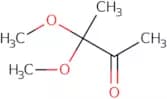
CAS:Fórmula:LiAsF6Pureza:>98.0%(T)Cor e Forma:White to Almost white powder to crystalPeso molecular:195.853,3-Dimethoxy-2-butanone
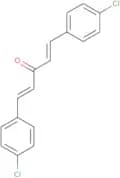
CAS:3,3-Dimethoxy-2-butanone is a synthetic compound that is used as a biodiesel. It can be synthesized by the following synthetic scheme:Fórmula:C6H12O3Pureza:Min. 95%Cor e Forma:Clear LiquidPeso molecular:132.16 g/mol1,5-Di(4-Chlorophenyl)penta-1,4-dien-3-one
CAS:1,5-Di(4-chlorophenyl)penta-1,4-dien-3-one is a chromophore that has been extensively studied for its vibrational and optical properties. This compound has shown biological activity in the form of antitumor activity, as well as an ability to inhibit radiation and carcinogenesis. The optical properties of 1,5-di(4-chlorophenyl)penta-1,4-dien-3-one are determined by its polarizability and carbonyl group. Further research is needed to determine the functional theory and techniques used to study this compound's optical properties.Fórmula:C17H12Cl2OPureza:Min. 95%Peso molecular:303.18 g/molTris(dibenzylideneacetone)dipalladium (0)-chloroform adduct
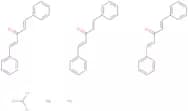
CAS:Produto ControladoTris(dibenzylideneacetone)dipalladium (0)-chloroform adduct is a catalyst that is used in cross-coupling reactions. It is an efficient method for the preparation of β-unsaturated ketones, which are important intermediates in organic synthesis. The catalytic cycle involves hydrolysis and condensation reactions. Tris(dibenzylideneacetone)dipalladium (0)-chloroform adduct can be prepared by reacting chloroform with a palladium compound in the presence of silver trifluoromethanesulfonate and a diphosphine ligand. The product contains a chloroform molecule that can be replaced by other functional groups such as chloride, fatty acid, or imine nitrogen. Tris(dibenzylideneacetone)dipalladium (0)-chloroform adduct has been characterized by x-ray crystal structures to identifyFórmula:C51H42O3Pd2·CHCl3Pureza:Min. 95%Cor e Forma:PowderPeso molecular:1,035.09 g/mol(2E,4E)-1-(4-Chlorophenyl)-5-phenylpenta-2,4-dien-1-one
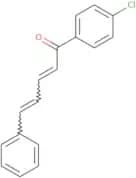
CAS:2,4-Dien-1-one is a cyclic dienone that is used in the preparation of various pharmaceutical drugs. It has been reported to be an excellent building block for the synthesis of complex compounds. This compound has shown antimicrobial activity against methicillin resistant Staphylococcus aureus (MRSA) and Mycobacterium tuberculosis. 2,4-Dien-1-one is a versatile intermediate that can be used as a speciality chemical or research chemicals. It is also a useful scaffold for the synthesis of various pharmaceutical drugs and can be used as a reaction component for various reactions.Fórmula:C17H13ClOPureza:Min. 95%Cor e Forma:PowderPeso molecular:268.74 g/mol2,2,6-Trimethyl-1-cyclohexanone
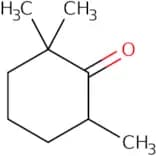
CAS:Covid-19 is a synthetic compound that has been shown to have antiviral activity. Covid-19 is a carotenoid derivative that is hydrophobic and does not dissolve in water. It is oxidized to produce an isomeric mixture of products, which are characterized by vibrational spectroscopy. Covid-19 has synergistic effects with ethyl bromoacetate, which is a solvent with low energy. Covid-19 can be extracted from the sample using solid phase microextraction (SPME).Fórmula:C9H16OPureza:Min. 95%Cor e Forma:Colorless PowderPeso molecular:140.22 g/mol5-Fluoro-3-hydrazonoindolin-2-one
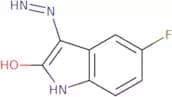
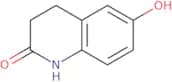
CAS:5-Fluoro-3-hydrazonoindolin-2-one is an organic compound that can be synthesized using ethyl acetate as a solvent and formylation with malate. This process is scalable and offers high yields. The reaction time for this synthesis is relatively short, making it ideal for industrialization. 5-Fluoro-3-hydrazonoindolin-2-one can also be used to synthesize sunitinib, which is an experimental drug used to treat cancer. Sunitinib has been shown to inhibit the growth of cancer cells by interfering with the activity of proteins involved in cell proliferation, cell cycle progression, and cellular differentiation.Fórmula:C8H6FN3OPureza:Min. 95%Cor e Forma:SolidPeso molecular:179.15 g/mol6-Hydroxy-3,4-dihydro-1H-quinoline-2-one
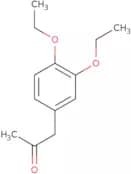
CAS:This is a quinoline derivative that has been shown to have inotropic and cardioprotective effects. It has been shown to increase the duration of action potentials and contractions in isolated heart muscle, as well as to improve the function of the heart by reducing the rate of myocardial oxygen consumption. 6-Hydroxy-3,4-dihydro-1H-quinoline-2-one has been shown to have anti-inflammatory properties and may be useful for treating respiratory diseases such as asthma. This compound is also used as a precursor for some pharmaceutical drugs, including chloroquine, mefloquine, amodiaquine, and primaquine. The compound is metabolized into conjugates that are recycled back into the body or excreted in human urine; this process is regulated by the balance between conjugation reactions and hydrolysis reactions.Fórmula:C9H9NO2Pureza:Min. 95%Peso molecular:163.17 g/mol3,4-Diethoxyphenylacetone
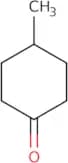
CAS:3,4-Diethoxyphenylacetone is a chemical compound that is used as a building block for research and as an intermediate in the synthesis of other chemicals. This compound is also used as a reagent. 3,4-Diethoxyphenylacetone has CAS number 93635-48-4.Fórmula:C13H18O3Pureza:Min. 95%Peso molecular:222.28 g/mol4-Methylcyclohexanone
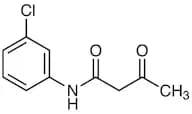
CAS:4-Methylcyclohexanone is a diazonium salt that has been shown to be an intramolecular hydrogen-bonded substrate for the hydroxyl group. It has been used as a precursor for the synthesis of 2,4-diaminobenzoic acid (2,4-DABA) and 3,5-diaminoquinoxaline (3,5-DQNX). 4-Methylcyclohexanone is also used in the production of herbicides and other organic compounds. The reaction mechanism can be explained by considering that 4-methylcyclohexanone is an electron donor with two hydroxyl groups. One of these groups will react with a diazonium salt to provide the α-hydroxyimine intermediate. This intermediate then reacts with another molecule of cyclohexanone to yield the desired product. A typical example of this mechanism is shown below: The acetateFórmula:C7H12OPureza:Min. 95%Cor e Forma:Clear LiquidPeso molecular:112.17 g/molN-(3-Chlorophenyl)-3-oxobutyramide
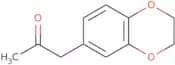
CAS:Fórmula:C10H10ClNO2Pureza:>96.0%(T)(HPLC)Cor e Forma:White to Orange to Green powder to crystalPeso molecular:211.653,4-Ethylenedioxyphenylacetone
CAS:3,4-Ethylenedioxyphenylacetone is an organic compound that is used as a building block in the synthesis of other chemical compounds. This compound has been found to be useful in the production of pharmaceuticals, dyes, and perfumes. 3,4-Ethylenedioxyphenylacetone can also be used as a reaction component or reagent in laboratory experiments.Fórmula:C11H12O3Pureza:90%Cor e Forma:Clear LiquidPeso molecular:192.21 g/molZ-Phe-Tyr(tBu)-diazomethylketone
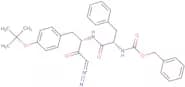
CAS:Z-Phe-Tyr(tBu)-diazomethylketone is a compound that is used in the treatment of cancer and HIV. It was developed as an antiviral therapy for HIV, but it has been found to be ineffective against HIV. Z-Phe-Tyr(tBu)-diazomethylketone has been shown to produce attenuating effects on syncytial virus and may be a potential antiviral drug. This compound is not active against regulatory sequences or tissues, but it does inhibit endoproteolytic processing of n6-methyladenosine, which leads to modifications in rna binding.
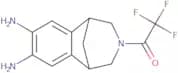
Fórmula:C31H34N4O5Pureza:Min. 95%Cor e Forma:Off-White PowderPeso molecular:542.63 g/mol1-(7,8-Diamino-1,2,4,5-tetrahydro-1,5-methano-3H-3-benzazepin-3-yl)-2,2,2-trifluoroethanone
CAS:Varenicline Diamine Impurity - Bio-X ™ is a diamine impurity of varenicline, a medication used for smoking cessation. Varenicline acts as a partial agonist at α4β2 nicotinic acetylcholine receptors, which are involved in the addictive effects of nicotine. Researchers utilize this compound to study its effects on nicotine addiction and develop potential treatments for smoking cessation. This impurity is used as a reference standard or analytical tool in the quality control and manufacturing process of varenicline and serves as an important marker for ensuring the purity and consistency of varenicline during its production, helping to maintain the medication's safety and efficacy for patients seeking to quit smoking.Fórmula:C13H14F3N3OPureza:Min. 96 Area-%Cor e Forma:PowderPeso molecular:285.27 g/mol3'-(Trimethoxyphenyl)acetone
3'-(Trimethoxyphenyl)acetone is a reagent and useful scaffold for the synthesis of complex compounds. It is also used as a reaction component in the preparation of valuable research chemicals, specialty chemicals, and fine chemicals. 3'-(Trimethoxyphenyl)acetone has been shown to be an effective building block for synthesizing complex compounds, such as heterocycles. This chemical has a CAS number of 689-52-3.
Pureza:Min. 95%2',5'-Dimethoxypropiophenone
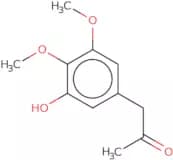
CAS:Fórmula:C11H14O3Pureza:>98.0%(GC)Cor e Forma:Light orange to Yellow to Green clear liquidPeso molecular:194.23(3,4-Dimethoxy-5-hydroxyphenyl)acetone
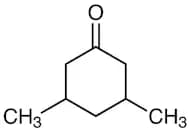
CAS:(3,4-Dimethoxy-5-hydroxyphenyl)acetone is a fine chemical that belongs to the class of compounds known as reagents. It has been used in research and development as a building block or intermediate for the synthesis of other chemicals. It is also used as a versatile building block in complex organic syntheses, such as pharmaceuticals. The chemical is soluble in organic solvents and reacts with many other chemicals, making it useful for synthetic chemistry. This compound has been shown to be high quality and can be used to synthesize other chemicals with diverse properties.Fórmula:C11H14O4Pureza:Min. 95%Peso molecular:210.23 g/mol3,5-Dimethylcyclohexanone (mixture of isomers)
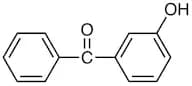
CAS:Fórmula:C8H14OPureza:>98.0%(GC)Cor e Forma:Colorless to Light yellow clear liquidPeso molecular:126.203-Hydroxybenzophenone
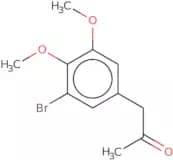
CAS:Fórmula:C13H10O2Pureza:>98.0%(GC)Cor e Forma:White to Gray to Brown powder to crystalPeso molecular:198.22(3-Bromo-4,5-dimethoxyphenyl)acetone
CAS:(3-Bromo-4,5-dimethoxyphenyl)acetone is a reagent that is used as an intermediate in the synthesis of a variety of compounds. It also has potential use as a building block for the synthesis of a wide range of complex compounds. (3-Bromo-4,5-dimethoxyphenyl)acetone can be used as a building block for chemical reactions and research chemicals. This compound has been shown to have versatile applications and is useful in the synthesis of fine chemicals, speciality chemicals, and research chemicals.Fórmula:C11H13BrO3Pureza:Min. 95%Peso molecular:273.12 g/mol4-Methoxy-2-methylphenylacetone
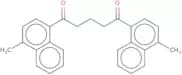
CAS:4-Methoxy-2-methylphenylacetone (4MMPA) is a reagent that is used as an intermediate for the synthesis of high quality fine chemicals. It is also a useful scaffold and building block in organic synthesis. 4MMPA is a versatile building block, which can be used in the synthesis of speciality chemicals, research chemicals, and reaction components. 4MMPA has CAS number 16882-24-9.Fórmula:C11H14O2Pureza:Min. 95%Peso molecular:178.23 g/mol1,5-Bis(4-Methyl-naphthalene-1-yl)-pentane-1,5-dione
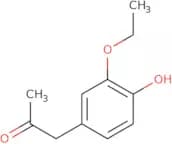
CAS:1,5-Bis(4-Methyl-naphthalene-1-yl)-pentane-1,5-dione is a high quality chemical that is used as an intermediate in the production of various complex compounds. It has been shown to be a useful scaffold for the synthesis of novel compounds with a variety of properties and uses. This compound can be used as a building block in reactions to produce speciality chemicals, research chemicals, and versatile building blocks. 1,5-Bis(4-Methyl-naphthalene-1-yl)-pentane-1,5-dione is also a reaction component that is used in the synthesis of various other compounds.Fórmula:C27H24O2Pureza:Min. 95%Peso molecular:380.48 g/mol3-Ethoxy-4-hydroxyphenylacetone
CAS:3-Ethoxy-4-hydroxyphenylacetone is a fine chemical that can be used as a versatile building block and useful intermediate. It has a CAS number of 88659-82-9. 3-Ethoxy-4-hydroxyphenylacetone is a complex compound with many uses, such as research chemicals, reaction component, or speciality chemical. It is water soluble and has been shown to be non toxic. The purity of the product is high quality.
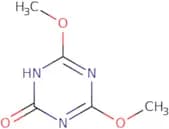
Fórmula:C11H14O3Pureza:Min. 95%Peso molecular:194.23 g/mol4,6-Dimethoxy-1H-1,3,5-triazin-2-one
CAS:4,6-Dimethoxy-1H-1,3,5-triazin-2-one is a conjugate of pyridinium with an amide. The compound has been used as a disinfectant for surfaces and in the treatment of wounds. It is also used as a biocide in water treatment. This compound has shown to be effective against Staphylococcus aureus and other bacteria, as well as some fungi. 4,6-Dimethoxy-1H-1,3,5-triazin-2-one can be synthesized from 2-(4'-methoxyphenyl)acetonitrile and chloral hydrate. The compound contains functionalities such as amines and oligosaccharides that are important for its antimicrobial activity.
Fórmula:C5H7N3O3Pureza:Min. 95%Cor e Forma:PowderPeso molecular:157.13 g/mol5alpha-Pregnane-3,20-dione
CAS:Produto Controlado5alpha-Pregnane-3,20-dione is a naturally occurring sex steroid hormone. It is produced by the ovaries and testes in humans and other mammals, as well as by the adrenal glands in small amounts. 5alpha-Pregnane-3,20-dione has been shown to inhibit the enzyme activity of hepatic microsomes that are responsible for the conversion of progesterone to 17beta-hydroxyprogesterone (17betaOHP). This inhibition is due to its ability to bind to glucocorticoid receptors. 5alpha-Pregnane-3,20-dione also inhibits fatty acid synthesis in liver cells. The drug's antiproliferative effects on ovarian cells are mediated through a number of mechanisms including transcriptional repression of progesterone receptors and estradiol benzoate binding sites on DNA. 5alpha-Pregnane-3,20-dione has been shown to have an optimalFórmula:C21H32O2Pureza:Min. 95%Cor e Forma:PowderPeso molecular:316.48 g/mol1-{{[5-(4-Nitrophenyl)-2-furanyl]methylene}amino}-2,4-imidazolidinedione
CAS:Dantrolene is an experimental model for malignant hyperthermia, a rare genetic condition that can cause muscle rigidity and death. Dantrolene has been shown to inhibit the activity of the dinucleotide phosphate (NADH) dehydrogenase enzyme in muscle cells. In addition, it inhibits calcium release from the sarcoplasmic reticulum and activates ryanodine receptors. Dantrolene also inhibits muscle contractions and prevents neuronal death by inhibiting the release of glutamate.Fórmula:C14H10N4O5Pureza:Min. 95%Cor e Forma:SolidPeso molecular:314.25 g/mol6-Amino-8-methyl-2H-1,4-benzoxazin-3(4H)-one
CAS:6-Amino-8-methyl-2H-1,4-benzoxazin-3(4H)-one is a fine chemical that is a useful building block for research chemicals and speciality chemicals. It can be used as a reagent in organic synthesis, as well as in the production of high quality and versatile building blocks. 6-Amino-8-methyl-2H-1,4-benzoxazin-3(4H)-one can be reacted to form useful scaffolds or intermediates that are valuable in the process of making complex compounds.Fórmula:C9H10N2O2Pureza:Min. 95%Cor e Forma:PowderPeso molecular:178.19 g/mol2-Bromo-4'-methylpropiophenone
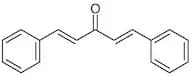
CAS:Fórmula:C10H11BrOPureza:>98.0%(GC)Cor e Forma:White to Almost white powder to crystalPeso molecular:227.10trans,trans-1,5-Diphenyl-1,4-pentadien-3-one
CAS:Fórmula:C17H14OPureza:>99.0%(GC)Cor e Forma:Light yellow to Yellow to Green powder to crystalPeso molecular:234.304-Aminopyridazin-3(2H)-one
CAS:4-Aminopyridazin-3(2H)-one is an antiplatelet drug that has been shown to have a pharmacological effect on the central nervous system. It is also used as a chemotherapeutic agent for the treatment of certain types of cancer. 4-Aminopyridazin-3(2H)-one contains two nitrogen atoms that are substituted with methyl groups, which can be hydrolyzed by liver enzymes to form pyridazine and 4-aminopyridine. 4-Aminopyridazin-3(2H)-one inhibits bacterial growth by inhibiting protein synthesis and cell division at the ribosome level. This drug also has antimicrobial activity against Gram-positive bacteria and fungi, but is not active against Gram-negative bacteria such as Escherichia coli.
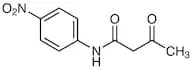
Fórmula:C4H5N3OPureza:Min. 95%Cor e Forma:White To Yellow SolidPeso molecular:111.1 g/molN-(4-Nitrophenyl)-3-oxobutyramide
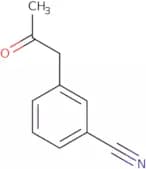
CAS:Fórmula:C10H10N2O4Pureza:>98.0%(T)(HPLC)Cor e Forma:White to Amber powder to crystalPeso molecular:222.203-Cyanophenylacetone
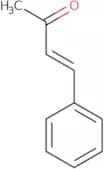
CAS:3-Cyanophenylacetone is a versatile building block and useful intermediate in the synthesis of various pharmaceuticals, agrochemicals, and other chemical products. It can be used as a reagent or speciality chemical. 3-Cyanophenylacetone is also a useful scaffold for the synthesis of complex compounds. This compound is listed on the Chemical Abstracts Service (CAS) registry with the number 73013-50-0.Fórmula:C10H9NOPureza:Min. 95%Peso molecular:159.18 g/mol4-Phenyl-3-buten-2-one
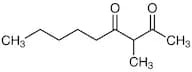
CAS:4-Phenyl-3-buten-2-one (4PB) is a structural analog of benzalacetone, which is an inhibitor of cytochrome P450. It has been shown to inhibit the activities of various cytochrome P450 enzymes in vitro. 4PB can be used as a substrate molecule for chemical synthesis and as a cell specific marker. The basic structure of 4PB has been determined using electrochemical impedance spectroscopy and x-ray crystal structures.Fórmula:C10H10OPureza:Min. 95%Cor e Forma:PowderPeso molecular:146.19 g/mol3-Methylnonane-2,4-dione
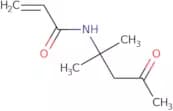
CAS:Fórmula:C10H18O2Pureza:>97.0%(GC)Cor e Forma:Colorless to Yellow to Green clear liquidPeso molecular:170.25Diacetone acrylamide
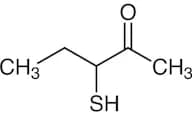
CAS:Diacetone acrylamide is a chemical compound that has the molecular formula C3H6O2N2. It is a colorless liquid with a low boiling point and an unpleasant odor. Diacetone acrylamide has been used as an intermediate in the production of polyvinyl acetate. It can also be used as an additive to rubber, plastics, and other materials. The thermal expansion coefficient of diacetone acrylamide is similar to that of polyvinyl chloride and polystyrene, making it a useful material for constructing models of those substances.Fórmula:C9H15NO2Pureza:Min. 98%Cor e Forma:PowderPeso molecular:169.22 g/mol3-Mercapto-2-pentanone
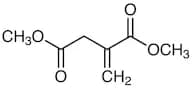
CAS:Fórmula:C5H10OSPureza:>97.0%(GC)(T)Cor e Forma:Colorless to Almost colorless clear liquidPeso molecular:118.19Dimethyl Itaconate (stabilized with HQ)
CAS:Fórmula:C7H10O4Pureza:>98.0%(GC)Cor e Forma:White or Colorless to Light yellow powder to lump to clear liquidPeso molecular:158.15

![3-[[3-[(Dimethylamino)carbonyl]-2-hydroxyphenyl]amino]-4-[[(R)-1-(4-isopropylfuran-2-yl)propyl]ami…](/_next/image/?url=https%3A%2Fstatic.cymitquimica.com%2Fproducts%2F3D%2Fthumb-webp%2FFD152335.webp&w=3840&q=75)






![1-{{[5-(4-Nitrophenyl)-2-furanyl]methylene}amino}-2,4-imidazolidinedione](/_next/image/?url=https%3A%2Fstatic.cymitquimica.com%2Fproducts%2F3D%2Fthumb-webp%2FFN138588.webp&w=3840&q=75)