Cetonas
As cetonas são compostos orgânicos caracterizados pela presença de um grupo carbonilo (C=O) ligado a dois átomos de carbono. Esses compostos são altamente versáteis e desempenham um papel crucial em várias reações químicas, incluindo oxidação, redução e condensação. As cetonas são intermediários essenciais na síntese de produtos farmacêuticos, fragrâncias e polímeros. Na CymitQuimica, oferecemos uma ampla gama de cetonas de alta qualidade para apoiar suas aplicações de pesquisa e industriais.
Foram encontrados 18810 produtos de "Cetonas"
Ordenar por
Pureza (%)
0
100
|
0
|
50
|
90
|
95
|
100
5-(2,4-Dimethoxyphenyl)cyclohexane-1,3-dione
CAS:Produto Controlado<p>Please enquire for more information about 5-(2,4-Dimethoxyphenyl)cyclohexane-1,3-dione including the price, delivery time and more detailed product information at the technical inquiry form on this page</p>Fórmula:C14H16O4Pureza:Min. 95%Peso molecular:248.27 g/mol5-Bromo-6-methylpyrimidine-2,4(1H,3H)-dione
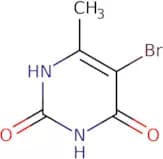
CAS:<p>5-Bromo-6-methylpyrimidine-2,4(1H,3H)-dione is an immunosuppressive drug that belongs to the class of hydantoins. It can be used to treat a variety of diseases associated with immunodeficiency including AIDS. 5-Bromo-6-methylpyrimidine-2,4(1H,3H)-dione inhibits viral replication by alkylating nucleotides and DNA synthesis at the GTPase level. The amide group in the molecule is responsible for this property. Kinetics studies have shown that the rate of hydrolysis of 5-bromo-6-methylpyrimidine-2,4(1H,3H)-dione depends on the pH and temperature of solution.</p>Fórmula:C5H5BrN2O2Pureza:Min. 95%Peso molecular:205.01 g/mol3,7,4'-Trihydroxy-5-methoxy-8-prenylflavanone, (2R,3R)-
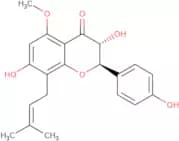
CAS:<p>3,7,4'-Trihydroxy-5-methoxy-8-prenylflavanone, (2R,3R)- is a prenylated flavonoid compound, which is a type of naturally occurring polyphenol. These compounds are known for their complex structures and biological activities, frequently contributing to the therapeutic properties of various plants. The source of this flavanone is often plants belonging to the Fabaceae family, including the roots and other parts of certain legumes, where it accumulates as part of the plant’s secondary metabolism.</p>Pureza:Min. 95%5α-Androstan-3-one
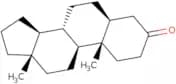
CAS:Produto Controlado<p>5alpha-Androstan-3-one is a metabolic intermediate of testosterone. It is found in the urine of humans and other mammals, but at concentrations that are 10 to 100 times lower than those of testosterone. It is also found in some plants and fungi. 5alpha-Androstan-3-one can be synthesized from cholesterol, or it can be formed by the hydroxylation of testosterone in response to the action of cytochrome P450 enzymes. The synthesis of 5alpha-androstan-3-one from cholesterol requires a significant amount of energy, so it is not likely to be a major route for its production. In contrast, the conversion of testosterone to 5alpha-androstan-3-one is an important pathway for maintaining physiological levels of this metabolite. The activity of 5alpha-androstan-3-one has been shown to depend on its concentration in tissues and cells. At low concentrations (less than 10 nM) 5alpha -</p>Fórmula:C19H30OPureza:Min. 95%Peso molecular:274.44 g/mol4-(Trifluoromethyl)cyclohexanone
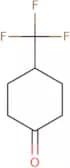
CAS:<p>4-(Trifluoromethyl)cyclohexanone is a reagent that is used in the synthesis of cyclohexanones, which are used to produce diazo compounds. In this process, the 4-trifluoromethyl group reacts with an aldehyde to form a cyclic intermediate, which then reacts with nitroethane to give the desired product. This compound has been shown experimentally to have a diastereoselection of about 75% for the formation of one stereoisomer over another.</p>Fórmula:C7H9F3OPureza:Min. 95%Peso molecular:166.14 g/molDichloro(1,1-bis(diphenylphosphino)ferrocene)palladium(II)acetoneadduct
CAS:Produto Controlado<p>Please enquire for more information about Dichloro(1,1-bis(diphenylphosphino)ferrocene)palladium(II)acetoneadduct including the price, delivery time and more detailed product information at the technical inquiry form on this page</p>Fórmula:C37H34Cl2FeOP2PdPureza:Min. 95%Peso molecular:789.78 g/mol3-Amino-5-(2,3,4-trimethoxyphenyl)cyclohex-2-en-1-one
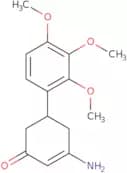
CAS:Produto Controlado<p>Please enquire for more information about 3-Amino-5-(2,3,4-trimethoxyphenyl)cyclohex-2-en-1-one including the price, delivery time and more detailed product information at the technical inquiry form on this page</p>Fórmula:C15H19NO4Pureza:Min. 95%Peso molecular:277.32 g/mol3-Amino-2,3-dihydro-1λ6-thiophene-1,1-dione hydrochloride
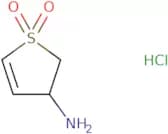
CAS:<p>Please enquire for more information about 3-Amino-2,3-dihydro-1λ6-thiophene-1,1-dione hydrochloride including the price, delivery time and more detailed product information at the technical inquiry form on this page</p>Fórmula:C4H7NO2S•HClPureza:Min. 95%Peso molecular:169.63 g/mol5-Chloro-2-pentanone
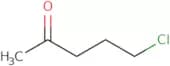
CAS:<p>5-Chloro-2-pentanone is a reactive, unsaturated ketone. It is a colorless liquid with a pungent odor. 5-Chloro-2-pentanone can be used in the synthesis of other organic compounds, such as covid-19 pandemic. The reaction of carbonyl groups with hydrogen chloride and chlorine atom to form hydrochloric acid and chlorocarbons is an example of a reaction that 5-chloro-2-pentanone can take part in. When 5-chloro-2-pentanone reacts with hydrogen chloride (HCl) and chlorine atom (Cl), the reaction products are hydrochloric acid (HCl) and chlorocarbons. This process is called nucleophilic attack and proceeds as follows: 5CH=C(CH)COH + HCl + Cl → CH=C(CH)COCl + H+ + Cl 5CH=C</p>Fórmula:C5H9ClOPureza:Min. 95%Cor e Forma:Clear LiquidPeso molecular:120.58 g/mol(2S,3S)-5-[2-(Dimethylamino)ethyl]-3-hydroxy-2-(4-methoxyphenyl)-2,3-dihydro-1,5-benzothiazepin-4-one hydrochloride
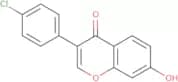
CAS:<p>(2S,3S)-5-[2-(Dimethylamino)ethyl]-3-hydroxy-2-(4-methoxyphenyl)-2,3-dihydro-1,5-benzothiazepin-4-one hydrochloride is a racemic mixture of two enantiomers. It is a prodrug that is hydrolyzed to its active form, diltiazem. The drug has been shown to be effective in the treatment of hypertension and angina pectoris. (2S,3S)-5-[2-(Dimethylamino)ethyl]-3-hydroxy-2-(4-methoxyphenyl)-2,3-dihydro-1,5-benzothiazepin-4-one hydrochloride has been shown to inhibit the activity of the enzyme phosphodiesterase which breaks down cyclic AMP. This inhibition results in an increase in levels of</p>Fórmula:C20H24N2O3S·HClPureza:Min. 95%Peso molecular:408.94 g/mol3-(4--Chloro-phenyl)-7-hydroxy-chromen-4-one
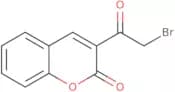
CAS:<p>3-(4-Chloro-phenyl)-7-hydroxy-chromen-4-one is an intermediate that is used in the research of Alzheimer's disease. It coordinates transition metals, such as copper (Cu), zinc (Zn), and nickel (Ni) to form a pharmacophore. This pharmacophore binds with flavones, which are compounds found in plants that have hypotensive and antihypertensive properties. 3-(4-Chloro-phenyl)-7-hydroxy-chromen-4-one has been shown to be an effective inhibitor of angiotensin II type 1 receptors and has a crystalline structure. 3-(4--Chloro---></p>Fórmula:C15H9ClO3Pureza:Min. 95%Peso molecular:272.68 g/mol3-(2-Bromoacetyl)-2H-chromen-2-one
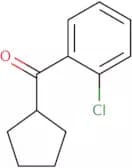
CAS:<p>3-(2-Bromoacetyl)-2H-chromen-2-one is a compound that has been shown to inhibit the growth of human liver cancer cells and has been used in the treatment of some cancers. 3-(2-Bromoacetyl)-2H-chromen-2-one is a nucleophile, which reacts with electrophiles, such as 2Nal, to form an intermediate covalent bond. The reaction mechanism for this process involves a nucleophilic substitution reaction, where one atom (the nucleophile) attacks another atom (the electrophile) from the side opposite its electron cloud. This process results in the formation of a covalent bond between the two atoms and the release of water. 3-(2-Bromoacetyl)-2H-chromen-2one was found to be effective against Streptococcus faecalis and other bacteria after being tested in vitro with these organisms. In addition to being</p>Fórmula:C11H7BrO3Pureza:Min. 95%Cor e Forma:PowderPeso molecular:267.08 g/mol2-Chlorophenyl cyclopentyl ketone
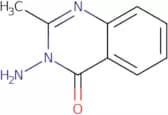
CAS:Produto Controlado<p>2-Chlorophenyl cyclopentyl ketone (2CCPK) is a synthetic, green, and scalable process for the preparation of cyclopentyl compounds. It has been used in analytical and preparative HPLC methods. 2CCPK is an acidic compound that can be analyzed by HPLC techniques. Preparative HPLC is used to isolate the product from impurities. The flow rate of 2CCPK can be determined using analytical HPLC techniques.</p>Fórmula:C12H13ClOPureza:Min. 95%Cor e Forma:Clear LiquidPeso molecular:208.68 g/mol3-Amino-2-methylquinazolin-4(3H)-one
CAS:Produto Controlado<p>3-Amino-2-methylquinazolin-4(3H)-one is a bidentate ligand that has been shown to have antibacterial and anticancer activity. The functional theory of the compound is based on its ability to form an imine nitrogen with metal ions such as Fe(II) or Cu(II). 3-Amino-2-methylquinazolin-4(3H)-one is not active against Staphylococcus aureus, but inhibits the growth of other bacteria by binding to their ribosomes and inhibiting protein synthesis. 3-Amino-2-methylquinazolin-4(3H)-one also has in vitro anticancer activity, which may be due to its ability to inhibit DNA synthesis and cell division.</p>Fórmula:C9H9N3OPureza:Min. 95%Peso molecular:175.19 g/mol3-Oxabicyclo[3.1.0]hexane-2,4-dione
CAS:<p>3-Oxabicyclo[3.1.0]hexane-2,4-dione is a cocatalyst with a molecular formula of C6H14O3. It is a synthetic compound that is used as an inhibitor in organic synthesis reactions and as a cocatalyst for the ring-opening polymerization of cyclic olefins. 3-Oxabicyclo[3.1.0]hexane-2,4-dione binds to the receptor subtype site on the benzene ring of benzoate, amines, and acid catalysts. This binding prevents the formation of an enzyme/substrate complex at the active site of the enzyme, inhibiting its activity and leading to cell death.</p>Pureza:95%Nmr3-Methylcyclopentanone
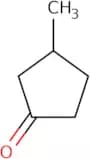
CAS:<p>3-Methylcyclopentanone is a chiral compound that can be prepared by the asymmetric synthesis of 3-methylpentan-2-one. The chemical analyses of 3-methylcyclopentanone have been found to have a dry weight of 136.19 g/mol, with a molecular formula of C5H7O2. 3-Methylcyclopentanone can be identified by its hydrogen bonding interactions and hydroxyl group (-OH). The photoelectron spectrum shows the presence of an intramolecular hydrogen bond between the -OH group and one of the methyl groups. This intramolecular hydrogen bond is responsible for the high boiling point and low reactivity. This molecule has an a-type configuration, which gives it a higher mass analyzer peak at m/z = 166 than for other configurations, such as b or c. This product description is not complete, please help us improve it by filling in missing details!</p>Fórmula:C6H10OPureza:Min. 95%Cor e Forma:Clear LiquidPeso molecular:98.14 g/mol(R)-(+)-4-(Methoxymethyl)-1,3-dioxolan-2-one
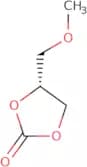
CAS:<p>Please enquire for more information about (R)-(+)-4-(Methoxymethyl)-1,3-dioxolan-2-one including the price, delivery time and more detailed product information at the technical inquiry form on this page</p>Fórmula:C5H8O4Pureza:Min. 95%Peso molecular:132.11 g/mol1-[3-Chloro-5-(trifluoromethyl)phenyl]ethanone
CAS:<p>Please enquire for more information about 1-[3-Chloro-5-(trifluoromethyl)phenyl]ethanone including the price, delivery time and more detailed product information at the technical inquiry form on this page</p>Fórmula:C9H6ClF3OPureza:Min. 95%Peso molecular:222.59 g/mol5-Chloro-1H-imidazo[4,5-b]pyridin-2(3H)-one
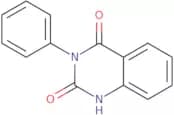
CAS:<p>5-Chloro-1H-imidazo[4,5-b]pyridin-2(3H)-one is a chemical compound that is used in analytical chemistry as an insecticide. It has been shown to cause genotoxic activity in weevils exposed to light. The compound has also been shown to have long term efficacy in plants and toxicity studies on animals. 5-Chloro-1H-imidazo[4,5-b]pyridin-2(3H)-one is metabolized by detoxification enzymes and excreted through the urine.</p>Pureza:Min. 95%3-Phenylquinazoline-2,4(1H,3H)-dione
CAS:Produto Controlado<p>3-Phenylquinazoline-2,4(1H,3H)-dione is an efficient synthesis of hydrazine. It can be used in the synthesis of other molecules.</p>Fórmula:C14H10N2O2Pureza:Min. 95%Peso molecular:238.24 g/mol



![(2S,3S)-5-[2-(Dimethylamino)ethyl]-3-hydroxy-2-(4-methoxyphenyl)-2,3-dihydro-1,5-benzothiazepin-4-…](/_next/image/?url=https%3A%2Fstatic.cymitquimica.com%2Fproducts%2F3D%2Fthumb-webp%2FFD45531.webp&w=3840&q=75)
![3-Oxabicyclo[3.1.0]hexane-2,4-dione](/_next/image/?url=https%3A%2Fstatic.cymitquimica.com%2Fproducts%2F3D%2Fthumb-webp%2FFO62778.webp&w=3840&q=75)
![1-[3-Chloro-5-(trifluoromethyl)phenyl]ethanone](/_next/image/?url=https%3A%2Fstatic.cymitquimica.com%2Fproducts%2F3D%2Fthumb-webp%2FFC90109.webp&w=3840&q=75)
![5-Chloro-1H-imidazo[4,5-b]pyridin-2(3H)-one](/_next/image/?url=https%3A%2Fstatic.cymitquimica.com%2Fproducts%2F3D%2Fthumb-webp%2FFC142316.webp&w=3840&q=75)