Amidas
Foram encontrados 16483 produtos de "Amidas"
3-Amino-4-chlorobenzamide
CAS:3-Amino-4-chlorobenzamide is an organic compound that belongs to the class of aminobenzoic acids and is used as a coupling agent in organic synthesis. It reacts with aryl halides or halides to form 3-amino-4-chlorobenzonitrile, which can be converted into anilines by heating with ammonia and ammonium chloride. This reaction has been shown to be reversible with heat. 3-Amino-4-chlorobenzamide is also used as a water absorber in paper products, such as diapers and sanitary napkins.
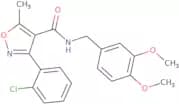
Fórmula:C7H7ClN2OPureza:Min. 95%Cor e Forma:PowderPeso molecular:170.6 g/molN-((3,4-dimethoxyphenyl)methyl)(3-(2-chlorophenyl)-5-methylisoxazol-4-yl)formamide
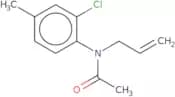
CAS:Please enquire for more information about N-((3,4-dimethoxyphenyl)methyl)(3-(2-chlorophenyl)-5-methylisoxazol-4-yl)formamide including the price, delivery time and more detailed product information at the technical inquiry form on this pagePureza:Min. 95%N-Allyl-n-(4-cyano-2-chlorophenyl)acetamide
CAS:N-Allyl-N-(4-cyano-2-chlorophenyl)acetamide is a high quality reagent that has been used as an intermediate in the synthesis of fine chemicals, useful scaffolds and building blocks. It is also a versatile building block that can be used to synthesize high quality compounds with a wide range of functionalities. N-Allyl-N-(4-cyano-2-chlorophenyl)acetamide is a speciality chemical that can be used for research purposes. This compound has been shown to produce reactions with other compounds, such as nitrobenzene, to generate useful products.
Fórmula:C12H11ClN2OPureza:Min. 95%Peso molecular:234.68 g/molDorzolamide hydrochloride
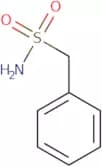
CAS:Carbonic anhydrase inhibitor; anti-glaucoma agentFórmula:C10H16N2O4S3•HClPureza:Min. 95%Cor e Forma:PowderPeso molecular:360.9 g/molPhenylmethanesulfonamide
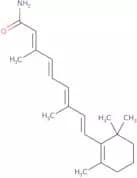
CAS:Phenylmethanesulfonamide is a chemical compound that has been shown to inhibit the proliferation of cancer cells in vitro. This drug has also been shown to be effective in reducing inflammatory diseases, such as arthritis and asthma, which may be due to its ability to inhibit prostaglandin synthesis. Phenylmethanesulfonamide has shown anti-inflammatory properties, which may be due to its inhibition of prostaglandin synthesis.Fórmula:C7H9NO2SPureza:Min. 95%Cor e Forma:PowderPeso molecular:171.22 g/molRetinamide
CAS:Retinamide is a synthetic retinoid that is used for the treatment of skin cancer. It has been shown to induce apoptosis by activation of the c-jun N-terminal kinase (JNK) and p38 pathways, as well as by suppression of signaling through the phosphatidylinositol 3-kinase (PI3K)/Akt pathway. Retinamide also inhibits proliferation of HL60 cells and induces mitochondrial membrane depolarization in colon carcinoma cells. This drug has been shown to be a potent inhibitor of squamous cell carcinoma growth in vitro and in vivo, especially when combined with other chemotherapeutic agents. Retinamide has also been found to be effective against group P2 carcinomas, which are characterized by mutations in the BRAF gene. Retinamide is metabolized by cytochrome P450 enzymes, leading to reactive metabolites that may cause toxic effects on cells. These metabolites can bind to DNA and cause strand breaksFórmula:C20H29NOPureza:Min. 95%Cor e Forma:PowderPeso molecular:299.45 g/molL-Alaninamide
CAS:L-Alaninamide is a protonated amino acid that reacts with the bacterial cell membrane and causes it to rupture. L-Alaninamide is synthesized by hydrolysis of the ester bond between butyric acid and serine protease in the presence of immobilized d-alanine. The reaction is carried out at a pH of 5.5, and the release of pressor is observed. This reaction takes place in an aqueous solution containing fatty acids as solvents. The type strain of this amino acid is E. coli.
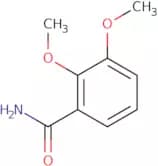
Fórmula:C3H8N2OPureza:Min. 95%Cor e Forma:PowderPeso molecular:88.11 g/mol2-Veratramide
CAS:2-Veratramide is a drug that belongs to the group of amides. It is a highly soluble, water-soluble and lipophilic molecule. The molecular modeling study revealed that it has a hydroxyl group in its structure and a hydrogen bond with the intramolecular hydrogen atom. 2-Veratramide has been observed to inhibit protein synthesis and cellular proliferation by binding to cancer cells or inflammatory cells. It also binds to dopamine receptors, inhibiting uptake of dopamine and subsequent activation of downstream signaling pathways. 2-Veratramide is an inhibitor of nitric oxide synthase (NOS), which plays an important role in inflammation, vascular tone, neurotransmission, and cell proliferation.
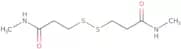
2-Veratramide inhibits NOS by competitively binding to the heme moiety at the active site of the enzyme, thereby blocking access to substrate arginine.Fórmula:C9H11NO3Pureza:Min. 97%Cor e Forma:PowderPeso molecular:181.19 g/molN,N'-Dimethyl-3,3'-dithiodipropionamide
CAS:N,N'-Dimethyl-3,3'-dithiodipropionamide (DTDPA) is a strong oxidizing agent that is used as a catalyst in organic synthesis. It can be used to convert xylene and benzene into products that are less toxic and more easily removed from the environment. DTDPA can also be used to remove 2-methyl-4-isothiazolin-3-one, chloroform, and other pollutants from water. DTDPA has been shown to react with hydrogen peroxide or hydrochloric acid to produce oxygen gas and chlorine, which is an effective disinfectant against bacteria such as Staphylococcus aureus or Pseudomonas aeruginosa. This chemical also reacts with toluene or chloroform to produce peroxides which have been shown to have an anti-inflammatory effect on cells.Fórmula:C8H16N2O2S2Pureza:(Q-1H Nmr) Min 95%Cor e Forma:White/Off-White SolidPeso molecular:236.36 g/mol2,2,2-Trifluoroacetamide
CAS:2,2,2-Trifluoroacetamide is a chemical compound that is stable under normal conditions and can be stored for long periods of time. The compound has been shown to react with trifluoroacetic acid and in the presence of an electrochemical probe to give a redox reaction. This reaction mechanism has been studied by using pharmacokinetic properties of 2,2,2-trifluoroacetamide and its metabolites. The compound is not active against infectious diseases but may be used as a reagent in analytical methods. 2,2,2-Trifluoroacetamide has also been investigated for its ability to bind hydrogen atoms and form intramolecular hydrogen bonds with tryptophan residues in proteins.
Fórmula:C2H2F3NOPureza:Min. 95%Cor e Forma:PowderPeso molecular:113.04 g/mol2-Phthalimidoyl-N-(methylsulfonyl)propanamide
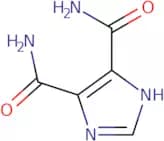
2-Phthalimidoyl-N-(methylsulfonyl)propanamide is a fine chemical that is used as a building block for research chemicals. It is a versatile intermediate that can be used as a reaction component. 2-Phthalimidoyl-N-(methylsulfonyl)propanamide has been shown to have high quality and can be used as a reagent in the synthesis of complex compounds.Fórmula:C12H12N2O5SPeso molecular:296.30 g/mol1H-Imidazole-4,5-dicarboxamide
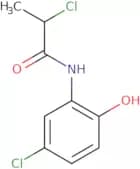
CAS:1H-Imidazole-4,5-dicarboxamide is a detergent composition that contains antimicrobial agents. It has been shown to inhibit the growth of resistant mutants in vitro and is active against a broad spectrum of bacteria. Hydrogen bonding interactions between 1H-imidazole-4,5-dicarboxamide and the amide group on the cell membrane surface are thought to be responsible for its activity. This compound also inhibits nuclear DNA synthesis by binding to the enzyme topoisomerase II, which is necessary for DNA replication. The molecular weight of 1H-imidazole-4,5-dicarboxamide makes it useful as an analytical reagent in gas chromatography.Fórmula:C5H6N4O2Pureza:Min. 95%Cor e Forma:PowderPeso molecular:154.13 g/molN-(5-Chloro-2-hydroxyphenyl)-2-chloropropanamide
CAS:Please enquire for more information about N-(5-Chloro-2-hydroxyphenyl)-2-chloropropanamide including the price, delivery time and more detailed product information at the technical inquiry form on this pagePureza:Min. 95%4-Chloro-3-nitrophenylacetamide
CAS:4-Chloro-3-nitrophenylacetamide is a chemical compound that can be used as a reagent, useful scaffold for research, and a high quality research chemical. CAS No. 5540-60-3, this versatile building block is useful for the synthesis of complex compounds and fine chemicals.
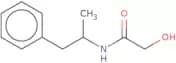
Fórmula:C8H7ClN2O3Pureza:Min. 98 Area-%Cor e Forma:PowderPeso molecular:214.61 g/mol2-Hydroxy-N-(1-phenylpropan-2-yl)acetamide
CAS:Produto Controlado2-Hydroxy-N-(1-phenylpropan-2-yl)acetamide is a versatile building block that can be used as a reagent or research chemical. This compound is an intermediate in the synthesis of many other organic compounds and has been shown to be useful for the production of pharmaceuticals, agrochemicals, and other industrial chemicals. The CAS number for this compound is 99985-83-8.Fórmula:C11H15NO2Pureza:Min. 95%Cor e Forma:PowderPeso molecular:193.24 g/mol3-Hydroxybenzamide
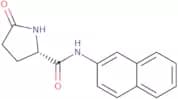
CAS:3-Hydroxybenzamide is a potent inhibitor of the enzyme synthetase and has been shown to inhibit the synthesis of adenosine diphosphate (ADP) ribose. It has been shown to have potent inhibitory activity against the enzyme in both solid and liquid phases. 3-Hydroxybenzamide binds to the carbonyl group of ADP ribose, which prevents it from binding to ATP. This inhibition of the synthesis of nucleotides limits cell proliferation by preventing DNA replication and protein synthesis. 3-Hydroxybenzamide has also been shown to inhibit the growth of mouse leukemia cells in vitro, as well as inhibiting l1210 murine leukemia cells grown in vivo. The mechanism for this inhibition is not yet known, but may be due to its ability to bind with hydrogen bonds or intramolecular hydrogen bonds. 3-Hydroxybenzamide also has a skeleton that can be synthesized asymmetrically by using a chiralFórmula:C7H7NO2Pureza:Min. 95%Cor e Forma:PowderPeso molecular:137.14 g/molL-Pyroglutamic acid-beta-naphthylamide
CAS:L-Pyroglutamic acid-beta-naphthylamide is a cell nucleus pressor that has been shown to stimulate locomotor activity in rats. It is a highly selective agonist at the 5-HT2 receptor, which is involved in the regulation of energy metabolism and feeding behaviour. L-Pyroglutamic acid-beta-naphthylamide also stimulates cholinergic and serotonergic systems. This drug also inhibits bacterial growth by binding to the receptor site on bacterial cell nuclei, thereby preventing DNA synthesis and locomotor activity. L-Pyroglutamic acid-beta-naphthylamide is an antimicrobial agent that can be used to treat infections caused by bacteria resistant to erythromycin. The antimicrobial effect of this drug is due to its ability to bind to the receptor site on bacterial cell nuclei, thereby preventing DNA synthesis and locomotor activity.
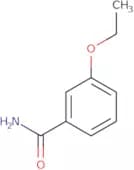
Fórmula:C15H14N2O2Pureza:Min. 98 Area-%Cor e Forma:White PowderPeso molecular:254.28 g/mol3-Ethoxybenzamide
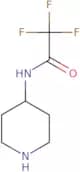
CAS:3-Ethoxybenzamide is a crystalline compound that can form complexes with metal ions. It has been shown to inhibit bacterial growth by binding to the enzyme thiourea, which is essential for the biosynthesis of thiamine. 3-Ethoxybenzamide also inhibits the production of hydrogen sulfide, which is produced by bacteria and a cause of foul odors. 3-Ethoxybenzamide has been shown to have antibacterial activity against Gram-positive bacteria such as Staphylococcus aureus and Streptococcus pyogenes. 3-Ethoxybenzamide also inhibits the growth of Gram-negative bacteria such as Escherichia coli and Salmonella typhimurium. This compound has also been shown to have anti-inflammatory activities through its ability to inhibit prostaglandin synthesis in mice.Fórmula:C9H11NO2Pureza:Min. 95%Cor e Forma:PowderPeso molecular:165.19 g/mol2,2,2-Trifluoro-N-(4-piperidinyl)acetamide
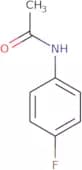
CAS:2,2,2-Trifluoro-N-(4-piperidinyl)acetamide (TFAPA) is a nucleic acid analog that binds to the target nucleic acid. TFAPA is a morpholino compound with an amide linkage between the morpholine ring and the acetic acid group. TFAPA is a sequence-specific DNA analog that inhibits protein synthesis by binding to the target nucleic acid. TFAPA can also be used as a probe for the detection of abnormal sequences in RNA.Fórmula:C7H11F3N2OPureza:Min. 95%Cor e Forma:White PowderPeso molecular:196.17 g/molN-(4-Fluorophenyl)acetamide
CAS:4-Fluorophenylacetic acid is a synthetic organic compound that has been used as a model system for the study of the reaction between hydrogen sulfate and hydrogen. 4-Fluorophenylacetic acid is a fluorinated analog of acetamide, which can be synthesized from sodium borohydride and hydrogen fluoride. It has been shown to inhibit the growth of Mycobacterium tuberculosis in an on-line assay and is also active against Mycobacterium avium complex. 4-Fluorophenylacetic acid also inhibits rat liver microsomes with a second order rate constant of 0.0006 M−1 s−1 at pH 7.4 and 37 °C (pH and temperature not specified). The biological properties of 4-fluorophenylacetic acid are not well understood, but it may bind to hydrophobic regions on proteins or DNA through hydrogen bonding interactions.Fórmula:C8H8FNOPureza:Min. 95%Cor e Forma:PowderPeso molecular:153.15 g/mol