Amidas
As amidas são uma ampla gama de compostos químicos que contêm pelo menos um anel heterocíclico, que possui átomos de pelo menos dois elementos diferentes na estrutura do anel, e pelo menos um grupo amida (-CONH2). Esses compostos são cruciais na síntese de produtos farmacêuticos, polímeros e agroquímicos. As amidas exibem propriedades e reatividade únicas, tornando-as intermediários valiosos na síntese orgânica. Na CymitQuimica, oferecemos uma seleção abrangente de amidas de alta qualidade para apoiar suas necessidades de pesquisa e industriais.
Foram encontrados 16485 produtos de "Amidas"
Ordenar por
Pureza (%)
0
100
|
0
|
50
|
90
|
95
|
100
N'-Cyanobenzenecarboximidamide hydrochloride
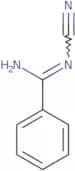
CAS:N-Cyanobenzenecarboximidamide hydrochloride (NCBCH) is an intermediate for the synthesis of azomethine dyes. It can be used to produce azo dyes with a methoxy group at the 3 position and a hydrogen atom at the 4 position. NCBCH is also an excellent substrate for chemical reactions involving fragmentation, extraction, or elimination. NCBCH can be synthesized from methyl ether and benzonitrile in the presence of benzamidine. The product is then treated with methanol to give a tautomeric mixture of benzyl and methyl ether.Fórmula:C8H7N3Pureza:Min. 95%Peso molecular:145.16 g/mol2-Chloro-N-(2-oxotetrahydro-3-thienyl)acetamide
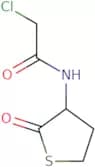
CAS:2-Chloro-N-(2-oxotetrahydro-3-thienyl)acetamide is a chemical compound that is used as an intermediate in the synthesis of other organic compounds. The impurities are minimized by using organic solvents such as acetone, pyridine, and tetrahydrofuran. The product can be precipitated by adding sodium carbonate or potassium carbonate to the solution, or it can be crystallized from a mixture of methanol and water. 2-Chloro-N-(2-oxotetrahydro-3-thienyl)acetamide is also soluble in ethers such as erdosteine and acetonitrile, which can be used to remove the last traces of water.Fórmula:C6H8ClNO2SPureza:Min. 95%Peso molecular:193.65 g/mol7-Phenylacetamide-3-chloromethyl-3-cephem-4-carboxylic acid diphenylmethyl ester
CAS:7-Phenylacetamide-3-chloromethyl-3-cephem-4-carboxylic acid diphenylmethyl ester is an organic solution that is used in the detoxification of chemical substances. It has a hydroxyl group and is soluble in nonpolar solvents. 7PAMC has been shown to be effective against bone lesions caused by acylation reactions. This drug also binds to the enzyme called cytochrome P450, which is involved in the metabolism of many drugs. It also inhibits bacterial growth by binding to DNA gyrase and topoisomerase IV, enzymes that maintain bacterial DNA integrity. The particle size of this drug is small, with a diameter of less than 10 microns. 7PAMC has a viscosity of 1 cps at 25°C and a melting point of 129°C.Fórmula:C29H25ClN2O4SPureza:Min. 95%Peso molecular:533.04 g/molL-Glutamic acid gamma-tert-butyl ester alpha-amide hydrochloride
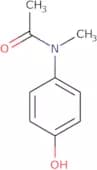
CAS:<p>Please enquire for more information about L-Glutamic acid gamma-tert-butyl ester alpha-amide hydrochloride including the price, delivery time and more detailed product information at the technical inquiry form on this page</p>Fórmula:C9H18N2O3·HClPureza:Min. 95%Peso molecular:238.71 g/molN-(4-Hydroxyphenyl)-N-methylacetamide
CAS:Please enquire for more information about N-(4-Hydroxyphenyl)-N-methylacetamide including the price, delivery time and more detailed product information at the technical inquiry form on this pageFórmula:C9H11NO2Pureza:Min. 95%Peso molecular:165.19 g/mol16-Phenoxy tetranor pgf2alfa cyclopropyl methylamide
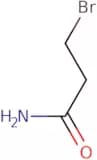
CAS:<p>Please enquire for more information about 16-Phenoxy tetranor pgf2alfa cyclopropyl methylamide including the price, delivery time and more detailed product information at the technical inquiry form on this page</p>Fórmula:C26H37NO5Pureza:Min. 95%Peso molecular:443.58 g/mol3-Bromopropionamide
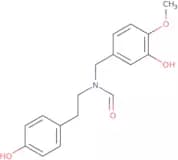
CAS:<p>3-Bromopropionamide is an antibacterial agent that inhibits bacterial growth by blocking the synthesis of proteins. It is a synthetic amide with significant antibacterial activity against S. aureus. 3-Bromopropionamide has been shown to be effective against drug-resistant bacteria, including those that are resistant to metalloid salts or alkylene compounds. This substance also has psychomimetic effects and may be useful for studying the kinetics of protein synthesis in cells. 3-Bromopropionamide can be used as a linker to attach other molecules to proteins, which could allow them to penetrate cell membranes more easily.</p>Fórmula:C3H6ONBrPureza:Min. 95%Cor e Forma:PowderPeso molecular:151.99 g/molN-(p-Hydroxyphenethyl)-N-(3-hydroxy-4-methoxybenzyl)formamide
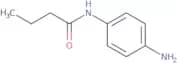
CAS:Produto Controlado<p>Please enquire for more information about N-(p-Hydroxyphenethyl)-N-(3-hydroxy-4-methoxybenzyl)formamide including the price, delivery time and more detailed product information at the technical inquiry form on this page</p>Fórmula:C17H19NO4Pureza:Min. 95%Peso molecular:301.34 g/molN-(4-Aminophenyl)butanamide
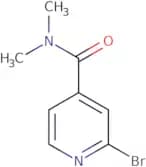
CAS:<p>Please enquire for more information about N-(4-Aminophenyl)butanamide including the price, delivery time and more detailed product information at the technical inquiry form on this page</p>Fórmula:C10H14N2OPureza:Min. 95%Peso molecular:178.23 g/mol2-Bromo-N,N-dimethylisonicotinamide
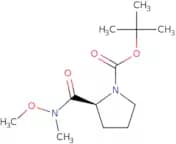
CAS:Please enquire for more information about 2-Bromo-N,N-dimethylisonicotinamide including the price, delivery time and more detailed product information at the technical inquiry form on this pageFórmula:C8H9BrN2OPureza:Min. 95%Peso molecular:229.07 g/molBoc-L-proline N,O-dimethylhydroxamide
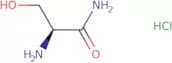
CAS:<p>Please enquire for more information about Boc-L-proline N,O-dimethylhydroxamide including the price, delivery time and more detailed product information at the technical inquiry form on this page</p>Fórmula:C12H22N2O4Pureza:Min. 95%Peso molecular:258.31 g/molL-Serine amide hydrochloride
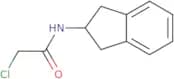
CAS:<p>L-Serine amide hydrochloride is a synthetic, anti-HIV drug that is used as an antiviral agent. It inhibits the viral life cycle by inhibiting the activity of acyclic nucleoside phosphonates, which are vital to viral DNA synthesis. L-Serine amide hydrochloride binds to the cyclopentane ring of guanosine and prevents its interaction with the enzyme ribonucleotide reductase. This binding prevents the conversion of guanosine into GTP, thereby preventing HIV from using this molecule in their life cycle. L-Serine amide hydrochloride is not active against cellular proteins or prostaglandins.</p>Fórmula:C3H8N2O2·HClPureza:Min. 95%Peso molecular:140.57 g/mol2-Chloro-N-(2,3-dihydro-1H-inden-2-yl)acetamide
CAS:Produto Controlado<p>Please enquire for more information about 2-Chloro-N-(2,3-dihydro-1H-inden-2-yl)acetamide including the price, delivery time and more detailed product information at the technical inquiry form on this page</p>Fórmula:C11H12ClNOPureza:Min. 95%Peso molecular:209.67 g/molN-(1,2,3,4-Tetrahydro-7-methoxy-1-oxo-2-naphthalenyl)propanamide
CAS:Produto ControladoPlease enquire for more information about N-(1,2,3,4-Tetrahydro-7-methoxy-1-oxo-2-naphthalenyl)propanamide including the price, delivery time and more detailed product information at the technical inquiry form on this pageFórmula:C14H17NO3Pureza:Min. 95%Peso molecular:247.29 g/molL-Phenylalanine b-naphthylamide
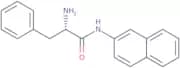
CAS:L-Phenylalanine b-naphthylamide is a phenylalanine derivative that can be used as an indicator for the detection of Clostridium, 2-naphthylamine, and other anaerobes. This compound is a chromogenic substrate that reacts with amino groups in amino acids and amides in peptides to form a variety of color products. The condensation of phenylalanine with 2-naphthylamine is catalyzed by enzymes found in clostridia. When L-phenylalanine b-naphthylamide is incubated with tissue from animals or humans, it produces a pink coloration that indicates the presence of clostridia. The aerobic conditions necessary for this reaction are also found in the environment and within the body.Fórmula:C19H18N2OPureza:Min. 95%Peso molecular:290.36 g/molN-(p-Hydroxyphenethyl)-N-(2-bromo-5-hydroxy-4-methoxybenzyl)formamide
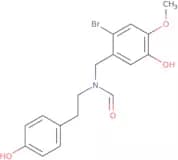
CAS:Produto Controlado<p>N-(p-Hydroxyphenethyl)-N-(2-bromo-5-hydroxy-4-methoxybenzyl)formamide is an anticancer drug that belongs to the class of phenethyl derivatives. It is a radiosensitizer that inhibits DNA and RNA synthesis, leading to cancer cell death. The drug has been shown to have a chiral center and two enantiomers, with the (S)-enantiomer being more active than the (R)-enantiomer. N-(p-Hydroxyphenethyl)-N-(2-bromo-5-hydroxy-4-methoxybenzyl)formamide has been shown to be effective in animal models for brain tumors and breast cancer cells. It has also been shown to be effective against leukemia cells, which are resistant to other treatments. N-(p-Hydroxyphenethyl)-N-(2-bromo-5-hydroxy-4</p>Fórmula:C17H18BrNO4Pureza:Min. 95%Peso molecular:380.23 g/mol2-(4-Aminophenoxy)acetamide
CAS:<p>2-(4-Aminophenoxy)acetamide is a chemical compound that belongs to the class of acetamides. It is used in the production of polyester fibers and dyes. 2-(4-Aminophenoxy)acetamide is a colorless, crystalline solid that has not been identified in nature.</p>Fórmula:C8H10N2O2Pureza:Min. 95%Peso molecular:166.18 g/mol2-[(Diphenylmethyl)sulfinyl]-N-hydroxyacetamide
CAS:Produto Controlado<p>Adrafinil is a prodrug. It is primarily metabolized in vivo to modafinil, resulting in very similar pharmacological effects.</p>Fórmula:C15H15NO3SPureza:Min. 98 Area-%Peso molecular:289.35 g/molN,N-Dimethyl decanamide
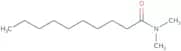
CAS:<p>N,N-Dimethyl decanamide is a fatty acid ester that is used as an amide with sodium carbonate and tebuconazole to form a particle. The particle has a diameter of about 0.5 microns and is thermally stable. N,N-Dimethyl decanamide can be used for the removal of organic substances from water by absorption onto the particle surface. It has been shown to be more efficient than other amides in removing these substances from water.</p>Fórmula:C12H25NOPureza:Min. 95%Peso molecular:199.33 g/mol2-Oxo-3-hydroxy-N-methyl-N-propyl D-lysergamide
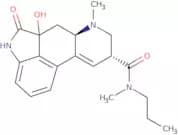
CAS:Produto Controlado<p>2-Oxo-3-hydroxy-N-methyl-N-propyl D-lysergamide (2OMD) is a metabolite of the drug lysergic acid diethylamide (LSD). It can be detected in urine, blood, and saliva. The detection time in urine is approximately 3 hours after ingestion. 2OMD can be found by chromatography techniques, such as thin layer chromatography or high performance liquid chromatography. It can also be detected using mass spectrometric techniques, such as gas chromatography/mass spectrometry or liquid chromatography/mass spectrometry. 2OMD can also be detected in urine samples by calibrations with standards of known concentration and by the use of analytical methods such as gas chromatography/mass spectroscopy.</p>Fórmula:C20H25N3O3Pureza:Min. 95%Peso molecular:355.43 g/mol






![2-[(Diphenylmethyl)sulfinyl]-N-hydroxyacetamide](/_next/image/?url=https%3A%2Fstatic.cymitquimica.com%2Fproducts%2F3D%2Fthumb-webp%2FW-104904.webp&w=3840&q=75)