Ácidos carboxílicos
Os ácidos carboxílicos são moléculas orgânicas caracterizadas por possuírem um grupo funcional carboxila (-COOH). Esses ácidos são fundamentais em várias reações químicas, incluindo esterificação, amidação e descarboxilação. Os ácidos carboxílicos são amplamente utilizados na produção de produtos farmacêuticos, polímeros e agroquímicos. Nesta seção, você pode encontrar uma grande variedade de ácidos carboxílicos prontos para uso. Na CymitQuimica, oferecemos uma ampla gama de ácidos carboxílicos de alta qualidade para apoiar suas aplicações de pesquisa e industriais.
Foram encontrados 12453 produtos de "Ácidos carboxílicos"
Ordenar por
Pureza (%)
0
100
|
0
|
50
|
90
|
95
|
100
Cromoglicic acid D5
CAS:<p>Please enquire for more information about Cromoglicic acid D5 including the price, delivery time and more detailed product information at the technical inquiry form on this page</p>Fórmula:C6D5BrPureza:Min. 95%Cor e Forma:PowderPeso molecular:473.40 g/moltert-Butyl 3-(aminomethyl)-1H-indole-1-carboxylate hydrochloride
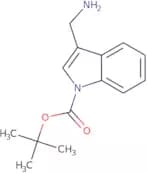
CAS:<p>Please enquire for more information about tert-Butyl 3-(aminomethyl)-1H-indole-1-carboxylate hydrochloride including the price, delivery time and more detailed product information at the technical inquiry form on this page</p>Fórmula:C14H18N2O2Pureza:Min. 95%Peso molecular:246.31 g/mol5-[4-(1,2,4,5-Tetrazin-3-yl)benzylamino]-5-oxopentanoic acid
CAS:<p>Please enquire for more information about 5-[4-(1,2,4,5-Tetrazin-3-yl)benzylamino]-5-oxopentanoic acid including the price, delivery time and more detailed product information at the technical inquiry form on this page</p>Fórmula:C14H15N5O3Pureza:Min. 95%Cor e Forma:White To Yellow To Dark Red SolidPeso molecular:301.3 g/molC-Type Natriuretic Peptide (32-53) acetate salt
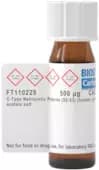
CAS:<p>C-type Natriuretic peptide is a peptide hormone that causes vasodilation, diuresis, and natriuresis. It is secreted by the heart and kidneys in response to volume overload. C-type Natriuretic peptide has been shown to cause fibrosis of the kidney as well as other tissues in mice. The binding of C-type Natriuretic peptide to its receptor activates cyclase, which converts ATP into cAMP. This leads to increased levels of cGMP, which causes smooth muscle relaxation and vasodilation.</p>Fórmula:C93H157N27O28S3Pureza:Min. 95%Peso molecular:2,197.6 g/mol7-[(2S,3R)-3-Amino-2-methyl-azetidin-1-yl]-1-(2,4-difluorophenyl)-6-fluoro-4-oxo-quinoline-3-carboxylic acid
CAS:<p>7-[(2S,3R)-3-Amino-2-methyl-azetidin-1-yl]-1-(2,4-difluorophenyl)-6-fluoro-4-oxo-quinoline-3-carboxylic acid (ABT) is a drug that binds to bacterial enzymes and inhibits their ability to synthesize proteins. ABT is a conjugate of fluoroquinolone and an amino acid. As the drug is degradable by hydrolysis, it has been shown to be less toxic in Sprague Dawley rats than other fluoroquinolones. This drug has been used in diagnostic tests as a ligand for affinity ligands, but has not been approved for human use. The drug also possesses functional groups that are important for binding to reconstituted enzymes.br>br>ABT's ester linkages are degradable by hydrolysis and can be</p>Fórmula:C20H16F3N3O3Pureza:Min. 95%Peso molecular:403.35 g/molD-(-)-3-Phosphoglyceric acid disodium
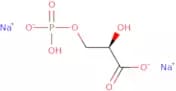
CAS:<p>D-(-)-3-Phosphoglyceric acid disodium is a homologue of D-glyceric acid and is used in the synthesis of phosphatidylcholine. It binds to the active site of phosphatases and prevents them from hydrolyzing phosphate groups, which are critical for the production of adenosine triphosphate (ATP). The chemical stability and the availability make this compound an excellent candidate for biochemical studies. D-(-)-3-Phosphoglyceric acid disodium has been shown to be essential in biological function, as it functions as a substrate for many metabolic pathways such as glycolysis, gluconeogenesis, pentose phosphate pathway, and fatty acid biosynthesis. The molecule is also involved in a number of biochemical reactions that are catalyzed by enzymes. Mutational studies have shown that organisms without this compound will not survive.</p>Fórmula:C3H5O7PNa2Pureza:Min. 93%Cor e Forma:White PowderPeso molecular:230.02 g/molN,N'-Bis(2,6-diisopropylphenyl)-3,4,9,10-perylenetetracarboxylic diimide
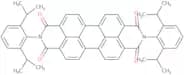
CAS:<p>N,N'-Bis(2,6-diisopropylphenyl)-3,4,9,10-perylenetetracarboxylic diimide is a molecule that has an optimum concentration of 0.5 M. It has a hydrogen bond donor and acceptor and is optically active. This molecule displays fluorescence properties and is inorganic with a chloride acceptor group. N,N'-Bis(2,6-diisopropylphenyl)-3,4,9,10-perylenetetracarboxylic diimide has been shown to have high photostability and to be enhanced by light emission from a diode. This molecule also has carbonyl groups that are electron donors for the fluorescence process.</p>Fórmula:C49H50N6O4Pureza:Min. 95 Area-%Cor e Forma:PowderPeso molecular:786.96 g/molMethyl 6-nitropyrido[1,2-a]benzimidazole-8-carboxylate
CAS:<p>Please enquire for more information about Methyl 6-nitropyrido[1,2-a]benzimidazole-8-carboxylate including the price, delivery time and more detailed product information at the technical inquiry form on this page</p>Fórmula:C13H9N3O4Pureza:Min. 95%Peso molecular:271.23 g/molKermesic acid
CAS:<p>Kermesic acid is a hydroxybenzoic acid that is used as a food dye. It can be found in some red wines and it is also used to color the eggs of a particular breed of chicken. The most common use for kermesic acid is as an oxidizing agent in a chromatographic method, which separates molecules based on their size. The oxidation catalyst used can vary, but often trifluoroacetic acid (TFA) is used. TFA reacts with the kermesic acid to form an octaketide, which has the chemical formula C8H6O3. This octaketide then reacts with another molecule of TFA to form two esters.</p>Fórmula:C16H10O8Pureza:Min. 95%Peso molecular:330.25 g/molIsatin-5-sulfonic acid sodium salt dihydrate
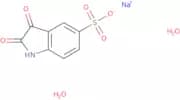
CAS:<p>Isatin-5-sulfonic acid sodium salt dihydrate is a potent inhibitor of caspases. It has been shown to inhibit the activity of caspase-3 in vitro, thereby inhibiting apoptosis. Isatin-5-sulfonic acid sodium salt dihydrate has also been shown to increase survival rates in animal models of neurodegenerative diseases such as Parkinson's disease and Huntington's disease. Isatin-5-sulfonic acid sodium salt dihydrate may have neuroprotective effects by inhibiting the release of proinflammatory cytokines and nitric oxide, which are associated with neuronal death. This drug also inhibits monoamine oxidase A (MAO-A) and zymosterone B (ZVAD).</p>Fórmula:C8H4NNaO5S·2H2OPureza:Min. 95%Cor e Forma:PowderPeso molecular:285.21 g/molDomoic acid
CAS:<p>Domoic acid is a neurotoxin that has been shown to induce neuronal death in vitro and in vivo. Domoic acid inhibits the activity of ligand-gated ion channels, which increases the cytosolic Ca2+ concentration. This toxin also induces mitochondrial membrane potential loss, causing apoptosis. Domoic acid binds to the NMDA receptor and blocks glutamate binding. It also inhibits ATP synthase by competing with ADP for binding sites on the enzyme's F1 portion. Domoic acid has low potency as a neurotoxin because it does not readily cross the blood-brain barrier or enter cells via passive diffusion.</p>Fórmula:C15H21NO6Pureza:Min. 90 Area-%Cor e Forma:Beige PowderPeso molecular:311.33 g/mol3,4-Dihydroxyhydrocinnamic Acid
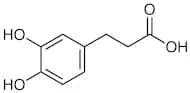
CAS:Fórmula:C9H10O4Pureza:>98.0%(GC)(T)Cor e Forma:White to Brown powder to crystalPeso molecular:182.1816-Hydroxyhexadecanoic Acid
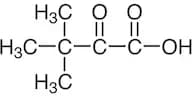
CAS:Fórmula:C16H32O3Pureza:>98.0%(T)Cor e Forma:White to Light yellow to Light orange powder to crystalPeso molecular:272.433,3-Dimethyl-2-oxobutyric Acid
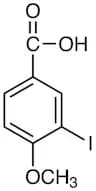
CAS:Fórmula:C6H10O3Pureza:>98.0%(T)Cor e Forma:White or Colorless to Almost white or Almost colorless powder to lump to clear liquidPeso molecular:130.143-Iodo-4-methoxybenzoic Acid
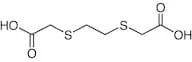
CAS:Fórmula:C8H7IO3Pureza:>97.0%(GC)(T)Cor e Forma:White to Light yellow to Light orange powder to crystalPeso molecular:278.05(Ethylenedithio)diacetic Acid
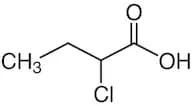
CAS:Fórmula:C6H10O4S2Pureza:>98.0%(GC)(T)Cor e Forma:White to Almost white powder to crystalPeso molecular:210.262-Chlorobutyric Acid
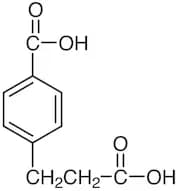
CAS:Fórmula:C4H7ClO2Pureza:>90.0%(GC)Cor e Forma:Colorless to Light orange to Yellow clear liquidPeso molecular:122.553-(4-Carboxyphenyl)propionic Acid
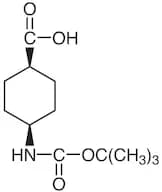
CAS:Fórmula:C10H10O4Pureza:>98.0%(T)Cor e Forma:White to Light yellow powder to crystalPeso molecular:194.19cis-4-(tert-Butoxycarbonylamino)cyclohexanecarboxylic Acid
CAS:Fórmula:C12H21NO4Pureza:>98.0%(GC)(T)Cor e Forma:White to Almost white powder to crystalPeso molecular:243.302-(4-Hydroxyphenyl)propionic Acid
CAS:Fórmula:C9H10O3Pureza:>98.0%(T)(HPLC)Cor e Forma:White to Light yellow to Light red powder to crystalPeso molecular:166.18


![5-[4-(1,2,4,5-Tetrazin-3-yl)benzylamino]-5-oxopentanoic acid](/_next/image/?url=https%3A%2Fstatic.cymitquimica.com%2Fproducts%2F3D%2Fthumb-webp%2FFT170851.webp&w=3840&q=75)
![7-[(2S,3R)-3-Amino-2-methyl-azetidin-1-yl]-1-(2,4-difluorophenyl)-6-fluoro-4-oxo-quinoline-3-carbo…](/_next/image/?url=https%3A%2Fstatic.cymitquimica.com%2Fproducts%2F3D%2Fthumb-webp%2FFA30404.webp&w=3840&q=75)
![Methyl 6-nitropyrido[1,2-a]benzimidazole-8-carboxylate](/_next/image/?url=https%3A%2Fstatic.cymitquimica.com%2Fproducts%2F3D%2Fthumb-webp%2FFM132139.webp&w=3840&q=75)