Ácidos carboxílicos
Os ácidos carboxílicos são moléculas orgânicas caracterizadas por possuírem um grupo funcional carboxila (-COOH). Esses ácidos são fundamentais em várias reações químicas, incluindo esterificação, amidação e descarboxilação. Os ácidos carboxílicos são amplamente utilizados na produção de produtos farmacêuticos, polímeros e agroquímicos. Nesta seção, você pode encontrar uma grande variedade de ácidos carboxílicos prontos para uso. Na CymitQuimica, oferecemos uma ampla gama de ácidos carboxílicos de alta qualidade para apoiar suas aplicações de pesquisa e industriais.
Foram encontrados 12454 produtos de "Ácidos carboxílicos"
Ordenar por
Pureza (%)
0
100
|
0
|
50
|
90
|
95
|
100
Phosphomolybdic acid hydrate
CAS:<p>Phosphomolybdic acid hydrate is a molybdenum-containing compound that exhibits biological activity. It has been found to have an effect on water permeability and the biological sample, which can be detected by synchronous fluorescence. The electrochemical impedance spectroscopy can be used to measure the effects of phosphomolybdic acid hydrate on energy metabolism. This compound has also been shown to act as a catalyst in analytical methods, such as laser ablation, and can be used in a model system for hydrogen bonding interactions with zirconium oxide.</p>Fórmula:MoO3·H3PO4·xH2OPureza:Min. 95%Cor e Forma:Off-White To Dark Yellow SolidPeso molecular:1,825.49 g/molNaphthenic acid
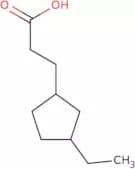
CAS:<p>Naphthenic acid is a metal chelate that is used in synchronous fluorescence spectroscopy. It has been shown to have biodegradation properties and can be used as an indicator for water quality. Naphthenic acid has been found to be a potent inhibitor of corrosion and is often used as an additive to petroleum products, such as gasoline, that are made from crude oil. Naphthenic acid also has acute toxicities and can cause toxicity studies on humans. It is able to inhibit energy metabolism in cells by binding to the mitochondrial membrane, which may be due to its ability to bind with benzalkonium chloride. Naphthenic acid can also be used for analytical methods, such as electrochemical impedance spectroscopy, because it has high sensitivity and specificity.</p>Fórmula:C7H10O2Cor e Forma:Clear LiquidPeso molecular:126.15 g/molRef: 3D-FN139341
Produto descontinuadoPeptide YY (3-36) (human) trifluoroacetate salt
CAS:<p>Peptide YY (3-36) (human) trifluoroacetate salt H-Ile-Lys-Pro-Glu-Ala-Pro-Gly-Glu-Asp-Ala-Ser-Pro-Glu-Glu-Leu-Asn -Arg -Tyr -Tyr -Ala -Ser -Leu -Arg <br>Peptide YY (3.36) is a peptide hormone that is secreted by L cells in the small intestine and colon. It has been shown to be an effective treatment for obesity, type 2 diabetes, and other metabolic disorders. Peptide YY (3.36) has been shown to increase insulin sensitivity, reduce food intake and body weight, increase metabolic rate, and improve glucose homeostasis in animal studies. In humans, it has been found to have similar effects on postprandial plasma levels of peptide YY (3.</p>Fórmula:C180H279N53O54Pureza:Min. 95%Peso molecular:4,049.47 g/molRef: 3D-FP110326
Produto descontinuadoDiethyldithiocarbamic acid sodium trihydrate
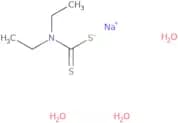
CAS:<p>Diethyldithiocarbamic acid sodium salt trihydrate (DDC) is an inhibitor of the response element that belongs to a class of pharmacological agents called diethyldithiocarbamates. DDC inhibits the growth of tumor cells by blocking enzyme activities and decreasing the production of GSH-Px enzymes, which are required for cellular protection against oxidative stress. DDC is also a potent inducer of experimental models for myocardial infarcts. The matrix effect is another mechanism by which DDC exerts its antitumor activity. This effect is due to its ability to inhibit protein synthesis in tumor cells and its ability to inhibit the synthesis of collagen in endothelial cells, thereby preventing angiogenesis.</p>Fórmula:C5H11NS2•Na•(H2O)3Pureza:Min. 95%Cor e Forma:PowderPeso molecular:226.32 g/molRef: 3D-FD21836
Produto descontinuado