Ácidos carboxílicos
Os ácidos carboxílicos são moléculas orgânicas caracterizadas por possuírem um grupo funcional carboxila (-COOH). Esses ácidos são fundamentais em várias reações químicas, incluindo esterificação, amidação e descarboxilação. Os ácidos carboxílicos são amplamente utilizados na produção de produtos farmacêuticos, polímeros e agroquímicos. Nesta seção, você pode encontrar uma grande variedade de ácidos carboxílicos prontos para uso. Na CymitQuimica, oferecemos uma ampla gama de ácidos carboxílicos de alta qualidade para apoiar suas aplicações de pesquisa e industriais.
Foram encontrados 12453 produtos de "Ácidos carboxílicos"
Ordenar por
Pureza (%)
0
100
|
0
|
50
|
90
|
95
|
100
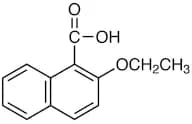
2-Ethoxy-1-naphthoic Acid
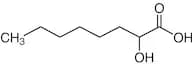
CAS:Fórmula:C13H12O3Pureza:>99.0%(T)(HPLC)Cor e Forma:White to Almost white powder to crystalPeso molecular:216.242-Hydroxy-n-octanoic Acid
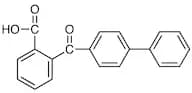
CAS:Fórmula:C8H16O3Pureza:>98.0%(T)Cor e Forma:White to Almost white powder to crystalPeso molecular:160.212-(4-Biphenylylcarbonyl)benzoic Acid
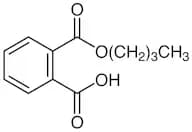
CAS:Fórmula:C20H14O3Pureza:>97.0%(GC)(T)Cor e Forma:White to Almost white powder to crystalPeso molecular:302.33Monobutyl Phthalate
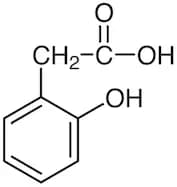
CAS:Fórmula:C12H14O4Pureza:>95.0%(GC)(T)Cor e Forma:White to Almost white powder to crystalPeso molecular:222.242-Hydroxyphenylacetic Acid
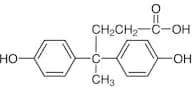
CAS:Fórmula:C8H8O3Pureza:>98.0%(GC)(T)Cor e Forma:Light yellow to Yellow to Orange powder to crystalPeso molecular:152.15Diphenolic Acid
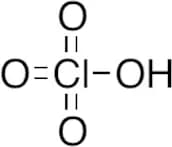
CAS:Fórmula:C17H18O4Pureza:>98.0%(GC)(T)Cor e Forma:White to Light yellow powder to crystalPeso molecular:286.33Perchloric Acid (60%)
CAS:<p>Applications Perchloric Acid is a useful chemical reagent in the preparation of perchlorate salts. It is also known to be a strong oxidizer.<br> E0<br></p>Fórmula:ClHO4Pureza:60%Cor e Forma:NeatPeso molecular:100.45854-Hydroxyphenylacetic acid
CAS:<p>4-Hydroxyphenylacetic acid is a sesquiterpene lactone that is found in the essential oils of plants such as valerian, lemon balm and rosemary. It has been shown to have high antioxidant activity and can inhibit carcinoid syndrome. This compound has also been shown to have properties similar to p-hydroxybenzoic acid, which is an inhibitor of polyphenol oxidase. 4-Hydroxyphenylacetic acid inhibits some enzyme activities, such as polymerase chain reaction (PCR) and DNA synthesis. It also binds to dinucleotide phosphate and can be used for the treatment of diseases related to energy metabolism.</p>Fórmula:C8H8O3Pureza:(%) Min. 98.5%Cor e Forma:White PowderPeso molecular:152.15 g/molRef: 3D-FH24475
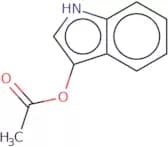
Produto descontinuado3-Indoxylacetate
CAS:<p>Please enquire for more information about 3-Indoxylacetate including the price, delivery time and more detailed product information at the technical inquiry form on this page</p>Fórmula:C10H9NO2Cor e Forma:White PowderPeso molecular:175.18 g/molRef: 3D-FI10731
Produto descontinuadoBis(2,2,2-trichloroethyl)azodicarboxylate
CAS:<p>Bis(2,2,2-trichloroethyl)azodicarboxylate is a nucleophile that can be used as an alkylating agent in the industrial process. It is also used to prepare chiral amines by adding an amine to the enantiomerically pure bis(2,2,2-trichloroethyl)azodicarboxylate. The anticancer activity of Bis(2,2,2-trichloroethyl)azodicarboxylate is due to its ability to inhibit tumor cell proliferation. Bis(2,2,2-trichloroethyl)azodicarboxylate is not effective against cancerous cells that do not have functional groups such as amino acids.</p>Fórmula:C6H4Cl6N2O4Pureza:Min. 95%Cor e Forma:Yellow SolidPeso molecular:380.82 g/molRef: 3D-FB01254
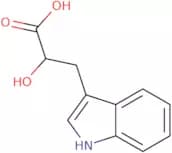
Produto descontinuadoDL-Indole-3-lactic acid
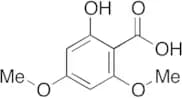
CAS:<p>Indole-3-lactic acid is a plant hormone that is produced in the leaves of the plant when they are under stress. It has been shown to have activity against bowel diseases and metabolic disorders. Indole-3-lactic acid has been isolated from plants like Caproicum album, which is used in vitro to measure its effect on caproic acid production. This compound has also been detected in human serum and wastewater treatment. Indole-3-lactic acid inhibits tryptophan degradation by competing with indolecarboxylase for substrate. The effect of indole-3-lactic acid on dextran sulfate and glomerular filtration rate was studied using a rat model, where it was found that it had no significant effects.</p>Fórmula:C11H11NO3Pureza:Min. 95%Cor e Forma:PowderPeso molecular:205.21 g/mol2-Hydroxy-4,6-dimethoxybenzoic Acid
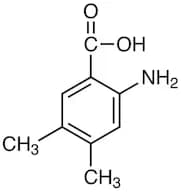
CAS:Produto Controlado<p>Applications 2-Hydroxy-4,6-dimethoxybenzoic acid is a reagent used in the synthesis of rac Zearalenone-d6 (Z270502). rac Zearalenone-d6 s an estrogenic mycotoxin produced by Fusarium fungi commonly found in grains. One of a group of compounds known as resorcylic acid lactones.<br>References Tanaka, T., et al.: J. Agric. Food Chem., 36, 979 (1988), Hamilton, S., et al.: Anticancer Res., 16, 3597 (1996), Hecht, S., et al.: Cancer Lett., 150, 49 (2000), Hussein, H., et al.: Toxicology, 167, 101 (2001), Lim, H., et al.: J. Immunol., 175, 4180 (2005),<br></p>Fórmula:C9H10O5Cor e Forma:Light Orange Colour To Light BrownPeso molecular:198.052-Amino-4,5-dimethylbenzoic Acid
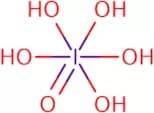
CAS:Fórmula:C9H11NO2Pureza:>97.0%(T)(HPLC)Cor e Forma:White to Yellow powder to crystalPeso molecular:165.19Periodic acid
CAS:<p>Periodic acid is a natural product that has been used as an antimicrobial agent for more than 100 years. It has been shown to have pro-apoptotic properties in a number of cell systems, including monocyte-like cells, hepatocyte-like cells, and epidermal growth factor receptor-transfected cells. Periodic acid is also effective against inflammatory bowel disease in infants. This drug also has anti-inflammatory effects and may be useful for the treatment of autoimmune diseases. Periodic acid inhibits the metabolic rate in cell cultures by blocking oxidative phosphorylation at complex I and II, leading to increased levels of reactive oxygen species (ROS). This ROS production induces apoptosis through a caspase cascade.</p>Fórmula:H5IO6Pureza:Min. 95%Cor e Forma:White Clear LiquidPeso molecular:227.94 g/molRef: 3D-FP16075
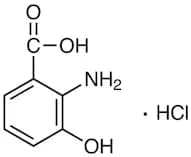
Produto descontinuado2-Amino-3-hydroxybenzoic Acid Hydrochloride
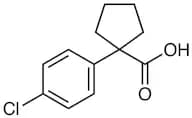
CAS:Fórmula:C7H7NO3·HClPureza:>98.0%(T)(HPLC)Cor e Forma:White to Light yellow to Purple powder to crystalPeso molecular:189.601-(4-Chlorophenyl)-1-cyclopentanecarboxylic Acid
CAS:Fórmula:C12H13ClO2Pureza:>98.0%(GC)(T)Cor e Forma:White to Almost white powder to crystalPeso molecular:224.684-Chloro-2-methylbenzoic acid
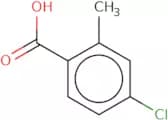
CAS:<p>4-Chloro-2-methylbenzoic acid is a high quality chemical that is used as an intermediate in the preparation of other compounds. It belongs to the group of complex compounds and has CAS No. 7499-07-2. This reagent can be used to synthesize speciality chemicals, research chemicals, and versatile building blocks. 4-Chloro-2-methylbenzoic acid is also useful as a reaction component for the synthesis of fine chemicals, pharmaceuticals, and agrochemicals.</p>Fórmula:C8H7ClO2Pureza:Min. 95%Peso molecular:170.59 g/molRef: 3D-FC55109
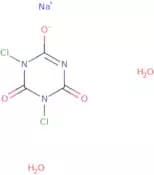
Produto descontinuadoDichloroisocyanuric acid sodium dihydrate
CAS:<p>Dichloroisocyanduric acid sodium salt (DCD) is a disinfectant that is used to control bacteria, fungi, and algae in wastewater treatment plants. DCD has been shown to be an effective antimicrobial agent against bacterial spores and the fungal plant pathogen "Botrytis cinerea" when used at concentrations of 0.1-0.3%. DCD also has a low toxicity for mammals, with LD50 values of 3.5g/kg for rats and 2g/kg for mice. The chemical stability of DCD can be increased by adding sodium carbonate or other alkaline substances in a neutral pH environment.</p>Fórmula:C3HCl2N3O3•(H2O)2•NaPureza:Min. 95%Cor e Forma:PowderPeso molecular:256.98 g/mol