


Aldeídos
Os aldeídos são compostos orgânicos que contêm um grupo carbonila (C=O) ligado a pelo menos um átomo de hidrogênio. Esses compostos versáteis são fundamentais em várias reações químicas, incluindo oxidação, redução e adição nucleofílica. Os aldeídos são building blocks essenciais na síntese de produtos farmacêuticos, fragrâncias e polímeros. Na CymitQuimica, oferecemos uma ampla seleção de aldeídos de alta qualidade para apoiar suas aplicações de pesquisa e industriais.
Foram encontrados 8573 produtos de "Aldeídos"
Ordenar por
Pureza (%)
0
100
|
0
|
50
|
90
|
95
|
100
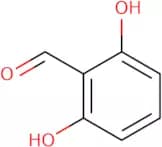
2,6-Dihydroxybenzaldehyde
CAS:<p>2,6-Dihydroxybenzaldehyde is a chemical compound that has been used as an intermediate in the synthesis of other chemicals. It is also used as a precursor for benzaldehyde and benzoic acid. 2,6-Dihydroxybenzaldehyde can be synthesized by reacting sodium carbonate with pluronic F127 in the presence of cationic surfactant. The surface methodology used in this process involves the use of hydrophobic molecules to form micelles and liposomes on the surface of the electrode. The interaction between these micelles and liposomes is pH dependent. This reaction causes an increase in hydrogen ions, which leads to an increase in conductivity at acidic pH values. Electrochemical impedance spectroscopy (EIS) results show that 2,6-dihydroxybenzaldehyde reacts with high concentrations of salt and water vapor. FTIR spectroscopy shows that it has two hydroxyl groups and one double</p>Fórmula:C7H6O3Pureza:Min. 95%Cor e Forma:PowderPeso molecular:138.12 g/mol2-Furaldehyde dimethylacetal
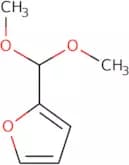
CAS:<p>2-Furaldehyde dimethylacetal is a monomer with a hydroxyl group and an aldehyde group in the molecule. It is produced by the reaction of formaldehyde with methanol and sodium hydroxide, which react to create formaldehyde hemiacetal. The formaldehyde hemiacetal then reacts with methanol to produce 2-furaldehyde dimethylacetal. This compound has been shown to polymerize when heated or irradiated with ultraviolet light, forming polymers. Gel chromatography can be used to separate this compound from other compounds in a mixture. The molecular weight of 2-furaldehyde dimethylacetal is 186g/mol.</p>Fórmula:C7H10O3Pureza:Min. 95 Area-%Cor e Forma:Clear LiquidPeso molecular:142.15 g/mol2-Benzyloxy-3-methoxybenzaldehyde
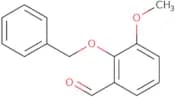
CAS:<p>2-Benzyloxy-3-methoxybenzaldehyde is an enantiopure compound that has been shown to have antiproliferative effects on cancer cells. It was also found to have a strong binding affinity for DNA and protein. The antiproliferative effects of 2-Benzyloxy-3-methoxybenzaldehyde were found to be due to its ability to bind to dna and inhibit the enzyme activity of pyrazine-2-carboxylic acid, leading to a decrease in the production of proteins vital for cell division. 2-Benzyloxy-3-methoxybenzaldehyde has been shown to have anticancer activity against colorectal cancer cells and may serve as a lead compound for future drug development.</p>Fórmula:C15H14O3Pureza:Min. 95%Peso molecular:242.27 g/mol2,4,6-Trimethoxybenzaldehyde
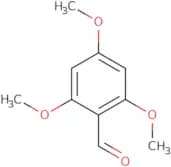
CAS:<p>2,4,6-Trimethoxybenzaldehyde is a chemical compound that is used as an intermediate in organic chemistry. It has been shown to have antiviral effects on influenza A virus by inhibiting the enzyme neuraminidase. This inhibition prevents the release of viruses from infected cells and thus prevents viral replication. 2,4,6-Trimethoxybenzaldehyde also inhibits the growth of cancer cells in vitro and has minimal toxicity to normal cells. This chemical has been shown to inhibit the reaction mechanism of proton pumps in mammalian cells, which may be due to its ability to inhibit p2y receptors or nitrogen atoms. 2,4,6-Trimethoxybenzaldehyde can also be used as a solvent for pharmaceutical preparations and as a reagent in x-ray diffraction data analysis.</p>Fórmula:C10H12O4Pureza:Min. 95%Cor e Forma:PowderPeso molecular:196.2 g/mol3-Hydroxybenzaldehyde
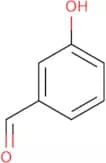
CAS:<p>3-Hydroxybenzaldehyde (3HBA) is an organic molecule that belongs to the group of substituted benzaldehydes. It has been shown to induce muscle cell proliferation in vitro and in vivo, as well as increased levels of activated caspase-3 in vitro. 3HBA also has a high resistance to hydrochloric acid, hydrogen bond, and chemical structures. It also shows properties of intramolecular hydrogen bonding and aldehyde groups. 3HBA has been shown to be active against malonic acid-induced pulmonary edema in rats, which may be due to its ability to inhibit the release of erythrocytes from the bone marrow into the circulation.</p>Fórmula:C7H6O2Pureza:Min. 96 Area-%Cor e Forma:Off-White PowderPeso molecular:122.12 g/mol2-(3-Chlorophenyl)thiazole-4-carbaldehyde
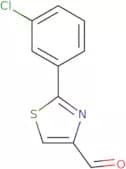
CAS:<p>Please enquire for more information about 2-(3-Chlorophenyl)thiazole-4-carbaldehyde including the price, delivery time and more detailed product information at the technical inquiry form on this page</p>Fórmula:C10H6ClNOSPureza:Min. 95%Cor e Forma:PowderPeso molecular:223.68 g/mol2-Phenoxybenzaldehyde
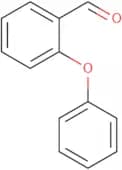
CAS:2-Phenoxybenzaldehyde is an organic compound that belongs to the heterocyclic aldehyde family. It is a white solid with a strong, pleasant odor. 2-Phenoxybenzaldehyde is used as an intermediate in organic synthesis, and has been shown to inhibit the receptor activity of human leukocyte antigen (HLA) class II molecules. The reaction mechanism for this inhibition is not known. The reaction of 2-phenoxybenzaldehyde with hydrochloric acid produces phenylhydroxylamine, which can be oxidized by inorganic acids to form phenyloxalic acid. This compound also inhibits the production of inflammatory cytokines such as TNFα and IL-1β in vitro and in vivo.Fórmula:C13H10O2Pureza:Min. 95%Cor e Forma:Clear LiquidPeso molecular:198.22 g/mol2-Chloro-4-hydroxybenzaldehyde
CAS:2-Chloro-4-hydroxybenzaldehyde is a potent competitive inhibitor of serine proteases, including thrombin. It also has an anticoagulant effect and can be used as an anti-cancer agent. 2-Chloro-4-hydroxybenzaldehyde has been shown to have a strong affinity for the progesterone receptor, which is a protein that regulates the activity of progesterone in cells. 2-Chloro-4-hydroxybenzaldehyde also binds to the formyl group of phenols and quinones, which leads to its use as an antioxidant in various applications. This compound is found in environmental pollution, where it can chelate metal ions such as chloride and lead.Fórmula:C7H5ClO2Pureza:Min. 95%Cor e Forma:PowderPeso molecular:156.57 g/mol3-Chloro-4-methoxybenzaldehyde
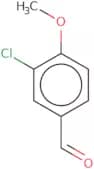
CAS:<p>3-Chloro-4-methoxybenzaldehyde is a chemical compound that belongs to the class of aromatic compounds. It is synthesized by reacting 3-chlorobenzaldehyde with methoxyacetone in a hydroxylation reaction. The asymmetric synthesis of 3-chloro-4-methoxybenzaldehyde was achieved by using a chiral auxiliary, which is an organic molecule that can be used to control the stereochemistry of other reactions. This product has high cytotoxicity and is able to cause melanogenesis (production of melanin) when applied to rat striatal membranes.</p>Fórmula:C8H7ClO2Pureza:Min. 95%Cor e Forma:PowderPeso molecular:170.59 g/mol6,6'-Dihydroxy-5,5'-dimethoxy- [1,1'-biphenyl]-3,3'-dicarboxaldehyde
CAS:6,6'-Dihydroxy-5,5'-dimethoxy-[1,1'-biphenyl]-3,3'-dicarboxaldehyde (DDM) is a molecule that belongs to the class of organic compounds known as phenols. DDM has been shown to be an inhibitor of the enzyme activity of lysine residues and protocatechuic acid production. DDM also inhibits 5-carboxyvanillic acid production by competitively binding to the enzyme's active site. DDM has been shown to have antibacterial activity against wild-type strains of Staphylococcus aureus and Escherichia coli.Fórmula:C16H14O6Pureza:Min. 95 Area-%Cor e Forma:Yellow PowderPeso molecular:302.28 g/mol3-(Methylthio)benzaldehyde
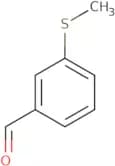
CAS:3-(Methylthio)benzaldehyde is a molecule that can be used in the preparation of mandelic acid. It has been shown to inhibit the activity of lipase, an enzyme that breaks down fats. The cavity of 3-(methylthio)benzaldehyde has been studied by X-ray analysis and was found to have cationic character with silver ions. It also has functional groups that can be used for protein modification by enzymatic reactions.Fórmula:C8H8OSPureza:Min. 95%Cor e Forma:Clear LiquidPeso molecular:152.21 g/mol3,4,5-Triacetoxybenzaldehyde
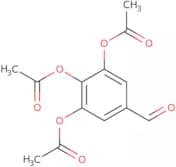
CAS:3,4,5-Triacetoxybenzaldehyde is a fine chemical that is useful as a scaffold for the synthesis of complex compounds. It is also used as a building block in the synthesis of research chemicals and speciality chemicals. 3,4,5-Triacetoxybenzaldehyde has been shown to be an intermediate in organic syntheses and reagents for laboratory use. This compound can be used as a reaction component in various reactions with other organic compounds to form new compounds. 3,4,5-Triacetoxybenzaldehyde is a high quality product that has been manufactured to the highest standards.Fórmula:C13H12O7Pureza:Min. 95%Cor e Forma:PowderPeso molecular:280.23 g/mol4-Fluoro-3-nitrobenzaldehyde
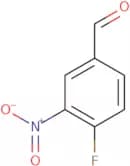
CAS:<p>4-Fluoro-3-nitrobenzaldehyde is a diphenyl ether that has been used as a starting material for the synthesis of dihydroisoquinolines and related compounds. The compound also inhibits IL-10 production in an experiment with human cells, which might be due to its ability to act as a pro-inflammatory cytokine. 4-Fluoro-3-nitrobenzaldehyde can be used as a control experiment for 4-fluoroaniline, which was found to inhibit IL-10 production in an experiment with human cells.<br>4-Fluoro-3-nitrobenzaldehyde is not active against P. aeruginosa, but does have antinociceptive effects and can be considered to have nucleophilic properties.</p>Fórmula:C7H4FNO3Pureza:Min. 95%Cor e Forma:PowderPeso molecular:169.11 g/mol3-Fluoro-2-methoxybenzaldehyde
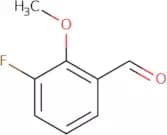
CAS:<p>3-Fluoro-2-methoxybenzaldehyde is a synthetic chemical that has been used as a precursor in the synthesis of pharmaceuticals and other organic compounds. 3-Fluoro-2-methoxybenzaldehyde can be prepared through the lithiation, chloromethylation, or trimethylation of 3-fluoroacetophenone. The compound can be oxidized to 3,4-dihydrobenzofuran with peroxide at low temperature. This conversion can be achieved using a variety of reagents, such as boron tribromide or boron trichloride.</p>Fórmula:C8H7FO2Pureza:Min. 95%Cor e Forma:Colorless PowderPeso molecular:154.14 g/mol3-Hydroxy-2-methoxybenzaldehyde
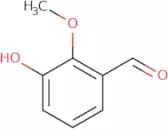
CAS:<p>3-Hydroxy-2-methoxybenzaldehyde is a synthetic compound that is used as an antiviral agent. It has been shown to inhibit the replication of Coxsackievirus A9 (CV-A9). In addition, 3-Hydroxy-2-methoxybenzaldehyde reacts with isoeugenol and isonicotinic acid under acidic conditions to form 4-allyl-2-methoxyphenol, which has antiviral activity against CV-A9. This reaction requires a catalyst, such as zinc chloride or nickel sulfate. The rate of this reaction can be increased by increasing the reaction time. 3-Hydroxy-2-methoxybenzaldehyde also inhibits the virus's ability to bind to cells and enter them, reducing its infectivity.</p>Fórmula:C8H8O3Cor e Forma:PowderPeso molecular:152.15 g/mol2-Methoxy-1-naphthaldehyde
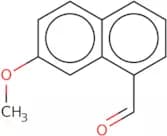
CAS:<p>2-Methoxy-1-naphthaldehyde is a potential chemical intermediate for the synthesis of a variety of biologically active compounds. It has been shown to have anti-tumor activity in solid tumours and can be used as a precursor for the production of new drugs that inhibit the growth of cancer cells. 2-Methoxy-1-naphthaldehyde is synthesized via an intramolecular hydrogen addition reaction with salicylaldehyde, which generates resonance stabilization. It also has an intermolecular hydrogen bond with naphthalene to form the dimer or trimer. The vibrational spectra and analytical methods are used to identify the functional groups present in 2-Methoxy-1-naphthaldehyde, which includes a hydrogen bond between the two methoxy groups. Computational methods can be used to predict how different molecules bind to this chemical intermediate and its role in biological activity.</p>Fórmula:C12H10O2Pureza:Min. 95%Cor e Forma:PowderPeso molecular:186.21 g/mol2,3-Dichlorobenzaldehyde oxime
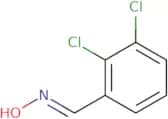
CAS:<p>2,3-Dichlorobenzaldehyde oxime is a versatile building block and reagent in the synthesis of complex compounds. It is mainly used as a research chemical and speciality chemical. 2,3-Dichlorobenzaldehyde oxime has been widely used for the preparation of fine chemicals, pharmaceuticals, agrochemicals, and other organic compounds. This compound can be reacted with various reagents to produce useful scaffolds or reaction components.</p>Fórmula:C7H5Cl2NOPureza:Min. 95%Cor e Forma:PowderPeso molecular:190.03 g/mol4-Bromo-3,5-dimethoxybenzaldehyde
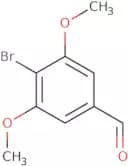
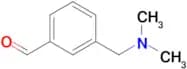
CAS:<p>4-Bromo-3,5-dimethoxybenzaldehyde is a compound that inhibits the replication of cells. It has been shown to induce apoptosis and inhibit tumor growth, including skin tumors and malignant melanoma cells. This chemical is synthesized by reacting an acrylonitrile with sodium hydroxide in a biphenyl amide. 4-Bromo-3,5-dimethoxybenzaldehyde has been used to inhibit bacterial growth, but it is not active against Mycobacterium tuberculosis or Mycobacterium avium complex.</p>Fórmula:C9H9BrO3Pureza:Min. 95%Cor e Forma:PowderPeso molecular:245.07 g/mol3-[(Dimethylamino)methyl]benzaldehyde
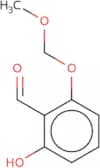
CAS:<p>3-[(Dimethylamino)methyl]benzaldehyde is a fine chemical that is used as a versatile building block in the synthesis of pharmaceuticals. It is also a useful intermediate in the synthesis of complex compounds and research chemicals. This product has been shown to be high quality and can be used as a reagent for many reactions.</p>Fórmula:C10H13NOPureza:Min. 95%Peso molecular:163.22 g/mol2-Hydroxy-6-(methoxymethoxy)benzaldehyde
CAS:<p>2-Hydroxy-6-(methoxymethoxy)benzaldehyde is a chemical intermediate that can be used in the synthesis of a wide range of compounds. It is an aromatic compound which has two hydroxyl groups on the benzene ring. This product is a versatile building block, and is useful in the synthesis of complex compounds with high purity. 2-Hydroxy-6-(methoxymethoxy)benzaldehyde can be obtained as a white solid with a melting point of 57°C.</p>Fórmula:C9H10O4Pureza:Min. 95%Cor e Forma:Clear LiquidPeso molecular:182.17 g/molRetinylaldehyde
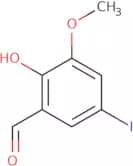
CAS:<p>Retinylaldehyde is a derivative of vitamin A that is important for visual health. It is an inhibitor of the chloride channel, which may be due to its ability to inhibit alcohol dehydrogenase and polymerase chain reaction (PCR). Retinylaldehyde has been shown to have a high affinity for nuclear DNA and can bind to guanine nucleotide-binding protein (G protein) in neural cells. This activity leads to chronic cough in mice. Retinylaldehyde also has been shown as having significant up-regulation in human monocytes when exposed to toll-like receptor ligands. The role of retinylaldehyde in the immune system is not fully understood, but it may play a role in modulating the response to bacterial infection by altering the production of cytokines such as interleukin-1β (IL-1β) and tumor necrosis factor alpha (TNFα).</p>Fórmula:C20H28OPureza:Min. 98 Area-%Cor e Forma:PowderPeso molecular:284.44 g/mol2-Hydroxy-5-iodo-3-methoxybenzaldehyde
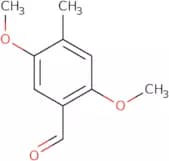
CAS:<p>Please enquire for more information about 2-Hydroxy-5-iodo-3-methoxybenzaldehyde including the price, delivery time and more detailed product information at the technical inquiry form on this page</p>Fórmula:C8H7IO3Pureza:Min. 98%Cor e Forma:PowderPeso molecular:278.04 g/mol2,5-Dimethoxy-4-methylbenzaldehyde
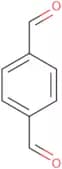
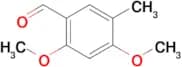
CAS:<p>2,5-Dimethoxy-4-methylbenzaldehyde is a bioactive chemical that has been shown to have anticancer activity. It has been shown to be an effective inhibitor of cancer cell growth in vitro and in vivo. 2,5-Dimethoxy-4-methylbenzaldehyde has also been shown to inhibit the formation of fatty acids and improve the uptake of glucose by cancer cells. This compound is a metabolite of the amino acid methionine and is used as a marker for mesenchymal cells. The structure of 2,5-dimethoxy-4-methylbenzaldehyde consists of two methoxy groups connected with an aliphatic chain consisting of one or more carbon atoms. This functional group may provide the anticancer activity through radical scavenging activities.</p>Fórmula:C10H12O3Pureza:Min. 95%Cor e Forma:Off-White PowderPeso molecular:180.2 g/molTerephthaldicarboxaldehyde
CAS:<p>Terephthaldicarboxaldehyde is a white crystalline solid that has been shown to be soluble in hydrogen fluoride, water vapor, and sodium salts. It is also insoluble in water. Langmuir adsorption isotherm experiments have shown that the solubility of terephthaldicarboxaldehyde increases with increasing concentration of chitosan polymer. Terephthaldicarboxaldehyde has been used as an analytical method for p-hydroxybenzoic acid (PHBA) and terephthalic acid (TPA). It can also be used as a fluorescent probe to detect the presence of these compounds in aqueous solutions.</p>Fórmula:C8H6O2Pureza:Min. 95%Cor e Forma:PowderPeso molecular:134.13 g/mol3-Cyclohexene-1-carboxaldehyde
CAS:<p>3-Cyclohexene-1-carboxaldehyde is a carbonyl reduction agent that converts primary alcohols to aldehydes. 3-Cyclohexene-1-carboxaldehyde is an effective catalyst for the reduction of alpha, beta unsaturated carbonyls. The mechanism of this reaction involves the elimination of hydrogen chloride, which forms hydrochloric acid. The reaction can be controlled by adding either alkali metal or chloride ions to the reaction mixture. This process produces 2 products: aldehyde and alkyl chlorides. 3-Cyclohexene-1-carboxaldehyde is primarily used in the production of polyethylene terephthalate (PET) and nylon 6,6 from ethylene glycol.</p>Fórmula:C7H10OPureza:Min. 95%Peso molecular:110.15 g/molClorprenaline HCl
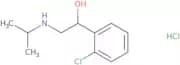
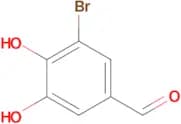
CAS:<p>β2-adrenergic receptor agonist</p>Fórmula:C11H17Cl2NOPureza:Min. 95%Cor e Forma:PowderPeso molecular:250.16 g/mol5-Bromo-3,4-dihydroxybenzaldehyde
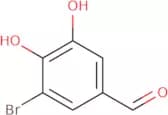
CAS:<p>5-Bromo-3,4-dihydroxybenzaldehyde (5BDBA) is a chemical compound that can be used as a reactive dye and photochemical crosslinker in the preparation of polymers. 5BDBA has been shown to have chemoattractant properties for immune cells, such as activated T lymphocytes and neutrophils. It also has been shown to have an effect on β-cells in the pancreas and skin cells. This compound has been found to activate the nuclear factor kappa-light-chain enhancer (NFκB), which leads to increased expression of chemoattractant protein (MCP). In 3T3-L1 preadipocytes, 5BDBA has been shown to induce accumulation of fatty acids by activating peroxisome proliferator activator receptor gamma.</p>Fórmula:C7H5BrO3Pureza:Min. 95%Cor e Forma:Yellow PowderPeso molecular:217.02 g/mol2-Hydroxy-3-methoxybenzaldehyde
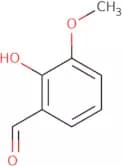
CAS:<p>2-Hydroxy-3-methoxybenzaldehyde is a model compound that is used to study the reaction mechanism of hydrogen bonding. It has been shown to have antioxidative properties and amoebicidal activity. The biological properties of 2-hydroxy-3-methoxybenzaldehyde are still being studied. There are also no reports on its toxicity or carcinogenicity in humans. This compound is a member of the group P2, which includes compounds with two aromatic rings connected by one carbon atom. The molecular geometry around this carbon atom is pyramidal and the molecule can exist in either an axial or equatorial orientation. Synchronous fluorescence experiments have shown that 2-hydroxymethoxybenzaldehyde reacts with Toll-like receptor 4 (TLR4).</p>Fórmula:C8H8O3Pureza:Min. 95%Cor e Forma:Yellow PowderPeso molecular:152.15 g/mol2-(2-Bromoethyl)benzaldehyde
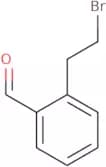
CAS:<p>2-(2-Bromoethyl)benzaldehyde is an organic compound that is used in the synthesis of many other compounds. It is produced by the acetylation of 2-bromoethanol with acetic anhydride and hydrochloric acid. This reaction mechanism starts with the formation of a carbocation from the protonated bromine and ethylene, followed by nucleophilic attack by the acetate anion to form a tertiary alcohol. The final step involves elimination of bromine to give 2-(2-bromoethyl)benzaldehyde. Techniques such as basic hydrolysis or chiral resolution can be used to produce optically pure 2-(2-bromoethyl)benzaldehyde.</p>Fórmula:C9H9BrOPureza:(%) Min. 80%Cor e Forma:Clear LiquidPeso molecular:213.07 g/mol3-Methoxy-4-(4-nitrobenzyloxy)benzaldehyde
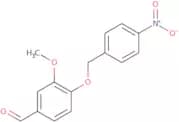
CAS:3-Methoxy-4-(4-nitrobenzyloxy)benzaldehyde is a chemical intermediate that is used in the synthesis of complex compounds. It has been shown to be an effective reagent for the synthesis of various organic compounds, such as pharmaceuticals and pesticides. 3-Methoxy-4-(4-nitrobenzyloxy)benzaldehyde is also used as a research chemical or as a speciality chemical in laboratories. This compound can be used as a building block in the synthesis of other compounds with interesting properties, such as 3-methoxy-4-(2,5-dichlorobenzyloxy)benzaldehyde.Fórmula:C15H13NO5Pureza:Min. 95%Cor e Forma:PowderPeso molecular:287.27 g/molImidazo[1,2-a]pyridine-3-carbaldehyde
CAS:Fórmula:C8H6N2OPureza:95%Cor e Forma:SolidPeso molecular:146.1491-Methyl-3-(trifluoromethyl)-1H-pyrazole-4-carbaldehyde
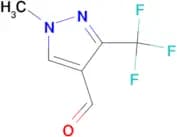
CAS:Fórmula:C6H5F3N2OPureza:98%Peso molecular:178.114Ethyl 2-formylcyclopropanecarboxylate, predominantly trans
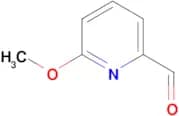
CAS:Fórmula:C7H10O3Pureza:95%Cor e Forma:LiquidPeso molecular:142.1546-Methoxypyridine-2-carbaldehyde
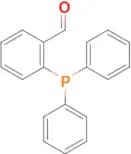
CAS:Fórmula:C7H7NO2Pureza:95%Cor e Forma:ViscousPeso molecular:137.1382-(Diphenylphosphino)benzaldehyde
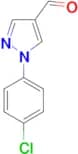
CAS:Fórmula:C19H15OPPureza:95%Cor e Forma:SolidPeso molecular:290.3021-(4-Chloro-phenyl)-1H-pyrazole-4-carbaldehyde
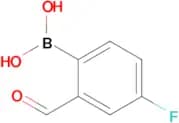
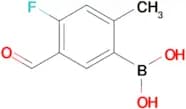
CAS:Fórmula:C10H7ClN2OPureza:98%Cor e Forma:SolidPeso molecular:206.63(4-Fluoro-2-formylphenyl)boronic acid
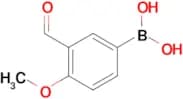
CAS:Fórmula:C7H6BFO3Pureza:98%Cor e Forma:SolidPeso molecular:167.933-Formyl-4-methoxyphenylboronic acid
CAS:Fórmula:C8H9BO4Pureza:98%Cor e Forma:Solid, Off-white powderPeso molecular:179.973-((Dimethylamino)methyl)benzaldehyde
CAS:Fórmula:C10H13NOPureza:97%Cor e Forma:LiquidPeso molecular:163.226-Bromo-2-fluoro-3-methoxybenzaldehyde
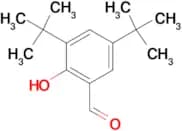
CAS:Fórmula:C8H6BrFO2Pureza:97%Cor e Forma:SolidPeso molecular:233.0363,5-Di-tert-butyl-2-hydroxybenzaldehyde
CAS:Fórmula:C15H22O2Pureza:97%Cor e Forma:Solid, Crystalline PowderPeso molecular:234.3391-METHYL-1H-PYRAZOLO[3,4-B]PYRIDINE-3-CARBALDEHYDE
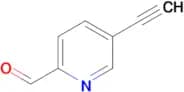
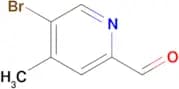
CAS:Fórmula:C8H7N3OPureza:98%Peso molecular:161.1645-Bromo-4-methylpicolinaldehyde
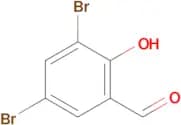
CAS:Fórmula:C7H6BrNOPureza:98%Cor e Forma:SolidPeso molecular:200.0353,5-Dibromosalicylaldehyde
CAS:Fórmula:C7H4Br2O2Pureza:95%Cor e Forma:Solid, PowderPeso molecular:279.9153-(Acetylamino)-4-pyridin-formaldehyde
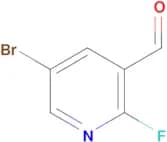
CAS:Fórmula:C8H8N2O2Pureza:95%Cor e Forma:SolidPeso molecular:164.1645-Bromo-2-fluoro-3-pyridinecarboxaldehyde
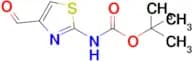
CAS:Fórmula:C6H3BrFNOPureza:95%Cor e Forma:PowderPeso molecular:203.998N-Boc-2-Amino-4-formylthiazole
CAS:Fórmula:C9H12N2O3SPureza:95%Cor e Forma:SolidPeso molecular:228.274-(Cyclopropylmethoxy)benzaldehyde
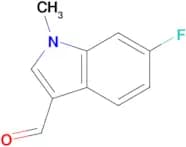
CAS:Fórmula:C11H12O2Pureza:97%Cor e Forma:Liquid, ClearPeso molecular:176.2156-fluoro-1-methyl-1H-indole-3-carbaldehyde
CAS:Fórmula:C10H8FNOPureza:95+%Cor e Forma:SolidPeso molecular:177.1784-Bromo-5-methylpicolinaldehyde
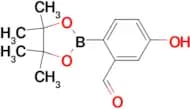
CAS:Fórmula:C7H6BrNOPureza:98%Cor e Forma:SolidPeso molecular:200.0355-HYDROXY-2-(4,4,5,5-TETRAMETHYL-1,3,2-DIOXABOROLAN-2-YL)BENZALDEHYDE
CAS:Pureza:97%Peso molecular:248.08999633789062N-(4-Formylphenyl)methanesulfonamide
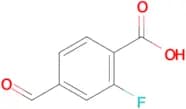
CAS:Fórmula:C8H9NO3SPureza:97%Cor e Forma:SolidPeso molecular:199.222-Fluoro-4-hydroxybenzaldehyde
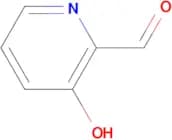
CAS:Fórmula:C7H5FO2Pureza:97%Cor e Forma:Crystalline Powder,PowderPeso molecular:140.1133-Hydroxypyridine-2-carboxaldehyde
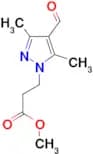
CAS:Fórmula:C6H5NO2Pureza:95%Cor e Forma:SolidPeso molecular:123.111methyl 3-(4-formyl-3,5-dimethyl-1H-pyrazol-1-yl)propanoate
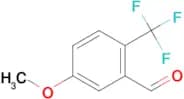
CAS:Fórmula:C10H14N2O3Pureza:95%Peso molecular:210.2335-METHOXY-2-(TRIFLUOROMETHYL)BENZALDEHYDE
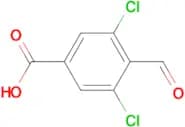
CAS:Fórmula:C9H7F3O2Pureza:97%Cor e Forma:SolidPeso molecular:204.1483,5-DICHLORO-4-FORMYLBENZOIC ACID
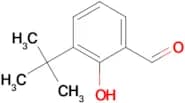
CAS:Fórmula:C8H4Cl2O3Pureza:95%Cor e Forma:SolidPeso molecular:219.023-(tert-Butyl)-2-hydroxybenzaldehyde
CAS:Fórmula:C11H14O2Pureza:95%Cor e Forma:LiquidPeso molecular:178.2314,4′,4”,4”’-([2,2′-Bi(1,3-dithiolylidene)]-4,4′,5,5′-tetrayl)tetrabenzaldehyde
CAS:Pureza:95%Peso molecular:620.77001955-Methylnicotinaldehyde
CAS:Fórmula:C7H7NOPureza:95%Cor e Forma:Low Melting SolidPeso molecular:121.139


![6,6'-Dihydroxy-5,5'-dimethoxy- [1,1'-biphenyl]-3,3'-dicarboxaldehyde](/_next/image/?url=https%3A%2Fstatic.cymitquimica.com%2Fproducts%2F3D%2Fthumb-webp%2FFD71561.webp&w=3840&q=75)
![3-[(Dimethylamino)methyl]benzaldehyde](/_next/image/?url=https%3A%2Fstatic.cymitquimica.com%2Fproducts%2F3D%2Fthumb-webp%2FFD124097.webp&w=3840&q=75)


![Imidazo[1,2-a]pyridine-3-carbaldehyde](/_next/image/?url=https%3A%2Fstatic.cymitquimica.com%2Fproducts%2F10%2Fthumb-webp%2FF065349.webp&w=3840&q=75)







![1-METHYL-1H-PYRAZOLO[3,4-B]PYRIDINE-3-CARBALDEHYDE](/_next/image/?url=https%3A%2Fstatic.cymitquimica.com%2Fproducts%2F10%2Fthumb-webp%2FF467593.webp&w=3840&q=75)
![4-methoxy-3-[(2-methylbenzyl)oxy]benzaldehyde](/_next/image/?url=https%3A%2Fstatic.cymitquimica.com%2Fproducts%2F10%2Fthumb-webp%2FF307600.webp&w=3840&q=75)











![4,4′,4”,4”’-([2,2′-Bi(1,3-dithiolylidene)]-4,4′,5,5′-tetrayl)tetrabenzaldehyde](/_next/image/?url=https%3A%2Fstatic.cymitquimica.com%2Fproducts%2F10%2Fthumb-webp%2FF617501.webp&w=3840&q=75)
