Aldeídos
Os aldeídos são compostos orgânicos que contêm um grupo carbonila (C=O) ligado a pelo menos um átomo de hidrogênio. Esses compostos versáteis são fundamentais em várias reações químicas, incluindo oxidação, redução e adição nucleofílica. Os aldeídos são building blocks essenciais na síntese de produtos farmacêuticos, fragrâncias e polímeros. Na CymitQuimica, oferecemos uma ampla seleção de aldeídos de alta qualidade para apoiar suas aplicações de pesquisa e industriais.
Foram encontrados 8573 produtos de "Aldeídos"
Ordenar por
Pureza (%)
0
100
|
0
|
50
|
90
|
95
|
100
4-Methoxybenzaldehyde
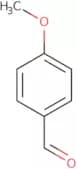
CAS:<p>4-Methoxybenzaldehyde is a surfactant with a Langmuir adsorption isotherm. It can be used in analytical methods for the determination of sodium carbonate at concentrations of 1 mg/mL and higher. The redox potentials of 4-methoxybenzaldehyde are +0.37 and -0.35 volts, which corresponds to group P2. The reaction mechanism for 4-methoxybenzaldehyde is the oxidation of the compound by potassium permanganate (KMnO4) in aqueous solution to form 4-hydroxybenzoic acid (4HB). The fluorescent derivative of 4-methoxybenzaldehyde is magnesium salt, which has been shown to react with ryanodine receptors in skeletal muscle cells, leading to a decrease in calcium release from the sarcoplasmic reticulum. Process optimization may be necessary for this product due to its limited applications in analytical chemistry.</p>Fórmula:C8H8O2Pureza:Min. 95%Cor e Forma:Colorless Clear LiquidPeso molecular:136.15 g/mol3-Chloro-4-methoxybenzaldehyde
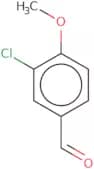
CAS:<p>3-Chloro-4-methoxybenzaldehyde is a chemical compound that belongs to the class of aromatic compounds. It is synthesized by reacting 3-chlorobenzaldehyde with methoxyacetone in a hydroxylation reaction. The asymmetric synthesis of 3-chloro-4-methoxybenzaldehyde was achieved by using a chiral auxiliary, which is an organic molecule that can be used to control the stereochemistry of other reactions. This product has high cytotoxicity and is able to cause melanogenesis (production of melanin) when applied to rat striatal membranes.</p>Fórmula:C8H7ClO2Pureza:Min. 95%Cor e Forma:PowderPeso molecular:170.59 g/molBenzaldehyde dimethyl acetal
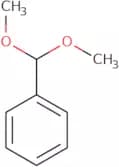
CAS:<p>Vegetable, nutty and floral flavour/fragrance</p>Fórmula:C9H12O2Pureza:Min. 95%Cor e Forma:Clear LiquidPeso molecular:152.19 g/mol3-Iodobenzaldehyde
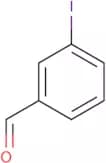
CAS:3-Iodobenzaldehyde is an atypical, isomeric, low energy, functional group. It has a fluorine atom in the 3-position and three different types of functional groups: alcohol, aldehyde and carboxylic acid. This compound has been studied for its ability to bind to receptors. 3-Iodobenzaldehyde can be synthesized by reacting benzalchohde with iodine and hydrochloric acid. The technique used to produce this compound is called Grignard reaction. 3-Iodobenzaldehyde can also be prepared by heating the corresponding nitrobenzene with sodium iodide in dry ether or under refluxing conditions. This compound has a low boiling point and melts at about 170 degrees Celsius. The frequency of this molecule ranges from 98 to 102 megahertzFórmula:C7H5IOPureza:Min. 95%Cor e Forma:PowderPeso molecular:232.02 g/mol2-Hydroxy-4-morpholinobenzaldehyde
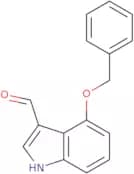
CAS:<p>Please enquire for more information about 2-Hydroxy-4-morpholinobenzaldehyde including the price, delivery time and more detailed product information at the technical inquiry form on this page</p>Fórmula:C11H13NO3Pureza:Min. 95%Peso molecular:207.23 g/mol4-Benzyloxyindole-3-carboxaldehyde
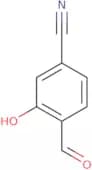
CAS:<p>4-Benzyloxyindole-3-carboxaldehyde is an analog of psilocin that is synthesized by the condensation of formylbenzene with indole-3-carboxaldehyde. It has been shown to act as a formylating agent, which can be used in the synthesis of other compounds. 4-Benzyloxyindole-3-carboxaldehyde may also be converted to n-dimethyltryptamine (DMT) by oxidation and decarboxylation.</p>Fórmula:C16H13NO2Pureza:Min. 95%Cor e Forma:PowderPeso molecular:251.28 g/mol4-Cyano-2-hydroxybenzaldehyde
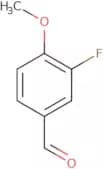
CAS:<p>4-Cyano-2-hydroxybenzaldehyde is a high quality chemical that can be used as a reagent and intermediate in the synthesis of complex compounds. It is also an important building block in the synthesis of fine chemicals. 4-Cyano-2-hydroxybenzaldehyde has been used as a versatile building block in the synthesis of organic compounds, useful scaffolds in medicinal chemistry, and reactive intermediates. It has also been shown to have anti-inflammatory properties and may be a potential treatment for inflammatory bowel disease.</p>Fórmula:C8H5NO2Pureza:Min. 95%Peso molecular:147.13 g/mol3-Fluoro-4-methoxybenzaldehyde
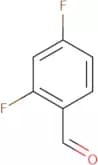
CAS:<p>3-Fluoro-4-methoxybenzaldehyde is a chemical compound that is used in the synthesis of natural products. It has been shown to have inhibitory properties against cancer cells, and has been synthesized as an analog of 3-fluoro-4-hydroxybenzaldehyde. The biological function of 3-fluoro-4-methoxybenzaldehyde is not yet known. Hydrochloric acid may be used to react with 3-fluoro-4-methoxybenzaldehyde to form a salt. This chemical also has anti-tumor effects and can be synthesized using cryogenic techniques.</p>Fórmula:C8H7FO2Pureza:Min. 95%Cor e Forma:Slightly Yellow PowderPeso molecular:154.14 g/mol2,4-Difluorobenzaldehyde
CAS:<p>2,4-Difluorobenzaldehyde is a glycosidic bond compound that is chiral. It has been shown to be able to inhibit human immunodeficiency virus (HIV) infection and inflammatory bowel disease. 2,4-Difluorobenzaldehyde is also an inhibitor of cholesterol ester transfer protein that can lead to autoimmune diseases. This compound has been shown to have receptor activity and is synthesized by the reaction of 2,4-dichlorobenzaldehyde with dimethyl acetal in refluxing ethanol. The synthesis method for this compound involves synchronous fluorescence and radiations. 2,4-Difluorobenzaldehyde has been found to have anti-inflammatory properties due to its ability to inhibit chronic pulmonary inflammation in rats.</p>Fórmula:C7H4F2OPureza:Min. 95%Cor e Forma:Clear LiquidPeso molecular:142.1 g/mol3-Sulfobenzaldehyde sodium salt
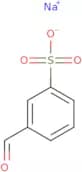
CAS:3-Sulfobenzaldehyde sodium salt is a novel anticancer agent that inhibits the activity of HDACs. It has shown a strong inhibitory effect on cancer cells in vivo, and can be used for the treatment of tumors. 3-Sulfobenzaldehyde sodium salt has an anti-proliferative effect on cancer cells, which may be due to its ability to inhibit the activity of HDACs and acetylation mediated by these enzymes. This drug also has an anti-proliferative effect in tumor growth, which may be due to its ability to inhibit the HDAC cycle and acetylation, leading to cell death.Fórmula:C7H5NaO4SPureza:85%MinCor e Forma:PowderPeso molecular:208.17 g/mol4-Nitrobenzaldehyde oxime
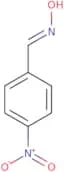
CAS:4-Nitrobenzaldehyde oxime is a phenylhydrazone derivative that is a potent cytotoxic agent. The 1,2-nitration of the benzene ring in 4-nitrobenzaldehyde oxime produces a reactive intermediate that reacts with nucleophilic groups on cellular macromolecules to produce DNA strand breaks and other types of damage. 4-Nitrobenzaldehyde oxime has been shown to have significant anticancer activity against leukemia cells in culture, as well as antibacterial and anticancer activity against Staphylococcus aureus and Escherichia coli.Fórmula:C7H6N2O3Pureza:Min. 95%Cor e Forma:PowderPeso molecular:166.13 g/mol2-Hydroxy-4-nitrobenzaldehyde
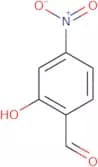
CAS:<p>2-Hydroxy-4-nitrobenzaldehyde is a molecule that reacts with kinase receptors in cancer cells and causes oxidative carbonylation. It has been shown to react with chloride, salicylaldehyde and dobutamine to form a fluorescent compound, which can be used as a probe for fluorescence studies. The fluorescence properties of 2-hydroxy-4-nitrobenzaldehyde have also been exploited for the development of pyrazoles as potential anti-cancer agents.</p>Fórmula:C7H5NO4Pureza:Min. 98 Area-%Cor e Forma:PowderPeso molecular:167.12 g/mol2,5-Difluoro-4-hydroxybenzaldehyde
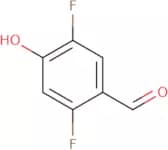
CAS:<p>2,5-Difluoro-4-hydroxybenzaldehyde is a chemical compound that belongs to the class of pyrazoles. It has been shown to inhibit the activity of multinuclear enzymes, such as tautomerase and hydrolases. This inhibition is due to the conformational changes in these enzymes induced by 2,5-difluoro-4-hydroxybenzaldehyde. 2,5-Difluoro-4-hydroxybenzaldehyde also displays biological activity against various types of cancer cells. This can be attributed to its ability to inhibit protein synthesis through inhibition of RNA transcription and translation.</p>Fórmula:C7H4F2O2Pureza:Min. 95%Cor e Forma:SolidPeso molecular:158.1 g/mol3-(Methylthio)benzaldehyde
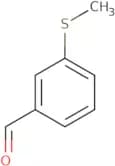
CAS:3-(Methylthio)benzaldehyde is a molecule that can be used in the preparation of mandelic acid. It has been shown to inhibit the activity of lipase, an enzyme that breaks down fats. The cavity of 3-(methylthio)benzaldehyde has been studied by X-ray analysis and was found to have cationic character with silver ions. It also has functional groups that can be used for protein modification by enzymatic reactions.Fórmula:C8H8OSPureza:Min. 95%Cor e Forma:Clear LiquidPeso molecular:152.21 g/mol5-(4-((3-Chloro-4-((3-fluorobenzyl)oxy)phenyl)amino) quinazolin-6-yl)furan-2-carbaldehyde
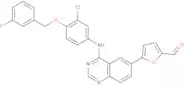
CAS:<p>5-(4-((3-Chloro-4-((3-fluorobenzyl)oxy)phenyl)amino)quinazolin-6-yl)furan-2-carbaldehyde is a heterocyclic compound that has been used to study protein tyrosine kinase activity. This drug binds to the active site of the enzyme and inhibits its function by forming an irreversible covalent bond with the enzyme's reactive cysteine residue, which prevents the transfer of phosphate groups from ATP to the substrate (tyrosine).</p>Fórmula:C26H17ClFN3O3Pureza:Min. 95%Peso molecular:473.88 g/mol3-Bromo-4-fluorobenzaldehyde
CAS:<p>3-Bromo-4-fluorobenzaldehyde is a drug substance that is used in the synthesis of pharmaceuticals. It is also a potential anticancer agent. 3-Bromo-4-fluorobenzaldehyde inhibits bacterial growth by binding to DNA, preventing transcription and replication. The high frequency of human activity has been shown using a patch clamp technique on human erythrocytes. This active form is metabolized through a number of metabolic transformations, including hydrolysis by esterases or glucuronidases, oxidation by cytochrome P450 enzymes, reduction by glutathione reductase, or conjugation with glucuronic acid. 3-Bromo-4-fluorobenzaldehyde also specifically binds to markers expressed at high levels in Mycobacterium tuberculosis strains (e.g., ESX-1 secretion system protein) and inhibits cell growth in culture.</p>Fórmula:C7H4BrFOPureza:Min. 95%Cor e Forma:PowderPeso molecular:203.01 g/mol2,5-Dihydroxybenzaldehyde
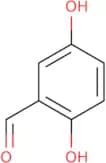
CAS:<p>2,5-Dihydroxybenzaldehyde is a compound that can be used as an antioxidant. It is also a precursor for the synthesis of benzalkonium chloride. 2,5-Dihydroxybenzaldehyde reacts with p-hydroxybenzoic acid to form 2,5-dihydroxyphenylacetic acid and benzoic acid. The reaction mechanism of 2,5-dihydroxybenzaldehyde has been studied in detail using hl-60 cells and has been shown to be significant cytotoxicity. The hydroxyl group in this molecule creates a hydrogen bond with the carbonyl group in p-hydroxybenzoic acid and the two react together to form products. This reaction is catalyzed by Michaelis–Menten kinetics and proceeds via an electrochemical detector. Nitrogen atoms are not present in this molecule but do exist in benzalkonium chloride, which is synthesized from 2</p>Fórmula:C7H6O3Pureza:Min. 95%Cor e Forma:Yellow PowderPeso molecular:138.12 g/mol4-Chloro-2-methylbenzaldehyde
CAS:4-Chloro-2-methylbenzaldehyde is a nucleophilic and electrophilic compound that has a carbonyl group. The vivo model of 4-Chloro-2-methylbenzaldehyde suggests that the methyl groups on the molecule are important for its anti-cancer activities. This compound also has anti-inflammatory properties, which may be due to its ability to inhibit prostaglandin synthesis. It is used in anti-cancer agents as well as in other applications such as catalysis and synthetic chemistry. 4-Chloro-2-methylbenzaldehyde is synthesized by first reacting benzaldehyde with sodium nitrite, followed by chlorination with phosphorus pentachloride and sodium hydroxide. The mechanistic details of this reaction have not been elucidated yet, but it is believed that the selectivity of this reaction may be due to the presence of aldehydes in the reactants. Further optimization of this reaction would involve changing theFórmula:C8H7ClOPureza:Min. 95%Cor e Forma:Clear LiquidPeso molecular:154.59 g/mol2-Carbomethoxybenzaldehyde
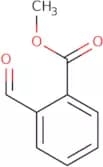
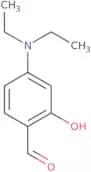
CAS:<p>2-Carbomethoxybenzaldehyde (2CMB) is a synthetic chemical compound that has been used as an efficient method for the synthesis of amines. The carbonyl group in 2CMB reacts with nucleophiles, such as amines, to form a tetrahydroisoquinoline derivative. This nucleophilic attack leads to the formation of an unstable intermediate that can be isolated and purified by trifluoroacetic acid (TFA). 2CMB is also used in the synthesis of quinoline derivatives and naphthalene derivatives. The acidic properties of 2CMB allow it to react with carboxylic acids, leading to the formation of esters.</p>Fórmula:C9H8O3Pureza:Min. 95%Cor e Forma:Colorless PowderPeso molecular:164.16 g/mol4-(N,N-Diethylamino)salicylaldehyde
CAS:<p>4-(N,N-Diethylamino)salicylaldehyde is a coumarin derivative that has been shown to be a fluorescent probe for proton transfer. It emits light at around 400 nm when the probe is excited by light of wavelength greater than 300 nm. The emission spectrum changes from green to red as the pH increases. 4-(N,N-Diethylamino)salicylaldehyde also exhibits fluorescence enhancement in the presence of metal ions such as Fe3+, Cu2+, or Cr3+. This compound can be used as a fluorescent probe for hydrogen bonding interactions and metal hydroxides.</p>Fórmula:C11H15NO2Pureza:Min. 95%Cor e Forma:PowderPeso molecular:193.24 g/mol