Aldeídos
Os aldeídos são compostos orgânicos que contêm um grupo carbonila (C=O) ligado a pelo menos um átomo de hidrogênio. Esses compostos versáteis são fundamentais em várias reações químicas, incluindo oxidação, redução e adição nucleofílica. Os aldeídos são building blocks essenciais na síntese de produtos farmacêuticos, fragrâncias e polímeros. Na CymitQuimica, oferecemos uma ampla seleção de aldeídos de alta qualidade para apoiar suas aplicações de pesquisa e industriais.
Foram encontrados 8573 produtos de "Aldeídos"
Ordenar por
Pureza (%)
0
100
|
0
|
50
|
90
|
95
|
100
2,4,6-Trimethoxy-3-methylbenzaldehyde
CAS:2,4,6-Trimethoxy-3-methylbenzaldehyde is a flavanone that is structurally related to the drug ciprofloxacin. The two molecules share a common molecular framework with the addition of a hydroxyl group on the 2 position of the benzene ring. In molecular docking studies, 2,4,6-Trimethoxy-3-methylbenzaldehyde has shown antitubercular activity against Mycobacterium tuberculosis and Mycobacterium avium complex. It is also an inhibitor of protein tyrosine phosphatase and has been shown to have antibacterial activity against various strains of bacteria.Fórmula:C11H14O4Pureza:Min. 95%Cor e Forma:PowderPeso molecular:210.23 g/mol2-(4-Fluorophenyl)thiazole-4-carbaldehyde
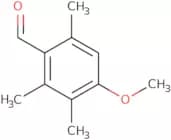
CAS:<p>Please enquire for more information about 2-(4-Fluorophenyl)thiazole-4-carbaldehyde including the price, delivery time and more detailed product information at the technical inquiry form on this page</p>Fórmula:C10H6FNOSPureza:Min. 95%Cor e Forma:PowderPeso molecular:207.23 g/mol4-Methoxy-2,3,6-trimethylbenzaldehyde
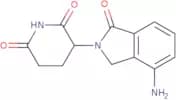
CAS:4-Methoxy-2,3,6-trimethylbenzaldehyde (MTMB) is a chemical intermediate that can be used as a building block for the synthesis of complex compounds. It has a high quality and is a versatile building block. MTMB is also known to react with other chemical compounds to form an aromatic ring. This compound is used in research and development as well as in fine chemical production.Fórmula:C11H14O2Pureza:Min. 95%Cor e Forma:PowderPeso molecular:178.23 g/molLenalidomide
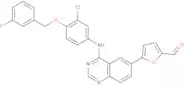
CAS:Produto Controlado<p>Inhibitor of E3 ubiquitin ligase cereblon; inducer of CK1α degradation</p>Fórmula:C13H13N3O3Pureza:Min. 95%Cor e Forma:PowderPeso molecular:259.26 g/mol5-(4-((3-Chloro-4-((3-fluorobenzyl)oxy)phenyl)amino) quinazolin-6-yl)furan-2-carbaldehyde
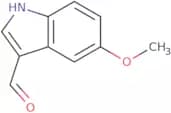
CAS:<p>5-(4-((3-Chloro-4-((3-fluorobenzyl)oxy)phenyl)amino)quinazolin-6-yl)furan-2-carbaldehyde is a heterocyclic compound that has been used to study protein tyrosine kinase activity. This drug binds to the active site of the enzyme and inhibits its function by forming an irreversible covalent bond with the enzyme's reactive cysteine residue, which prevents the transfer of phosphate groups from ATP to the substrate (tyrosine).</p>Fórmula:C26H17ClFN3O3Pureza:Min. 95%Peso molecular:473.88 g/mol5-Methoxyindole-3-carboxaldehyde
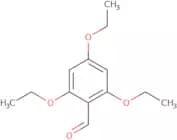
CAS:5-Methoxyindole-3-carboxaldehyde is a molecule that belongs to the genus of indolequinones. It has been shown to have potent inhibitory activity against prostate cancer cells, and also has anti-cancer properties. 5-Methoxyindole-3-carboxaldehyde inhibits the proliferation of cancer cells by inducing apoptosis in prostate cancer cells. 5-Methoxyindole-3-carboxaldehyde also suppresses the growth of cervical cancer cells and breast cancer cells. This molecule binds to the hydrogen bond sites on DNA, which may be one reason for its anti-cancer properties. The molecule is fluorescent and can be used as a marker for detecting cancers or other diseases in living tissue.Fórmula:C10H9NO2Pureza:Min. 95%Cor e Forma:PowderPeso molecular:175.18 g/molPhloroglucinol aldehyde triethyl ether
CAS:Phloroglucinol aldehyde triethyl ether is a high quality, research chemical, speciality chemical and versatile building block. It is used in the synthesis of complex compounds that are useful as intermediates or fine chemicals. The CAS No. for this compound is 59652-88-9.Fórmula:C13H18O4Pureza:Min. 95%Peso molecular:238.28 g/mol3-[(Dimethylamino)methyl]benzaldehyde
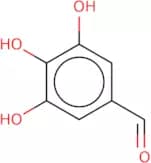
CAS:<p>3-[(Dimethylamino)methyl]benzaldehyde is a fine chemical that is used as a versatile building block in the synthesis of pharmaceuticals. It is also a useful intermediate in the synthesis of complex compounds and research chemicals. This product has been shown to be high quality and can be used as a reagent for many reactions.</p>Fórmula:C10H13NOPureza:Min. 95%Peso molecular:163.22 g/molGallaldehyde hemihydrate
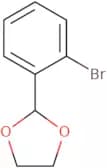
CAS:Gallaldehyde hemihydrate is a bioactive phenolic compound that inhibits the tyrosine kinase domain of the epidermal growth factor receptor (EGFR). It has been shown to inhibit tumor cell growth and induce apoptosis in cancer tissues. Gallaldehyde hemihydrate has also been found in lentils, which might be used as a potential biomarker for this compound. The optimum pH for gallaldehyde hemihydrate is between 2.0-4.0, and it can bind to cation channels and act as a potential biomarker for skin cancer cells.Fórmula:C7H6O4Pureza:Min. 95%Cor e Forma:PowderPeso molecular:154.12 g/mol2-Bromobenzaldehyde ethylene acetal
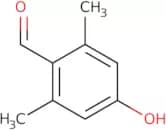
CAS:2-Bromobenzaldehyde ethylene acetal is a reactive intermediate that can be used to form allyl ethers. It is prepared by the Grignard reaction of 2-bromobenzaldehyde with an ethylene acetal. This molecule may be useful for the synthesis of dioxolanes and amines, as well as for other applications such as supramolecular chemistry and emulsions.Fórmula:C9H9BrO2Pureza:Min. 95%Peso molecular:229.07 g/mol2,6-Dimethyl-4-hydroxybenzaldehyde
CAS:<p>2,6-Dimethyl-4-hydroxybenzaldehyde is a synthetic compound that belongs to the class of aminoguanidines. It has been shown to be a potent vasoprotective agent and is used in the treatment of cardiovascular diseases. 2,6-Dimethyl-4-hydroxybenzaldehyde reverses the effects of formate on the jejunum by inhibiting secretion and intestinal motility. The activity of this drug has been shown to be due to its inhibitory effect on histamine release from mast cells.</p>Fórmula:C9H10O2Pureza:Min. 95%Cor e Forma:Yellow PowderPeso molecular:150.17 g/mol3-Methylbenzaldehyde
CAS:3-Methylbenzaldehyde is a diphenolase that is found in a Chinese medicinal plant, Acalypha wilkesiana. 3-Methylbenzaldehyde has been shown to have anti-inflammatory properties and can be used as a complementary therapy for inflammatory diseases. The chemical ionization technique was used to measure the production rate of 3-methylbenzaldehyde from the acetate extract of A. wilkesiana. The linear regression analysis showed that there was an increase in the production rate with increased concentration of hydrogen bonding interactions with 3-methylbenzaldehyde. Hydrogen bonding interactions are due to the presence of hydroxyl groups on the benzene ring and methyl group on the side chain. This chemical reaction forms glyoxal, which is then metabolized through p450 isozymes in order to produce 3-methylbenzaldehyde or other metabolites.Fórmula:C8H8OPureza:Min. 98 Area-%Cor e Forma:Colorless Clear LiquidPeso molecular:120.15 g/mol2-Chloro-6-fluorobenzaldehyde
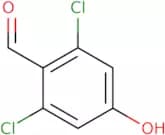
CAS:<p>2-Chloro-6-fluorobenzaldehyde is an impurity that can be found in wastewater. It has been shown to be a reactive intermediate for the synthesis of streptochlorin, which is a natural product with potential antibiotic activity. 2-Chloro-6-fluorobenzaldehyde is produced by the reaction of chlorine and anhydrous sodium, with acid as catalyst. The molecule has two fluorine atoms and one chloride atom. This compound can also be used in the treatment of waste water due to its ability to react with hydroxyl ions and chloride ions in the presence of hydrogen chloride or hydrochloric acid. The pain model was evaluated using nmr spectra and optical properties.</p>Fórmula:C7H4ClFOPureza:Min. 95%Cor e Forma:White PowderPeso molecular:158.56 g/mol2,6-Dichloro-4-hydroxybenzaldehyde
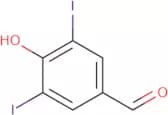
CAS:<p>2,6-Dichloro-4-hydroxybenzaldehyde is a chlorinated organic compound that can be synthesized by the chlorination of 2,6-dichlorobenzaldehyde. It has non-polar properties and can be used as an analytical reagent. Due to its chlorine atoms, it is used in the analysis of chlorine content in water and other substances. It is a formyl derivative and a homologue of formaldehyde. There are two isomers: 2,4-dichloro-6-hydroxybenzaldehyde (2,4 DCHA) and 2,5-dichloro-6-hydroxybenzaldehyde (2,5 DCHA).</p>Fórmula:C7H4Cl2O2Pureza:Min. 95%Cor e Forma:Yellow PowderPeso molecular:191.01 g/mol3,5-Diiodo-4-hydroxybenzaldehyde
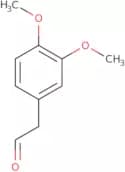
CAS:3,5-Diiodo-4-hydroxybenzaldehyde (3,5-DIBA) is a functional group that contains both hydroxyl and iodide groups. The hydroxyl group is positioned ortho to the iodide group. 3,5-DIBA is found in wastewater and can be used as a bioremediation agent. It has been shown to react with chromatographic solvents and may be used for the removal of organic contaminants from water. 3,5-DIBA reacts with monoiodotyrosine in an aqueous environment to form hypoiodous acid (HIO). This reaction is catalyzed by hydrochloric acid. HIO reacts with diiodoacetic acid or iodoacetic acid to form coagulation products such as diiodoacetate or iodoacetate. These reactions are reversible and can be used for the removal of excess iodine from wastewater.Fórmula:C7H4I2O2Pureza:Min. 98 Area-%Cor e Forma:Off-White PowderPeso molecular:373.91 g/mol2-(3,4-Dimethoxyphenyl)acetaldehyde
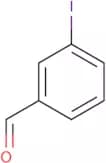
CAS:<p>2-(3,4-Dimethoxyphenyl)acetaldehyde is a bioactive molecule that has shown anti-cancer properties in vitro and in vivo. It inhibits the activity of aldehyde dehydrogenase, an enzyme responsible for the oxidation of alcohols to aldehydes. This inhibition leads to accumulation of acetaldehyde in cells and induces apoptosis or cell death by caspase-independent mechanisms. 2-(3,4-Dimethoxyphenyl)acetaldehyde also has been shown to induce acidolysis reactions in the presence of acid. This reaction mechanism may be due to protonation of the phenolic hydroxyl group. The resulting 3,4-dimethoxyphenylacetic acid analog can inhibit cells' proliferation and induce apoptosis by blocking protein synthesis and cell division.</p>Fórmula:C10H12O3Pureza:Min. 95%Cor e Forma:Clear LiquidPeso molecular:180.2 g/mol3-Iodobenzaldehyde
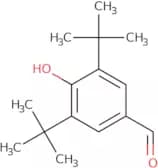
CAS:3-Iodobenzaldehyde is an atypical, isomeric, low energy, functional group. It has a fluorine atom in the 3-position and three different types of functional groups: alcohol, aldehyde and carboxylic acid. This compound has been studied for its ability to bind to receptors. 3-Iodobenzaldehyde can be synthesized by reacting benzalchohde with iodine and hydrochloric acid. The technique used to produce this compound is called Grignard reaction. 3-Iodobenzaldehyde can also be prepared by heating the corresponding nitrobenzene with sodium iodide in dry ether or under refluxing conditions. This compound has a low boiling point and melts at about 170 degrees Celsius. The frequency of this molecule ranges from 98 to 102 megahertzFórmula:C7H5IOPureza:Min. 95%Cor e Forma:PowderPeso molecular:232.02 g/mol3,5-Di-tert-butyl-4-hydroxybenzylaldehyde
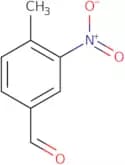
CAS:<p>3,5-Di-tert-butyl-4-hydroxybenzylaldehyde is a compound that can be used as an extraction solvent for solid phase microextraction (SPME) in analytical methods. This sample preparation technique is used to measure the amount of malonic acid in kidney bean samples, as well as to detect growth factors in cell cultures. 3,5-Di-tert-butyl-4-hydroxybenzylaldehyde has been shown to be effective in wastewater treatment and has also been found to have anti-inflammatory properties. In addition, this compound was detected at low levels in urine samples from patients with inflammatory diseases. The mechanism of 3,5-Di-tert-butyl-4-hydroxybenzylaldehyde's antiinflammatory activity may be due to its ability to inhibit oxidative DNA damage by reacting with hydrogen bonds.</p>Fórmula:C15H22O2Pureza:Min. 95%Cor e Forma:PowderPeso molecular:234.33 g/mol4-Methyl-3-nitrobenzaldehyde
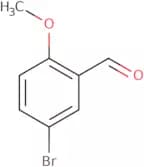
CAS:4-Methyl-3-nitrobenzaldehyde is an aldehyde that is synthesized in vitro and used as a replication inhibitor. It has been shown to inhibit the replication of dsDNA, ssDNA, and RNA viruses. 4-Methyl-3-nitrobenzaldehyde binds to nucleic acids by forming hydrogen bonds with the carboxylic acid group on the molecule and the acceptor, which are usually hydroxyl groups or amino groups. 4-Methyl-3-nitrobenzaldehyde can be used for the synthesis of viologens, which are molecules that can be used as electron acceptors in organic reactions.Fórmula:C8H7NO3Pureza:Min. 95%Cor e Forma:PowderPeso molecular:165.15 g/mol5-Bromo-2-methoxybenzaldehyde
CAS:5-Bromo-2-methoxybenzaldehyde is a benzodiazepine receptor ligand that has been shown to have antiviral, antibacterial and anticancer properties. 5-Bromo-2-methoxybenzaldehyde is an inhibitor of the enzyme benzyl alcohol dehydrogenase (BAHD). BAHD plays an important role in the production of reactive oxygen species (ROS) by converting benzoic acid to benzoate, which is then converted to ROS. The inhibitory concentration values for 5-bromo-2-methoxybenzaldehyde are not yet known.Fórmula:C8H7BrO2Pureza:Min. 95%Cor e Forma:PowderPeso molecular:215.04 g/mol


![3-[(Dimethylamino)methyl]benzaldehyde](/_next/image/?url=https%3A%2Fstatic.cymitquimica.com%2Fproducts%2F3D%2Fthumb-webp%2FFD124097.webp&w=3840&q=75)