Aldeídos
Os aldeídos são compostos orgânicos que contêm um grupo carbonila (C=O) ligado a pelo menos um átomo de hidrogênio. Esses compostos versáteis são fundamentais em várias reações químicas, incluindo oxidação, redução e adição nucleofílica. Os aldeídos são building blocks essenciais na síntese de produtos farmacêuticos, fragrâncias e polímeros. Na CymitQuimica, oferecemos uma ampla seleção de aldeídos de alta qualidade para apoiar suas aplicações de pesquisa e industriais.
Foram encontrados 8573 produtos de "Aldeídos"
Ordenar por
Pureza (%)
0
100
|
0
|
50
|
90
|
95
|
100
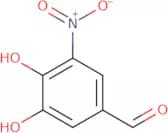
3,4-Dihydroxy-5-nitrobenzaldehyde
CAS:3,4-Dihydroxy-5-nitrobenzaldehyde is a chemical substance that is used in an analytical method to measure the level of methoxy groups in chronic kidney disease. The methanol solvent and hydrochloric acid are used to dissolve the sample, which is then titrated with trifluoroacetic acid. The chloride ion reacts with the methylene group from the 3,4-dihydroxy-5-nitrobenzaldehyde molecule to form a new compound that can be detected by ultraviolet light at 254 nm. The active methylene group is quantified by measuring its absorbance at this wavelength and comparing it with a calibration curve using known concentrations of sodium salts. This test has been shown to be more sensitive than other chromatographic methods for detecting methoxy groups in chronic kidney disease.Fórmula:C7H5NO5Pureza:Min. 95%Cor e Forma:Yellow PowderPeso molecular:183.12 g/mol5-[(4,5-Dimethyl-4H-1,2,4-triazol-3-yl)thio]-2-furaldehyde
CAS:5-[(4,5-Dimethyl-4H-1,2,4-triazol-3-yl)thio]-2-furaldehyde is a versatile building block that can be used as a research chemical or reagent. It is also useful for the synthesis of complex compounds. This material has been shown to be an excellent starting point for the synthesis of high quality and useful scaffolds.Fórmula:C9H9N3O2SPureza:Min. 95%Cor e Forma:PowderPeso molecular:223.25 g/mol3-Hydroxy-4-methoxy-2-nitrobenzaldehyde
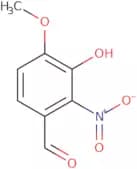
CAS:3-Hydroxy-4-methoxy-2-nitrobenzaldehyde is a ternary complex that has been adsorbed onto the surface of an ion exchange resin. The adsorption process occurs through the formation of hydrogen bonds between the hydroxyl groups on the resin and the hydroxyl groups on the molecule. This complex is also soluble in chloroform, which may be due to its ability to form hydrogen bonds with itself and other molecules. The 3-hydroxy group on this molecule has been shown to react reductively with nitrophenol, forming a nitroso derivative. 3-Hydroxy-4-methoxy-2-nitrobenzaldehyde has been used as a template for the microbiological assay of azides and quinones.Fórmula:C8H7NO5Pureza:Min. 95%Peso molecular:197.14 g/mol6-Benzyloxyindole-3-carboxaldehyde
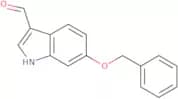
CAS:6-Benzyloxyindole-3-carboxaldehyde is a benzyl compound that is produced by the catalytic hydrogenolysis of benzyl alcohol. The debenzylation product of 6-benzyloxyindole-3-carboxaldehyde is known as benzene.Fórmula:C16H13NO2Pureza:Min. 95%Cor e Forma:PowderPeso molecular:251.28 g/mol3,5-Di-tert-butyl-2-hydroxy benzaldehyde
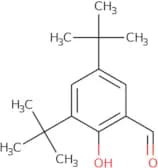
CAS:<p>3,5-Di-tert-butyl-2-hydroxy benzaldehyde is a molecule that has been shown to have inhibitory effects on cancer cells. It has been tested in vitro on carcinoma cell lines with promising results and shows the potential to be used as an anticancer agent. 3,5-Di-tert-butyl-2-hydroxy benzaldehyde inhibits the growth of cancer cells by binding to their DNA and preventing the synthesis of proteins. This drug is also effective against bacterial strains such as Escherichia coli, Salmonella typhimurium, Klebsiella pneumoniae, Pseudomonas aeruginosa, and Vibrio cholerae. 3,5-Di-tert-butyl-2-hydroxy benzaldehyde forms hydrogen bonds with nitrogen atoms that are present in the molecules of these bacteria. The intramolecular hydrogen bonding interactions between 3,5-di tert butyl 2 hydroxyben</p>Fórmula:C15H22O2Pureza:Min. 95%Cor e Forma:Off-White PowderPeso molecular:234.33 g/mol5-Bromo-3,4-dihydroxybenzaldehyde
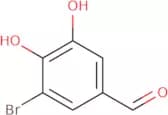
CAS:<p>5-Bromo-3,4-dihydroxybenzaldehyde (5BDBA) is a chemical compound that can be used as a reactive dye and photochemical crosslinker in the preparation of polymers. 5BDBA has been shown to have chemoattractant properties for immune cells, such as activated T lymphocytes and neutrophils. It also has been shown to have an effect on β-cells in the pancreas and skin cells. This compound has been found to activate the nuclear factor kappa-light-chain enhancer (NFκB), which leads to increased expression of chemoattractant protein (MCP). In 3T3-L1 preadipocytes, 5BDBA has been shown to induce accumulation of fatty acids by activating peroxisome proliferator activator receptor gamma.</p>Fórmula:C7H5BrO3Pureza:Min. 95%Cor e Forma:Yellow PowderPeso molecular:217.02 g/mol2-Carboxy-3,4-dimethoxybenzaldehyde
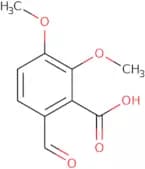
CAS:2-Carboxy-3,4-dimethoxybenzaldehyde is a chemical that belongs to the class of compounds known as butyric acid derivatives. It is a colorless liquid with a pungent odor and can be used in pharmaceutical preparations as an antispasmodic or a sedative. 2-Carboxy-3,4-dimethoxybenzaldehyde has been shown to have radical scavenging activities in tissue culture systems and dry weight reaction products in the presence of hydrochloric acid and chloride ion. This compound can also act as an acid complexing agent for hydrogen chloride and depressant activity on animal behavior.Fórmula:C10H10O5Pureza:Min. 95%Cor e Forma:White Yellow PowderPeso molecular:210.18 g/mol4-Chlorobenzaldehyde
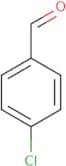
CAS:<p>4-Chlorobenzaldehyde is a chemical compound with the molecular formula C6H5ClO. It can be synthesized by reacting malonic acid with sephadex g-100, copper chloride, and diphenolase. This reaction mechanism is shown in Figure 1. The product then reacts with copper to form a copper complex. 4-Chlorobenzaldehyde has been shown to have anticancer activity against carcinoma cell lines and squamous carcinoma cells. The mechanism of action for this compound may be due to its ability to inhibit the synthesis of picolinic acid, which is an important precursor for the synthesis of nicotinamide adenine dinucleotide (NAD).</p>Fórmula:C7H5ClOPureza:Min. 95%Cor e Forma:White Clear LiquidPeso molecular:140.57 g/molD-(+)-Glyceraldehyde
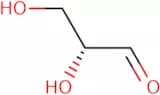
CAS:<p>D-Glyceraldehyde is sold by active weight in solution</p>Fórmula:C3H6O3Pureza:85%MinCor e Forma:Colorless Clear Viscous LiquidPeso molecular:90.08 g/mol4-(1H-Imidazol-1-yl)benzaldehyde
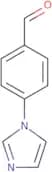
CAS:<p>4-(1H-Imidazol-1-yl)benzaldehyde is a chalcone derivative. It has been shown to inhibit cancer cells by inhibiting the mitochondrial membrane potential and enhancing the expression of histone deacetylase 1. 4-(1H-Imidazol-1-yl)benzaldehyde has also been shown to have anticancer activity in vivo, with an IC50 of 18 µM. This compound was found to inhibit cell growth and induce apoptosis in human breast cancer cells (MDA-MB231). In addition, this compound is able to cross the blood brain barrier and inhibits astrocyte proliferation.</p>Fórmula:C10H8N2OPureza:Min. 95%Cor e Forma:PowderPeso molecular:172.18 g/mol2-(4,4,5,5-Tetramethyl-[1,3,2]dioxaborolan-2-yl)-benzaldehyde
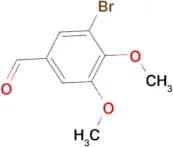
CAS:Fórmula:C13H17BO3Pureza:95%Cor e Forma:LiquidPeso molecular:232.093-Bromo-4,5-dimethoxybenzaldehyde
CAS:Fórmula:C9H9BrO3Pureza:98%Cor e Forma:SolidPeso molecular:245.0727-Bromobenzo[c][1,2,5]thiadiazole-4-carbaldehyde
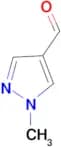
CAS:Fórmula:C7H3BrN2OSPureza:96%Cor e Forma:SolidPeso molecular:243.081-Methyl-1H-pyrazole-4-carbaldehyde
CAS:Fórmula:C5H6N2OPureza:96%Cor e Forma:Low Melting Solid, Low melting solidPeso molecular:110.116

![5-[(4,5-Dimethyl-4H-1,2,4-triazol-3-yl)thio]-2-furaldehyde](/_next/image/?url=https%3A%2Fstatic.cymitquimica.com%2Fproducts%2F3D%2Fthumb-webp%2FFD120211.webp&w=3840&q=75)

![Benzo[d]thiazole-7-carbaldehyde](/_next/image/?url=https%3A%2Fstatic.cymitquimica.com%2Fproducts%2F10%2Fthumb-webp%2FF230205.webp&w=3840&q=75)
![2-(4,4,5,5-Tetramethyl-[1,3,2]dioxaborolan-2-yl)-benzaldehyde](/_next/image/?url=https%3A%2Fstatic.cymitquimica.com%2Fproducts%2F10%2Fthumb-webp%2FF032509.webp&w=3840&q=75)
![7-Bromobenzo[c][1,2,5]thiadiazole-4-carbaldehyde](/_next/image/?url=https%3A%2Fstatic.cymitquimica.com%2Fproducts%2F10%2Fthumb-webp%2FF517627.webp&w=3840&q=75)