Aldeídos
Foram encontrados 8576 produtos de "Aldeídos"
2,6-Dimethylbenzaldehyde
CAS:2,6-Dimethylbenzaldehyde is a colorless liquid with a sweet odor. It is used in the synthesis of fatty acids and as an intermediate for other compounds. This chemical has significant cytotoxicity against leukemia cells, and is used in the production of acrylonitrile. 2,6-Dimethylbenzaldehyde can be synthesized by reacting an amine with an acyl chloride, followed by hydrolysis of the resulting ester. A contactor is usually added to facilitate the reaction. The reaction can also be carried out in the presence of a phosphorane or organic solvent. 2,6-Dimethylbenzaldehyde can be hydrogenated to produce 2,4-dimethylaniline and 2,4,6-trimethylaniline.Fórmula:C9H10OPureza:Min. 95%Cor e Forma:Clear White Solid Or Liquid (May Vary)Peso molecular:134.18 g/molThiophene-3-carboxaldehyde
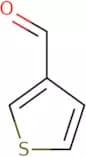
CAS:Thiophene-3-carboxaldehyde is an electron-rich, reactive chemical substance that can be used as a polymer film. It is a heterocyclic compound with a thiophene ring and a carbonyl group in the 3-position. Thiophene-3-carboxaldehyde is synthesized by reacting methyl ketones with glycol ethers. This reaction produces redox potential, malonic acid, and nmr spectra.Fórmula:C5H4OSPureza:Min. 95%Cor e Forma:Colorless Clear LiquidPeso molecular:112.15 g/mol5-Bromo thiophene-2-aldehyde
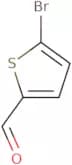
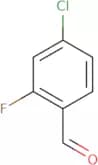
CAS:5-Bromo thiophene-2-aldehyde is a trifluoroacetic acid derivative used as an activatable probe for the study of biomolecular interactions. This compound has been shown to be biocompatible and has a low cytotoxicity. 5-Bromo thiophene-2-aldehyde binds to malonic acid in the presence of x-ray radiation and forms a complex that can be detected by electrochemical impedance spectroscopy. The structure of this complex was determined by x-ray crystal structures. This probe is also able to bind to nitrogen atoms in proteins, which can be used to diagnose cancer resistance through protease activity. 5-Bromo thiophene-2-aldehyde is isolated as its hydrochloride salt, which can be purified with a suzuki coupling reaction.Fórmula:C5H3BrOSPureza:Min. 95%Cor e Forma:Yellow PowderPeso molecular:191.05 g/mol4-Chloro-2-fluorobenzaldehyde
CAS:4-Chloro-2-fluorobenzaldehyde is an aryl aldehyde that belongs to the class of chemical compounds known as chloroaldehydes. It can be synthesized from 4-chlorophenylacetic acid and 2,3-dichloroacetone. The compound is chiral and has two enantiomers. One enantiomer is less reactive than the other, which is more reactive. 4-Chloro-2-fluorobenzaldehyde can be used in the synthesis of a variety of organic compounds, such as pharmaceuticals, herbicides, pesticides, and dyes. This compound can also be used for microbial strain identification by liquid chromatography (LC) with ultraviolet (UV) detection. The yields are typically high (>90%), and the process can be performed at room temperature without any need for vacuum or pressure conditions.Fórmula:C7H4ClFOPureza:Min. 95%Cor e Forma:PowderPeso molecular:158.56 g/mol(E)-2-Hexadecenal
CAS:(E)-2-Hexadecenal is an asymmetric molecule that is a reactive and carcinogenic compound. It has been shown to induce c-Jun phosphorylation in the human carcinoma cell lines, leading to physiological changes. (E)-2-Hexadecenal has also been used to induce chemiluminescence in vitro, which can be used for analytical chemistry. It is made by a hydroxyl group on a fatty acid with a biofuel reaction. This molecule may also have pro-apoptotic properties due to its chemical biology and ability to affect mitochondrial membrane potentials.
Fórmula:C16H30OPureza:Min. 95%Cor e Forma:PowderPeso molecular:238.41 g/mol2,3-Dimethyl-1H-indole-5-carbaldehyde
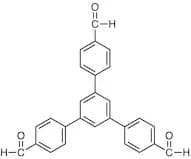
CAS:2,3-Dimethyl-1H-indole-5-carbaldehyde is a high quality reagent that is used as a complex compound. It has been shown to be a useful intermediate and building block in the production of fine chemicals. 2,3-Dimethyl-1H-indole-5-carbaldehyde is also useful as a research chemical. This compound is versatile and can be used in reactions as an intermediate or building block. As a speciality chemical, it has various applications and is not limited to any specific area of research.Fórmula:C11H11NOPureza:Min. 95%Cor e Forma:PowderPeso molecular:173.21 g/mol1,3,5-Tris(4-formylphenyl)benzene
CAS:Fórmula:C27H18O3Pureza:>96.0%(HPLC)Cor e Forma:White to Light yellow to Light orange powder to crystalPeso molecular:390.44Benzo[d]oxazole-5-carbaldehyde
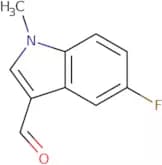
CAS:Benzo[d]oxazole-5-carbaldehyde is a chemical compound that can be used as a building block in the synthesis of more complex molecules. It is a high quality, versatile building block with many applications. Benzo[d]oxazole-5-carbaldehyde can be used as a reagent in organic chemistry and as a reaction component in the synthesis of more complex compounds. This compound can also serve as an intermediate or scaffold for the synthesis of other compounds.Fórmula:C8H5NO2Pureza:Min. 95%Cor e Forma:White PowderPeso molecular:147.13 g/mol5-Fluoro-1-Methyl-1H-Indole-3-Carbaldehyde
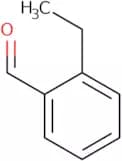
CAS:5-Fluoro-1-Methyl-1H-Indole-3-Carbaldehyde is a high quality chemical that is used as a reagent, an intermediate for the synthesis of pharmaceuticals, and in the production of fine chemicals. 5FMICA is also a useful scaffold for developing valuable building blocks. This chemical has been shown to be a versatile building block for the synthesis of complex compounds. 5FMICA can be used as a reaction component for the preparation of speciality chemicals and research chemicals.Fórmula:C10H8FNOPureza:Min. 95%Cor e Forma:PowderPeso molecular:177.18 g/mol2-Ethylbenzaldehyde
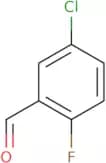
CAS:2-Ethylbenzaldehyde is a colorless volatile liquid that has an odor similar to that of cloves. 2-Ethylbenzaldehyde can be found in the essential oil of nutmeg and other spices, such as cinnamon. It is used in the chemical industry as a control agent for analytical methods, such as the spectrometric determination of ether linkages. 2-Ethylbenzaldehyde has been shown to inhibit fatty acid production by bacteria and to inhibit lipid peroxidation. It also exhibits anti-inflammatory effects when exposed to cells in vitro. Exposure to 2-ethylbenzaldehyde may cause irritation of the eyes, skin, and respiratory tract, dizziness, headache, nausea and vomiting. 2-Ethylbenzaldehyde is generally considered safe for human consumption at low levels; however it may cause adverse health effects if ingested in large quantities or if heated over 400° F (204° Celsius).Fórmula:C9H10OPureza:Min. 95%Cor e Forma:PowderPeso molecular:134.18 g/mol5-Chloro-2-fluorobenzaldehyde
CAS:5-Chloro-2-fluorobenzaldehyde is an efficient method for synthesizing substituted benzoic acid derivatives. It is a useful reagent in the acylation reaction. 5-Chloro-2-fluorobenzaldehyde also has high yields and can be used as a substitute for other more toxic or expensive compounds.
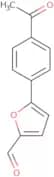
Fórmula:C7H4ClFOPureza:Min. 95%Peso molecular:158.56 g/mol5-(4-Acetylphenyl)-2-furaldehyde
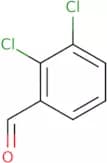
CAS:5-(4-Acetylphenyl)-2-furaldehyde is a fine chemical that is a versatile building block for synthesis of complex compounds. It has been used as an intermediate in the production of polyurethanes and polyesters. This compound has also been shown to be an effective reaction component in the preparation of research chemicals, such as 2,5-diacetylbenzoic acid and 4-acetamidophenol. 5-(4-Acetylphenyl)-2-furaldehyde is a high quality reagent with CAS No. 57268-39-0 that can be used in the synthesis of speciality chemicals.Fórmula:C13H10O3Pureza:Min. 95%Cor e Forma:PowderPeso molecular:214.22 g/mol2,3-Dichlorobenzaldehyde
CAS:2,3-Dichlorobenzaldehyde (2,3-DBA) is an organic compound that is used as a synthetic intermediate in the preparation of other chemicals. It is prepared by reacting 2-chloroacetophenone with hydrochloric acid and sodium carbonate in a reaction vessel. The product can be purified through fractional distillation or crystallization. The optical properties of 2,3-DBA are determined by its dipole moment and the substituents attached to the methylene group. Molecular modeling studies have shown that felodipine can bind to 2,3-DBA through its active methylene group. The reaction products between sulfadiazine and 2,3-DBA are pyridinedicarboxylic acid and 3-chlorobenzaldehyde.Fórmula:C7H4Cl2OPureza:Min. 95%Cor e Forma:White PowderPeso molecular:175.01 g/mol4-Isobutylbenzaldehyde - 80%
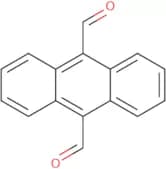
CAS:4-Isobutylbenzaldehyde is a solid phase microextraction (SPME) extractant used to remove volatile organic compounds from the air. It is an aromatic compound that has been shown to have antimicrobial activity against anthranilate-resistant strains of bacteria and fungi. SPME can be used for the extraction of polyfluoroalkyl anions, chloride, and methyl cinnamate from the environment. This extractant can also be used to cross-couple chloroformates through a palladium catalyst. 4-Isobutylbenzaldehyde is found in healthy plants as well as exudates such as those from robinia or aliphatic hydrocarbons, such as methyl anthranilate.Fórmula:C11H14OPureza:Min. 95%Cor e Forma:Clear LiquidPeso molecular:162.23 g/mol9,10-Anthracenedicarboxaldehyde
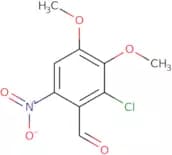
CAS:9,10-Anthracenedicarboxaldehyde is a chemical compound that is used to measure the terminal half-life of drugs in humans. It is an inhibitor of collagen synthesis and has anticancer properties. 9,10-Anthracenedicarboxaldehyde has been shown to inhibit cancer cells by interfering with DNA replication and cell division. The chemical stability of 9,10-anthracenedicarboxaldehyde has been demonstrated in the reaction solution by the formation of chloromethyl ketone. This product also inhibits activity at the camp level and shows antineoplastic properties. The terminal half-life of 9,10-anthracenedicarboxaldehyde was determined to be 48 hours in a study involving human volunteers. The terminal half-life of this product can be shortened by hydrochloric acid or nitro (a reagent).Fórmula:C16H10O2Pureza:Min. 95%Cor e Forma:PowderPeso molecular:234.25 g/mol2-Chloro-3,4-dimethoxy-6-nitrobenzaldehyde
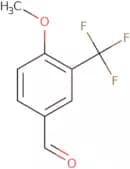
CAS:2-Chloro-3,4-dimethoxy-6-nitrobenzaldehyde is a fine chemical with a CAS number of 82330-54-9. It is a versatile building block that can be used as a reagent or intermediate for the production of other chemicals. This product has been shown to have many different reactions. It is useful in the synthesis of complex compounds and offers high quality and purity.Fórmula:C9H8ClNO5Pureza:Min. 95%Cor e Forma:PowderPeso molecular:245.62 g/mol4-Methoxy-3-(trifluoromethyl)benzaldehyde
CAS:4-Methoxy-3-(trifluoromethyl)benzaldehyde is a fine chemical that can be used as a building block for pharmaceuticals and other organic compounds. It is also used in research for the synthesis of complex compounds. This chemical has been reported to be a useful intermediate or scaffold for organic syntheses. 4-Methoxy-3-(trifluoromethyl)benzaldehyde is soluble in water and ethanol, and insoluble in ether. It has a melting point of 140°C, boiling point of 249°C, density 1.096 g/cm³, and refractive index (20°C) 1.567.Fórmula:C9H7F3O2Pureza:Min. 95%Peso molecular:204.15 g/mol3-Bromothiophene-2-carbaldehyde
CAS:3-Bromothiophene-2-carbaldehyde is an organic compound that has been shown to have antibacterial activity. It can be synthesized by reacting triethyl orthoformate with methyl ketones in the presence of a photocatalyst such as titanium dioxide or zinc oxide. This reaction produces 3-bromothiophene-2-carboxylic acid which reacts with ammonia and hydrogen bromide to form 3-bromothiophene-2-carbaldehyde. 3-Bromothiophene-2-carbaldehyde has been shown to inhibit the growth of cancer cells and induce apoptosis, which may be due to its ability to inhibit angiogenesis. The anticancer properties are most likely due to its ability to bind DNA and inhibit protein synthesis, leading to cell death.
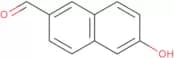
Fórmula:C5H3BrOSPureza:Min. 95%Cor e Forma:White To Yellow To Light Brown SolidPeso molecular:191.05 g/mol6-Hydroxy-2-naphthaldehyde
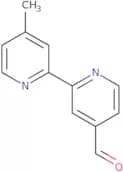
CAS:6-Hydroxy-2-naphthaldehyde is a reactive compound that is used to measure the fluorescence resonance of mitochondria. It is a fluorophore that has been used as a probe for the measurement of membrane permeability, and as a hydroxyl group it can be converted into 6-hydroxy-2-naphthalenecarboxylic acid which is used in the production of dyes. 6-Hydroxy-2-naphthaldehyde has been shown to have congestive heart effects in mice, but this effect may be due to its ability to induce naphthalene and formamide.Fórmula:C11H8O2Pureza:Min. 95%Peso molecular:172.18 g/mol4'-Methyl-2,2'-bipyridine-4-carboxaldehyde
CAS:4'-Methyl-2,2'-bipyridine-4-carboxaldehyde is a heterocyclic compound that contains a nitro group. It has the chemical formula C8H6N2O and the molecular weight of 122.15 g/mol. This compound belongs to the class of formyl compounds and it is composed of two formyl groups and one hydrogen atom. The bipyridines are linked by a methylene bridge to form a six-membered ring. The compound can be used as an intermediate for the synthesis of other organic compounds such as pharmaceuticals, dyes, water repellents, pesticides, and herbicides.Fórmula:C12H10N2OPureza:Min. 95%Cor e Forma:PowderPeso molecular:198.22 g/mol





![Benzo[d]oxazole-5-carbaldehyde](/_next/image/?url=https%3A%2Fstatic.cymitquimica.com%2Fproducts%2F3D%2Fthumb-webp%2FFB143425.webp&w=3840&q=75)