Aldeídos
Os aldeídos são compostos orgânicos que contêm um grupo carbonila (C=O) ligado a pelo menos um átomo de hidrogênio. Esses compostos versáteis são fundamentais em várias reações químicas, incluindo oxidação, redução e adição nucleofílica. Os aldeídos são building blocks essenciais na síntese de produtos farmacêuticos, fragrâncias e polímeros. Na CymitQuimica, oferecemos uma ampla seleção de aldeídos de alta qualidade para apoiar suas aplicações de pesquisa e industriais.
Foram encontrados 8573 produtos de "Aldeídos"
Ordenar por
Pureza (%)
0
100
|
0
|
50
|
90
|
95
|
100
2,4-Octadienal, predominantly trans,trans (Technical Grade)
CAS:Produto Controlado<p>Applications 2,4-Octadienal, predominantly trans,trans >=95%, FG is a useful research chemical for organic synthesis and other chemical processes.<br>References Feng, J., et al.: J. Org. Chem., 82, 1412 (2017); Sun, S., et al.: J. Appl. Phycol., 24, 1003 (2012)<br></p>Fórmula:C8H12OCor e Forma:NeatPeso molecular:124.183-(2,4-Dihydroxyphenyl)-2-propenal
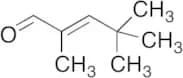
CAS:Produto ControladoFórmula:C9H8O3Cor e Forma:NeatPeso molecular:164.16(E,E)-5-[4-(Diethylamino)phenyl]penta-2,4-dienal
CAS:Produto Controlado<p>Stability Light Sensitive<br>Applications (E,E)-5-[4-(Diethylamino)phenyl]penta-2,4-dienal is used in polymerization process.<br>References Innocenzi, P., et al.: J. Mater Chem., 15, 3821 (2005), Cai, Y., et al.: Polymer, 2006, 47, 6560 (2006),<br></p>Fórmula:C15H19NOCor e Forma:NeatPeso molecular:229.32Oct-7-enal
CAS:Produto Controlado<p>Stability Air Sensitive<br>Applications Oct-7-enal is a useful research chemical, an aliphatic aldehyde isolated from the roots of Cirsium Cipsacolepis.<br>References Takano, S., et al.: Phytochemistry, 26, 435 (1987); Halle, M. B., et al.: RSC Adv., 4, 63342 (2014)<br></p>Fórmula:C8H14OCor e Forma:NeatPeso molecular:126.24-Bromobenzaldehyde
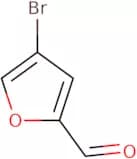
CAS:<p>Please enquire for more information about 4-Bromobenzaldehyde including the price, delivery time and more detailed product information at the technical inquiry form on this page</p>Fórmula:C7H5BrOPeso molecular:185.03 g/mol4-Bromofuran-2-carbaldehyde
CAS:<p>4-Bromofuran-2-carbaldehyde is a synthetic compound that has been shown to have antioxidant properties. It contains an electron-donating carbonyl group and an electron-withdrawing bromine atom. 4-Bromofuran-2-carbaldehyde is useful in the treatment of endophytic fungi infections, as it inhibits the synthesis of ergosterol, which is an important component of the fungal cell membrane. The molecule's conformational properties are also important for its biological activity, as they enable it to act as a chiral ligand by binding to proteins in a way that will inhibit their function. In addition, 4-bromofuran-2-carbaldehyde has been shown to be effective against cancer cells in vitro, particularly against MMCF7 cells. This may be due to its ability to bind to DNA and prevent transcription or replication of DNA strands.</p>Fórmula:C5H3BrO2Pureza:Min. 95%Peso molecular:174.98 g/molAdrenalone
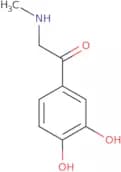
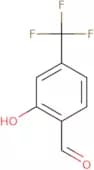
CAS:Produto Controlado<p>Adrenalone is a caffeic acid derivative that contains a hydroxyl group. It is used in the treatment of infectious diseases, bowel disease, and autoimmune diseases. Adrenalone inhibits bacterial growth by interfering with cell wall synthesis, which prevents the formation of new cell walls and leads to bacterial death. It also inhibits the production of dopamine by acting on an amine oxidase enzyme. This drug has been shown to be effective in treating inflammatory bowel disease (IBD) in both mice and humans due to its ability to inhibit pro-inflammatory cytokines such as TNF-α, IL-1β, and IL-6.</p>Fórmula:C9H11NO3Pureza:Min. 95%Cor e Forma:Colourless To Pale Yellow SolidPeso molecular:181.19 g/mol2-Hydroxy-4-(trifluoromethyl)benzaldehyde
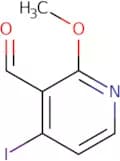
CAS:<p>2-Hydroxy-4-(trifluoromethyl)benzaldehyde is an analgesic and anti-inflammatory agent that belongs to the pyrazole family. It has shown analgesic and anti-inflammatory effects in animal studies. 2-Hydroxy-4-(trifluoromethyl)benzaldehyde has been shown to be a potent inhibitor of cyclooxygenase (COX), which is responsible for prostaglandin synthesis, and as such, may have potential as a treatment for inflammatory conditions such as rheumatoid arthritis. This drug also inhibits the production of nitric oxide, which is involved in vasodilation and increased blood flow. 2-Hydroxy-4-(trifluoromethyl)benzaldehyde has been demonstrated to inhibit COX enzymes by forming a covalent bond with active site serine residues on the enzyme. The docked complex shows hydrogen bonding interactions between the hydroxyl group of 2</p>Fórmula:C8H5F3O2Pureza:Min. 95%Peso molecular:190.12 g/mol4-Iodo-2-methoxypyridine-3-carboxaldehyde
CAS:4-Iodo-2-methoxypyridine-3-carboxaldehyde is a disubstituted compound that has insulin-like properties. It inhibits the activity of the insulin receptor, which may contribute to its insulin-like growth factor effects. This inhibitor also targets the protein kinase, which is responsible for the response of cells to insulin. 4-Iodo-2-methoxypyridine 3 carboxaldehyde has been shown to inhibit IGF1R and malonate ion, and it may have potential as an oral treatment for diabetes.Fórmula:C7H6INO2Pureza:Min. 95%Peso molecular:263.03 g/mol2-Cyanobenzaldehyde
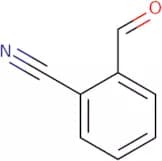
CAS:<p>2-Cyanobenzaldehyde is an aldehyde that reacts with nucleophiles such as trifluoromethanesulfonic acid to form a molecule. 2-Cyanobenzaldehyde has potent inhibitory activity against the kinase glycogen synthase kinase 3 (GSK3) and can be used to treat autoimmune diseases. It also reacts with hydrochloric acid in solution to form an intermediate, which is then reacted with glycine and ATP to produce a chiral compound. The product of this reaction has been shown to be active methylene, which was synthesized by asymmetric synthesis.</p>Fórmula:C8H5NOPureza:Min. 95%Cor e Forma:PowderPeso molecular:131.13 g/mol2-(1H-Pyrazol-1-yl)benzaldehyde
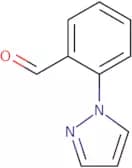
CAS:<p>2-(1H-Pyrazol-1-yl)benzaldehyde is a synthetic chemical compound that is used in the preparation of coupling reactions. It has been shown to be an efficient reagent for the synthesis of 2-bromobenzaldehyde and pyrazole. The molecule has a hydrazone attack, which can be coupled with 2-bromobenzaldehyde, with or without the use of an additional base such as sodium methoxide. This reaction can be carried out at room temperature and does not require any harsh conditions. 2-(1H-Pyrazol-1-yl)benzaldehyde also belongs to the family of aldehydes, which are molecules containing a carbon group that is connected to two hydrogen groups (i.e., RCH=O). Hydrogenation of this type of molecule gives rise to alcohols (RCHOH).</p>Fórmula:C10H8N2OPureza:Min. 95%Peso molecular:172.18 g/molN-Methyl-N-hydroxyethyl-4-aminobenzaldehyde
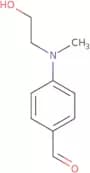
CAS:<p>N-Methyl-N-hydroxyethyl-4-aminobenzaldehyde (NHABA) is a bathochromic molecule that absorbs light at wavelengths of 400 to 500 nm. It is reactive and reacts with metal cations to form chromophores. NHABA has been shown to be a fluorescent probe for the detection of tyrosinase and autophagy in human serum. It also has inhibitory properties against tyrosinase, which may be due to its ability to inhibit the formation of melanin. NHABA is used as an analytical chemistry reagent for the determination of ammonia, nitrite, and nitrate ions in water samples. This molecule can also be used as a chemosensor for the detection of phenolic compounds in water samples.</p>Fórmula:C10H13NO2Pureza:Min. 95%Peso molecular:179.22 g/mol2-Fluoro-4-hydroxybenzaldehyde
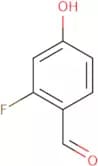
CAS:<p>2-Fluoro-4-hydroxybenzaldehyde is an oxidative compound that is a model compound of phenolic compounds. It can be used to synthesize 2,6-dichloroquinone and 2,5,7,8-tetrachlorodibenzo[p]fluoranthene. The metabolic pathway for this compound starts with the oxidative decarboxylation of L-tyrosine to form 4-hydroxyphenylpyruvic acid. This compound is then oxidized by cytochrome P450 enzymes to form 4-(2'-oxo)phenol. The 4-(2'-oxo)phenol can be methylated by S-adenosylmethionine in order to form 2-fluoro-4-hydroxybenzaldehyde.</p>Fórmula:C7H5FO2Pureza:Min. 95%Peso molecular:140.11 g/mol1-Phenyl-1H-pyrazole-4-carbaldehyde
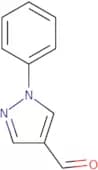
CAS:<p>1-Phenyl-1H-pyrazole-4-carbaldehyde is an antibacterial agent that has been shown to have bactericidal activity against bacteria. It inhibits the growth of bacteria by binding to the pyrazole ring in the bacterial cell wall and blocking the formation of a hydrogen bond. 1-Phenyl-1H-pyrazole-4-carbaldehyde has been shown to be effective against methicillin resistant Staphylococcus aureus (MRSA) and Ciprofloxacin resistant Pseudomonas aeruginosa isolates, but not against Mycobacterium tuberculosis or Mycobacterium avium complex.</p>Fórmula:C10H8N2OPureza:Min. 95%Peso molecular:172.18 g/mol2,4-Dihydroxy-6-methylbenzaldehyde
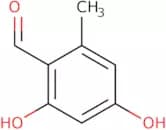
CAS:<p>2,4-Dihydroxy-6-methylbenzaldehyde is a chemical that is found naturally in a variety of plants. It has been shown to have immunomodulatory and anti-inflammatory effects in vitro and in vivo. 2,4-Dihydroxy-6-methylbenzaldehyde has been shown to reduce the production of inflammatory molecules such as tumor necrosis factor alpha (TNFα) and interleukin 12 (IL-12) by inhibiting the activation of microglia cells. This compound also inhibits LPS induced inflammatory response in human carcinoma cells. 2,4-Dihydroxy-6 methylbenzaldehyde is currently undergoing clinical trials for its potential use in regenerative medicine.</p>Fórmula:C8H8O3Pureza:Min. 95%Peso molecular:152.15 g/mol5-Bromopyridine-2-carbaldehyde
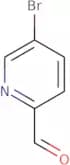
CAS:<p>5-Bromopyridine-2-carbaldehyde is a water soluble organic molecule that has been shown to inhibit the mitochondrial respiratory chain. It is a structural analog of the natural substrate for mitochondrial cytochrome c oxidase, 5-aminolevulinic acid. This compound has been shown to be selective against cancer cells and has anti-viral properties. The photophysical properties of 5-bromopyridine-2-carbaldehyde have been studied extensively. The fluorescence quantum yield of this molecule in aqueous solution is 0.06%.</p>Fórmula:C6H4BrNOPureza:Min. 95%Cor e Forma:White PowderPeso molecular:186.01 g/mol6-(Hydroxymethyl)pyridine-2-carboxaldehyde
CAS:<p>6-(Hydroxymethyl)pyridine-2-carboxaldehyde is a ligand that has anisotropic magnetic properties. It crystallizes in an orthorhombic system, and its structure consists of two iron atoms (II) coordinated by two hydrazone groups and one carboxylate group. The compound is dimeric, with each unit consisting of two iron atoms (II) coordinated by two hydrazone groups and one carboxylate group. The compound exhibits ferromagnetic properties, being paramagnetic at room temperature. In crystallography studies, it was found that the 6-(hydroxymethyl)pyridine-2-carboxaldehyde adducts are tetranuclear with a helicate geometry around the Fe(II) atom. This compound is also paramagnetic at room temperature due to the presence of unpaired electrons on the two Fe(II) centers.</p>Fórmula:C7H7NO2Pureza:Min. 99.8 Area-%Cor e Forma:White Off-White PowderPeso molecular:137.14 g/mol4-(Benzyloxy)-5-methoxy-2-nitrobenzaldehyde
CAS:<p>4-(Benzyloxy)-5-methoxy-2-nitrobenzaldehyde (BOMBA) is an amide with affinity for microtubules. It has been shown to interact with the microtubule lattice and inhibit the polymerization of tubulin. This leads to a decrease in cell viability and cytotoxicity, as well as a decrease in tumor size. In vivo studies have demonstrated that BOMBA inhibits tumor growth by inducing thrombosis and coagulation, which results in reduced blood flow to the tumor. The mechanism of action of BOMBA is thought to be due to its ability to form sulfamates, which are known for their anti-coagulant activity.</p>Fórmula:C15H13NO5Pureza:Min. 95%Peso molecular:287.27 g/molTetrafluoroterephthaldehyde
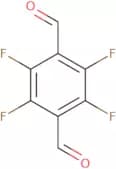
CAS:<p>Tetrafluoroterephthaldehyde (TFPA) is a reactive aldehyde that can be synthesized in the laboratory by the reaction of trifluoromethanesulfonic acid with an aromatic hydrocarbon or ester compound. TFPA has been used to study the synthesis of supramolecular assemblies and supramolecular chemistry. The radiation-induced formation of TFPA is a useful method for the synthesis of polymers, and the thermal expansion of TFPA is high enough to be used as a thermometer. TFPA has shown chemical stability in both acidic and alkaline media, as well as resistance to radiation and oxidation. TFPA also has a high boiling point, making it useful for desolvation during gas chromatography experiments.</p>Fórmula:C8H2F4O2Pureza:Min. 95%Cor e Forma:PowderPeso molecular:206.09 g/mol



![(E,E)-5-[4-(Diethylamino)phenyl]penta-2,4-dienal](/_next/image/?url=https%3A%2Fstatic.cymitquimica.com%2Fproducts%2FTR%2Fthumb-webp%2FD443665.webp&w=3840&q=75)