Aldeídos
Os aldeídos são compostos orgânicos que contêm um grupo carbonila (C=O) ligado a pelo menos um átomo de hidrogênio. Esses compostos versáteis são fundamentais em várias reações químicas, incluindo oxidação, redução e adição nucleofílica. Os aldeídos são building blocks essenciais na síntese de produtos farmacêuticos, fragrâncias e polímeros. Na CymitQuimica, oferecemos uma ampla seleção de aldeídos de alta qualidade para apoiar suas aplicações de pesquisa e industriais.
Foram encontrados 8573 produtos de "Aldeídos"
Ordenar por
Pureza (%)
0
100
|
0
|
50
|
90
|
95
|
100
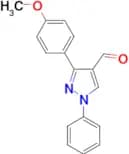
3-(4-Methoxy-phenyl)-1-phenyl-1 H -pyrazole-4-carbaldehyde
CAS:Pureza:95.0%Peso molecular:278.31100463867194-(Methylsulfonyl)-2-nitrobenzaldehyde
CAS:Fórmula:C8H7NO5SPureza:95.0%Cor e Forma:SolidPeso molecular:229.21Methyl 3-[(3-formyl-1H-indol-1-yl)methyl]benzoate
CAS:Cor e Forma:SolidPeso molecular:293.3219909667969Ref: 10-F735124
1gA consultar2gA consultar5gA consultar100mgA consultar250mgA consultar500mgA consultar2-Methoxy-5-(trifluoromethoxy)benzaldehyde
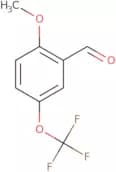
CAS:2-Methoxy-5-(trifluoromethoxy)benzaldehyde is a tachykinin antagonist that inhibits the binding of neurokinin to its receptor with high affinity. This compound has shown potential as a drug for the treatment of pain and other conditions such as asthma, allergies, and depression. The efficacy of 2-methoxy-5-(trifluoromethoxy)benzaldehyde has been demonstrated in high-throughput screening for the detection of nk1 receptor antagonists. Further studies have shown that modification of this molecule may increase its potency and reduce side effects.Fórmula:C9H7F3O3Pureza:Min. 95%Cor e Forma:Clear LiquidPeso molecular:220.15 g/mol4-Bromo-3-methylbenzaldehyde
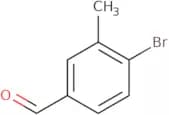
CAS:<p>4-Bromo-3-methylbenzaldehyde is a versatile building block that is used in the synthesis of many complex compounds. It can be used as a reactant, reagent, or speciality chemical. 4-Bromo-3-methylbenzaldehyde is an intermediate for the production of other chemicals and has been shown to be useful in the synthesis of various scaffolds. This product has been shown to have high purity and quality.</p>Fórmula:C8H7BrOPureza:Min. 95%Cor e Forma:Yellow PowderPeso molecular:199.04 g/mol5-[(4,5-Dimethyl-4H-1,2,4-triazol-3-yl)thio]-2-furaldehyde
CAS:<p>5-[(4,5-Dimethyl-4H-1,2,4-triazol-3-yl)thio]-2-furaldehyde is a versatile building block that can be used as a research chemical or reagent. It is also useful for the synthesis of complex compounds. This material has been shown to be an excellent starting point for the synthesis of high quality and useful scaffolds.</p>Fórmula:C9H9N3O2SPureza:Min. 95%Cor e Forma:PowderPeso molecular:223.25 g/mol3,4,5-Trihydroxybenzaldehyde monohydrate
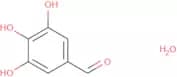
CAS:<p>3,4,5-Trihydroxybenzaldehyde monohydrate is a chemical compound that belongs to the class of aromatic hydrocarbons. It has been shown to have a neurotoxic effect on the mouse brain and is used in the diagnosis of neurological diseases. 3,4,5-Trihydroxybenzaldehyde monohydrate is also used as an intermediate in the synthesis of other chemicals. The molecular formula for this substance is C9H7O3 and it contains three nitrogen atoms. The molecular weight is 179.06 g/mol and its sequence length is 707 amino acids long. This substance has been found to be present in humans with chronic kidney disease and insulin resistance.</p>Fórmula:C7H6O4·H2OPureza:(%) Min. 95%Cor e Forma:PowderPeso molecular:172.14 g/mol3,5-Dimethoxybenzaldehyde
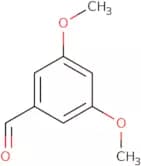
CAS:<p>3,5-Dimethoxybenzaldehyde is a fungicide that can kill fungal cells by inhibiting the synthesis of ergosterol, an important component of the fungal cell membrane. It has been shown to be effective against Cryptococcus neoformans and other fungi. 3,5-Dimethoxybenzaldehyde inhibits mitochondrial superoxide production and the growth of fungi in a model system. The optimum concentration for inhibition was determined in a kinetic and thermodynamic study. This compound has also been shown to have anti-inflammatory properties, which may be due to its ability to inhibit prostaglandin synthesis.</p>Fórmula:C9H10O3Pureza:Min. 98%Cor e Forma:PowderPeso molecular:166.17 g/mol2,5-Dichlorobenzaldehyde
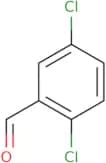
CAS:<p>2,5-Dichlorobenzaldehyde is a molecule that is used as a building block for the synthesis of etoposide. Etoposide is an anticancer drug that has been shown to be effective against many types of cancer cells. 2,5-Dichlorobenzaldehyde has been proposed as an optical probe for detecting methyltransferase activity in vivo and in vitro. It has also been shown to inhibit the proliferation of cancer cells by binding to survivin, which plays a role in regulating apoptosis. 2,5-Dichlorobenzaldehyde can be synthesized from commercially available chemicals with asymmetric synthesis methods. The molecule can also be used for functional studies on metal ions and dipole interactions.</p>Fórmula:C7H4Cl2OPureza:Min. 95%Peso molecular:175.01 g/mol2-Hydroxy-4-methoxybenzaldehyde
CAS:<p>2-Hydroxy-4-methoxybenzaldehyde is an organic chemical that is used as a versatile building block for complex compounds, research chemicals, and reagents. It is also used as a speciality chemical and as a useful intermediate in the synthesis of other chemicals. 2-Hydroxy-4-methoxybenzaldehyde has CAS No. 673-22-3 and can be used to make many different types of compounds. This compound is a useful scaffold for the synthesis of diverse compounds with biological activity such as pharmaceuticals, agrochemicals, dyes, perfumes, fragrances, flavors and fragrances.</p>Fórmula:C8H8O3Pureza:Min. 99.0 Area-%Peso molecular:152.15 g/mol2-Bromo-4-cyanobenzaldehyde
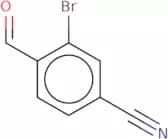
CAS:<p>2-Bromo-4-cyanobenzaldehyde is a potent protease inhibitor and can be used as an antiviral agent. It inhibits the NS3 protease of hepatitis C virus (HCV) with IC50 of 0.2 μM. 2-Bromo-4-cyanobenzaldehyde has been evaluated for its ability to inhibit replicons from HCV genotypes 1, 2, 3, 4 and 5 with varying degrees of potency. In vitro studies have shown that 2-bromo-4-cyanobenzaldehyde is a potent inhibitor of HCV NS3 protease, demonstrating activity against all major HCV genotypes in cell culture. This molecule has also been shown to inhibit the replication of HIV, herpes simplex virus type 1 and human rhinovirus type 2 in cell culture.</p>Fórmula:C8H4BrNOPureza:Min. 95%Cor e Forma:PowderPeso molecular:210.03 g/mol4-Fluorobenzaldehyde
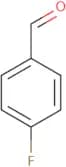
CAS:<p>4-Fluorobenzaldehyde is an organic compound that is used in the synthesis of other chemicals. 4-Fluorobenzaldehyde has been shown to have hemolytic activity and to be a copper complex that reacts with hydrochloric acid. The reaction mechanism of 4-fluorobenzaldehyde with copper chloride is thought to involve the formation of a copper complex, which then undergoes nucleophilic attack by the trifluoroacetic acid, forming a positronium ion. This positronium ion then reacts with hydroxide ions from water, forming hydrogen peroxide and a pyrimidine compound.</p>Fórmula:C7H5FOPureza:Min. 98 Area-%Cor e Forma:Colourless To Yellow LiquidPeso molecular:124.11 g/mol3,5-Dibromobenzaldehyde
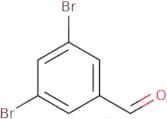
CAS:<p>3,5-Dibromobenzaldehyde is an analytical reagent that has been used as a chemosensor. The compound was synthesized by the reaction of benzaldehyde with bromine and potassium hydroxide (KOH). 3,5-Dibromobenzaldehyde has a skeleton consisting of three phenyl groups and two aldehyde groups. The compound also contains two active methylene groups and two vinylene groups. 3,5-Dibromobenzaldehyde can be detected by fluorescence probe or low energy electron diffraction. This chemical is an effective antibacterial agent with an LD50 value of 1.6 milligrams per kilogram in rats.</p>Fórmula:C7H4Br2OPureza:Min. 95%Cor e Forma:White PowderPeso molecular:263.91 g/mol



![Methyl 3-[(3-formyl-1H-indol-1-yl)methyl]benzoate](/_next/image/?url=https%3A%2Fstatic.cymitquimica.com%2Fproducts%2F10%2Fthumb-webp%2FF364891.webp&w=3840&q=75)

![5-[(4,5-Dimethyl-4H-1,2,4-triazol-3-yl)thio]-2-furaldehyde](/_next/image/?url=https%3A%2Fstatic.cymitquimica.com%2Fproducts%2F3D%2Fthumb-webp%2FFD120211.webp&w=3840&q=75)