Aldeídos
Os aldeídos são compostos orgânicos que contêm um grupo carbonila (C=O) ligado a pelo menos um átomo de hidrogênio. Esses compostos versáteis são fundamentais em várias reações químicas, incluindo oxidação, redução e adição nucleofílica. Os aldeídos são building blocks essenciais na síntese de produtos farmacêuticos, fragrâncias e polímeros. Na CymitQuimica, oferecemos uma ampla seleção de aldeídos de alta qualidade para apoiar suas aplicações de pesquisa e industriais.
Foram encontrados 8573 produtos de "Aldeídos"
Ordenar por
Pureza (%)
0
100
|
0
|
50
|
90
|
95
|
100
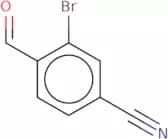
2-Bromo-4-cyanobenzaldehyde
CAS:<p>2-Bromo-4-cyanobenzaldehyde is a potent protease inhibitor and can be used as an antiviral agent. It inhibits the NS3 protease of hepatitis C virus (HCV) with IC50 of 0.2 μM. 2-Bromo-4-cyanobenzaldehyde has been evaluated for its ability to inhibit replicons from HCV genotypes 1, 2, 3, 4 and 5 with varying degrees of potency. In vitro studies have shown that 2-bromo-4-cyanobenzaldehyde is a potent inhibitor of HCV NS3 protease, demonstrating activity against all major HCV genotypes in cell culture. This molecule has also been shown to inhibit the replication of HIV, herpes simplex virus type 1 and human rhinovirus type 2 in cell culture.</p>Fórmula:C8H4BrNOPureza:Min. 95%Cor e Forma:PowderPeso molecular:210.03 g/mol4-Benzyloxy-3-chlorobenzaldehyde
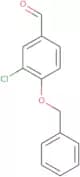
CAS:<p>4-Benzyloxy-3-chlorobenzaldehyde is a chemical intermediate that can be used for the production of a variety of compounds. It is an aromatic compound, with a benzene ring and two oxy groups at each end. The CAS number for 4-benzyloxy-3-chlorobenzaldehyde is 66422-84-2. It is also known as 1,4-dichloroacetophenone. This chemical is useful in the production of speciality chemicals and research chemicals, and it can act as a versatile building block in organic synthesis.</p>Fórmula:C14H11ClO2Pureza:Min. 95%Peso molecular:246.69 g/mol4-Acetyl syringaldehyde
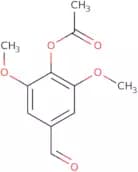
CAS:4-Acetyl syringaldehyde is a gaseous compound that has been shown to have antitumor properties. It is synthesized from 5-iodovanillin, which can be found in Australian marine sponge and organic acids such as citric acid. 4-Acetyl syringaldehyde has been shown to inhibit the growth of human colorectal cancer cells (HCT116) and induce apoptosis. This compound also inhibits the growth of bacteria by binding to the bacterial dna gyrase and dna topoisomerase, inhibiting their ability to maintain the integrity of bacterial DNA. 4-Acetyl syringaldehyde undergoes a number of reactions when exposed to chlorine or nitro compounds, including oxidation products that are formed when it reacts with formic acid and hct116 cells.Fórmula:C11H12O5Pureza:Min. 95%Cor e Forma:PowderPeso molecular:224.21 g/mol2-Bromobenzaldehyde
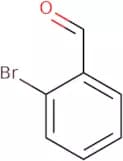
CAS:<p>2-Bromobenzaldehyde is an important aryl aldehyde that can be synthesized through the copper-catalyzed coupling of 2-bromobenzyl bromide and phenylacetone. The synthesis of 2-bromobenzaldehyde has been used to study the effects of physiological activities on the coordination geometry. It is also used as a fluorescent probe for amines and esters, which are commonly found in bioinorganic chemistry. The compound is characterized by intermolecular hydrogen bonding and hydrogen bonding between the hydroxy group and chloride, which are associated with its acidity.<br>2-Bromobenzaldehyde has been shown to have antiinflammatory properties, which may be due to its ability to inhibit prostaglandin synthesis.</p>Fórmula:C7H5BrOPureza:Min. 95%Cor e Forma:Off-White PowderPeso molecular:185.02 g/mol2-Chloro-5-hydroxybenzaldehyde
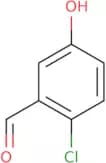
CAS:<p>2-Chloro-5-hydroxybenzaldehyde is an organic compound that can be used as a starting material for the synthesis of many other chemicals. It is a building block for the production of high quality and fine chemicals, such as research chemicals and speciality chemicals. 2-Chloro-5-hydroxybenzaldehyde also has versatile uses in chemical reactions, such as condensation reactions, nucleophilic substitution reactions, and electrophilic addition reactions. The CAS number of this chemical is 7310-94-3.</p>Fórmula:C7H5ClO2Pureza:Min. 98 Area-%Cor e Forma:PowderPeso molecular:156.57 g/mol4-[(2,3,4Trimethoxyphenyl)methyl]piperazine-1-carbaldehyde
CAS:<p>Please enquire for more information about 4-[(2,3,4Trimethoxyphenyl)methyl]piperazine-1-carbaldehyde including the price, delivery time and more detailed product information at the technical inquiry form on this page</p>Fórmula:C15H22N2O4Pureza:Min. 95%Cor e Forma:PowderPeso molecular:294.35 g/mol2-Methoxybenzaldehyde oxime
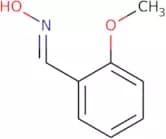
CAS:<p>2-Methoxybenzaldehyde oxime is a synthetic amine that is used in the synthesis of peroxides. The reaction rate and nature depend on the type of peroxide being synthesized, but typically, it is used with acetonitrile as a solvent and an acid catalyst. 2-Methoxybenzaldehyde oxime reacts with peracid to create an aldoxime and nitrite. This product can also be made by reacting benzaldehyde with nitrous acid, which will produce dioxane as an intermediate. The reaction time for this process takes about four hours at room temperature.</p>Fórmula:C8H9NO2Pureza:Min. 95%Cor e Forma:PowderPeso molecular:151.16 g/mol2-Hydroxy-4-methoxybenzaldehyde
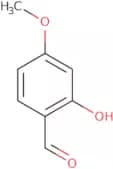
CAS:<p>2-Hydroxy-4-methoxybenzaldehyde is an antifungal agent that has been shown to have a broad spectrum of activity against filamentous fungi. It is able to inhibit the growth of fungi by inhibiting the enzyme shikimate dehydrogenase, which is involved in the synthesis of aromatic amino acids and other essential metabolites. 2-Hydroxy-4-methoxybenzaldehyde also inhibits xylose reductase and alpha-galactosidase, enzymes that are involved in cell wall biosynthesis. This compound is effective against Candida albicans, Aspergillus niger, and Trichophyton mentagrophytes. 2-Hydroxy-4-methoxybenzaldehyde has also been shown to have bacteriostatic effects on Escherichia coli.</p>Fórmula:C8H8O3Pureza:Min. 95%Cor e Forma:Off-White PowderPeso molecular:152.15 g/mol2-Fluoro-6-(trifluoromethyl)benzaldehyde
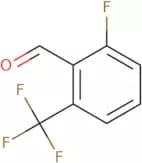
CAS:<p>2-Fluoro-6-(trifluoromethyl)benzaldehyde is a chemical compound that is used in the synthesis of other organic compounds. It can be synthesized by reacting benzaldehyde with sodium trifluoromethanesulfinate in liquid ammonia solution at a temperature of -78°C. The reaction produces 2-fluoro-6-(trifluoromethyl)benzaldehyde, which is isolated by evaporating the reaction liquid and recrystallizing the product from methanol. The yield of this reaction is high and there are no major byproducts.</p>Fórmula:C8H4F4OPureza:Min. 95%Cor e Forma:Clear LiquidPeso molecular:192.11 g/mol3,4-Dihydroxybenzaldehyde
CAS:<p>Please enquire for more information about 3,4-Dihydroxybenzaldehyde including the price, delivery time and more detailed product information at the technical inquiry form on this page</p>Fórmula:C7H6O3Peso molecular:138.12 g/molHexoprenaline sulphate
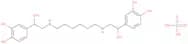
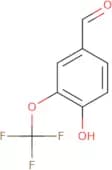
CAS:<p>β-adrenoreceptor agonist; betamimetic agent</p>Fórmula:C22H34N2O10SPureza:Min. 95%Cor e Forma:White PowderPeso molecular:518.58 g/mol4-Hydroxy-3-(trifluoromethoxy)benzaldehyde
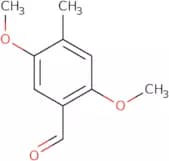
CAS:4-Hydroxy-3-(trifluoromethoxy)benzaldehyde is a chemical that modulates the toxicity of cells. It has been shown to reduce amyloid plaques in animals and humans with Alzheimer's disease, and to inhibit the formation of plaques in transgenic mice. In addition, 4-hydroxy-3-(trifluoromethoxy)benzaldehyde has been found to be a pyrimidine compound, which can be used as a potential treatment for alzheimer's disease. This substance also has an insoluble nature and is not soluble in water. Curcumin is one of the substances that may be used to dissolve this substance.Fórmula:C8H5F3O3Pureza:Min. 95%Peso molecular:206.12 g/mol2,5-Dimethoxy-4-methylbenzaldehyde
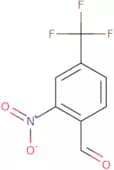
CAS:<p>2,5-Dimethoxy-4-methylbenzaldehyde is a bioactive chemical that has been shown to have anticancer activity. It has been shown to be an effective inhibitor of cancer cell growth in vitro and in vivo. 2,5-Dimethoxy-4-methylbenzaldehyde has also been shown to inhibit the formation of fatty acids and improve the uptake of glucose by cancer cells. This compound is a metabolite of the amino acid methionine and is used as a marker for mesenchymal cells. The structure of 2,5-dimethoxy-4-methylbenzaldehyde consists of two methoxy groups connected with an aliphatic chain consisting of one or more carbon atoms. This functional group may provide the anticancer activity through radical scavenging activities.</p>Fórmula:C10H12O3Pureza:Min. 95%Cor e Forma:Off-White PowderPeso molecular:180.2 g/mol2-Nitro-4-(trifluoromethyl)benzaldehyde
CAS:<p>2-Nitro-4-(trifluoromethyl)benzaldehyde is an immunosuppressive agent that binds to the active site of the enzyme nitric oxide synthase, inhibiting its activity. This drug has been shown to be active against human immunocompromised patients and those with a history of melamine exposure. It also inhibits the production of nitric oxide, which is associated with inflammation. 2-Nitro-4-(trifluoromethyl)benzaldehyde has been shown to bind to vinylic positions on proteins, leading to immunosuppression.</p>Fórmula:C8H4F3NO3Pureza:Min. 95%Cor e Forma:PowderPeso molecular:219.12 g/molChloroacetaldehyde (40% aq.)
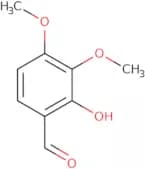
CAS:<p>Chloroacetaldehyde is a reactive compound that is found in wastewater. It can be used to remove other pollutants from the water. Chloroacetaldehyde has been shown to be toxic and may cause cancer, but it also has been used as a model system for studying energy metabolism. This substance is toxic because it reacts with cellular components such as proteins and DNA by cross-linking them. The cytosolic Ca2+ concentration increases when chloroacetaldehyde binds to cellular proteins, which affects cell physiology and the production of MMP-9.</p>Fórmula:ClCH2CHOPureza:Min. 95%Cor e Forma:Clear LiquidPeso molecular:78.5 g/mol2-Hydroxy-3,4-dimethoxybenzaldehyde
CAS:<p>2-Hydroxy-3,4-dimethoxybenzaldehyde is a molecule that has an acidic character. It has been shown to be able to form a copper complex with good optical properties. A method using this compound as the monomer was found to be efficient for synthesizing polymers with size exclusion chromatography. 2-Hydroxy-3,4-dimethoxybenzaldehyde is a monocarboxylic acid that contains an aliphatic hydrocarbon and hydroxyl group. It can also act as a monomer in polymerization reactions and can be used in chemical structures such as multidrugs, which are made from large molecules of different types of atoms. The acid catalyst is required for these reactions to take place.</p>Fórmula:C9H10O4Pureza:Min. 95%Cor e Forma:PowderPeso molecular:182.17 g/mol2-Hydroxy-5-methylbenzaldehyde
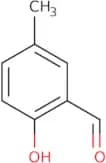
CAS:<p>2-Hydroxy-5-methylbenzaldehyde (2HMBA) is a biologically active molecule that has been shown to bind to human serum albumin. The binding constants for the two molecules are relatively low, with a Kd of approximately 2.6 x 10 M. The nitrogen atoms in the molecule form hydrogen bonds with the hydroxyl group on the ethylene diamine, which stabilizes it and prevents it from dissolving in water. This compound also has a cyclohexane ring and can be found in natural products such as erythronolide B, an antibiotic produced by Streptomyces erythreus. 2HMBA is stable when complexed with hydrochloric acid or potassium dichromate and can be used in structural analysis of other molecules.</p>Fórmula:C8H8O2Pureza:Min. 95%Cor e Forma:Off-White PowderPeso molecular:136.15 g/mol2,3,4-Trihydroxybenzaldehyde
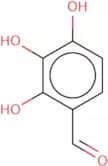
CAS:2,3,4-Trihydroxybenzaldehyde is a chemical compound that has been shown to have anti-cancer properties. It is used in the detection of cancer cells and as an indicator for the presence of palladium complexes. 2,3,4-Trihydroxybenzaldehyde is also a skin allergen and can cause allergic reactions. This chemical reacts with potassium ions in solution to form a precipitate or sludge. 2,3,4-Trihydroxybenzaldehyde has been shown to be effective against colorectal carcinoma cells and Group P2 bacteria.Fórmula:C7H6O4Pureza:Min. 95%Cor e Forma:PowderPeso molecular:154.12 g/mol3,4,5-Triacetoxybenzaldehyde
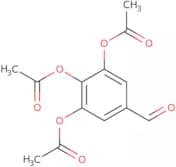
CAS:3,4,5-Triacetoxybenzaldehyde is a fine chemical that is useful as a scaffold for the synthesis of complex compounds. It is also used as a building block in the synthesis of research chemicals and speciality chemicals. 3,4,5-Triacetoxybenzaldehyde has been shown to be an intermediate in organic syntheses and reagents for laboratory use. This compound can be used as a reaction component in various reactions with other organic compounds to form new compounds. 3,4,5-Triacetoxybenzaldehyde is a high quality product that has been manufactured to the highest standards.Fórmula:C13H12O7Pureza:Min. 95%Cor e Forma:PowderPeso molecular:280.23 g/mol5-(4-((3-Chloro-4-((3-fluorobenzyl)oxy)phenyl)amino) quinazolin-6-yl)furan-2-carbaldehyde
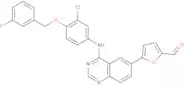
CAS:<p>5-(4-((3-Chloro-4-((3-fluorobenzyl)oxy)phenyl)amino)quinazolin-6-yl)furan-2-carbaldehyde is a heterocyclic compound that has been used to study protein tyrosine kinase activity. This drug binds to the active site of the enzyme and inhibits its function by forming an irreversible covalent bond with the enzyme's reactive cysteine residue, which prevents the transfer of phosphate groups from ATP to the substrate (tyrosine).</p>Fórmula:C26H17ClFN3O3Pureza:Min. 95%Peso molecular:473.88 g/mol

![4-[(2,3,4Trimethoxyphenyl)methyl]piperazine-1-carbaldehyde](/_next/image/?url=https%3A%2Fstatic.cymitquimica.com%2Fproducts%2F3D%2Fthumb-webp%2FFT46258.webp&w=3840&q=75)