Aldeídos
Os aldeídos são compostos orgânicos que contêm um grupo carbonila (C=O) ligado a pelo menos um átomo de hidrogênio. Esses compostos versáteis são fundamentais em várias reações químicas, incluindo oxidação, redução e adição nucleofílica. Os aldeídos são building blocks essenciais na síntese de produtos farmacêuticos, fragrâncias e polímeros. Na CymitQuimica, oferecemos uma ampla seleção de aldeídos de alta qualidade para apoiar suas aplicações de pesquisa e industriais.
Foram encontrados 8573 produtos de "Aldeídos"
Ordenar por
Pureza (%)
0
100
|
0
|
50
|
90
|
95
|
100
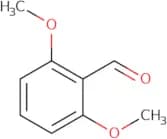
2,6-Dimethoxybenzaldehyde
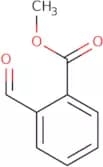
CAS:<p>Synthetic building block</p>Fórmula:C9H10O3Pureza:Min. 95%Cor e Forma:White PowderPeso molecular:166.17 g/mol2-Carbomethoxybenzaldehyde
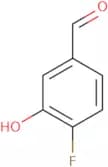
CAS:<p>2-Carbomethoxybenzaldehyde (2CMB) is a synthetic chemical compound that has been used as an efficient method for the synthesis of amines. The carbonyl group in 2CMB reacts with nucleophiles, such as amines, to form a tetrahydroisoquinoline derivative. This nucleophilic attack leads to the formation of an unstable intermediate that can be isolated and purified by trifluoroacetic acid (TFA). 2CMB is also used in the synthesis of quinoline derivatives and naphthalene derivatives. The acidic properties of 2CMB allow it to react with carboxylic acids, leading to the formation of esters.</p>Fórmula:C9H8O3Pureza:Min. 95%Cor e Forma:Colorless PowderPeso molecular:164.16 g/mol4-Fluoro-3-hydroxybenzaldehyde
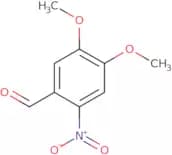
CAS:<p>4-Fluoro-3-hydroxybenzaldehyde is a fluorescent chemical that belongs to the group of alcohols. It has been shown to have the following properties: an excitation wavelength of 285 nm, a fluorescence wavelength of 350 nm, and a quantum yield of 0.004%. The solvent effect on 4-fluoro-3-hydroxybenzaldehyde's fluorescence intensity is approximately linear with concentration, but the fluorescence profile is dependent on the polarity of the solvent. The phenyl group of 4-fluoro-3-hydroxybenzaldehyde causes it to be more polarizable than other molecules in its class. The kinetic rate constants for 4-fluoro-3-hydoxybenzaldehyde were found by measuring the decay rates of its fluorescence emission as a function of time.</p>Fórmula:C7H5FO2Pureza:Min. 95%Cor e Forma:PowderPeso molecular:140.11 g/mol3,4-Dimethoxy-6-nitrobenzaldehyde
CAS:<p>3,4-Dimethoxy-6-nitrobenzaldehyde is a chemical compound that has been synthesized by the reaction of 3,4-dimethoxybenzaldehyde and nitric acid. The asymmetric synthesis of 3,4-Dimethoxy-6-nitrobenzaldehyde starts with the preparation of the corresponding ester, which is then reacted with nitric acid to produce the desired product. The chemical structure of 3,4-Dimethoxy-6-nitrobenzaldehyde consists of three aromatic rings: a benzene ring fused to a phenyl ring and a pyridine ring. This chemical can be used as an intermediate in the synthesis of epidermal growth factor (EGF). It also has been shown to bind to toll like receptor 4 (TLR4), which activates NFκB signaling pathway and induces apoptosis in monocytes.</p>Fórmula:C9H9NO5Pureza:Min. 95 Area-%Cor e Forma:White Yellow PowderPeso molecular:211.17 g/mol2-Hydroxy-3,4-dimethoxybenzaldehyde
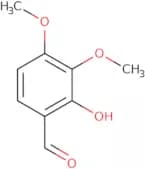
CAS:<p>2-Hydroxy-3,4-dimethoxybenzaldehyde is a molecule that has an acidic character. It has been shown to be able to form a copper complex with good optical properties. A method using this compound as the monomer was found to be efficient for synthesizing polymers with size exclusion chromatography. 2-Hydroxy-3,4-dimethoxybenzaldehyde is a monocarboxylic acid that contains an aliphatic hydrocarbon and hydroxyl group. It can also act as a monomer in polymerization reactions and can be used in chemical structures such as multidrugs, which are made from large molecules of different types of atoms. The acid catalyst is required for these reactions to take place.</p>Fórmula:C9H10O4Pureza:Min. 95%Cor e Forma:PowderPeso molecular:182.17 g/mol4-Bromo-3,5-dimethylbenzaldehyde
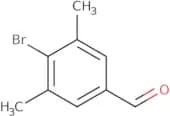
CAS:4-Bromo-3,5-dimethylbenzaldehyde is an organic compound that contains a benzene ring with a bromine atom in the 4 position. It is used as a reagent and intermediate in organic synthesis. The compound can be converted to radical cations by reaction with electron-deficient alkylating agents such as methyl iodide or trimethylsilyl chloride. Radical cations are classified as reactive intermediates and have been shown to react with other organic compounds to form new products.Fórmula:C9H9BrOPureza:Min. 95%Peso molecular:213.07 g/mol2-Nitro-4,5-methylenedioxybenzaldehyde
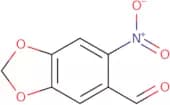
CAS:<p>2-Nitro-4,5-methylenedioxybenzaldehyde (2NMB) is a molecule with a molecular weight of 188.24, an empirical formula of C8H8NO2 and a chemical structure consisting of a benzene ring attached to two nitro groups. 2NMB has been shown to bind to the dopamine β-hydroxylase enzyme in human serum and inhibit the production of dopa, which leads to a decrease in dopamine levels. It also inhibits the growth of staphylococcus, cryptococcus neoformans, and typhimurium. 2NMB also has been used as radiotracers for gyrase activity and can be used for asymmetric synthesis due to its piperonal group. The uptake of 2NMB by cells is dependent on its nucleophilic properties.</p>Fórmula:C8H5NO5Pureza:Min. 98%Cor e Forma:PowderPeso molecular:195.13 g/mol3,4-Dichlorobenzaldehyde oxime
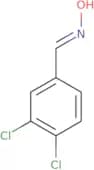
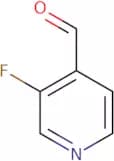
CAS:<p>3,4-Dichlorobenzaldehyde oxime is a natural carotenoid that has been shown to have antibacterial activity. 3,4-Dichlorobenzaldehyde oxime is produced by the reaction of malonate and aldehyde in an incubated system. This compound has been shown to be active against Gram-positive bacteria such as staphylococcus and aldoximes and Gram-negative bacteria such as E. coli, Salmonella typhimurium, and Shigella flexneri. 3,4-Dichlorobenzaldehyde oxime inhibits bacterial growth by binding to the 50S ribosomal subunit of the bacterial cell membrane. This binding prevents protein synthesis, leading to cell death. The biosynthesis of 3,4-dichlorobenzaldehyde oxime involves the conversion of abscisic acid (ABA) into ABA quinone through oxidation by an enzyme called ABA oxidase</p>Fórmula:C7H5Cl2NOPureza:Min. 95%Cor e Forma:PowderPeso molecular:190.03 g/mol3-Fluoropyridine-4-carboxaldehyde
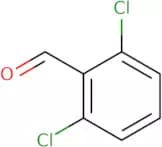
CAS:<p>3-Fluoropyridine-4-carboxaldehyde is a reactivator that can be used in the treatment of bladder cancer. It binds to pyridinium and oxime derivatives, which are present in proteins, to form a reactive intermediate. This intermediate reacts with aldehyde groups on hemoglobin, restoring the oxygen binding capacity of hemoglobin to levels seen in healthy individuals. 3-Fluoropyridine-4-carboxaldehyde has been shown to have anticancer activity against bladder cancer cells and also has potential use as an additive for the treatment of red blood cells.</p>Fórmula:C6H4FNOPureza:Min. 95%Cor e Forma:Colorless Yellow Clear LiquidPeso molecular:125.1 g/mol2,6-Dichlorobenzaldehyde
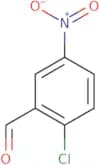
CAS:<p>2,6-Dichlorobenzaldehyde is a nucleophilic compound that has the ability to form hydrogen bonds. It reacts with phosphorus pentachloride to produce 2-chloro-4,6-dichlorobenzene. 2,6-Dichlorobenzaldehyde can be used in the synthesis of β-unsaturated ketones and anticancer drugs such as aziridines. It is also used as a precursor for coordination complexes. This compound is an efficient method for making nitrogen nucleophiles, which are important in chain reactions and the production of polymers. The 2,6-dichlorobenzaldehyde molecule contains two chiral centers that give rise to four stereoisomers. X-ray diffraction data shows that this molecule exists as a mixture of these four isomers.</p>Fórmula:C7H4Cl2OPureza:Min. 97.5%Cor e Forma:PowderPeso molecular:175.01 g/mol2-Chloro-5-nitrobenzaldehyde
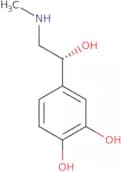
CAS:2-Chloro-5-nitrobenzaldehyde (2CNB) is an antibacterial agent that has been shown to be effective against a number of bacterial species. It is a nucleophilic compound and reacts with the sulfhydryl group in cysteine. 2CNB also reacts with the thiol group of proteins, which are involved in many cellular processes. 2CNB has industrial uses, such as for the production of cyclohexanone and cyclopentanone. The structures of 2CNB and its homologues have been studied by 13CNMR spectroscopy, which provides information about the type of bonds present in the molecule and their lengths.Fórmula:C7H4ClNO3Pureza:Min. 95%Cor e Forma:PowderPeso molecular:185.56 g/molL-Adrenaline
CAS:Produto Controlado<p>L-Adrenaline is a hormone that belongs to the group of nonsteroidal anti-inflammatory drugs. It is used in combination therapy for the treatment of asthma, chronic obstructive pulmonary disease and other respiratory diseases. L-Adrenaline has also been shown to increase blood pressure and heart rate. L-Adrenaline may interact with other medication such as cardiac glycosides and calcium channel blockers, so it is important to consult with a doctor before taking this drug. L-Adrenaline is a potent vasoconstrictor that can cause primary pulmonary hypertension, which can lead to heart failure. The epinephrine in this drug binds to receptors on cells in the lungs, increasing bronchial secretions, which reduces the symptoms of anaphylaxis.</p>Fórmula:C9H13NO3Pureza:Min. 95%Cor e Forma:PowderPeso molecular:183.2 g/mol5-Iodo-2,3-dimethoxybenzaldehyde
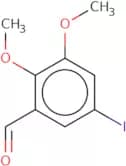
CAS:<p>5-Iodo-2,3-dimethoxybenzaldehyde is a fine chemical that is useful as a scaffold for the synthesis of other compounds. It can be used as an intermediate for research chemicals or as a reaction component in the synthesis of complex compounds. 5-Iodo-2,3-dimethoxybenzaldehyde is used for the manufacture of high quality reagents and building blocks.</p>Fórmula:C9H9IO3Pureza:Min. 95%Cor e Forma:PowderPeso molecular:292.07 g/mol2,6-Dimethyl-4-fluorobenzaldehyde
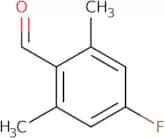
CAS:<p>2,6-Dimethyl-4-fluorobenzaldehyde is a fine chemical that is used as a building block in the synthesis of other chemicals. It can be used as a reagent and as a speciality chemical. This product has high purity and quality and is versatile in its use as both an intermediate or scaffold molecule. It can be used in reactions to create complex compounds with useful properties.</p>Fórmula:C9H9FOPureza:Min. 95%Cor e Forma:PowderPeso molecular:152.17 g/mol4-Benzyloxy-3-methoxybenzaldehyde
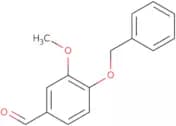
CAS:<p>4-Benzyloxy-3-methoxybenzaldehyde is a deuterium isotope analog of the natural compound benzaldehyde. This molecule has been shown to inhibit the growth of cancer cells in tissue culture by binding to DNA. The molecular mechanism of this inhibition is believed to involve an enzymatic process that results in the substitution of chloride for chlorine, thereby inhibiting DNA synthesis and preventing cell division. 4-Benzyloxy-3-methoxybenzaldehyde also inhibits the production of growth factors and thus has anticancer activity.</p>Fórmula:C15H14O3Pureza:Min. 95%Cor e Forma:PowderPeso molecular:242.27 g/mol3,4-Dimethoxybenzaldehyde
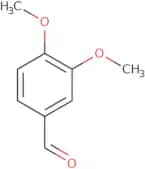
CAS:<p>3,4-Dimethoxybenzaldehyde is a crystalline cellulose that has been shown to have anthelmintic properties. 3,4-Dimethoxybenzaldehyde reduces the redox potential of the parasite and inhibits the oxidative metabolism of p-hydroxybenzoic acid (pHBA). It also inhibits the biosynthesis of dihydroconiferyl alcohol and usnic acid, which are building blocks for bacterial cell walls. The reaction mechanism is thought to be due to a hydrogen atom transfer from 3,4-dimethoxybenzaldehyde to the p-hydroxybenzoic acid molecule. The product of this reaction is an aromatic ring with a hydroxyl group on carbon 2 and an ether oxygens on carbons 3 and 4. This aromatic ring will then react with another molecule of 3,4-dimethoxybenzaldehyde to produce a new molecule with two hydroxyl groups on carbons 2 and 5. This will</p>Fórmula:C9H10O3Pureza:Min. 95%Cor e Forma:PowderPeso molecular:166.17 g/mol3,5-Difluoro-4-hydroxybenzaldehyde
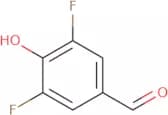
CAS:<p>3,5-Difluoro-4-hydroxybenzaldehyde is a biochemical that belongs to the group of anticancer agents. It is activated by hydroxyl radicals and inhibits cancer cells. 3,5-Difluoro-4-hydroxybenzaldehyde inhibits protein synthesis in the cell by binding to messenger RNA and preventing its translation into protein. This compound also has inhibitory properties against DNA polymerase, which prevents DNA replication and transcription. 3,5-Difluoro-4-hydroxybenzaldehyde can be used as a template for oligodeoxynucleotides (ODN) to enhance photochemical properties.</p>Fórmula:C7H4F2O2Pureza:Min. 95%Cor e Forma:Off-White PowderPeso molecular:158.1 g/mol3-Ethoxy-4-hydroxybenzaldehyde
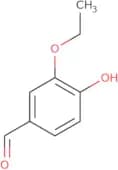
CAS:<p>3-Ethoxy-4-hydroxybenzaldehyde is an active analogue of p-hydroxybenzoic acid that can be used in the synthesis of vanillin. 3-Ethoxy-4-hydroxybenzaldehyde is extracted from a reaction solution using solid phase microextraction, and can then be analyzed by gas chromatography/mass spectrometry to determine the concentration of vanillin. This compound has been shown to have a solubility in water, but not in organic solvents. 3-Ethoxy-4-hydroxybenzaldehyde has been found to inhibit cytochrome P450 activity and polyvinyl chloride production. This chemical compound has also been found to be toxic when inhaled or ingested, with no known toxicity studies for skin contact or eye contact.</p>Fórmula:C9H10O3Pureza:Min. 95%Cor e Forma:White PowderPeso molecular:166.17 g/mol2,4-Diaminobenzaldehyde
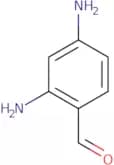
CAS:<p>2,4-Diaminobenzaldehyde is a chemical compound that is used as an intermediate in the synthesis of drugs and other organic chemicals. It can be oxidized with periodate to produce 2,4-diaminophenol. This reaction system can then be desilyated to produce 2,4-diaminoanisole. Reaction time has a significant effect on the yield of this reaction system. The optimal dosage of periodate for this reaction system is 0.5 mM for 2,4-diaminophenol and 0.1 mM for 2,4-diaminoanisole. This reaction system can also be carried out using lavendamycin or tosyl chloride instead of periodate. The conversion efficiency of this reaction system is dependent on the presence or absence of methyl esters in the starting material and product.<br>END></p>Fórmula:C7H8N2OPureza:Min. 95%Cor e Forma:White Yellow PowderPeso molecular:136.15 g/mol4-Aminobenzaldehyde
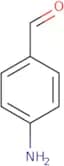
CAS:4-Aminobenzaldehyde is a molecule that belongs to the class of aromatic compounds. It has a crystalline structure and reacts with acylating agents to form amides. 4-Aminobenzaldehyde has been used for the preparation of diazonium salts, which are reactive intermediates in organic synthesis that can be used as a nucleophile. This compound has been shown to react with sodium nitrate to form an electrochemical data, and it has also been used as a control experiment for nmr spectra.Fórmula:C7H7NOPureza:Min. 98 Area-%Cor e Forma:PowderPeso molecular:121.14 g/mol