Aldeídos
Os aldeídos são compostos orgânicos que contêm um grupo carbonila (C=O) ligado a pelo menos um átomo de hidrogênio. Esses compostos versáteis são fundamentais em várias reações químicas, incluindo oxidação, redução e adição nucleofílica. Os aldeídos são building blocks essenciais na síntese de produtos farmacêuticos, fragrâncias e polímeros. Na CymitQuimica, oferecemos uma ampla seleção de aldeídos de alta qualidade para apoiar suas aplicações de pesquisa e industriais.
Foram encontrados 8573 produtos de "Aldeídos"
Ordenar por
Pureza (%)
0
100
|
0
|
50
|
90
|
95
|
100
2-fluoro-4-(trifluoromethyl)benzaldehyde
CAS:<p>2-fluoro-4-(trifluoromethyl)benzaldehyde is a chemical compound that can be synthesized by the reaction of peroxide with fluorine. It is used as a solvent in coatings and in the production of organic chemicals. 2-fluoro-4-(trifluoromethyl)benzaldehyde has been shown to be toxic to cancer cells at high concentrations, but not normal cells. The waveguide effect can be observed at temperatures below -60°C and it has three functional groups that are hydrolyzed by HCl.</p>Fórmula:C8H4F4OPureza:Min. 95%Cor e Forma:Clear LiquidPeso molecular:192.11 g/mol3-Chloro-2,6-dihydroxy-4-methylbenzaldehyde
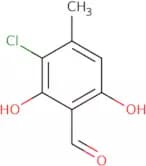
CAS:3-Chloro-2,6-dihydroxy-4-methylbenzaldehyde is a hydroxylated compound that is used in wastewater treatment. It can be found in many products including plastics and pesticides. 3-Chloro-2,6-dihydroxy-4-methylbenzaldehyde has been shown to inhibit the growth of bacteria such as Usnic Acid through its ability to react with hydrogen atoms on the bacterial cell wall and replace them with chlorine. This replacement halts the production of benzoate, which is essential for bacterial growth. The reaction mechanism has been detected using an electrochemical detector, chloroatranol.Fórmula:C8H7ClO3Pureza:Min. 95%Cor e Forma:Off-White PowderPeso molecular:186.59 g/mol3-Hydroxy-2,2-dimethylpropanal
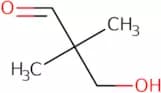
CAS:<p>3-Hydroxy-2,2-dimethylpropanal is a condensation product of formaldehyde and glycol. It is the simplest of the three aldehydes that are produced by this reaction. The catalyst for this reaction is usually dibutyltin oxide, which can be replaced with calcium chloride or sodium carbonate. 3-Hydroxy-2,2-dimethylpropanal reacts with neopentyl glycol to form a dimer and glycol ester. This reaction mechanism has been studied extensively using solution kinetics.</p>Fórmula:C5H10O2Pureza:(%) Min. 95%Cor e Forma:White PowderPeso molecular:102.13 g/mol2,3-Dimethoxybenzaldehyde
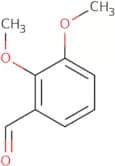
CAS:<p>2,3-Dimethoxybenzaldehyde is a chemical substance that binds to its ligands by hydrogen bonding and van der Waals forces. It is used in the synthesis of diethyl succinate. 2,3-Dimethoxybenzaldehyde has been shown to inhibit the growth of squamous carcinoma cells. The conversion of 2,3-dimethoxybenzaldehyde into benzoquinone is catalyzed by glucose oxidase and peroxidase. This oxidation process results in a loss of two electrons and one proton from the molecule, changing it from a phenol to an aromatic hydrocarbon.</p>Fórmula:C9H10O3Pureza:Min. 95%Cor e Forma:PowderPeso molecular:166.17 g/mol3,4-Dimethoxy-6-nitrobenzaldehyde
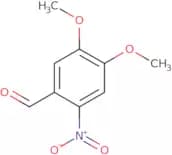
CAS:<p>3,4-Dimethoxy-6-nitrobenzaldehyde is a chemical compound that has been synthesized by the reaction of 3,4-dimethoxybenzaldehyde and nitric acid. The asymmetric synthesis of 3,4-Dimethoxy-6-nitrobenzaldehyde starts with the preparation of the corresponding ester, which is then reacted with nitric acid to produce the desired product. The chemical structure of 3,4-Dimethoxy-6-nitrobenzaldehyde consists of three aromatic rings: a benzene ring fused to a phenyl ring and a pyridine ring. This chemical can be used as an intermediate in the synthesis of epidermal growth factor (EGF). It also has been shown to bind to toll like receptor 4 (TLR4), which activates NFκB signaling pathway and induces apoptosis in monocytes.</p>Fórmula:C9H9NO5Pureza:Min. 95 Area-%Cor e Forma:White Yellow PowderPeso molecular:211.17 g/mol4-(1H-Imidazol-1-yl)benzaldehyde
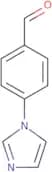
CAS:<p>4-(1H-Imidazol-1-yl)benzaldehyde is a chalcone derivative. It has been shown to inhibit cancer cells by inhibiting the mitochondrial membrane potential and enhancing the expression of histone deacetylase 1. 4-(1H-Imidazol-1-yl)benzaldehyde has also been shown to have anticancer activity in vivo, with an IC50 of 18 µM. This compound was found to inhibit cell growth and induce apoptosis in human breast cancer cells (MDA-MB231). In addition, this compound is able to cross the blood brain barrier and inhibits astrocyte proliferation.</p>Fórmula:C10H8N2OPureza:Min. 95%Cor e Forma:PowderPeso molecular:172.18 g/mol3,5-Dimethoxybenzaldehyde
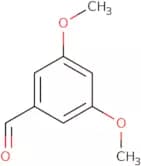
CAS:<p>3,5-Dimethoxybenzaldehyde is a fungicide that can kill fungal cells by inhibiting the synthesis of ergosterol, an important component of the fungal cell membrane. It has been shown to be effective against Cryptococcus neoformans and other fungi. 3,5-Dimethoxybenzaldehyde inhibits mitochondrial superoxide production and the growth of fungi in a model system. The optimum concentration for inhibition was determined in a kinetic and thermodynamic study. This compound has also been shown to have anti-inflammatory properties, which may be due to its ability to inhibit prostaglandin synthesis.</p>Fórmula:C9H10O3Pureza:Min. 98%Cor e Forma:PowderPeso molecular:166.17 g/mol1,10-Phenanthroline-2-carbaldehyde
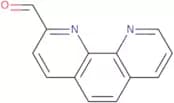
CAS:<p>1,10-Phenanthroline-2-carbaldehyde is a phenylhydrazone compound that has been shown to have anticancer activity. It is also a supramolecular complex, which means it can form hydrogen bonds and coordinate bonds with other molecules. The anticancer activity of 1,10-phenanthroline-2-carbaldehyde may be due to its ability to inhibit the growth of prostate carcinoma cells. This compound also inhibits the growth of human cervical carcinoma cells by binding to their DNA and inhibiting the synthesis of RNA and protein. 1,10-Phenanthroline-2-carbaldehyde is being studied for its potential as an inhibitor of tumor angiogenesis.<br>1,10-Phenanthroline-2-carbaldehyde has been shown to have antiplatelet aggregation effects in platelets from healthy humans as well as those with type 2 diabetes mellitus or chronic kidney disease.</p>Fórmula:C13H8N2OPureza:Min. 90 Area-%Cor e Forma:Off-White PowderPeso molecular:208.22 g/mol2,4-Dihydroxybenzaldehyde
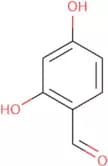
CAS:<p>2,4-Dihydroxybenzaldehyde (2,4DBA) is a copper complex that has been shown to have biological properties. This compound has been studied in biological studies and is classified as group p2 on the periodic table. It is a redox potential of -0.95 V and can undergo intramolecular hydrogen bonding with itself or with other molecules to form hydrogen bonds. Hydroxyl groups are found on 2,4DBA and can coordinate with the nitrogen atoms found on penicillin-binding proteins or acetylcholinesterase inhibition. The coordination geometry of 2,4DBA is tetrahedral and its methyl ethyl group is also found on this molecule.</p>Fórmula:C7H6O3Pureza:Min. 98 Area-%Cor e Forma:White PowderPeso molecular:138.12 g/molPyruvic aldehyde - Technical grade, 35-45% w/w aqueous solution
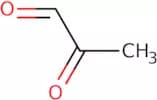
CAS:<p>Pyruvic aldehyde is a reactive compound that is an intermediate in the glycolytic pathway. It is used in vitro to measure enzyme activities and as a model system for studying pathogenic mechanisms. Pyruvic aldehyde has been shown to damage mitochondrial membranes by increasing the production of reactive oxygen species, leading to the collapse of mitochondrial membrane potential and cell death. The methylglyoxal-derived compound also has pharmacological effects, such as anti-inflammatory activities. Pyruvic aldehyde can be prepared using preparative high-performance liquid chromatography (Hplc) or by reacting pyruvate with acidified ethyl acetate.</p>Fórmula:C3H4O2Cor e Forma:Brown Yellow Clear LiquidPeso molecular:72.06 g/molUreaformaldehyde
CAS:<p>Ureaformaldehyde is a synthetic slow-release fertilizer that contains urea and formaldehyde. It has been shown to be highly active as a slow-release fertilizer in Langmuir adsorption isotherm studies. Ureaformaldehyde also has the ability to mineralize chloride and hydrogen bond to soil particles, increasing the availability of these ions for plant uptake. Ureaformaldehyde is also used in analytical methods such as chromatographic determination of fatty acids, which are an important component of animal and vegetable oils. !--</p>Fórmula:(CH4N2O•CH2O)xPureza:Min. 95%Cor e Forma:Clear LiquidPeso molecular:90.08 g/mol2-Hydroxy-4-[3-(trifluoromethyl)-3H-diazirin-3-yl]benzaldehyde
CAS:<p>2-Hydroxy-4-[3-(trifluoromethyl)-3H-diazirin-3-yl]benzaldehyde is a reaction component that is used in the synthesis of organic compounds. It has been shown to be an effective reagent and can be used in the synthesis of high quality compounds. CAS No. 308085-25-8, it is a research chemical that can be used as a useful scaffold or building block for other compounds. 2-Hydroxy-4-[3-(trifluoromethyl)-3H-diazirin-3-yl]benzaldehyde may also be useful as an intermediate or building block in complex synthesis reactions.</p>Fórmula:C9H5F3N2O2Pureza:Min. 95%Cor e Forma:PowderPeso molecular:230.14 g/mol4-Fluorobenzaldehyde
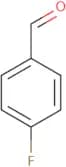
CAS:<p>4-Fluorobenzaldehyde is an organic compound that is used in the synthesis of other chemicals. 4-Fluorobenzaldehyde has been shown to have hemolytic activity and to be a copper complex that reacts with hydrochloric acid. The reaction mechanism of 4-fluorobenzaldehyde with copper chloride is thought to involve the formation of a copper complex, which then undergoes nucleophilic attack by the trifluoroacetic acid, forming a positronium ion. This positronium ion then reacts with hydroxide ions from water, forming hydrogen peroxide and a pyrimidine compound.</p>Fórmula:C7H5FOPureza:Min. 98 Area-%Cor e Forma:Colourless To Yellow LiquidPeso molecular:124.11 g/mol3,5-Dinitrosalicylaldehyde
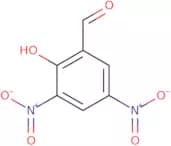
CAS:<p>3,5-Dinitrosalicylaldehyde is an oxidizing agent that is used in organic chemistry to produce aldehydes or carboxylic acids. It reacts with the amino groups of lysine residues and converts them to nitro groups. 3,5-Dinitrosalicylaldehyde is also used as a reagent in the determination of the number of lysine residues in proteins by titration with hydrochloric acid. The reaction mechanism of 3,5-dinitrosalicylaldehyde involves formation of an electron deficient intermediate that oxidizes chloride ions to form water molecules and chloride radicals. These intermediates react with nitro groups on lysine residues, resulting in nitro compounds. Crystallography studies have shown that the molecular structure of 3,5-dinitrosalicylaldehyde has two nitro groups and one hydroxyl group.</p>Fórmula:C7H4N2O6Pureza:Min. 95%Cor e Forma:Yellow PowderPeso molecular:212.12 g/mol3-Methoxy-4,5-methylenedioxybenzaldehyde
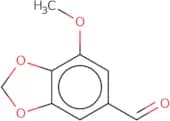
CAS:Produto Controlado3-Methoxy-4,5-methylenedioxybenzaldehyde (MMDA) is an amine that is used in the synthesis of drugs and pharmaceuticals. It is a major component of myristicin, which is found in nutmeg. MMDA can be synthesized from aluminium chloride, hydrochloric acid and pyridine. The molecule has a skeleton that is recemic at acidic pH values and mesoionic at basic pH values. This compound also reacts with acetyl chloride to form 3,4-dimethoxyacetophenone, which can be chromatographically separated from other compounds. The chromatography produces flavonoid derivatives such as quercetin, 3′-methoxyquercetin and 3′,4′-dimethoxyquercetin. Flavonoids are polyphenolic compounds found in plants that have antioxidant properties. Chromatographic separation of these compounds can be done using spectrometric methods toFórmula:C9H8O4Pureza:Min. 95 Area-%Cor e Forma:Off-White PowderPeso molecular:180.16 g/mol3-Chloro-4-hydroxybenzaldehyde
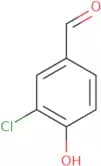
CAS:<p>3-Chloro-4-hydroxybenzaldehyde is a molecule that belongs to the class of aldehydes. It is a monocarboxylic acid and an important precursor in the production of coumarin derivatives. 3-Chloro-4-hydroxybenzaldehyde has been shown to have pharmacokinetic properties, such as vibrational, chemical, and optical properties. It is also a fluorophore with strong fluorescence emission. The hydroxymethyl group can be programmed by adding an amine or thiol group at the 4 position on the ring of 3-chloro-4-hydroxybenzaldehyde. The addition of these groups will change the optical properties of 3-chloro-4-hydroxybenzaldehyde to make it more useful for biotechnology applications.</p>Fórmula:C7H5ClO2Pureza:Min. 95%Cor e Forma:PowderPeso molecular:156.57 g/mol3-Nitrosalicylaldehyde
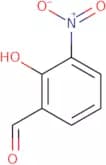
CAS:<p>3-Nitrosalicylaldehyde is an oxidizing agent that reacts with DNA in vitro to form DNA adducts. 3-Nitrosalicylaldehyde also has antioxidative properties, which can be demonstrated by its ability to inhibit the oxidation of low density lipoprotein (LDL) in vivo. This compound has been shown to activate the metalloproteinase MT2 receptor, which is involved in the regulation of blood pressure and heart function. 3-Nitrosalicylaldehyde is metabolized by hydrolysis and reduction to form a neutral product, which has been shown to have antidiabetic effects on mice.</p>Fórmula:C7H5NO4Pureza:Min. 95%Cor e Forma:PowderPeso molecular:167.12 g/molPhthalaldehyde
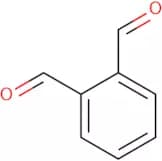
CAS:<p>Phthalaldehyde is a disinfectant that is used for the prevention of microbial contamination in the manufacturing process of pharmaceuticals, cosmetics, and many other products. It has been shown to inhibit the growth of bacteria by inhibiting protein synthesis. The mechanism of action is thought to be due to its reaction with amino acids, which are important for protein synthesis. Phthalaldehyde also reacts with benzalkonium chloride to form a fluorescent derivative, which can be detected using fluorescence detectors or LC-MS/MS methods. The use of this compound as a fluorescence probe allows for the detection of probiotic bacteria in nutrient solutions without the need for expensive equipment or complicated analytical methods.</p>Fórmula:C8H6O2Pureza:Min. 98%Cor e Forma:PowderPeso molecular:134.13 g/mol4'-Chloro-[1,1'-biphenyl]-4-carbaldehyde
CAS:4'-Chloro-[1,1'-biphenyl]-4-carbaldehyde (CBA) is an intermediate in the synthesis of oritavancin. CBA is obtained by condensation of benzyl chloride and aldehydes. It is also used as a precursor to other compounds. In the laboratory, it can be obtained by heating an ether with chloroform in the presence of acid. 4'-Chloro-[1,1'-biphenyl]-4-carbaldehyde has been shown to be toxic, selective and efficient for certain reactions.Fórmula:C13H9ClOPureza:Min. 97 Area-%Cor e Forma:Yellow PowderPeso molecular:216.66 g/mol2,6-Dimethyl-4-fluorobenzaldehyde
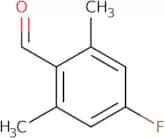
CAS:<p>2,6-Dimethyl-4-fluorobenzaldehyde is a fine chemical that is used as a building block in the synthesis of other chemicals. It can be used as a reagent and as a speciality chemical. This product has high purity and quality and is versatile in its use as both an intermediate or scaffold molecule. It can be used in reactions to create complex compounds with useful properties.</p>Fórmula:C9H9FOPureza:Min. 95%Cor e Forma:PowderPeso molecular:152.17 g/mol2-Nitro-4-(trifluoromethyl)benzaldehyde
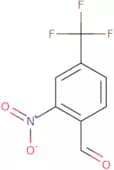
CAS:<p>2-Nitro-4-(trifluoromethyl)benzaldehyde is an immunosuppressive agent that binds to the active site of the enzyme nitric oxide synthase, inhibiting its activity. This drug has been shown to be active against human immunocompromised patients and those with a history of melamine exposure. It also inhibits the production of nitric oxide, which is associated with inflammation. 2-Nitro-4-(trifluoromethyl)benzaldehyde has been shown to bind to vinylic positions on proteins, leading to immunosuppression.</p>Fórmula:C8H4F3NO3Pureza:Min. 95%Cor e Forma:PowderPeso molecular:219.12 g/mol2-Bromo-5-methoxybenzaldehyde
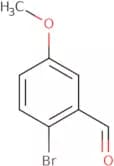
CAS:<p>2-Bromo-5-methoxybenzaldehyde is an organic compound that is used as a synthetic intermediate. It has been shown to be a substrate for the acid transporter SLC26A2, which transports it into cells. This compound has also been found in low levels in human tissues and fluids, where it may play a role in the development of cancer. 2-Bromo-5-methoxybenzaldehyde has been shown to inhibit the growth of cancer cells by uv absorption and terminal alkynes. The anticancer activity of this compound is due to its ability to react with functional groups such as benzyl groups and other alkyl groups.</p>Fórmula:C8H7BrO2Pureza:Min. 95%Cor e Forma:PowderPeso molecular:215.04 g/mol4-Dimethylamino-2-methoxybenzaldehyde
CAS:4-Dimethylamino-2-methoxybenzaldehyde is a chemical used as a research reagent and intermediate. It can be used to synthesize other compounds, such as pharmaceuticals, pesticides, and agrochemicals. It is also useful in the production of various dyes, pigments, and fragrances, representing effective staining under anaerobic conditions. CAS No. 84562-48-1Fórmula:C10H13NO2Peso molecular:179.22 g/mol3-Bromo-4-fluorobenzaldehyde
CAS:<p>3-Bromo-4-fluorobenzaldehyde is a drug substance that is used in the synthesis of pharmaceuticals. It is also a potential anticancer agent. 3-Bromo-4-fluorobenzaldehyde inhibits bacterial growth by binding to DNA, preventing transcription and replication. The high frequency of human activity has been shown using a patch clamp technique on human erythrocytes. This active form is metabolized through a number of metabolic transformations, including hydrolysis by esterases or glucuronidases, oxidation by cytochrome P450 enzymes, reduction by glutathione reductase, or conjugation with glucuronic acid. 3-Bromo-4-fluorobenzaldehyde also specifically binds to markers expressed at high levels in Mycobacterium tuberculosis strains (e.g., ESX-1 secretion system protein) and inhibits cell growth in culture.</p>Fórmula:C7H4BrFOPureza:Min. 95%Cor e Forma:PowderPeso molecular:203.01 g/mol3-Hydroxy-4-methoxy-2-nitrobenzaldehyde
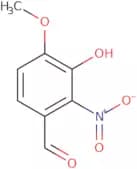
CAS:3-Hydroxy-4-methoxy-2-nitrobenzaldehyde is a ternary complex that has been adsorbed onto the surface of an ion exchange resin. The adsorption process occurs through the formation of hydrogen bonds between the hydroxyl groups on the resin and the hydroxyl groups on the molecule. This complex is also soluble in chloroform, which may be due to its ability to form hydrogen bonds with itself and other molecules. The 3-hydroxy group on this molecule has been shown to react reductively with nitrophenol, forming a nitroso derivative. 3-Hydroxy-4-methoxy-2-nitrobenzaldehyde has been used as a template for the microbiological assay of azides and quinones.Fórmula:C8H7NO5Pureza:Min. 95%Peso molecular:197.14 g/mol2,5-Dimethoxy-4-methylbenzaldehyde
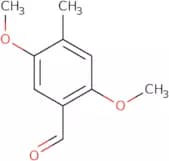
CAS:<p>2,5-Dimethoxy-4-methylbenzaldehyde is a bioactive chemical that has been shown to have anticancer activity. It has been shown to be an effective inhibitor of cancer cell growth in vitro and in vivo. 2,5-Dimethoxy-4-methylbenzaldehyde has also been shown to inhibit the formation of fatty acids and improve the uptake of glucose by cancer cells. This compound is a metabolite of the amino acid methionine and is used as a marker for mesenchymal cells. The structure of 2,5-dimethoxy-4-methylbenzaldehyde consists of two methoxy groups connected with an aliphatic chain consisting of one or more carbon atoms. This functional group may provide the anticancer activity through radical scavenging activities.</p>Fórmula:C10H12O3Pureza:Min. 95%Cor e Forma:Off-White PowderPeso molecular:180.2 g/mol4-Fluoro-3-phenoxybenzaldehyde
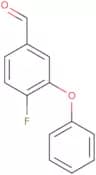
CAS:<p>4-Fluoro-3-phenoxybenzaldehyde is a chiral organic compound that has been synthesized in the laboratory. This compound has a linear response to peroxide and can be used as an environmental pollutant indicator. It is produced by the reaction of phenol with peroxide in deionized water, which is catalyzed by acid. The reaction time is dependent on the diluent used, and ultrasonic irradiation can be used to speed up the reaction. 4-Fluoro-3-phenoxybenzaldehyde's structure consists of two isomers, each containing either a fluorine atom or hydrogen atom on one of the phenyl rings. 4-Fluoro-3-phenoxybenzaldehyde can be purified using distillation or recrystallization techniques.</p>Fórmula:C13H9FO2Pureza:Min. 95%Cor e Forma:LiquidPeso molecular:216.21 g/mol4-Acetamidobenzaldehyde
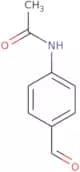
CAS:<p>4-Acetamidobenzaldehyde is an organic compound that has been shown to exhibit inhibitory effects on influenza virus replication in cell culture. 4-Acetamidobenzaldehyde is a dihedral molecule with a p2 group and can be synthesized from benzaldehyde and acetamide. It has also been shown to have potential use in the treatment of tuberculosis. The biological properties of 4-acetamidobenzaldehyde are not well understood, but it is thought that uptake may occur through the imine nitrogen. This molecule has been detected in tissue samples such as lung, liver, and kidney.</p>Fórmula:C9H9NO2Pureza:Min. 95%Cor e Forma:PowderPeso molecular:163.17 g/mol5-(Trifluoromethoxy)salicylaldehyde
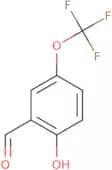
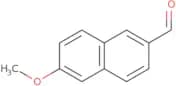
CAS:<p>5-(Trifluoromethoxy)salicylaldehyde is a ligand that binds to the active site of the enzyme catalysis, thereby inhibiting its activity. It has been shown to be effective in colon cancer and other cancers due to its ability to inhibit protein synthesis. 5-(Trifluoromethoxy)salicylaldehyde also inhibits the production of prostaglandins, which may prevent inflammation. The compound is also used in supramolecular chemistry and biological studies as a tool for studying protein-ligand interactions. 5-(Trifluoromethoxy)salicylaldehyde has been shown to have dose-dependent effects on cell proliferation and protein synthesis.</p>Fórmula:C8H5F3O3Pureza:Min. 95%Cor e Forma:PowderPeso molecular:206.12 g/mol6-Methoxy-2-naphthaldehyde
CAS:<p>6-Methoxy-2-naphthaldehyde is a nonsteroidal antiinflammatory drug that belongs to the class of naphthalenes. It inhibits the formation of inflammatory prostaglandins, which are mediators of pain and inflammation. 6-Methoxy-2-naphthaldehyde has been shown to have cytotoxic effects on cancer cells and in vitro studies have shown that it can induce cell lysis. It has also been shown to be a potent fluorescence probe for use in biological applications. This compound binds to human serum proteins by hydrogen bonding interactions, which may affect its pharmacokinetic properties. In addition, this compound has been shown to inhibit the activity of detoxification enzymes such as CYP 2C9 and 2D6 at high concentrations, which may lead to unwanted side effects such as nausea or vomiting. The molecular docking analysis of 6-Methoxy-2-naphthaldehyde with the active site of human liver alcohol dehydrogen</p>Fórmula:C12H10O2Pureza:Min. 98 Area-%Cor e Forma:PowderPeso molecular:186.21 g/mol4-Chloro-2-methylbenzaldehyde
CAS:4-Chloro-2-methylbenzaldehyde is a nucleophilic and electrophilic compound that has a carbonyl group. The vivo model of 4-Chloro-2-methylbenzaldehyde suggests that the methyl groups on the molecule are important for its anti-cancer activities. This compound also has anti-inflammatory properties, which may be due to its ability to inhibit prostaglandin synthesis. It is used in anti-cancer agents as well as in other applications such as catalysis and synthetic chemistry. 4-Chloro-2-methylbenzaldehyde is synthesized by first reacting benzaldehyde with sodium nitrite, followed by chlorination with phosphorus pentachloride and sodium hydroxide. The mechanistic details of this reaction have not been elucidated yet, but it is believed that the selectivity of this reaction may be due to the presence of aldehydes in the reactants. Further optimization of this reaction would involve changing theFórmula:C8H7ClOPureza:Min. 95%Cor e Forma:Clear LiquidPeso molecular:154.59 g/moltert-Butyl 2-formyl-4,5-dihydrothieno[2,3-c]pyridine-6(7H)-carboxylate
CAS:Fórmula:C13H17NO3SPureza:97%Cor e Forma:SolidPeso molecular:267.34tert-Butyl 1-formyl-7-azabicyclo[2.2.1]heptane-7-carboxylate
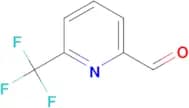
CAS:Pureza:98%Peso molecular:225.28799446-(Trifluoromethyl)picolinaldehyde
CAS:Fórmula:C7H4F3NOPureza:95%Cor e Forma:SolidPeso molecular:175.114-Methyl-5-thiazolecarboxaldehyde
CAS:Fórmula:C5H5NOSPureza:95%Cor e Forma:Solid, Off-white powderPeso molecular:127.168-Bromo-6-chloroimidazo[1,2-a]pyridine-3-carbaldehyde
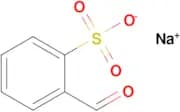
CAS:Fórmula:C8H4BrClN2OPureza:98%Peso molecular:259.49Sodium 2-formylbenzenesulfonate
CAS:Fórmula:C7H5NaO4SPureza:95%Cor e Forma:SolidPeso molecular:208.16TERT-BUTYL (2S,4S)-4-FLUORO-2-FORMYLPYRROLIDINE-1-CARBOXYLATE
CAS:Pureza:97%Peso molecular:217.24000553-Bromo-5-chloro-2-fluorobenzaldehyde
CAS:Fórmula:C7H3BrClFOPureza:98%Cor e Forma:SolidPeso molecular:237.45


![2-Hydroxy-4-[3-(trifluoromethyl)-3H-diazirin-3-yl]benzaldehyde](/_next/image/?url=https%3A%2Fstatic.cymitquimica.com%2Fproducts%2F3D%2Fthumb-webp%2FFH97014.webp&w=3840&q=75)
![4'-Chloro-[1,1'-biphenyl]-4-carbaldehyde](/_next/image/?url=https%3A%2Fstatic.cymitquimica.com%2Fproducts%2F3D%2Fthumb-webp%2FFC39938.webp&w=3840&q=75)



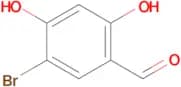

![tert-Butyl 2-formyl-4,5-dihydrothieno[2,3-c]pyridine-6(7H)-carboxylate](/_next/image/?url=https%3A%2Fstatic.cymitquimica.com%2Fproducts%2F10%2Fthumb-webp%2FF221170.webp&w=3840&q=75)
![tert-Butyl 1-formyl-7-azabicyclo[2.2.1]heptane-7-carboxylate](/_next/image/?url=https%3A%2Fstatic.cymitquimica.com%2Fproducts%2F10%2Fthumb-webp%2FF684132.webp&w=3840&q=75)
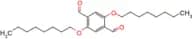

![Ethyl 4′-formyl-[1,1′-biphenyl]-3-carboxylate](/_next/image/?url=https%3A%2Fstatic.cymitquimica.com%2Fproducts%2F10%2Fthumb-webp%2FF771864.webp&w=3840&q=75)
![8-Bromo-6-chloroimidazo[1,2-a]pyridine-3-carbaldehyde](/_next/image/?url=https%3A%2Fstatic.cymitquimica.com%2Fproducts%2F10%2Fthumb-webp%2FF215036.webp&w=3840&q=75)