Aldeídos
Os aldeídos são compostos orgânicos que contêm um grupo carbonila (C=O) ligado a pelo menos um átomo de hidrogênio. Esses compostos versáteis são fundamentais em várias reações químicas, incluindo oxidação, redução e adição nucleofílica. Os aldeídos são building blocks essenciais na síntese de produtos farmacêuticos, fragrâncias e polímeros. Na CymitQuimica, oferecemos uma ampla seleção de aldeídos de alta qualidade para apoiar suas aplicações de pesquisa e industriais.
Foram encontrados 8573 produtos de "Aldeídos"
Ordenar por
Pureza (%)
0
100
|
0
|
50
|
90
|
95
|
100
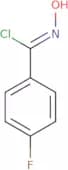
alpha-Chloro-4-fluorobenzaldehyde oxime
CAS:<p>Alpha-Chloro-4-fluorobenzaldehyde oxime is a selenium compound that can be stabilized with heat resistance and structuring. It is used as an additive in the plating of alloys, thermoplastics, and rubber products. Alpha-Chloro-4-fluorobenzaldehyde oxime has been shown to have anti-oxidant effects, which may be due to its ability to stabilize free radicals.</p>Fórmula:C7H5ClFNOPureza:Min. 95%Peso molecular:173.57 g/mol3,6-Dimethoxyterephthaldicarboxaldehyde
<p>3,6-Dimethoxyterephthaldicarboxaldehyde is a chemical compound that can be used in the synthesis of complex compounds. It has been shown to be an effective reagent for the synthesis of heterocycles and has also been used as a building block in the synthesis of pharmaceuticals and other organic compounds. 3,6-Dimethoxyterephthaldicarboxaldehyde is a versatile building block with many potential uses. It has also been identified as a useful scaffold for drug design and development.</p>Pureza:Min. 95%7-Isopropyl-1,4-dimethylazulene-3-carboxaldehyde
CAS:Fórmula:C16H18OPureza:>97.0%(GC)Cor e Forma:Gray to Dark purple to Black powder to crystalPeso molecular:226.32Bourgeonal
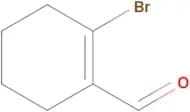
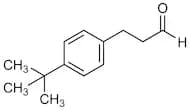
CAS:Fórmula:C13H18OPureza:>90.0%(GC)Cor e Forma:Colorless to Yellow to Yellow green clear liquidPeso molecular:190.291-Cyclohexene-1-carboxaldehyde
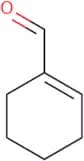
CAS:<p>1-Cyclohexene-1-carboxaldehyde (1C) is a fatty acid that is found in the blood of mammals, including humans. It can be synthesized by reacting 1-cyclohexene with t-butyl hydroperoxide and potassium t-butoxide in the presence of an acid catalyst. 1C has been shown to have antibacterial activity against Gram-positive bacteria such as Bacillus subtilis and Streptococcus pneumoniae. The oxidative products of 1C are also active against Gram-positive bacteria. These products include pyrethroid analogs, which are insecticides used for the control of insects, and alkylating agents, which are chemicals that react with DNA to form covalent bonds.</p>Fórmula:C7H10OPureza:Min. 95%Cor e Forma:Colorless Clear LiquidPeso molecular:110.15 g/mol5-Bromo thiophene-2-aldehyde
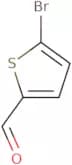
CAS:<p>5-Bromo thiophene-2-aldehyde is a trifluoroacetic acid derivative used as an activatable probe for the study of biomolecular interactions. This compound has been shown to be biocompatible and has a low cytotoxicity. 5-Bromo thiophene-2-aldehyde binds to malonic acid in the presence of x-ray radiation and forms a complex that can be detected by electrochemical impedance spectroscopy. The structure of this complex was determined by x-ray crystal structures. This probe is also able to bind to nitrogen atoms in proteins, which can be used to diagnose cancer resistance through protease activity. 5-Bromo thiophene-2-aldehyde is isolated as its hydrochloride salt, which can be purified with a suzuki coupling reaction.</p>Fórmula:C5H3BrOSPureza:Min. 95%Cor e Forma:Yellow PowderPeso molecular:191.05 g/mol2-Bromo-5-fluorobenzaldehyde
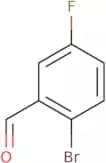
CAS:<p>2-Bromo-5-fluorobenzaldehyde is a chemical compound that has been shown to inhibit the activity of ns3 protease, an enzyme responsible for the cleavage of peptides in HIV. 2-Bromo-5-fluorobenzaldehyde binds to the active site of ns3 protease and prevents it from carrying out its function. This drug has also been shown to bind to the active site of ns5b polymerase and inhibit its activity, which is necessary for viral DNA synthesis. 2-Bromo-5-fluorobenzaldehyde has been used as a fungicide and has shown high potency against Candida albicans, Cryptococcus neoformans, Saccharomyces cerevisiae, and Aspergillus fumigatus.</p>Fórmula:C7H4BrFOPureza:Min. 95%Cor e Forma:PowderPeso molecular:203.01 g/mol2,3-Dimethyl-1H-indole-5-carbaldehyde
CAS:<p>2,3-Dimethyl-1H-indole-5-carbaldehyde is a high quality reagent that is used as a complex compound. It has been shown to be a useful intermediate and building block in the production of fine chemicals. 2,3-Dimethyl-1H-indole-5-carbaldehyde is also useful as a research chemical. This compound is versatile and can be used in reactions as an intermediate or building block. As a speciality chemical, it has various applications and is not limited to any specific area of research.</p>Fórmula:C11H11NOPureza:Min. 95%Cor e Forma:PowderPeso molecular:173.21 g/molIsoquinoline-6-carbaldehyde
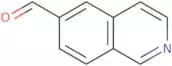
CAS:<p>Isoquinoline-6-carbaldehyde is a fine chemical that belongs to the group of research chemicals. It can be used as a reagent for organic synthesis, a speciality chemical, or a building block in complex organic molecules. Isoquinoline-6-carbaldehyde is also an intermediate for the synthesis of many pharmaceuticals and other useful compounds. Isoquinoline-6-carbaldehyde has been shown to react with 2-aminoethanol to form (2E)-3-(4-(1,1'-biphenyl)-2-yl)butanal, which is an important reaction component in the synthesis of nitroaromatics. Isoquinoline-6-carbaldehyde is also a versatile scaffold for the synthesis of other fine chemicals.</p>Fórmula:C10H7NOPureza:Min. 95%Cor e Forma:SolidPeso molecular:157.17 g/mol2,5-Dibromoterephthalaldehyde
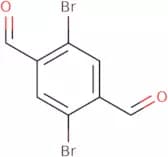
CAS:<p>2,5-Dibromoterephthalaldehyde is a red fluorescent compound that has been shown to have potential as a cancer therapy. The compound is able to bind to the electron acceptor 2,5-dibromoterephthalate (DBT) and can be used in photocatalytic reactions. It has been shown that 2,5-dibromoterephthalaldehyde can cause high levels of cell death in cancer cells with low levels of toxicity to healthy cells. This property may be due to its ability to target cancerous cells by binding with their mitochondria. The compound is also fluorescent and emits light when excited with UV light. 2,5-Dibromoterephthalaldehyde has been shown to form structured metallacycles in the presence of copper ions.<br>!--</p>Fórmula:C8H4Br2O2Pureza:Min. 95%Cor e Forma:PowderPeso molecular:291.92 g/mol2-(4-Methoxyphenoxy)benzaldehyde
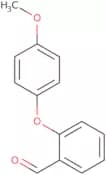
CAS:<p>2-(4-Methoxyphenoxy)benzaldehyde is a fine chemical that is used as a versatile building block in the synthesis of complex compounds and research chemicals. 2-(4-Methoxyphenoxy)benzaldehyde is also a reagent that can be used to synthesize speciality chemicals, useful building blocks, and reaction components. This chemical may be used as an intermediate for the synthesis of high-quality pharmaceuticals or other useful scaffolds. It has CAS number 19434-36-7.</p>Fórmula:C14H12O3Pureza:Min. 95%Cor e Forma:White To Brown SolidPeso molecular:228.24 g/mol1-Ethyl-3-methyl-1H-pyrazole-4-carbaldehyde
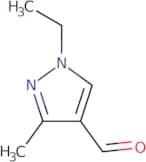
CAS:<p>1-Ethyl-3-methyl-1H-pyrazole-4-carbaldehyde is a reactive intermediate that is used as a reagent in organic synthesis. It is also a useful scaffold for the synthesis of complex compounds, such as pharmaceuticals and agrochemicals. 1-Ethyl-3-methyl-1H-pyrazole-4-carbaldehyde has been used as an intermediate to synthesize the antihistamine drug terfenadine and the insecticide carbofuran. This chemical is manufactured by reacting ethyl pyruvate with anhydrous hydrazine.</p>Fórmula:C7H10N2OPureza:Min. 95%Cor e Forma:Yellow PowderPeso molecular:138.17 g/mol2-Bromo-5-hydroxybenzaldehyde
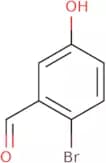
CAS:Intermediate in the synthesis of crisaborole AN2728Fórmula:C7H5BrO2Pureza:Min. 95%Cor e Forma:White PowderPeso molecular:201.02 g/mol2-Hydroxy-4,6-dimethoxy-3,5-dimethylbenzaldehyde
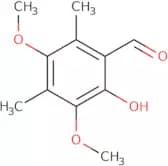
CAS:2-Hydroxy-4,6-dimethoxy-3,5-dimethylbenzaldehyde is a versatile building block that can be used in research chemicals, reagents, and speciality chemicals. It is also a useful building block that can be used as a reaction component or scaffold for high-quality compounds. This chemical has been shown to have antihistamine properties with applications in treatment of allergies and asthma.Fórmula:C11H14O4Pureza:Min. 95%Cor e Forma:PowderPeso molecular:210.23 g/molQuinoxaline-5-carboxaldehyde
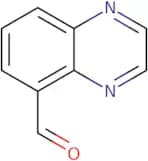
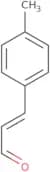
CAS:Quinoxaline-5-carboxaldehyde is a versatile building block and reagent for organic chemistry. It is a complex compound that can be used as a research chemical or as a speciality chemical, with high quality and a useful scaffold. This compound has been shown to be an intermediate in the synthesis of other compounds, such as quinoxaline-5-carboxylic acid.Fórmula:C9H6N2OPureza:Min. 95%Cor e Forma:Off-White PowderPeso molecular:158.16 g/mol(E)-3-(p-Tolyl)acrylaldehyde
CAS:<p>(E)-3-(p-Tolyl)acrylaldehyde is a reactive compound that has been shown to have antibacterial activity. It also inhibits the growth of Coxsackievirus A21 by binding to cardiomyocytes and inducing apoptosis. (E)-3-(p-Tolyl)acrylaldehyde binds to the amine group of proteins, which prevents it from being hydrolysed. This inhibition leads to an accumulation of the reactive amine in the organism, causing cell death. The reaction between (E)-3-(p-Tolyl)acrylaldehyde and nitro groups in DNA can cause mutagenesis or carcinogenesis.</p>Fórmula:C10H10OPureza:Min. 98 Area-%Cor e Forma:PowderPeso molecular:146.19 g/molBenzo[d]oxazole-5-carbaldehyde
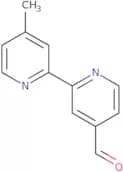
CAS:Benzo[d]oxazole-5-carbaldehyde is a chemical compound that can be used as a building block in the synthesis of more complex molecules. It is a high quality, versatile building block with many applications. Benzo[d]oxazole-5-carbaldehyde can be used as a reagent in organic chemistry and as a reaction component in the synthesis of more complex compounds. This compound can also serve as an intermediate or scaffold for the synthesis of other compounds.Fórmula:C8H5NO2Pureza:Min. 95%Cor e Forma:White PowderPeso molecular:147.13 g/mol4'-Methyl-2,2'-bipyridine-4-carboxaldehyde
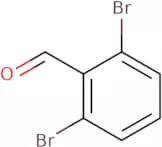
CAS:<p>4'-Methyl-2,2'-bipyridine-4-carboxaldehyde is a heterocyclic compound that contains a nitro group. It has the chemical formula C8H6N2O and the molecular weight of 122.15 g/mol. This compound belongs to the class of formyl compounds and it is composed of two formyl groups and one hydrogen atom. The bipyridines are linked by a methylene bridge to form a six-membered ring. The compound can be used as an intermediate for the synthesis of other organic compounds such as pharmaceuticals, dyes, water repellents, pesticides, and herbicides.</p>Fórmula:C12H10N2OPureza:Min. 95%Cor e Forma:PowderPeso molecular:198.22 g/mol2,6-Dibromobenzaldehyde
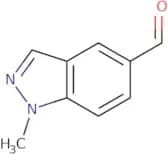
CAS:<p>2,6-Dibromobenzaldehyde is an imidazole derivative that has been shown to be a potent inhibitor of tyrosine kinase. It has been shown to inhibit the replication of virus type-1 and is effective in the treatment of pain models. 2,6-Dibromobenzaldehyde also inhibits the activity of enzymes, such as phosphodiesterases and protein kinases. This compound has shown promising results in animal studies for the treatment of human immunodeficiency virus type 1 (HIV-1) infection. The pharmacokinetic properties of 2,6-dibromobenzaldehyde have been studied in rats and dogs with oral administration and found to be linear and rapid with high bioavailability.</p>Fórmula:C7H4Br2OPureza:Min. 95%Cor e Forma:PowderPeso molecular:263.91 g/mol1-Methyl-1H-indazole-5-carbaldehyde
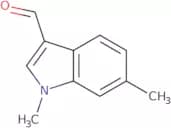
CAS:<p>1-Methyl-1H-indazole-5-carbaldehyde is a selective inhibitor of the enzyme lysine acetyltransferase (KAT). KAT inhibitors are a new class of compounds that have been shown to be effective in inhibiting the growth of acute myeloid leukaemia cells, with little effect on other cells. 1-Methyl-1H-indazole-5-carbaldehyde has potent inhibitory activity against human myeloid leukemia cells and does not affect the viability of normal human erythrocytes or peripheral blood mononuclear cells. This compound is reversible, meaning it can be turned off when it is no longer needed. 1-Methyl-1H-indazole-5-carbaldehyde has also been shown to inhibit maoA and thymidine phosphorylase in vitro.</p>Fórmula:C9H8N2OPureza:Min. 95%Cor e Forma:PowderPeso molecular:160.17 g/mol1,6-Dimethyl-1H-indole-3-carbaldehyde
CAS:<p>1,6-Dimethyl-1H-indole-3-carbaldehyde is a compound that can be used in the synthesis of many organic and pharmaceutical compounds. It is also an intermediate for the production of other chemicals. 1,6-Dimethyl-1H-indole-3-carboxylic acid has been shown to be useful as a building block in organic synthesis, due to its versatility and reactivity. The compound is also a reagent and can be used as part of research studies. This chemical has CAS number 202584-14-3.</p>Fórmula:C11H11NOPureza:Min. 95%Cor e Forma:PowderPeso molecular:173.21 g/mol4-Hydroxy-2-iodobenzaldehyde
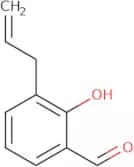
CAS:<p>4-Hydroxy-2-iodobenzaldehyde is a high quality chemical that belongs to the group of complex compounds. It has been shown to be a useful intermediate, fine chemical, and speciality chemical. It can also be used as a reaction component in the synthesis of other chemicals and is an important building block for making other compounds. 4-Hydoxy-2-iodobenzaldehyde is versatile and can be used in many different reactions.</p>Fórmula:C7H5IO2Pureza:Min. 98 Area-%Peso molecular:248.02 g/mol3-Allyl salicylaldehyde
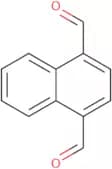
CAS:<p>3-Allyl salicylaldehyde is a fluorescent probe that is used to measure the mitochondrial membrane potential. It can be used as an amine-reactive fluorescence probe for the detection of amines such as histamine and serotonin. 3-Allyl salicylaldehyde has been shown to bind to metal complexes, such as palladium complexes, immobilized on silica gel. The cavity of the immobilized metal complex acts as an adsorption site for 3-allyl salicylaldehyde, which binds to the cavity by means of a metal chelate mechanism. This binding results in an alteration in the absorption spectra and x-ray absorption properties of 3-allyl salicylaldehyde. The hydroxyl group of 3-allyl salicylaldehyde is not involved in this binding process with the immobilized metal complex, while its carbonyl group is important for this interaction.</p>Fórmula:C10H10O2Pureza:Min. 95%Peso molecular:162.19 g/molNaphthalene 1,4-dicarboxaldehyde
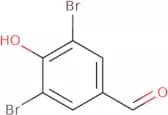
CAS:<p>Naphthalene 1,4-dicarboxaldehyde is a low energy focusing molecule that is used in macrocyclic compounds. It can be oxidized to form naphthalene 1,4-diacid and naphthalene 1,4-diketone. This compound has been used to synthesize the triarylmethane dye viologen by Wittig reaction. Naphthalene 1,4-dicarboxaldehyde has also been shown to have fluorescence properties and can be useful for chemiluminescence. Naphthalene 1,4-dicarboxaldehyde reacts with sulfide or amine groups to form sulfides or amines respectively.</p>Fórmula:C12H8O2Pureza:Min. 95%Cor e Forma:PowderPeso molecular:184.19 g/mol3,5-Dibromo-4-hydroxybenzaldehyde
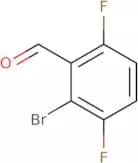
CAS:<p>3,5-Dibromo-4-hydroxybenzaldehyde is an aldehyde that is used as a precursor to other organic compounds. It can be produced using the efficient method of reacting 3,5-dibromo-4-hydroxybenzoic acid with sodium borohydride in methanol. The molecule has three hydroxymethyl groups and two functional groups. 3,5-Dibromo-4-hydroxybenzaldehyde is soluble in water and organic solvents such as ethanol and acetone. This compound has shown antibacterial activity against some strains of bacteria, including group P2 bacteria. The reaction yield for the synthesis of this compound is approximately 93%. The inhibitory activities of 3,5-dibromo-4-hydroxybenzaldehyde have been demonstrated against both Gram positive and Gram negative bacteria.</p>Fórmula:C7H4Br2O2Pureza:Min. 95%Cor e Forma:PowderPeso molecular:279.91 g/mol2-Bromo-3,6-difluorobenzaldehyde
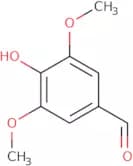
CAS:<p>2-Bromo-3,6-difluorobenzaldehyde is a versatile building block that is used in the synthesis of many complex compounds. It has been shown to be a useful intermediate and reaction component in organic synthesis. 2-Bromo-3,6-difluorobenzaldehyde can be used as a reagent or speciality chemical for research purposes. This compound has high quality and is a useful scaffold for the preparation of fine chemicals.</p>Fórmula:C7H3BrF2OPureza:Min. 95%Cor e Forma:Off-White PowderPeso molecular:221 g/mol4-Hydroxy-3,5-dimethoxybenzaldehyde
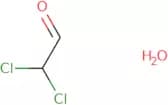
CAS:4-Hydroxy-3,5-dimethoxybenzaldehyde (4HMB) is a phenolic compound that can be obtained from lignin. 4HMB is the precursor in the synthesis of vanillin, which has a characteristic flavor and odor. It is also used as an additive in perfumes. The compound is found naturally in plants, such as in the bark of cinchona trees, and can be extracted using preparative high performance liquid chromatography (HPLC). 4HMB can be synthesized by reacting p-hydroxybenzoic acid with 3,4,5-trimethoxybenzyl alcohol in the presence of copper chloride. This chemical reaction results in an aldehyde form of the molecule. 4HMB binds to sodium salts to form a water soluble salt that can be used for wastewater treatment. It also has antioxidant properties due to its ability to scavenge free radicals. The enzyme activities of 4HMB are not wellFórmula:C9H10O4Pureza:Min. 95%Cor e Forma:Off-White PowderPeso molecular:182.17 g/molDichloroacetaldehyde hydrate
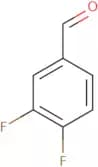
CAS:<p>Dichloroacetaldehyde hydrate is an organic compound that is used in the treatment of skin cancer. It has been shown to have protective effects on cell membranes, which may be due to its ability to inhibit lipid peroxidation. Dichloroacetaldehyde hydrate also has a potential use as a radiation sensitizer and may be able to extend the lifespan of animals.</p>Fórmula:C2H4Cl2O2Pureza:Min. 95%Cor e Forma:PowderPeso molecular:130.96 g/mol3,4-Difluorobenzaldehyde
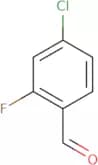
CAS:3,4-Difluorobenzaldehyde is a chemical inhibitor that has been shown to be effective in the treatment of cancer. It inhibits the activity of an enzyme called tyrosine kinase by reacting with its functional group, leading to decreased production of growth factors and cell proliferation. 3,4-Difluorobenzaldehyde has been shown to have a high reaction yield in animal health studies, and it can be used as a drug for treating carcinoma cells. This compound also has strong liquid crystal properties and can be used as a component of diphenyl ether molecules. 3,4-Difluorobenzaldehyde is metabolized by the liver or excreted through urine. The pharmacokinetic properties of this compound are similar to those of other drugs that are metabolized by humans.Fórmula:C7H4F2OPureza:Min. 95%Cor e Forma:Colorless Clear LiquidPeso molecular:142.1 g/mol4-Chloro-2-fluorobenzaldehyde
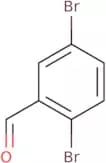
CAS:4-Chloro-2-fluorobenzaldehyde is an aryl aldehyde that belongs to the class of chemical compounds known as chloroaldehydes. It can be synthesized from 4-chlorophenylacetic acid and 2,3-dichloroacetone. The compound is chiral and has two enantiomers. One enantiomer is less reactive than the other, which is more reactive. 4-Chloro-2-fluorobenzaldehyde can be used in the synthesis of a variety of organic compounds, such as pharmaceuticals, herbicides, pesticides, and dyes. This compound can also be used for microbial strain identification by liquid chromatography (LC) with ultraviolet (UV) detection. The yields are typically high (>90%), and the process can be performed at room temperature without any need for vacuum or pressure conditions.Fórmula:C7H4ClFOPureza:Min. 95%Cor e Forma:PowderPeso molecular:158.56 g/mol2,5-Dibromobenzaldehyde
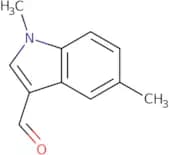
CAS:<p>2,5-Dibromobenzaldehyde is a synthetic compound that has been shown to have a red fluorescent emission. It is also thermally stable and can be used in the synthesis of quinoline derivatives. 2,5-Dibromobenzaldehyde may be used as a potential fluorescent label for viologen or amines. This compound can undergo an intermolecular Diels-Alder reaction with diacetate to form a bicyclic system, which is important to the understanding of its interactions with other compounds.</p>Fórmula:C7H4Br2OPureza:Min. 95%Cor e Forma:PowderPeso molecular:263.91 g/mol1,5-Dimethyl-1H-indole-3-carbaldehyde
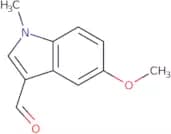
CAS:<p>1,5-Dimethyl-1H-indole-3-carbaldehyde is a useful building block for organic synthesis. It is an important reagent for the synthesis of complex compounds and it has been used as a versatile building block in organic chemistry. This compound can be used as a starting point for the preparation of other chemicals, such as pharmaceuticals, pesticides, and dyes. 1,5-Dimethyl-1H-indole-3-carbaldehyde is also a fine chemical that has been used for research purposes. There are no known commercial uses for this compound.</p>Fórmula:C11H11NOPureza:Min. 95%Cor e Forma:PowderPeso molecular:173.21 g/mol5-Methoxy-1-methyl-1H-indole-3-carbaldehyde
CAS:<p>5-Methoxy-1-methyl-1H-indole-3-carbaldehyde is a synthetic compound that has been shown to inhibit the growth of human tumour cells in vitro. This compound is a regioisomeric mixture of two enantiomers, with the (S) isomer being the more potent inhibitor. The (R) isomer was found to be less active against human tumour cells and may have an antimicrobial activity. 5-Methoxy-1-methyl-1H-indole-3-carbaldehyde has been shown to be bioreductive towards electron donors such as NADPH and glutathione. It also inhibits dt diaphorase and aerobic metabolism in human tumour cells.</p>Fórmula:C11H11NO2Pureza:Min. 95%Cor e Forma:Off-White PowderPeso molecular:189.21 g/mol2-Chloro-3,4-dimethoxy-6-nitrobenzaldehyde
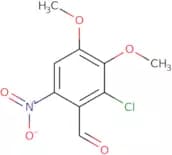
CAS:2-Chloro-3,4-dimethoxy-6-nitrobenzaldehyde is a fine chemical with a CAS number of 82330-54-9. It is a versatile building block that can be used as a reagent or intermediate for the production of other chemicals. This product has been shown to have many different reactions. It is useful in the synthesis of complex compounds and offers high quality and purity.Fórmula:C9H8ClNO5Pureza:Min. 95%Cor e Forma:PowderPeso molecular:245.62 g/mol4-(Piperidin-1-ylmethyl)benzaldehyde
CAS:<p>4-(Piperidin-1-ylmethyl)benzaldehyde is a benzyl compound that has been shown to inhibit the activity of some imidazole compounds. It has been shown to have an agonistic effect on h3 receptors, and can be used for the treatment of anxiety disorders. This compound can be used in drug design as a linker or pharmacophore for other compounds. 4-(Piperidin-1-ylmethyl)benzaldehyde can be synthesized from commercially available materials, which makes it worth further exploration.</p>Fórmula:C13H17NOPureza:Min. 95%Cor e Forma:PowderPeso molecular:203.28 g/mol8-Hydroxy-5-nitroquinoline-2-carbaldehyde
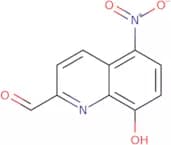
CAS:8-Hydroxy-5-nitroquinoline-2-carbaldehyde is a high quality, versatile building block that can be used as a reaction intermediate or to synthesize heterocycles. It is also a useful scaffold for the synthesis of complex compounds. The CAS number of this chemical is 884497-63-6.Fórmula:C10H6N2O4Pureza:Min. 95%Cor e Forma:PowderPeso molecular:218.17 g/mol3-Oxo-3,4-dihydro-2H-pyrido[3,2-b][1,4]oxazine-6-carbaldehyde
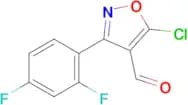
CAS:Pureza:95%Peso molecular:178.14700325-chloro-3-(2,4-difluorophenyl)-1,2-oxazole-4-carbaldehyde
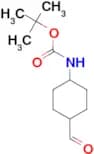
CAS:Fórmula:C10H4ClF2NO2Pureza:95.0%Peso molecular:243.59(4-Formyl-cyclohexyl)-carbamic acid tert-butyl ester
CAS:Fórmula:C12H21NO3Pureza:95.0%Peso molecular:227.3042,3-Dihydroxybenzaldehyde
CAS:Fórmula:C7H6O3Pureza:95%Cor e Forma:Solid, Beige powderPeso molecular:138.122




![Benzo[d]oxazole-5-carbaldehyde](/_next/image/?url=https%3A%2Fstatic.cymitquimica.com%2Fproducts%2F3D%2Fthumb-webp%2FFB143425.webp&w=3840&q=75)



![3-Oxo-3,4-dihydro-2H-pyrido[3,2-b][1,4]oxazine-6-carbaldehyde](/_next/image/?url=https%3A%2Fstatic.cymitquimica.com%2Fproducts%2F10%2Fthumb-webp%2FF608156.webp&w=3840&q=75)