Aldeídos
Os aldeídos são compostos orgânicos que contêm um grupo carbonila (C=O) ligado a pelo menos um átomo de hidrogênio. Esses compostos versáteis são fundamentais em várias reações químicas, incluindo oxidação, redução e adição nucleofílica. Os aldeídos são building blocks essenciais na síntese de produtos farmacêuticos, fragrâncias e polímeros. Na CymitQuimica, oferecemos uma ampla seleção de aldeídos de alta qualidade para apoiar suas aplicações de pesquisa e industriais.
Foram encontrados 8573 produtos de "Aldeídos"
Ordenar por
Pureza (%)
0
100
|
0
|
50
|
90
|
95
|
100
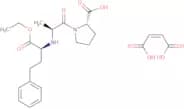
Enalapril maleate
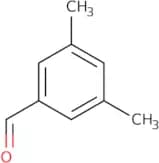
CAS:<p>Angiotensin-converting enzyme inhibitor; anti-hypertensive</p>Fórmula:C20H28N2O5•C4H4O4Pureza:Min. 95%Cor e Forma:PowderPeso molecular:492.52 g/mol3,5-Dimethylbenzaldehyde
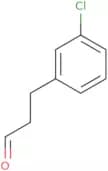
CAS:<p>3,5-Dimethylbenzaldehyde is an organic compound that is a colorless liquid. It has a chemical formula of C9H12O2 and is classified as an aldehyde. 3,5-Dimethylbenzaldehyde can be synthesized by the reaction of isopropyl palmitate with xylene in the presence of carbon as a source. The reaction time required for this synthesis is approximately one day. The major products of this reaction are 3,5-dimethylbenzaldehyde and 2-methylbutanal. This reaction mechanism can also be used to determine the concentration of urinary metabolites in human urine samples. Analysis of these samples requires an organic solvent such as hexane or dichloromethane. Kinetic data was collected from the rate at which zinc powder reacts with 3,5-dimethylbenzaldehyde over time at different concentrations. A kinetic experiment was conducted using c–h bond activation to produce 3,5-dimethoxy</p>Fórmula:C9H10OPureza:Min. 95%Cor e Forma:Colorless Clear LiquidPeso molecular:134.18 g/mol3-(3-Chlorophenyl)propionaldehyde
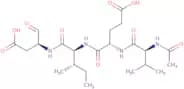
CAS:<p>Please enquire for more information about 3-(3-Chlorophenyl)propionaldehyde including the price, delivery time and more detailed product information at the technical inquiry form on this page</p>Fórmula:C9H9ClOPureza:Min. 95%Peso molecular:168.62 g/molAc-Val-Glu-Ile-Asp-aldehyde (pseudo acid)
CAS:<p>Ac-Val-Glu-Ile-Asp-aldehyde is a pseudo acid that has been shown to induce apoptotic cell death in cultured cells. It is localized in the cerebellar granule and mitochondria of HL-60 cells and HK-2 cells. Ac-Val-Glu-Ile-Asp-aldehyde induces necrotic cell death when it binds to the serine protease zymogen, which is localized in the mitochondrial membrane. It also induces apoptosis by disrupting the mitochondrial membrane potential, leading to a release of cytochrome c into the cytosol. Ac-Val-Glu-Ile-Asp-aldehyde can bind to annexin and tubule cells, which are important for β cell function.</p>Fórmula:C22H36N4O9Pureza:Min. 95%Peso molecular:500.54 g/mol(2,2,3-Trimethylcyclopent-3-en-1-yl)acetaldehyde
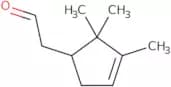
CAS:<p>(2,2,3-Trimethylcyclopent-3-en-1-yl)acetaldehyde is an epoxide. It is a colorless liquid with a pleasant odor and taste that can be used as a flavoring agent. This compound is biosynthesized by bacteria from the alpha-terpineol or 2,2,3-trimethylcyclopentanone. The biological activity of (2,2,3-Trimethylcyclopent-3-en-1-yl)acetaldehyde has been investigated in cultures and in vitro studies on acid bacteria. The production of this compound was found to be stimulated by the presence of other terpenoids such as limonene and alpha pinene.</p>Fórmula:C10H16OPureza:Min. 95%Peso molecular:152.23 g/mol2-Methyl-5-nitrobenzaldehyde
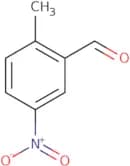
CAS:<p>2-Methyl-5-nitrobenzaldehyde is a nitro compound that is used in the synthesis of dobutamine. It has been shown to undergo rearrangements, with the formation of 2-methyl-5-nitrophenol. Kinetic studies have shown that chlorine can be substituted for hydrogen at the 2 position, and this substitution leads to an increase in reactivity. 2-methyl-5-nitrobenzaldehyde also reacts with dopamine to form a ketone. The hydroxy group on this molecule is nucleophilic and can attack electrophiles, making it useful as an active site for synthetic reactions. This compound is also pyrophoric, which means it will spontaneously ignite in air and burn until all its fuel is consumed.</p>Fórmula:C8H7NO3Pureza:Min. 95%Cor e Forma:Off-White PowderPeso molecular:165.15 g/mol1H-Pyrazole-4-carbaldehyde
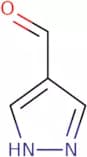
CAS:<p>1H-Pyrazole-4-carbaldehyde is a chemical compound that inhibits the growth of bacteria by binding to the enzyme ribonucleotide reductase. It has been shown to have significant antifungal activity against Candida albicans and Saccharomyces cerevisiae, as well as in vitro antifungal activity against other fungi. The 1H-pyrazole-4-carbaldehyde has also been found to inhibit xanthine oxidase and nitric oxide synthase (NOS) in vitro and in vivo, which may be due to its ability to reduce oxidative stress. This chemical compound is a coumarin derivative and contains a pyrazole ring.</p>Fórmula:C4H4N2OPureza:Min. 95%Cor e Forma:White PowderPeso molecular:96.09 g/molZ-Leu-Leu-Tyr-a-keto aldehyde
CAS:<p>Please enquire for more information about Z-Leu-Leu-Tyr-a-keto aldehyde including the price, delivery time and more detailed product information at the technical inquiry form on this page</p>Fórmula:C30H39N3O7Pureza:Min. 95%Peso molecular:553.65 g/mol4-Bromo-2-pyrrolecarboxaldehyde
CAS:<p>4-Bromo-2-pyrrolecarboxaldehyde is a synthetic chemical that is used as an antifungal agent. It inhibits the growth of filamentous fungi by binding to their pyrrole rings and inhibiting the synthesis of proteins. 4-Bromo-2-pyrrolecarboxaldehyde has shown in vitro antifungal activity against isolates of Candida albicans, Aspergillus niger, and Fusarium oxysporum. This compound also has substitutions at positions 1 and 2 of the pyrrole ring, which are thought to be responsible for its inhibitory properties. 4-Bromo-2-pyrrolecarboxaldehyde is soluble in organic solvents such as acetone and chloroform.</p>Fórmula:C5H4BrNOPureza:Min. 95%Cor e Forma:PowderPeso molecular:174 g/mol4-Nitrobenzaldehyde
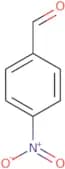
CAS:<p>4-Nitrobenzaldehyde is a reactive compound that has been shown to have antimicrobial activity. It is used in the synthesis of antibiotics and other pharmaceuticals. 4-Nitrobenzaldehyde binds to the mitochondrial membrane potential, which leads to the disruption of aerobic respiration. This compound has also been shown to bind to human serum proteins, such as albumin. The mechanism of this binding is through hydrogen bonding interactions with the amine groups on the protein surface. The reaction of 4-nitrobenzaldehyde with sodium carbonate results in an equilibrium between nitrobenzene and 4-nitrophenol. The equilibrium constant for this reaction can be determined experimentally by measuring the solubility of these compounds at different concentrations. <br>4-Nitrobenzaldehyde can be used as a model system for studying electron transfer reactions in electrochemistry through its interaction with methyl ethyl ketone (MEK) and pyridine (PYR). MEK</p>Fórmula:C7H5NO3Pureza:Min. 92%Cor e Forma:Slightly Yellow PowderPeso molecular:151.12 g/molCell-permeable Caspase-3 Inhibitor I trifluoroacetate salt
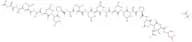
CAS:Please enquire for more information about Cell-permeable Caspase-3 Inhibitor I trifluoroacetate salt including the price, delivery time and more detailed product information at the technical inquiry form on this pageFórmula:C94H158N20O27Pureza:Min. 95%Peso molecular:2,000.38 g/molN-Boc-(3S)-3-phenyl-3-aminopropionaldehyde
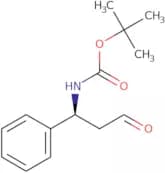
CAS:<p>N-Boc-(3S)-3-phenyl-3-aminopropionaldehyde is a synthetic chiral ligand that can be used as a building block in the synthesis of other compounds. It has been used to optimize the synthetic process, and it can be used in buffers, ammonium formate, metal chelate, and other additives to synthesize new compounds. N-Boc-(3S)-3-phenyl-3-aminopropionaldehyde is an optical isomer that can be used for supercritical fluid chromatography (SCFC) or liquid chromatography (LC). This compound has been shown to have a high affinity for ligands with a phenol group.</p>Fórmula:C14H19NO3Pureza:Min. 95%Peso molecular:249.31 g/mol4-tert-Butoxybenzaldehyde
CAS:<p>4-tert-Butoxybenzaldehyde is a colorless liquid that has a viscosity of 0.3 mm2/s at 25 °C. It can be synthesized by reacting pyridine with hydrochloric acid in the presence of a Grignard reagent. 4-tert-Butoxybenzaldehyde reacts with phenolic antioxidants to form an ester, which can be used as an industrial solvent. The crystal x-ray diffraction pattern of 4-tert-Butoxybenzaldehyde exhibits peaks at 2θ = 8.0, 11.5, and 18.5° corresponding to the (100), (200), and (220) planes, respectively. This chemical can also undergo reactions that lead to termination or transfer reactions, including diethyl ketomalonate formation with diethyl malonate in the presence of water as a solvent and potassium hydroxide as a catalyst for transfer reactions.END></p>Fórmula:C11H14O2Pureza:Min. 95%Cor e Forma:PowderPeso molecular:178.23 g/molZ-Leu-Leu-Nle-aldehyde
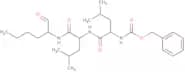
CAS:<p>Z-Leu-Leu-Nle (ZLL) is a small molecule that selectively inhibits the activity of the aspartyl protease, BACE1, which is an enzyme that cleaves amyloid precursor protein (APP) to produce amyloid beta peptides. The inhibition of this enzyme has been shown to be effective in preventing or delaying the onset of Alzheimer's disease. ZLL also inhibits estrogen receptor alpha and has antiestrogenic effects in breast cancer cells. This compound induces apoptosis by binding to apoptotic proteins, such as tumor necrosis factor receptor 1, Fas ligand, and TRAIL receptors. It also inhibits cell growth and induces chemoresistance in breast cancer cells.</p>Fórmula:C26H41N3O5Pureza:Min. 95%Peso molecular:475.62 g/molMethoxyacetaldehyde diethyl acetal
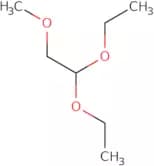
CAS:<p>Methoxyacetaldehyde diethyl acetal is a viscous liquid with a low vapor pressure. This substance is stable at high temperatures and has a high resistance to chemical interactions. It is also hydrophobic in nature. Methoxyacetaldehyde diethyl acetal has been shown to interact with the aminoglycoside antibiotics, erythromycin, streptomycin, and neomycin. The interaction of this substance with these antibiotics may be due to the fact that it has proton resonances similar to those of amino acids, as well as its ability to form hydrogen bonds with the antibiotic molecules. Methoxyacetaldehyde diethyl acetal also interacts with triethyl orthoformate, which can lead to the formation of an ester bond between them.</p>Fórmula:C7H16O3Pureza:Min. 95%Cor e Forma:Colorless Clear LiquidPeso molecular:148.2 g/mol2,4-Dichlorobenzaldehyde
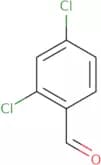
CAS:<p>2,4-Dichlorobenzaldehyde is a compound that is a member of the class of phenylpropanoids. It has been shown to react with curcumin analogues to form 1,3-dichloro-2,4-bis(chloromethyl)benzene and 1,3-dichloro-2,4-(1′,2′-dichloroethoxy)benzene. These products have been found to have high values for fluorescence analysis. This molecule also has physiological effects as a growth regulator and antimicrobial agent. 2,4-Dichlorobenzaldehyde has been used in analytical methods such as dihedral angle determination and synthetic processes like the synthesis of benzaldehydes.</p>Fórmula:C7H4Cl2OPureza:Min. 95%Cor e Forma:PowderPeso molecular:175.01 g/molBetulinaldehyde
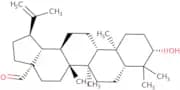
CAS:Produto Controlado<p>Betulinaldehyde is a natural compound that belongs to the group of betulinic acid. It has been shown to have antimicrobial activity against oral pathogens and has been shown to inhibit the growth of bacteria by reacting with their cell walls. Betulinaldehyde has also been shown to have an effect on autoimmune diseases such as multiple sclerosis, as well as infectious diseases such as HIV and tuberculosis. Betulinaldehyde can be extracted from the bark of birch trees using acetate, which is then reacted with hydrogen peroxide in a reaction solution. The resulting product is purified using preparative high-performance liquid chromatography (HPLC).</p>Fórmula:C30H48O2Pureza:Min. 95%Cor e Forma:PowderPeso molecular:440.7 g/mol1-H-Pyrazole-3-carboxaldehyde
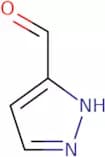
CAS:<p>1-H-Pyrazole-3-carboxaldehyde (1HP) is a β-unsaturated ketone that has been shown to inhibit the growth of chronic pulmonary fungal infections, such as histoplasmosis, coccidioidomycosis, and blastomycosis. It has also been shown to have anticancer activity in vitro and in vivo. 1HP inhibits cellular proliferation by inducing cell cycle arrest at the G(2)/M checkpoint. The molecular mechanism of this inhibition is due to an increase in the expression of p21 protein and p27 protein, which are tumor suppressor proteins that regulate progression through the cell cycle. 1HP also inhibits HIV infection by inhibiting reverse transcriptase and proteases, which are enzymes involved in viral replication. This compound binds to active methylene groups on the enzyme's surface, blocking its ability to perform chemical reactions with other molecules. 1HP also has strong inhibitory effects on cancer cells because it causes structural</p>Fórmula:C4H4N2OPureza:Min. 95%Peso molecular:96.09 g/molBiotinyl-Asp-Glu-Val-Asp-aldehyde (pseudo acid)
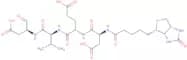
CAS:<p>Biotinyl-Asp-Glu-Val-Asp-aldehyde (pseudo acid) is a biotinylated amino acid, which can be used to study the affinity of caspases and other proteases. Biotin binds to the peptide through an amide bond and the amino group on the biotin molecule reacts with reactive groups on proteins, such as lysine, cysteine, histidine, or arginine. This reaction leads to the formation of a stable link between biotin and the target protein. The biotinylated peptide can then be purified from a sample by using an affinity chromatography column that has been pre-coated with streptavidin.<br>Biotin is not toxic because it does not bind to DNA.</p>Fórmula:C28H42N6O12SPureza:Min. 95%Peso molecular:686.73 g/mol2-Thiophenecarboxaldehyde
CAS:<p>2-Thiophenecarboxaldehyde is a synthetic compound that has been shown to have in vitro antifungal activity. It has also been shown to inhibit the growth of bacteria and fungi, such as Candida albicans. The antimicrobial activity of 2-thiophenecarboxaldehyde has been demonstrated by in vitro studies using human serum, metal carbonyl complexes, and sodium salts. In addition, this compound inhibits the synthesis of proteins in animal cells infected with viruses or bacteria. It also has amoebicidal activity against Entamoeba histolytica and Leishmania donovani. This compound is used for the treatment of autoimmune diseases such as rheumatoid arthritis and multiple sclerosis.</p>Fórmula:C5H4OSPureza:Min. 95%Cor e Forma:Clear LiquidPeso molecular:112.15 g/mol