Ácidos Benzóicos
Os ácidos benzóicos são ácidos carboxílicos aromáticos com a fórmula molecular C7H6O2, caracterizados por um anel benzênico ligado a um grupo carboxila (-COOH). Esses compostos são amplamente utilizados como conservantes, intermediários na síntese orgânica e na produção de vários produtos químicos, incluindo corantes e fragrâncias. Os ácidos benzóicos também são importantes nas indústrias alimentícia e farmacêutica. Na CymitQuimica, oferecemos uma gama diversificada de ácidos benzóicos de alta qualidade para apoiar suas necessidades de pesquisa e industriais.
Foram encontrados 5472 produtos de "Ácidos Benzóicos"
Ordenar por
Pureza (%)
0
100
|
0
|
50
|
90
|
95
|
100
Ref: 10-F822877
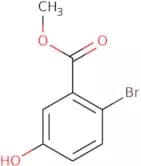
1g1.412,00€5g4.337,00€10g6.404,00€2.5g2.953,00€50mg255,00€100mg351,00€250mg488,00€500mg769,00€2-Bromo-5-hydroxybenzoic acid methyl ester
CAS:2-Bromo-5-hydroxybenzoic acid methyl ester (2BB) is a phenoxy activator that activates the glucokinase activator. It has been shown to have a glucose lowering effect in both animal and human studies. 2BB is orally bioavailable and has an allosteric mode of action, which means it works by binding to the allosteric site on the enzyme's active site, thereby increasing its activity. It binds to the benzamide of glucokinase, which causes an increase in glucose uptake and utilization by cells. 2BB is being studied for use as an oral treatment for type II diabetes mellitus.Fórmula:C8H7BrO3Pureza:Min. 95%Cor e Forma:PowderPeso molecular:231.04 g/mol4-Cyanobenzoic acid
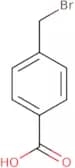
CAS:<p>4-Cyanobenzoic acid (4CB) is a benzene derivative that inhibits the activity of tyrosinase, an enzyme involved in the production of melanin. It is synthesized by reacting 2,4-dichlorobenzoic acid with sodium hydroxide and acetone. 4CB has been shown to have a potent inhibitory effect on the enzyme, with an isolated yield of up to 83%. The compound also shows strong hydrogen bonding interactions with water molecules and coordinates in a geometry where one of its oxygen atoms is double bonded to two nitrogen atoms. This structural analysis suggests that 4 CB may bind to tyrosinase through adsorption mechanism.</p>Fórmula:C8H5NO2Pureza:Min. 95%Cor e Forma:White PowderPeso molecular:147.13 g/mol4-(Bromomethyl) benzoic acid
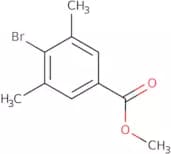
CAS:<p>4-(Bromomethyl) benzoic acid (4-BA) is a chemical compound that is used as an antimicrobial agent and a reagent in organic synthesis. It has been shown to have a broad spectrum of activity against Gram-positive and Gram-negative bacteria, fungi, and protozoa. 4-BA is stable at neutral pH and can be prepared by the reaction of 2-bromobenzeneacetic acid with sodium borohydride in the presence of acetic acid. This compound reacts with nucleophiles such as imatinib, forming an iminium intermediate. The resulting product can then react with chloride or hydrogen bond to form 4-BA chloride or 4-BA hydrogen bond respectively. Magnetic resonance spectroscopy has also been used to study the magnetic properties of this compound.</p>Fórmula:C8H7BrO2Pureza:Min. 95%Cor e Forma:White PowderPeso molecular:215.04 g/mol4-Bromo-3,5-dimethylbenzoic acid methyl ester
CAS:<p>4-Bromo-3,5-dimethylbenzoic acid methyl ester is a versatile building block that is used in the synthesis of complex compounds. 4-Bromo-3,5-dimethylbenzoic acid methyl ester is an intermediate in the synthesis of speciality chemicals and research chemicals. It is also a useful scaffold for the synthesis of high quality and useful reagents as well as reaction components.</p>Fórmula:C10H11BrO2Pureza:Min. 95%Cor e Forma:White PowderPeso molecular:243.1 g/mol2,3-Diaminobenzoic acid
CAS:<p>2,3-Diaminobenzoic acid is a benzimidazole derivative that is used in the treatment of microbial infections. It has been shown to inhibit the growth of bacteria by binding to their ribosomes and inhibiting protein synthesis. The reaction solution of 2,3-diaminobenzoic acid has fluorescence properties that can be used to detect contaminating substances. The conjugates formed with p-hydroxyphenylacetic acid are more soluble than those formed with hydroxybenzoic acid. 2,3-Diaminobenzoic acid is not very toxic and does not cause any detectable changes in enzyme activities or other biochemical parameters in short term exposure. It can be easily decomposed by sodium chloride into chlorine gas and hydrochloric acid, which are both highly reactive with water.</p>Fórmula:C7H8N2O2Pureza:Min. 95%Cor e Forma:PowderPeso molecular:152.15 g/mol4-Methyl-3-nitrobenzoic acid
CAS:<p>4-Methyl-3-nitrobenzoic acid is a fine chemical that is used as a building block in the synthesis of complex compounds. It is often used as a reagent or speciality chemical, and it has a CAS number of 96-98-0. 4-Methyl-3-nitrobenzoic acid can be react with other chemicals to form useful intermediates or scaffolds for larger molecules. This chemical is versatile and can be used in many different reactions.</p>Fórmula:C8H7NO4Pureza:Min. 98.0 Area-%Peso molecular:181.15 g/mol

![2-[[3-(4-HYDROXYPHENYL)-1-OXOPROPYL]AMINO]BENZOIC ACID](/_next/image/?url=https%3A%2Fstatic.cymitquimica.com%2Fproducts%2F10%2Fthumb-webp%2FF825493.webp&w=3840&q=75)