Ácidos Benzóicos
Os ácidos benzóicos são ácidos carboxílicos aromáticos com a fórmula molecular C7H6O2, caracterizados por um anel benzênico ligado a um grupo carboxila (-COOH). Esses compostos são amplamente utilizados como conservantes, intermediários na síntese orgânica e na produção de vários produtos químicos, incluindo corantes e fragrâncias. Os ácidos benzóicos também são importantes nas indústrias alimentícia e farmacêutica. Na CymitQuimica, oferecemos uma gama diversificada de ácidos benzóicos de alta qualidade para apoiar suas necessidades de pesquisa e industriais.
Foram encontrados 5471 produtos de "Ácidos Benzóicos"
Ordenar por
Pureza (%)
0
100
|
0
|
50
|
90
|
95
|
100
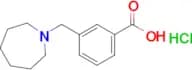
3-(Azepan-1-ylmethyl)benzoic acid hydrochloride
CAS:Fórmula:C14H20ClNO2Pureza:97%Peso molecular:269.774-[3-(METHOXYCARBONYL)-5-ISOXAZOLYL]BENZOIC ACID
CAS:Fórmula:C12H9NO5Pureza:≥95%Cor e Forma:LiquidPeso molecular:247.2062-Chloro-4-(3-methyl-1H-pyrazol-1-yl)benzoic acid
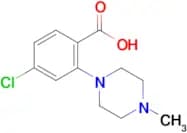
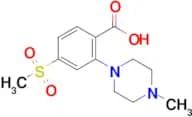
CAS:Fórmula:C11H9ClN2O2Pureza:95.0%Peso molecular:236.664-Chloro-2-(4-methylpiperazin-1-yl)benzoic acid
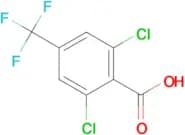
CAS:Fórmula:C12H15ClN2O2Pureza:≥97%Peso molecular:254.712,6-Dichloro-4-(trifluoromethyl)benzoic acid
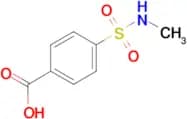
CAS:Fórmula:C8H3Cl2F3O2Pureza:≥95%Cor e Forma:SolidPeso molecular:259.014-(N-Methylsulfamoyl)benzoic acid
CAS:Fórmula:C8H9NO4SPureza:95%Cor e Forma:SolidPeso molecular:215.224-Amino-5-(ethylsulfonyl)-2-methoxybenzoic acid
CAS:Fórmula:C10H13NO5SPureza:99%(LC-MS);RGCor e Forma:SolidPeso molecular:259.282-Bromo-5-hydroxybenzoic acid methyl ester
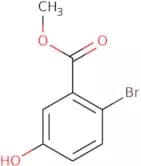
CAS:2-Bromo-5-hydroxybenzoic acid methyl ester (2BB) is a phenoxy activator that activates the glucokinase activator. It has been shown to have a glucose lowering effect in both animal and human studies. 2BB is orally bioavailable and has an allosteric mode of action, which means it works by binding to the allosteric site on the enzyme's active site, thereby increasing its activity. It binds to the benzamide of glucokinase, which causes an increase in glucose uptake and utilization by cells. 2BB is being studied for use as an oral treatment for type II diabetes mellitus.Fórmula:C8H7BrO3Pureza:Min. 95%Cor e Forma:PowderPeso molecular:231.04 g/mol2,4-Dihydroxybenzoic acid
CAS:2,4-Dihydroxybenzoic acid is a building block for the production of pharmaceuticals and other chemicals. It is a versatile chemical that can be used in the synthesis of complex compounds. 2,4-Dihydroxybenzoic acid is also a reaction component, reagent, and useful scaffold. This compound has been shown to have high quality and is a research chemical with speciality use.Fórmula:C7H6O4Peso molecular:154.12 g/mol2,3-Diaminobenzoic acid
CAS:<p>2,3-Diaminobenzoic acid is a benzimidazole derivative that is used in the treatment of microbial infections. It has been shown to inhibit the growth of bacteria by binding to their ribosomes and inhibiting protein synthesis. The reaction solution of 2,3-diaminobenzoic acid has fluorescence properties that can be used to detect contaminating substances. The conjugates formed with p-hydroxyphenylacetic acid are more soluble than those formed with hydroxybenzoic acid. 2,3-Diaminobenzoic acid is not very toxic and does not cause any detectable changes in enzyme activities or other biochemical parameters in short term exposure. It can be easily decomposed by sodium chloride into chlorine gas and hydrochloric acid, which are both highly reactive with water.</p>Fórmula:C7H8N2O2Pureza:Min. 95%Cor e Forma:PowderPeso molecular:152.15 g/mol4-Bromo-3,5-dimethylbenzoic acid methyl ester
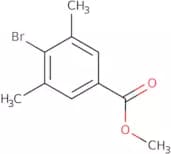
CAS:<p>4-Bromo-3,5-dimethylbenzoic acid methyl ester is a versatile building block that is used in the synthesis of complex compounds. 4-Bromo-3,5-dimethylbenzoic acid methyl ester is an intermediate in the synthesis of speciality chemicals and research chemicals. It is also a useful scaffold for the synthesis of high quality and useful reagents as well as reaction components.</p>Fórmula:C10H11BrO2Pureza:Min. 95%Cor e Forma:White PowderPeso molecular:243.1 g/mol4-Sulfophthalic acid (contains 3-sulfophthalic acid), 50% aqueous solution
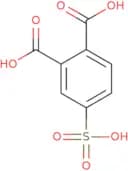
CAS:<p>Please enquire for more information about 4-Sulfophthalic acid (contains 3-sulfophthalic acid), 50% aqueous solution including the price, delivery time and more detailed product information at the technical inquiry form on this page</p>Fórmula:C8H6O7SPureza:80%Peso molecular:246.2 g/mol4-(Azidomethyl)benzoic acid
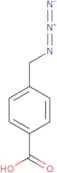
CAS:<p>4-(Azidomethyl)benzoic acid is a chemical compound that has been used in studies on mammalian cells, as well as in vitro assays. This molecule belongs to the class of organic compounds called heterocyclic compounds and contains a reactive functional group. 4-(Azidomethyl)benzoic acid can be synthetically made by combining the appropriate reactants, including lysine residues, in a solid-phase synthesis. The postsynthetic modification of this molecule includes its conversion to other molecules with different functional groups. 4-(Azidomethyl)benzoic acid has been shown to have anti-cancer properties against leukemia cells in vivo.</p>Fórmula:C8H7N3O2Pureza:Min. 95%Peso molecular:177.16 g/mol3-(Chlorosulfonyl)benzoic acid
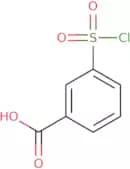
CAS:<p>3-(Chlorosulfonyl)benzoic acid is a synthetic compound that inhibits histone lysine methylation. It has been shown to protect against neuronal injury and cognitive impairment. 3-(Chlorosulfonyl)benzoic acid also has an inhibitory effect on the activation of Sirt2, which is an enzyme involved in cellular processes such as cancer, diabetes, inflammation, and aging. 3-(Chlorosulfonyl)benzoic acid has low potency and is not very soluble in water. It can be used to treat metabolic disorders by increasing the amount of insulin released from the pancreas and lowering blood glucose levels.</p>Fórmula:C7H5ClO4SPureza:Min. 95%Peso molecular:220.63 g/mol3,5-Diamino-2,4,6-triiodobenzoic acid
CAS:<p>3,5-Diamino-2,4,6-triiodobenzoic acid is a metabolite of hydrochloric acid and has been used in sample preparation for roentgenographic techniques. It is also used in the preparation of methylating agents for mass spectrometric analysis. It is hydrophilic with a methyl esterification that can be activated by amines. This chemical compound is found in human urine and has been shown to have an enhanced effect on tissues when combined with hydrochloric acid.</p>Fórmula:C7H5I3N2O2Pureza:Min. 95%Cor e Forma:PowderPeso molecular:529.84 g/mol4-(Bromomethyl) benzoic acid
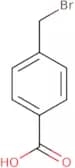
CAS:<p>4-(Bromomethyl) benzoic acid (4-BA) is a chemical compound that is used as an antimicrobial agent and a reagent in organic synthesis. It has been shown to have a broad spectrum of activity against Gram-positive and Gram-negative bacteria, fungi, and protozoa. 4-BA is stable at neutral pH and can be prepared by the reaction of 2-bromobenzeneacetic acid with sodium borohydride in the presence of acetic acid. This compound reacts with nucleophiles such as imatinib, forming an iminium intermediate. The resulting product can then react with chloride or hydrogen bond to form 4-BA chloride or 4-BA hydrogen bond respectively. Magnetic resonance spectroscopy has also been used to study the magnetic properties of this compound.</p>Fórmula:C8H7BrO2Pureza:Min. 95%Cor e Forma:White PowderPeso molecular:215.04 g/mol4-Methyl-3-nitrobenzoic acid
CAS:<p>4-Methyl-3-nitrobenzoic acid is a fine chemical that is used as a building block in the synthesis of complex compounds. It is often used as a reagent or speciality chemical, and it has a CAS number of 96-98-0. 4-Methyl-3-nitrobenzoic acid can be react with other chemicals to form useful intermediates or scaffolds for larger molecules. This chemical is versatile and can be used in many different reactions.</p>Fórmula:C8H7NO4Pureza:Min. 98.0 Area-%Peso molecular:181.15 g/mol4-Cyanobenzoic acid
CAS:<p>4-Cyanobenzoic acid (4CB) is a benzene derivative that inhibits the activity of tyrosinase, an enzyme involved in the production of melanin. It is synthesized by reacting 2,4-dichlorobenzoic acid with sodium hydroxide and acetone. 4CB has been shown to have a potent inhibitory effect on the enzyme, with an isolated yield of up to 83%. The compound also shows strong hydrogen bonding interactions with water molecules and coordinates in a geometry where one of its oxygen atoms is double bonded to two nitrogen atoms. This structural analysis suggests that 4 CB may bind to tyrosinase through adsorption mechanism.</p>Fórmula:C8H5NO2Pureza:Min. 95%Cor e Forma:White PowderPeso molecular:147.13 g/molMethyl 3,4-dimethoxybenzoate
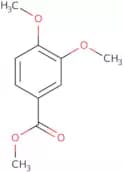
CAS:Methyl 3,4-dimethoxybenzoate is an acetate extract that has been shown to inhibit tyrosinase activity. This compound also has a potent inhibitory effect on the production of p-hydroxybenzoic acid. Methyl 3,4-dimethoxybenzoate can be synthesized from protocatechuic acid and methoxy groups. It is a chemical reaction involving three steps: condensation, dehydration, and reduction. Tyrosinase is an enzyme in the melanin biosynthetic pathway that catalyzes the conversion of tyrosine to dopaquinone. Tyrosinase activity can be inhibited by methyl 3,4-dimethoxybenzoate through competitive inhibition or by its ability to reduce the availability of substrate for this enzyme.Fórmula:C10H12O4Pureza:Min. 95%Cor e Forma:PowderPeso molecular:196.2 g/mol2-(Boc-aminomethyl)benzoic acid
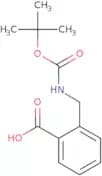
CAS:<p>2-(Boc-aminomethyl)benzoic acid is a versatile building block with a wide range of applications in the field of organic chemistry. It has been shown to be useful as a reagent in the synthesis of complex compounds and fine chemicals, as well as a reaction component for the preparation of pharmaceuticals. 2-(Boc-aminomethyl)benzoic acid can also be used as an intermediate in the synthesis of speciality chemicals such as herbicides, pesticides, and fungicides.</p>Fórmula:C13H17NO4Pureza:Min. 95%Cor e Forma:PowderPeso molecular:251.28 g/mol5-Iodo-2-nitrobenzoic acid
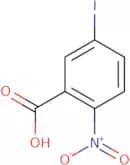
CAS:5-Iodo-2-nitrobenzoic acid is a fine chemical that is used as a building block in the synthesis of complex compounds and research chemicals. This compound has been shown to be an effective reagent for the synthesis of many different types of compounds. It can also be used as a reactant or intermediate in organic syntheses, such as those involving cross-coupling reactions. 5-Iodo-2-nitrobenzoic acid is a versatile building block that can be used in both simple and complex chemical reactions.Fórmula:C7H4INO4Pureza:Min. 95%Cor e Forma:Yellow PowderPeso molecular:293.02 g/mol4-Hydrazinobenzoic acid hydrochloride
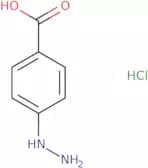
CAS:<p>4-Hydrazinobenzoic acid hydrochloride is a chemical species that has an oxidative effect on DNA. It is a reactive oxygen species (ROS) that changes the hydrogen spectrum of water. The hydrogen bond is broken and the electrons in the molecule are excited to a higher energy level, which results in ROS formation. 4-Hydrazinobenzoic acid hydrochloride also inhibits mitochondrial function and causes heart disease by increasing blood pressure and weakening the heart muscle. This compound can be used as a cancer treatment for human cells, because it suppresses genes that promote cell growth. In addition, 4-hydrazinobenzoic acid hydrochloride may inhibit endothelial cell proliferation in animal experiments.</p>Fórmula:C7H8N2O2•HClPureza:Min. 95%Cor e Forma:PowderPeso molecular:188.61 g/mol4-Hydrazinobenzoic acid
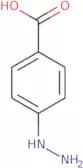
CAS:<p>4-Hydrazinobenzoic acid is a chemical compound that is used as an inhibitor of DNA synthesis. It prevents the formation of hydrogen bonds between nucleotides in DNA, which prevents the synthesis of new DNA strands. 4-Hydrazinobenzoic acid has been shown to inhibit the growth of human breast cancer cells by reactivating the tumor suppressor genes p21 and Rb1, which are responsible for regulating cell cycle progression. This compound also inhibits the production of hydrogen chloride (HCl) in reaction solutions containing sodium hypochlorite (NaOCl).</p>Fórmula:C7H8N2O2Pureza:Min. 95%Cor e Forma:Slightly Yellow PowderPeso molecular:152.15 g/mol


![4-[3-(METHOXYCARBONYL)-5-ISOXAZOLYL]BENZOIC ACID](/_next/image/?url=https%3A%2Fstatic.cymitquimica.com%2Fproducts%2F10%2Fthumb-webp%2FF387294.webp&w=3840&q=75)