Ácidos Benzóicos
Foram encontrados 5475 produtos de "Ácidos Benzóicos"
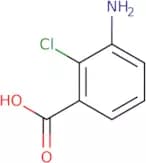
3-Amino-2-chlorobenzoic acid
CAS:3-Amino-2-chlorobenzoic acid is a molecule that belongs to the group of acidic compounds. It has been shown to induce apoptosis and inhibit cell proliferation in human immunodeficient virus (HIV) cells, as well as inhibit the growth of cancer cells. 3-Amino-2-chlorobenzoic acid also inhibits histone deacetylase, which is an enzyme that controls gene expression by removing acetyl groups from lysine residues on the N-terminal tails of histones. This inhibition may be responsible for its anticancer activity. 3-Amino-2-chlorobenzoic acid is metabolized by oxidation to chlorinated derivatives and excreted via the kidneys. It has been shown to have a pharmacokinetic profile in rats similar to that observed with other triazines such as atrazine and simazine. The elimination half-life of 3-amino-2-chlorob
Fórmula:C7H6ClNO2Pureza:Min. 95%Cor e Forma:Off-White PowderPeso molecular:171.58 g/molRef: 3D-FA55281
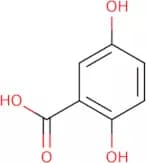
Produto descontinuado2,5-Dihydroxybenzoic acid
CAS:2,5-Dihydroxybenzoic acid is a natural compound that has been shown to inhibit the matrix metalloproteinase enzyme activity of α1-acid glycoprotein. The 2,5-dihydroxybenzoic acid structure is similar to p-hydroxybenzoic acid and gentisic acid. It is also an inhibitor of xanthine oxidase and caffeic acid oxidase. 2,5-Dihydroxybenzoic acid has a number of potential uses in analytical chemistry as it can be used to measure the concentrations of caffeic acids and other related compounds in biological samples.
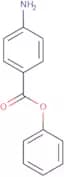
Fórmula:C7H6O4Pureza:(%) Min. 98%Cor e Forma:White PowderPeso molecular:154.12 g/molPhenyl 4-aminobenzoate
CAS:Phenyl 4-aminobenzoate is an amide that can be polymerized to form a polymer. It is synthesised from the reaction of ethyl esters of phenyl 4-aminobenzoate with trifluoroacetic acid and chlorides in the presence of activated phosphorus oxychloride. Phenyl 4-aminobenzoate has substituent effects on its physical properties, such as gel permeation chromatography and optical properties. The amide group can be replaced by sulfoxide or anions, which leads to different physical properties.
Fórmula:C13H11NO2Pureza:Min. 95%Cor e Forma:PowderPeso molecular:213.23 g/molRef: 3D-FP70487
Produto descontinuado4-Amino-3-methoxybenzoic acid
CAS:4-Amino-3-methoxybenzoic acid is an inhibitor of the enzyme hydroxylase. It has been shown to inhibit cancer cell growth in nanomolar concentrations and may be a potential anti-cancer drug candidate. 4-Amino-3-methoxybenzoic acid inhibits the production of 3-methoxy-4-nitrobenzoic acid, which is an intermediate in the biosynthesis of cyclic peptides. This compound also has potent inhibitory activity against active enzymes involved in the biosynthesis of 3-methoxy-4-nitrobenzoic acid, such as hydroxylases, nitroreductases, and methyltransferases.
Fórmula:C8H9NO3Pureza:Min. 95%Cor e Forma:PowderPeso molecular:167.16 g/mol2,6-Dimethylbenzoic acid
CAS:2,6-Dimethylbenzoic acid is a colorless solid that has a molecular weight of 162.2 g/mol and an empirical formula of C7H8O2. It has a melting point of about 82 degrees Celsius and a boiling point of about 315 degrees Celsius. 2,6-Dimethylbenzoic acid is soluble in water at 100 degrees Celsius. It has been shown to act as a potent antagonist for the muscarinic acetylcholine receptors. This compound also has basic properties due to its hydrogen bonding interactions with proteins and other molecules. 2,6-Dimethylbenzoic acid has been shown to be efficient in supramolecular chemistry because it is electron deficient and contains thermodynamic functional groups such as carboxylic acids and alcohols.
Fórmula:C9H10O2Pureza:Min. 95%Cor e Forma:PowderPeso molecular:150.17 g/molRef: 3D-FD22359
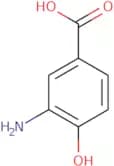
Produto descontinuado3-Amino-4-hydroxybenzoic acid
CAS:3-Amino-4-hydroxybenzoic acid is a type of phenolic compound that can be found in human serum. It is also used as a chemical building block for the synthesis of coumarin derivatives, which are important compounds in biochemistry, pharmacology and medical research. 3-Amino-4-hydroxybenzoic acid has been shown to have diphenolase activity, which is an enzyme that cleaves two molecules of phenol from one molecule of diphenol. The light emission is likely due to a metal ion in the active site that acts as a catalyst. The high values seen in the experiments were most likely due to the presence of corynebacterium glutamicum, which is an organism with high levels of 3-amino-4-hydroxybenzoic acid production. This study also found that 3-amino-4-hydoxybenzoic acid may be an antimicrobial agent against HIV
Fórmula:C7H7NO3Pureza:Min. 95%Cor e Forma:Off-White PowderPeso molecular:153.14 g/molRef: 3D-FA33832
Produto descontinuado2,5-Dichlorobenzoic acid
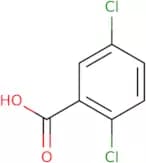
CAS:2,5-Dichlorobenzoic acid is a hydrogen-bonding agent that interacts with other molecules by forming hydrogen bonds. It reacts with benzoate to form 2,5-dichlorobenzoate, which is an intermediate in the synthesis of phenylbenzene and biphenyl. 2,5-Dichlorobenzoic acid has been shown to inhibit the growth of bacteria such as Stenotrophomonas maltophilia and Pseudomonas aeruginosa. The compound also lowers cholesterol levels in rats and humans.
2,5-Dichlorobenzoic acid has a redox potential of -0.25 V and can be used to reduce sodium hydroxide solution or hydroxide solution. This chemical's structure allows it to be taken up by cells through passive diffusion and active transport mechanisms.Fórmula:C7H4Cl2O2Pureza:Min. 95%Cor e Forma:White PowderPeso molecular:191.01 g/mol4,5-Dimethoxy-2-nitrobenzoic acid - Technical
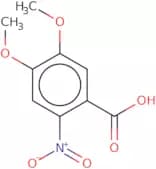
CAS:4,5-Dimethoxy-2-nitrobenzoic acid is a versatile building block and reagent that can be used in research and development as well as for the production of fine chemicals. This compound has been shown to react with amines using the nitration reaction to produce a variety of useful compounds. The synthesis of this compound is not difficult, but requires care and some speciality chemicals. 4,5-Dimethoxy-2-nitrobenzoic acid is also a useful scaffold for complex compounds. It reacts readily with other building blocks to form nitrogen heterocycles and is used in the production of pharmaceuticals and pesticides.
Fórmula:C9H9NO6Pureza:Min. 95%Peso molecular:227.17 g/molRef: 3D-FD173069
Produto descontinuado2-Amino-5-nitrobenzoic acid
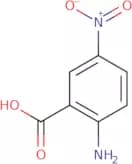
CAS:2-Amino-5-nitrobenzoic acid is a plant metabolite that contains a nitro group. It has been found to be an effective inhibitor of glutamate dehydrogenase, one of the enzymes involved in the metabolism of amino acids. 2-Amino-5-nitrobenzoic acid has also been shown to have no effect on other enzyme activities such as amines and nitrosamines. This natural product has been shown to be useful as a model system for understanding how hydrochloric acid interacts with plants, by inhibiting their growth.
Fórmula:C7H6N2O4Pureza:Min. 97.5%Cor e Forma:Yellow PowderPeso molecular:182.13 g/mol2-Nitrobenzoic acid - Technical
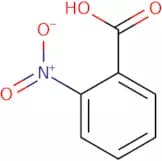
CAS:2-Nitrobenzoic acid is an organic compound that is used as a reagent in the preparation of aldehydes, esters, and amides. It has been shown to be a potent inhibitor of the MCL-1 protein. This protein is an important regulator of mitochondrial permeability transition pore (MPTP) opening and apoptosis induction. The inhibition of the MPTP by 2-nitrobenzoic acid may be due to its ability to react with nitric oxide (NO) to form peroxynitrite, which reacts with MPTP proteins in the mitochondria. The use of 2-nitrobenzoic acid has been found to be effective in treating infectious diseases such as HIV, as well as autoimmune diseases such as psoriasis.
Fórmula:C7H5NO4Pureza:Min. 95%Cor e Forma:PowderPeso molecular:167.12 g/mol4,5-Dimethoxy-2-nitrobenzoic acid
CAS:4,5-Dimethoxy-2-nitrobenzoic acid (DMNB) is a nitrophenol compound that is used as an intermediate in the synthesis of pesticides. DMNB inhibits the growth of bacteria through its ability to inhibit protein synthesis and DNA replication. The inhibition is due to DMNB’s ability to covalently bind to nucleophilic sites on enzymes that are essential for these processes. It has been shown that DMNB can be degraded by microorganisms, such as bacteria, fungi, and algae. The biodegradation process may be facilitated by its solubility in water and its low molecular weight.
Fórmula:C9H9NO6Pureza:Min. 97.5%Cor e Forma:Yellow SolidPeso molecular:227.17 g/molRef: 3D-FD22176
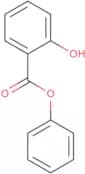
Produto descontinuadoPhenyl salicylate
CAS:Phenyl salicylate is a phenolic compound that is used as an antipyretic and analgesic. It has the ability to inhibit prostaglandin synthesis, which can lead to reduced inflammation in the body. Phenyl salicylate has been shown to bind to specific receptors on cells, which leads to inhibition of prostaglandin synthesis. This receptor binding may also be responsible for its anti-inflammatory properties. Phenyl salicylate is metabolized in the liver and excreted through the kidneys.
Fórmula:C13H10O3Pureza:Min. 98%Cor e Forma:White PowderPeso molecular:214.22 g/molRef: 3D-FP34589
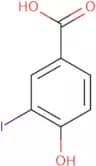
Produto descontinuado4-Hydroxy-3-iodobenzoic acid
CAS:4-Hydroxy-3-iodobenzoic acid is a synthetic retinoid that is used in the synthesis of various other pharmaceutical compounds. It is also an inhibitor of bacterial growth, which may be due to its ability to bind to receptors on the bacterial cell surface. The antibiotic activity of 4-hydroxy-3-iodobenzoic acid has been demonstrated using an in vitro assay with Escherichia coli and Streptococcus pyogenes. 4-Hydroxy-3-iodobenzoic acid has also been shown to have antiestrogen properties when it competes with estradiol for receptor binding sites. This compound binds to the estrogen receptor and blocks its activity, inhibiting estrogen production by the ovaries or from other sources. Structural analysis of 4-hydroxy-3-iodobenzoic acid revealed that this compound has two functional groups: one group that interacts with nitrogen and another that binds to hydrogen or oxygen. These
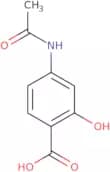
Fórmula:C7H5IO3Pureza:Min. 95%Cor e Forma:PowderPeso molecular:264.02 g/molN-Acetyl-4-aminosalicylic acid
CAS:N-Acetyl-4-aminosalicylic acid is an active site directed probe for the detection of salicylic acid. It has a fluorescence emission maximum at 370 nm and a fluorescence quantum yield of 0.93. N-Acetyl-4-aminosalicylic acid can be used to analyze samples, such as wastewater and human urine, which contain salicylic acid. The probe is protonated in the presence of salicylic acid and then binds to the acceptor in the sample with a bimodal distribution. The fluorescence resonance energy transfer (FRET) process between the donor and acceptor leads to an increase in fluorescence intensity that can be detected by electrophoresis methods. This probe also has a conformational change when it binds to its target, which allows for easy separation from other components in the sample by size exclusion chromatography.
Fórmula:C9H9NO4Pureza:Min. 95%Cor e Forma:Slightly Brown PowderPeso molecular:195.17 g/molRef: 3D-FA17083
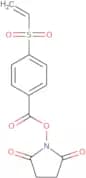
Produto descontinuado4-(Ethenylsulfonyl)benzoic acid 2,5-dioxo-1-pyrrolidinyl ester
CAS:4-(Ethenylsulfonyl)benzoic acid 2,5-dioxo-1-pyrrolidinyl ester is a fine chemical that is a useful scaffold for the synthesis of complex compounds. It can be used as a versatile building block in the production of research chemicals and pharmaceuticals, as well as a reaction component in speciality chemicals. The CAS Number for 4-(Ethenylsulfonyl)benzoic acid 2,5-dioxo-1-pyrrolidinyl ester is 343934-41-8.
Fórmula:C13H11NO6SPureza:Min. 95%Cor e Forma:White PowderPeso molecular:309.3 g/molRef: 3D-FE22859
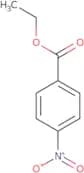
Produto descontinuadoEthyl 4-nitrobenzoate
CAS:Ethyl 4-nitrobenzoate is a compound that is used to synthesize other drugs, such as erythromycin. It is also an intermediate in the synthesis of some pesticides and dyes. The second-order rate constant for the reaction of ethyl 4-nitrobenzoate with phosphotungstic acid has been measured at 0.058/min at 25°C. This reaction is catalyzed by recombinant cytochrome P450 (P450) enzymes from human liver preparations and cationic surfactants such as nitrobenzene or sodium carbonate, which are known to form hydrogen bonds with the protonated nitrogen atom on the aromatic ring of ethyl 4-nitrobenzoate. Ethyl 4-nitrobenzoate is also used clinically to treat gastric ulcers, although it can be toxic if taken in large doses or over a long period of time.
Fórmula:C9H9NO4Pureza:Min. 95%Cor e Forma:PowderPeso molecular:195.17 g/molRef: 3D-FE37379
Produto descontinuado4-Chloro-3-hydroxybenzoic acid
CAS:4-Chloro-3-hydroxybenzoic acid (4-CHB) is a reactive compound that can be used for the detection of bacteria. 4-CHB reacts with peroxyl radicals in solution to form a chlorobenzoic acid derivative, which emits light when excited by radiation. 4-CHB is also capable of dehalogenating chlorobenzene, and can be used as a bioluminescent probe for the detection of bacteria. The reactions are efficient at low concentrations and are detectable with an ultraviolet or visible spectrophotometer.
Fórmula:C7H5ClO3Pureza:Min. 95%Cor e Forma:PowderPeso molecular:172.57 g/molRef: 3D-FC70409
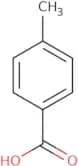
Produto descontinuado4-Toluic acid
CAS:4-Toluic acid is a chemical compound with the molecular formula CH3C6H2O2. It is a white solid that is soluble in water and alcohol. 4-Toluic acid can be produced by oxidation of benzoate, which is a reaction catalyzed by light or by using a catalyst such as trifluoroacetic acid. The reaction mechanism begins with the formation of the intramolecular hydrogen and subsequent oxidation to form an organic radical. This organic radical then reacts with oxygen to produce 4-toluic acid. 4-Toluic acid has been shown to have biochemical properties such as enzyme inhibition, DNA cleavage, and protein denaturation. The coordination geometry for this molecule is octahedral, and its redox potentials are -0.27 V (in acidic solution) and -1.06 V (in alkaline solution).
Fórmula:C8H8O2Pureza:Min. 98 Area-%Cor e Forma:White PowderPeso molecular:136.15 g/molRef: 3D-FT38107
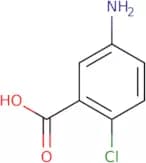
Produto descontinuado5-Amino-2-chlorobenzoic acid
CAS:5-Amino-2-chlorobenzoic acid is a carboxylate that has antiproliferative effects. It is synthesized through the reaction of morpholine and malonic acid. 5-Amino-2-chlorobenzoic acid has been shown to have an optimal reaction with UV light, which may be due to its structure activity relationship with other carboxylates. It also has a high affinity for metal ions such as magnesium and chloride, which are thought to be important in cancer cell proliferation. 5-Amino-2-chlorobenzoic acid can be used in analytical methods because it is soluble in water and can be obtained through gravimetric analysis.
Fórmula:C7H6ClNO2Cor e Forma:PowderPeso molecular:171.58 g/molRef: 3D-FA36935
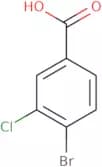
Produto descontinuado4-Bromo-3-chlorobenzoic acid
CAS:4-Bromo-3-chlorobenzoic acid is a molecule that belongs to the class of antimicrobial compounds and is used for the treatment of gram-negative pathogens. It inhibits the growth of these bacteria by blocking their ability to synthesize DNA, RNA, and proteins. 4-Bromo-3-chlorobenzoic acid has been shown to be effective against bacteria in mammalian cells and also has activity against multidrug resistant strains. This compound is biosynthesized in plant cells from carbon sources like glucose, and it can be found in plants like carrot tissue. The resistance of bacteria to this compound has been observed globally, with outbreaks occurring in Japan and India.
Fórmula:C7H4BrClO2Pureza:Min. 95%Cor e Forma:White PowderPeso molecular:235.46 g/mol2-Amino-6-fluorobenzoic acid
CAS:Intermediate in the synthesis of idelalisib
Fórmula:C7H6FNO2Pureza:Min. 98 Area-%Cor e Forma:PowderPeso molecular:155.13 g/molRef: 3D-FA11268
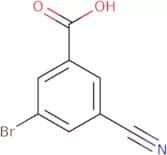
Produto descontinuado3-Bromo-5-cyanobenzoic acid
CAS:3-Bromo-5-cyanobenzoic acid is a fine chemical that is used as a reagent or intermediate in the production of other chemicals. 3-Bromo-5-cyanobenzoic acid can be used as an intermediate in the synthesis of pharmaceuticals, agrochemicals, and perfumes. This compound is also useful as a building block for making speciality chemicals and research chemicals. 3-Bromo-5-cyanobenzoic acid is versatile because it can be used in many different reactions with many different substrates to make many different products.
Fórmula:C8H4BrNO2Pureza:Min. 95%Cor e Forma:PowderPeso molecular:226.03 g/molRef: 3D-FB12102
Produto descontinuado4-(Acetylamino)-2-nitrobenzoic acid
CAS:4-(Acetylamino)-2-nitrobenzoic acid (AAANB) is a versatile building block that can be used in the synthesis of a wide range of organic and pharmaceutical compounds. AAANB is an intermediate in the preparation of 4-Amino-3-nitrophenol, which is an important research chemical. This compound is a useful scaffold for the synthesis of organic compounds with various biological activities. The CAS number for this product is 21573-29-5.
Fórmula:C9H8N2O5Pureza:Min. 95%Cor e Forma:PowderPeso molecular:224.17 g/molRef: 3D-FA131194
Produto descontinuado3,5-Diamino-2,4,6-triiodobenzoic acid
CAS:3,5-Diamino-2,4,6-triiodobenzoic acid is a metabolite of hydrochloric acid and has been used in sample preparation for roentgenographic techniques. It is also used in the preparation of methylating agents for mass spectrometric analysis. It is hydrophilic with a methyl esterification that can be activated by amines. This chemical compound is found in human urine and has been shown to have an enhanced effect on tissues when combined with hydrochloric acid.
Fórmula:C7H5I3N2O2Pureza:Min. 95%Cor e Forma:PowderPeso molecular:529.84 g/molRef: 3D-FD21450
Produto descontinuado4-Methyl-3-nitrobenzoic acid
CAS:4-Methyl-3-nitrobenzoic acid is a fine chemical that is used as a building block in the synthesis of complex compounds. It is often used as a reagent or speciality chemical, and it has a CAS number of 96-98-0. 4-Methyl-3-nitrobenzoic acid can be react with other chemicals to form useful intermediates or scaffolds for larger molecules. This chemical is versatile and can be used in many different reactions.
Fórmula:C8H7NO4Pureza:Min. 98.0 Area-%Peso molecular:181.15 g/molRef: 3D-M-4217
Produto descontinuado