Ácidos Benzóicos
Foram encontrados 5472 produtos de "Ácidos Benzóicos"
4-Formylbenzoic acid
CAS:4-Formylbenzoic acid is an organic compound with the molecular formula CH2=C(O)CH=CHCO2H. It is a white solid that is soluble in water and has a strong, unpleasant odor. 4-Formylbenzoic acid has been shown to have affinity for binding to odorous molecules such as sulfur compounds, amines, and mercaptans. The binding of these molecules to the 4-formylbenzoic acid leads to a decrease in their odor concentration. This process can be done using electrochemical impedance spectroscopy or optical sensors. The oxidation of 4-formylbenzoic acid by trifluoroacetic acid produces 2-formylphenol and formaldehyde, which are themselves volatile compounds with an unpleasant odor. These reactions may be used as wastewater treatment methods. Langmuir adsorption isotherm may be used as an analytical method for measuring the concentration of 4-formylbenzoic acid
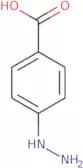
Fórmula:C8H6O3Pureza:Min. 98 Area-%Cor e Forma:White Yellow PowderPeso molecular:150.13 g/mol4-Hydrazinobenzoic acid
CAS:4-Hydrazinobenzoic acid is a chemical compound that is used as an inhibitor of DNA synthesis. It prevents the formation of hydrogen bonds between nucleotides in DNA, which prevents the synthesis of new DNA strands. 4-Hydrazinobenzoic acid has been shown to inhibit the growth of human breast cancer cells by reactivating the tumor suppressor genes p21 and Rb1, which are responsible for regulating cell cycle progression. This compound also inhibits the production of hydrogen chloride (HCl) in reaction solutions containing sodium hypochlorite (NaOCl).
Fórmula:C7H8N2O2Pureza:Min. 95%Cor e Forma:Slightly Yellow PowderPeso molecular:152.15 g/mol3-Chloro-5-iodobenzoic acid methyl ester
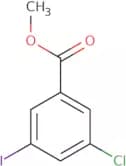
CAS:3-Chloro-5-iodobenzoic acid methyl ester is a versatile building block that can be used to make many complex compounds, including research chemicals and reagents. 3-Chloro-5-iodobenzoic acid methyl ester is used as an intermediate for the production of speciality chemicals and has many uses in chemical reactions. This compound was previously sold under the CAS number 289039-85-6.Fórmula:C8H6ClIO2Pureza:Min. 95%Cor e Forma:PowderPeso molecular:296.49 g/molMethyl 3,4-dimethoxybenzoate
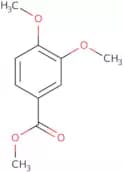
CAS:Methyl 3,4-dimethoxybenzoate is an acetate extract that has been shown to inhibit tyrosinase activity. This compound also has a potent inhibitory effect on the production of p-hydroxybenzoic acid. Methyl 3,4-dimethoxybenzoate can be synthesized from protocatechuic acid and methoxy groups. It is a chemical reaction involving three steps: condensation, dehydration, and reduction. Tyrosinase is an enzyme in the melanin biosynthetic pathway that catalyzes the conversion of tyrosine to dopaquinone. Tyrosinase activity can be inhibited by methyl 3,4-dimethoxybenzoate through competitive inhibition or by its ability to reduce the availability of substrate for this enzyme.Fórmula:C10H12O4Pureza:Min. 95%Cor e Forma:PowderPeso molecular:196.2 g/mol4-Hydrazinobenzoic acid hydrochloride
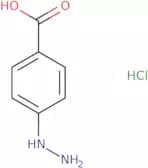
CAS:4-Hydrazinobenzoic acid hydrochloride is a chemical species that has an oxidative effect on DNA. It is a reactive oxygen species (ROS) that changes the hydrogen spectrum of water. The hydrogen bond is broken and the electrons in the molecule are excited to a higher energy level, which results in ROS formation. 4-Hydrazinobenzoic acid hydrochloride also inhibits mitochondrial function and causes heart disease by increasing blood pressure and weakening the heart muscle. This compound can be used as a cancer treatment for human cells, because it suppresses genes that promote cell growth. In addition, 4-hydrazinobenzoic acid hydrochloride may inhibit endothelial cell proliferation in animal experiments.
Fórmula:C7H8N2O2•HClPureza:Min. 95%Cor e Forma:PowderPeso molecular:188.61 g/mol2-Acetylbenzoic acid
CAS:2-Acetylbenzoic acid is a functional molecule that contains an acetyl group. It can form hydrogen bonds with other molecules and has been shown to induce apoptosis in cells. The reaction products of 2-acetylbenzoic acid are malonic acid, acetylsalicylic acid, and 2-benzoylbenzoic acid. These three compounds are made by the addition of hydrogen or hydroxide to the molecule 2-acetylbenzoic acid. The molecule has two functional groups: a carbonyl group and an acetyl group. The chemical structure of this molecule can be seen in the figure below.
2-Acetylbenzoic AcidFórmula:C9H8O3Pureza:Min. 95%Cor e Forma:PowderPeso molecular:164.16 g/molMethyl 3-bromobenzoate
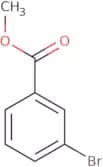
CAS:Methyl 3-bromobenzoate is a cross-coupled compound with three functional groups: a methyl group, an acid bromo group, and a carboxylic acid benzoic ester. It is used in the synthesis of antigens that are chemically reactive to trifluoroacetic acid gas. The clinical studies have shown that the efficiency of this study is low because it has been found to be difficult to synthesize methyl 3-bromobenzoate in large quantities. This molecule can be prepared by the reaction of vinylene with an electrophile in non-polar solvents or by catalytic mechanisms.Fórmula:C8H7BrO2Pureza:Min. 95%Cor e Forma:White PowderPeso molecular:215.04 g/mol2-Iodobenzoic acid methyl ester
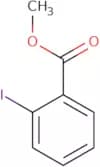
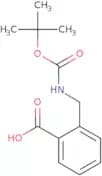
CAS:2-Iodobenzoic acid methyl ester is a palladium complex that can be used as a catalyst for the hydrolysis of ketoesters, imines, and halides. The reaction mechanism involves the coordination of the metal center to the carboxylate or amine group on the substrate, followed by a nucleophilic attack at the benzoate or chloride group. The resulting product is an alkyl halide. 2-Iodobenzoic acid methyl ester has been shown to catalyze the cross-coupling of diphenyl ethers with various amines in water and in organic solvents.Fórmula:C8H7IO2Pureza:Min. 95%Cor e Forma:Clear LiquidPeso molecular:262.04 g/mol2-(Boc-aminomethyl)benzoic acid
CAS:2-(Boc-aminomethyl)benzoic acid is a versatile building block with a wide range of applications in the field of organic chemistry. It has been shown to be useful as a reagent in the synthesis of complex compounds and fine chemicals, as well as a reaction component for the preparation of pharmaceuticals. 2-(Boc-aminomethyl)benzoic acid can also be used as an intermediate in the synthesis of speciality chemicals such as herbicides, pesticides, and fungicides.
Fórmula:C13H17NO4Pureza:Min. 95%Cor e Forma:PowderPeso molecular:251.28 g/molRef: 4Z-B-085188
Produto descontinuadoRef: 4Z-B-085009
Produto descontinuadoRef: 4Z-B-085189
Produto descontinuadoRef: 4Z-B-085060
Produto descontinuadoRef: 4Z-B-085209
Produto descontinuado3-[6-Chloro-4-(trifluoromethyl)pyridin-2-yl]benzoic acid
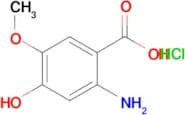
CAS:Pureza:95.0%Cor e Forma:SolidPeso molecular:301.64999389648442-amino-4-hydroxy-5-methoxybenzoic acid hydrochloride
CAS:Pureza:95.0%Peso molecular:219.6199951171875Ref: 10-F520974
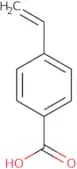
Produto descontinuado4-Vinylbenzoic acid
CAS:4-Vinylbenzoic acid is a water-insoluble polymer that has been shown to have bacteriostatic and fungistatic properties. 4-Vinylbenzoic acid inhibits bacterial growth by binding to the enzyme diphenolase, which is involved in the synthesis of cell wall precursors. This polymer also binds to cationic surfactants and is soluble in organic solvents such as ethanol and acetone. The mechanism of inhibition of fungal growth is not known, but it may be due to hydrogen bonding interactions with the cell membrane.
4-Vinylbenzoic acid has been shown to be effective against human serum, although it does not inhibit bacterial growth in this medium.Fórmula:C9H8O2Pureza:Min. 95%Cor e Forma:White PowderPeso molecular:148.16 g/mol





![2-[4-(methylamino)-3-nitrobenzoyl]benzoic acid](/_next/image/?url=https%3A%2Fstatic.cymitquimica.com%2Fproducts%2F10%2Fthumb-webp%2FF518183.webp&w=3840&q=75)

![3-[6-Chloro-4-(trifluoromethyl)pyridin-2-yl]benzoic acid](/_next/image/?url=https%3A%2Fstatic.cymitquimica.com%2Fproducts%2F10%2Fthumb-webp%2FF317175.webp&w=3840&q=75)