Ácidos Benzóicos
Foram encontrados 5475 produtos de "Ácidos Benzóicos"
Ethyl 4-amino-2-nitrobenzoate
CAS:Ethyl 4-amino-2-nitrobenzoate is a chemical intermediate that is used in the synthesis of other chemicals. It is also a versatile building block with many uses, such as in the production of research chemicals or as a reagent. It has CAS No. 84228-46-6 and can be purchased from various suppliers.Fórmula:C9H10N2O4Pureza:Min. 95%Cor e Forma:PowderPeso molecular:210.19 g/mol5-Amino-2-nitrobenzoic acid
CAS:5-Amino-2-nitrobenzoic acid is an organic compound that belongs to the class of versatile building block. It is a white solid that has been used as a research chemical, reagent, and specialty chemical for the synthesis of complex compounds and pharmaceuticals. 5-Amino-2-nitrobenzoic acid is also known as 2-amino-5-chlorobenzoic acid (ACBA). It is soluble in water, but insoluble in ethanol. The CAS number for this chemical is 13280-60-9.
Fórmula:C7H6N2O4Peso molecular:182.14 g/molRef: 3D-A-6802
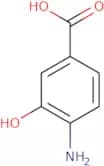
1kgA consultar100gA consultar250gA consultar500gA consultar2500gA consultar-Unit-ggA consultar4-Amino-3-hydroxybenzoic acid
CAS:4-Amino-3-hydroxybenzoic acid is a small molecule that has been shown to inhibit the activity of epidermal growth factor receptor (EGFR) and human epidermal growth factor (HER2). It is also an inhibitor of cytochrome P450 enzymes, which are involved in the metabolism of drugs. 4-Amino-3-hydroxybenzoic acid is used in vitro as an antifungal agent for Candida albicans and other pathogenic fungi. This drug inhibits the growth of cancer cells by binding to specific cell surface receptors, causing them to detach from their surroundings and die. 4-Amino-3-hydroxybenzoic acid may have potential as a drug for treating metastatic colorectal cancer. The mechanism of action is not yet fully understood but it may be related to the inhibition of intermolecular hydrogen bonding and water permeability.
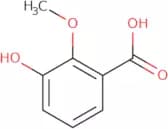
Fórmula:C7H7NO3Pureza:Min. 97.5 Area-%Cor e Forma:Off-White PowderPeso molecular:153.14 g/mol3-Hydroxy-2-methoxybenzoic acid
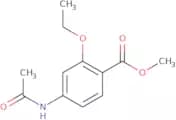
CAS:3-Hydroxy-2-methoxybenzoic acid (3HMB) is a phenolic compound that is found in the heartwood of Eucalyptus trees, fruits such as apples and cherries, and some vegetables. 3HMB has been shown to inhibit tumor necrosis factor-α (TNF-α) production by proinflammatory cytokines such as IL-1β and IL-6, which are produced by cells in response to infection or tissue injury. 3HMB also inhibits the activity of tyrosol oxygenase, which converts tyrosol to vanillic acid. Vanillic acid can be converted into vanillin, an important precursor for the synthesis of pigments that give fruits their color. 3HMB has been shown to inhibit the growth of cancer cells in vitro.Fórmula:C8H8O4Pureza:Min. 95%Cor e Forma:PowderPeso molecular:168.15 g/molEthopabate - Technical
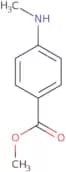
CAS:Ethopabate is a salt of ethopropazine and sodium carbonate. It is used in pharmaceutical preparations as an antiparasitic agent. The chemical composition of the salt is CHNO, with one hydrogen bond between the ethopropazine and sodium carbonate. Ethopabate has been shown to be active against amprolium-resistant coccidia in human serum, as well as being an analytical reagent for detecting monoclonal antibodies. This chemical can be used to prepare a polymeric matrix for use in fluorescence detection or for antimicrobial agents. Hydrochloric acid and UV light are used to synthesize this compound.Fórmula:C12H15NO4Pureza:Min. 95%Cor e Forma:White PowderPeso molecular:237.25 g/molMethyl 4-(N-methylamino)benzoate
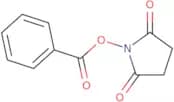
CAS:Methyl 4-(N-methylamino)benzoate is a substance that inhibits the enzyme DPP-4, which is involved in blood glucose regulation. It has been shown to be effective against certain types of cancer and impurities that may be present in the drug. Methyl 4-(N-methylamino)benzoate is an acidic compound with molecular descriptors that include acidic and amines. This compound also has genotoxic impurities, such as benzofurans, which may affect its efficacy.Fórmula:C9H11NO2Pureza:90%Cor e Forma:PowderPeso molecular:165.19 g/molBenzoic acid N-hydroxysuccinimide ester
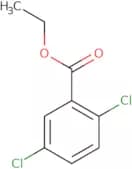
CAS:Benzoic acid N-hydroxysuccinimide ester is a chemical compound that is used for the diagnosis of cancer. It is used as a reagent in chromatographic methods and as a sample preparation agent in amine extraction techniques. The benzoate group reacts with amines to form an aminobenzoate ester, which can be detected by ionization techniques. This reaction mechanism has been studied extensively with spinorphin and epidermal growth factor.Fórmula:C11H9NO4Pureza:Min. 95%Cor e Forma:White PowderPeso molecular:219.19 g/mol2,5-Dichlorobenzoic acid ethyl ester
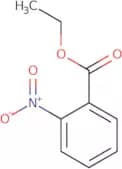
CAS:2,5-Dichlorobenzoic acid ethyl ester is a high quality, versatile building block that can be used as a reagent or intermediate. It is a useful scaffold for the synthesis of fine chemicals and research chemicals. This compound has been used in the synthesis of 2,5-dichloro-N-(2-hydroxyethyl)benzamide (CAS No. 35112-27-7), which is a speciality chemical with potential applications in pharmaceuticals and agrochemicals. 2,5-Dichlorobenzoic acid ethyl ester reacts with an amine to produce an N-[2-(2,5-dichlorophenyl)ethyl]amine (CAS No. 35112-27-7). The reaction proceeds via an amide bond formation by condensation of the amine with the acid chloride formed from the acid and ethyl chloride. This reaction is facilitated by heat andFórmula:C9H8Cl2O2Pureza:Min. 95%Cor e Forma:PowderPeso molecular:219.06 g/molEthyl 2-nitrobenzoate
CAS:Ethyl 2-nitrobenzoate is a cyclic organic compound that contains a nitro group, which is an organic radical with the formula -NO2. It belongs to the class of amides and has two carbonyl groups. The molecule consists of a bicyclic heterocycle consisting of one ring with five carbon atoms and one ring with six carbon atoms. Ethyl 2-nitrobenzoate can be used in the treatment of muscle diseases, metabolic disorders, growth factor deficiencies, autoimmune diseases, and neural system disorders due to its ability to act as an antihypertensive agent and as an inhibitor of angiotensin converting enzyme (ACE). This molecule's hydroxyl group can also react with epidermal growth factor (EGF) to form N-hydroxyethyl EGF (NHE). This product has been shown to have antiviral properties against HIV-1 protease inhibitors by interfering with viral protein synthesis.Fórmula:C9H9NO4Pureza:Min. 95%Cor e Forma:White PowderPeso molecular:195.17 g/mol2-Iodo-5-nitrobenzoic acid
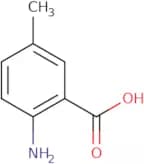
CAS:2-Iodo-5-nitrobenzoic acid is a reactive molecule that reacts with terminal alkynes to form a fluorescent compound. It was immobilized on an electrode and used as a probe in voltammetry studies. 2-Iodo-5-nitrobenzoic acid is also used as a reagent in the synthesis of amides, which are important in many biochemical reactions. The use of this compound may be limited by the toxicity to cells, which can be increased through the presence of cisplatin or 3-aminobenzoic acid. The microenvironment around cancer cells may also alter the reactivity of 2-iodo-5-nitrobenzoic acid.Fórmula:C7H4INO4Pureza:Min. 95%Cor e Forma:Beige PowderPeso molecular:293.02 g/mol2-Amino-5-methylbenzoic acid
CAS:2-Amino-5-methylbenzoic acid is an anthranilic acid derivative that has been shown to have potent antitumor activity. It inhibits the growth of cancer cells and is effective against light emission. 2-Amino-5-methylbenzoic acid blocks the production of porphyrins, which are necessary for the production of heme, a cofactor in many enzymes. The compound also inhibits serine protease, which is involved in tumor cell proliferation and metastasis. 2-Amino-5-methylbenzoic acid has been shown to inhibit the growth of human liver cancer cells in vitro. This compound can be synthesized by a Suzuki coupling reaction with phenylacetic acid and 3-(2'-aminoethyl)aminobenzene.Fórmula:C8H9NO2Pureza:Min. 95%Cor e Forma:PowderPeso molecular:151.16 g/molN-Phenylanthranilic acid
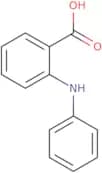
CAS:N-Phenylanthranilic acid is a nonsteroidal anti-inflammatory drug that inhibits the activity of cyclooxygenase-1 and cyclooxygenase-2. It has been shown to be effective against congestive heart failure in animal models. N-Phenylanthranilic acid also possesses potent anti-inflammatory activities that are mediated by inhibiting the production of prostaglandins. The compound binds to DNA and blocks the binding of transcription factors, leading to cell death. N-Phenylanthranilic acid has been shown to inhibit proliferation in human erythrocytes and k562 cells, as well as apoptosis pathway in these cells.Fórmula:C13H11NO2Pureza:Min. 95%Cor e Forma:PowderPeso molecular:213.23 g/molMethyl 4-bromo-2-methoxybenzoate
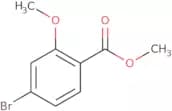
CAS:Methyl 4-bromo-2-methoxybenzoate is a drug molecule that belongs to the amide class. It is a synthetic reagent and can be used as a potential precursor in the synthesis of other drugs. Methyl 4-bromo-2-methoxybenzoate has been shown to react with carboxylic acids to form methyl esters, which are functional groups that contain a carboxyl group (COOH) and an alcohol group (OH). This reaction is called methoxylation. The transformation of methyl 4-bromo-2-methoxybenzoate into methyl esters increases the solubility of the compound and allows for it to be transported in water.Fórmula:C9H9BrO3Pureza:Min. 98 Area-%Cor e Forma:Yellow PowderPeso molecular:245.07 g/mol2-(Bromomethyl)benzoic acid
CAS:2-(Bromomethyl)benzoic acid is a functional group that can be found in many organic compounds. It is a derivative of phthalic acid and has some similar properties, including the ability to form micelles and radical species. 2-(Bromomethyl)benzoic acid has been shown to react with carbon tetrachloride or terephthalic acid to produce peroxides. This reaction is initiated by oxidation of the carbon-carbon double bond, which produces a radical pair that reacts with oxygen in the air to form radicals that are stabilized by resonance. 2-(Bromomethyl)benzoic acid also reacts with an inorganic base such as sodium hydroxide or potassium hydroxide to produce bromine gas and water.Fórmula:C8H7BrO2Pureza:Min. 97 Area-%Cor e Forma:White Off-White PowderPeso molecular:215.04 g/mol2,5-Dimethoxybenzoic acid
CAS:2,5-Dimethoxybenzoic acid (2,5-DMA) is a plant metabolite that belongs to the group of cinnamic acid derivatives. It can be found in plants and has been shown to have systemic effects. 2,5-DMA is involved in the cycloacylation of protocatechuic acid. This reaction is catalyzed by an enzyme called cyclooxygenase and requires molecular oxygen as a cofactor. 2,5-DMA also forms hydrogen bonds with methoxy groups and other molecules. The monoclonal antibodies against 2,5-DMA have been used for radiation therapy and are effective against cancer cells. Model studies show that 2,5-DMA can be converted into more potent metabolites by the action of cytochrome P450 enzymes or glutathione S-transferases.Fórmula:C9H10O4Pureza:Min. 95%Cor e Forma:PowderPeso molecular:182.17 g/mol3-Cyanobenzoic acid
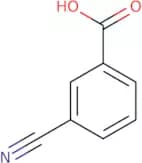
CAS:3-Cyanobenzoic acid is a chemical intermediate that is used to synthesize 3-cyanobenzamide. It is also a byproduct of the synthesis of benzonitrile and can be found in metal surface residues and environmental pollution. The molecule has two functional groups, one electron withdrawing and one electron donating, which are necessary for its stability. This compound can be found in high concentrations when it reacts with metal surfaces or organic solvents. 3-Cyanobenzamide was synthesized from 3-cyanobenzoic acid as an amide, which has been shown to have antimicrobial properties against Gram-positive bacteria such as Staphylococcus aureus, Streptococcus pyogenes and Enterococcus faecalis.Fórmula:C8H5O2NPureza:Min. 95%Cor e Forma:PowderPeso molecular:147.13 g/mol4-Formyl-3-hydroxybenzoic acid
CAS:4-Formyl-3-hydroxybenzoic acid (4FHB) is a member of the phenylacetic acid family. It has been shown to have potential as a substrate for creatine kinase and amines, as well as an inhibitor of the enzyme. 4FHB binds to the surface of silica particles in order to enhance Raman scattering in a solid-phase synthesis. The molecular weight of 4FHB is 148 g/mol, with optical properties that can be described by fluorescence spectroscopy. 4FHB has been shown to be homochiral and tetradentate, with a magnetic resonance spectrum that can be characterized by hydroxyl group and salicylaldehyde groups.Fórmula:C8H6O4Pureza:Min. 96.5 Area-%Cor e Forma:PowderPeso molecular:166.13 g/mol2,6-Dihydroxy-4-methylbenzoic acid
CAS:2,6-Dihydroxy-4-methylbenzoic acid is a phenolic compound that has been shown to have significant cytotoxicity against cancer cells and may be used in the treatment of various cancers. It is also an endophytic fungus that has been found to produce significant desorption of chloride ions from soil. This compound can also be synthesized by reacting 2,6-dihydroxyphenylacetic acid with methyl iodide or methyl bromide. The reaction system for this synthesis includes concentrated hydrochloric acid, zinc dust, and ethyl acetate. The reaction solution was crystallized in the form of a white solid and the crystals were analyzed by X-ray crystallography to determine their structure. Photocatalytic activity was observed when using 2,6-dihydroxy-4-methylbenzoic acid as an electron donor in a reaction system containing titanium dioxide and hydrogen peroxide as an electron acceptor.Fórmula:C8H8O4Pureza:Min. 98 Area-%Cor e Forma:SolidPeso molecular:168.15 g/mol4-Aminohippuric acid sodium
CAS:4-Aminohippuric acid sodium (4AHA) is a drug that is used as a diagnostic tool for measuring renal plasma flow and renal function. The drug is administered intravenously and its optical properties are measured. 4AHA is filtered by the kidneys, which causes it to be excreted in urine. A sensor is placed on the patient's arm and measures the concentration of 4AHA in the blood flowing through the arm. This measurement can then be used to calculate renal plasma flow, which indirectly indicates kidney function. 4AHA can also be used to measure sodium levels in blood plasma, as it binds to sodium ions in solution. However, this application of 4AHA has been superseded by newer technologies such as ion-selective electrodes and magnetic resonance imaging, which offer improved accuracy at lower cost.Fórmula:C9H10N2NaO3Pureza:Min. 95%Cor e Forma:PowderPeso molecular:217.18 g/molMethyl 4-acetylbenzoate
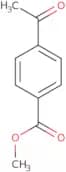
CAS:Methyl 4-acetylbenzoate is a synthetic compound that can be used for the synthesis of imatinib and other pharmaceuticals. It is an effective method for the synthesis of butyric acid with high enantiomeric purity. The cross-coupling reaction was first reported by Suzuki in 1979, which has been widely applied to organic synthesis because it is efficient and produces simple byproducts. This reaction has also been used in the synthesis of model compounds and natural products, as well as in environmental pollution studies.Fórmula:C10H10O3Pureza:Min. 95%Cor e Forma:PowderPeso molecular:178.18 g/mol