Álcoois benzílicos
Foram encontrados 1457 produtos de "Álcoois benzílicos"
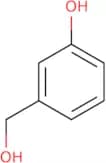
3-Hydroxybenzyl alcohol
CAS:3-Hydroxybenzyl alcohol is a fatty acid with a hydroxyl group. The clinical relevance of 3-hydroxybenzyl alcohol remains unclear. It has been used in acetate extract and ph optimum tests, as well as to study reaction solutions and nmr spectroscopic data. Hydrogen bonds have been observed between the molecule's hydroxyl group and the oxygen atoms in water molecules, which may explain its antifungal properties. 3-hydroxybenzyl alcohol also has an inhibitory effect on cyclic peptide synthesis, rotarod test performance, and analytical methods. It is a broad-spectrum antimicrobial that can be used against bacteria, fungi, protozoa and viruses. 3-hydroxybenzyl alcohol has an acidic character because it reacts with copper ions to form a copper complex.
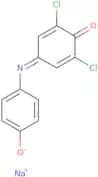
Fórmula:C7H8O2Pureza:Min. 95%Cor e Forma:White PowderPeso molecular:124.14 g/mol2,6-Dichloroindophenol sodium salt hydrate
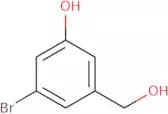
CAS:Blue redox dye; used to quantify vitamin C contentFórmula:C12H7Cl2NNaO2·xH2OCor e Forma:Green PowderPeso molecular:291.09 g/mol3-Bromo-5-hydroxybenzyl alcohol
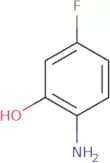
CAS:3-Bromo-5-hydroxybenzyl alcohol is a useful building block that can be used to synthesize more complex compounds. This chemical is a reagent and reaction component for organic synthesis. 3-Bromo-5-hydroxybenzyl alcohol is useful as a high quality research chemical, speciality chemical, or versatile building block. It reacts rapidly with strong oxidants and strong bases to form the corresponding bromohydrins. The CAS number for 3-bromo-5-hydroxybenzyl alcohol is 1020336-51-9.Fórmula:C7H7BrO2Pureza:Min. 95%Cor e Forma:PowderPeso molecular:203.03 g/mol2-Amino-5-fluorophenol
CAS:2-Amino-5-fluorophenol (2AP) is a natural product that has been found to be an effective inhibitor of the enzyme fatty acid synthase. 2AP has been shown to inhibit the growth of Candida albicans, Trichophyton mentagrophytes, and Toxoplasma gondii in a model system. This compound is used as a starting material for the synthesis of other pharmaceutical compounds, such as fluoroquinolones and aminoglycosides. 2AP inhibits the activity of the enzyme fatty acid synthase by binding to the thiolate moiety on cysteine residues near the active site and thus preventing substrate binding. This inhibition results in a decrease in fatty acid synthesis, which leads to cell death.Fórmula:C6H6FNOPureza:Min. 95%Cor e Forma:PowderPeso molecular:127.12 g/mol2,6-Dimethoxyphenol
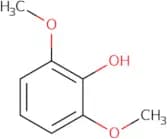
CAS:2,6-Dimethoxyphenol is a chemical compound that is used in the manufacture of industrial chemicals. It is also used as an intermediate in organic synthesis and has been shown to have antibacterial activity against some strains of bacteria. 2,6-Dimethoxyphenol binds to bacterial ribosomes by interfering with the protein synthesis machinery. The reaction mechanism occurs via a nucleophilic attack by the hydroxyl group on the carbonyl carbon atom, leading to a tetrahedral intermediate with the coordination geometry of square planar. This compound has been shown to scavenge anion radicals and has high resistance to oxidation from redox potential.
Fórmula:C8H10O3Pureza:Min. 99 Area-%Cor e Forma:PowderPeso molecular:154.16 g/mol2-Chloro-3-fluorobenzyl alcohol
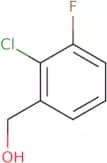
CAS:2-Chloro-3-fluorobenzyl alcohol is a versatile building block for the synthesis of complex compounds. It has been used as a reagent and intermediate in research chemical synthesis. This compound is useful for the preparation of high quality, useful intermediates and reaction components. 2-Chloro-3-fluorobenzyl alcohol can be used as a scaffold to build different organic compounds with different functional groups.Fórmula:C7H6ClFOPureza:Min. 95%Cor e Forma:PowderPeso molecular:160.57 g/mol4-Iodophenol
CAS:An enhancer used in chemiluminescent reactions
Fórmula:C6H5IOPureza:Min. 98.5 Area-%Cor e Forma:PowderPeso molecular:220.01 g/molDichlorophen BP
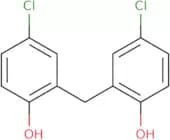
CAS:Anti-cestodal agent; tapeworm infection treatmentFórmula:C13H10Cl2O2Pureza:(Titration) 97 - 101%Cor e Forma:PowderPeso molecular:269.12 g/mol4-Chlorobenzyl alcohol
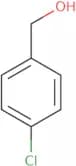
CAS:4-Chlorobenzyl alcohol is a lipase inhibitor that is used in the treatment of pancreatic disorders. It binds to the active site of pancreatic lipase, which prevents the enzyme from hydrolyzing the ester bonds of glycol esters and long chain fatty acids, thereby inhibiting their absorption. This product does not inhibit other enzymes (e.g., amylase) or have an effect on chloride secretion. The reaction with 4-chlorobenzyl alcohol can also be catalyzed by hydrogen bonding between the carboxylic acid group and a hydroxyl group. Miconazole nitrate is a synthetic antifungal agent that inhibits ergosterol synthesis by binding to 14-alpha demethylase, which converts lanosterol into ergosterol. It has been shown to inhibit the growth of fungi such as Candida albicans and Aspergillus niger when combined with 4-chlorobenzyl alcohol. Cleavage productsFórmula:C7H7ClOPureza:Min. 98 Area-%Cor e Forma:White PowderPeso molecular:142.58 g/mol4-Phenoxyphenol
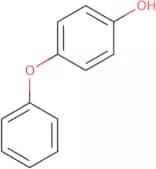
CAS:4-Phenoxyphenol is a phenoxy compound that inhibits bacterial growth by binding to DNA-dependent RNA polymerase, thereby preventing transcription and replication. 4-Phenoxyphenol is synthesized by the reaction of anhydrous sodium with 4-phenoxyphenol in the presence of copper chloride and hydroxyl group. The resulting product has a hydroxyl group attached to the aromatic ring of the phenoxy group. This molecule is then inserted into an expression plasmid with a promoter sequence, which directs it to be expressed in liver cells. The final product can be used as an antibacterial agent against bacteria that are resistant to penicillin, ampicillin, and erythromycin.
Fórmula:C12H10O2Pureza:Min. 95%Cor e Forma:PowderPeso molecular:186.21 g/mol4-Cyano-3-fluorophenol
CAS:4-Cyano-3-fluorophenol is a chemical compound that has two phenoxy groups and one fluorine atom. 4-Cyano-3-fluorophenol has been shown to be an effective antagonist of GABA A receptors, which may be due to its ability to interact with the chloride ion site on the receptor, or its hydrogen bonding effects with the receptor. 4-Cyano-3-fluorophenol has been shown to have potent effects in a number of other biological systems. These include inhibition of suzuki coupling reactions (a type of nucleophilic substitution reaction), as well as acylation reactions in which an acid reacts with an alcohol to form an ester, and pharmacokinetic properties. 4-Cyano-3-fluorophenol also has been shown to bind selectively to proteins, including those involved in protein–protein interactions.
Fórmula:C7H4FNOPureza:Min. 95%Cor e Forma:White PowderPeso molecular:137.11 g/mol4-Ethylbenzyl alcohol
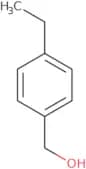
CAS:4-Ethylbenzyl alcohol is a constituent of natural rubber and is produced as a by-product during the manufacture of styrene. It has been shown that 4-ethylbenzyl alcohol can inhibit phosphatidylethanolamine N-methyltransferase, an enzyme that catalyzes the synthesis of phosphatidylethanolamine from phosphatidylcholine, thereby inhibiting lipid biosynthesis in cells. This inhibition may be due to the presence of the hydroxy group on the benzene ring which may bind to the active site of the enzyme and prevent it from binding with its substrate. In addition, 4-ethylbenzyl alcohol may act as an organic solvent and react with other substances in cells to form cytotoxic products. 4-Ethylbenzyl alcohol has been shown to cause narcosis when used in high concentrations or over a long period.
Fórmula:C9H12OPureza:90%Cor e Forma:PowderPeso molecular:136.19 g/mol3-Methoxybenzyl alcohol
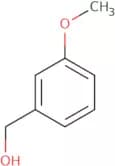
CAS:3-Methoxybenzyl alcohol is a natural product from the root of the orchid Dendrobium officinale. It has been shown to inhibit the growth of bacteria by binding to the enzyme Aldehyde Dehydrogenase, which is required for cellular energy production. The product also inhibits bacterial Vanillyl Alcohol Dehydrogenase, which prevents the formation of vanillin. 3-Methoxybenzyl alcohol has a neutral pH and can be used as an antimicrobial agent in acidic foods and beverages. 3-Methoxybenzyl alcohol also has antioxidant properties, and has been shown to prevent damage from oxidative stress.Fórmula:C8H10O2Pureza:Min. 95%Cor e Forma:Colorless Clear LiquidPeso molecular:138.16 g/mol2-Amino-4-methylphenol
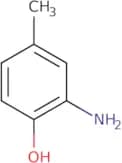
CAS:2-Amino-4-methylphenol is an organic compound that belongs to the group of p2 molecules. It has been shown to react with hydroxyl radicals in the human liver, and this reaction may be a significant mechanism for its toxicity. 2-Amino-4-methylphenol also reacts with low concentrations of hydrochloric acid (0.1 M) to form a stable intermediate with an intramolecular hydrogen bond between the amine nitrogen and the carbonyl carbon. This intermediate then reacts with more hydrochloric acid to form 4-(hydroxymethyl)benzoic acid and 2-aminoethanol. The NMR spectra of 2-amino-4-methylphenol show only one resonance due to the absence of electronegative groups on the molecule, which makes it resistant to oxidation by air or light. The high resistance of 2-amino-4-methylphenol makes it an ideal chemical
Fórmula:C7H9NOPureza:Min. 95%Cor e Forma:Beige PowderPeso molecular:123.15 g/mol3,3'-Dichlorobisphenol A
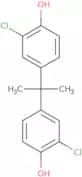
CAS:3,3'-Dichlorobisphenol A is a chlorine-containing organic compound that is used in the manufacture of polycarbonate plastics. It has been found to be genotoxic and carcinogenic in animals. 3,3'-Dichlorobisphenol A is also toxic to aquatic organisms and may persist for long periods in the environment. 3,3'-Dichlorobisphenol A enters wastewater when it is released during the production of polycarbonate plastics or as a byproduct of other chlorination reactions. The most common method for removing 3,3'-dichlorobisphenol A from wastewater is to use UV irradiation followed by chlorine gas treatment. This process can lead to the formation of additional chlorinated compounds that are more toxic than 3,3'-dichlorobisphenol A.
Fórmula:C15H14Cl2O2Pureza:Min. 95%Cor e Forma:White PowderPeso molecular:297.18 g/mol4-Aminothiophenol
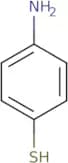
CAS:4-Aminothiophenol is a redox potential probe that is used as an analytical chemistry reagent. It has been shown to react with nitrite ion and form a nitrogen atom, which can be detected by Raman spectroscopy. 4-Aminothiophenol has also been used to measure the amount of fatty acid in human serum samples. 4-Aminothiophenol has been shown to have an enhancement effect on the detection sensitivity of model system reactions and can be used as a model system for these reactions. The reaction mechanism for this compound is not well understood, but it is believed that it may involve electron transfer from the aminothiophenol radical cation to the nitrite ion.
Pureza:Min. 95%Cor e Forma:White PowderPeso molecular:125.19 g/molBisphenol F bis(2,3-dihydroxypropyl) ether
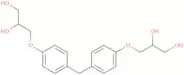
CAS:Standard for determination of toxic monomers from polymer coatingsFórmula:C19H24O6Pureza:Min. 95%Cor e Forma:White PowderPeso molecular:348.39 g/mol3-Ethoxyphenol
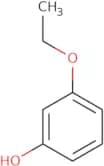
CAS:3-Ethoxyphenol is an organic compound that has a phenolic hydroxyl group attached to the 3-position of an ethyl alcohol. The ethoxy groups on the molecule allow it to bind to receptors in the central nervous system, including the dopamine receptor and the d4 receptor. This binding process is thermodynamically and kinetically favorable, which leads to a high metabolic rate. 3-Ethoxyphenol has been shown to have strong antiviral properties, particularly against chromobacterium violaceum, and can be used as a specific ligand for metal surfaces. The coumarin derivatives of 3-ethoxyphenol have also been shown to inhibit the growth of propionate and covid-19 pandemic.Fórmula:C8H10O2Pureza:Min. 95%Cor e Forma:PowderPeso molecular:138.16 g/mol3,4-Dimethoxyphenol
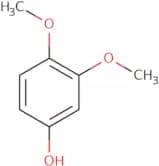
CAS:3,4-Dimethoxyphenol is a compound that is structurally similar to p-hydroxybenzoic acid. It has been shown to inhibit fatty acid synthesis in rat liver microsomes by competitive inhibition of the enzyme β-hydroxylase. This inhibition may be due to its ability to form a stable complex with the enzyme and thereby preventing substrate binding. 3,4-Dimethoxyphenol can also be prepared by sulfonation of 3,4-dihydroxybenzaldehyde followed by chromatographic purification. The compound has been used as an analytical reagent for the determination of sulfonic acids, and it has been shown to have electrochemical methods with good sensitivity and selectivity.
Fórmula:C8H10O3Pureza:Min. 95%Cor e Forma:White PowderPeso molecular:154.16 g/mol3,5-Dihydroxybenzyl alcohol
CAS:3,5-Dihydroxybenzyl alcohol is an organic solution that has been shown to inhibit the growth of cancer cells by binding to the chloride ion and forming a hydrophobic effect with the hydrochloric acid. This compound also inhibits the growth of other cells such as bacteria and yeast. 3,5-Dihydroxybenzyl alcohol has potent inhibitory activity against silver ions and prevents their adhesion to DNA molecules. The molecule also has a hydroxyl group which may help to prevent bacterial growth by preventing the production of proteins essential for cell division. 3,5-Dihydroxybenzyl alcohol is not toxic to human liver cells and does not cause any carcinogenic effects in vitro.
Fórmula:C7H8O3Pureza:Min. 95%Cor e Forma:Off-White PowderPeso molecular:140.14 g/mol