Álcoois benzílicos
Os álcoois benzílicos são álcoois aromáticos que apresentam um anel benzênico ligado a um grupo hidroximetil (-CH2OH). Esses compostos são usados como solventes, conservantes e intermediários na síntese de produtos farmacêuticos, fragrâncias e resinas. Os álcoois benzílicos são conhecidos por suas propriedades antimicrobianas e versatilidade em várias reações químicas. Na CymitQuimica, oferecemos uma ampla seleção de álcoois benzílicos de alta qualidade para apoiar suas pesquisas e aplicações industriais.
Foram encontrados 1458 produtos de "Álcoois benzílicos"
Ordenar por
Pureza (%)
0
100
|
0
|
50
|
90
|
95
|
100
(3-Bromo-5-(trifluoromethyl)phenyl)methanol
CAS:Fórmula:C8H6BrF3OPureza:97%Cor e Forma:LiquidPeso molecular:255.0344-Chlorobenzyl Chloride (~90%)
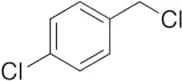
CAS:Produto Controlado<p>Stability Moisture Sensitive<br>Applications 4-Chlorobenzyl Chloride is a benzylchloride derivative used in the preparation of various biologically active compounds such as bronchodilators and antibacterial agents.<br> Not a dangerous good if item is equal to or less than 1g/ml and there is less than 100g/ml in the package<br>References Adams, M. et al.: Synth. Comm., 29, 2419 (1999); Foroumadi, A. et al.: Arch. Pharm. Res., 30, 138 (2007);<br></p>Fórmula:C7H6Cl2Pureza:~90%Cor e Forma:NeatPeso molecular:161.03Benzyl-2,3,4,5,6-D5 Alcohol
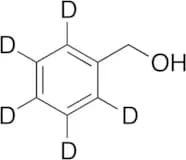
CAS:Produto Controlado<p>Applications Benzyl-2,3,4,5,6-D5 Alcohol is an isotopically labeled analog of Benzyl Alcohol (T536635), which is used in the synthesis of Cephalosporolide B as a versatile biomimetic synthetic precursor for chemical synthesis of other cephalosporides.<br>References Song, L. et al.: Org. Lett., 15, 5850 (2013);<br></p>Fórmula:C7D5H3OCor e Forma:NeatPeso molecular:113.174-(Chloromethyl)benzyl alcohol
CAS:4-(Chloromethyl)benzyl alcohol is a colorless, water-soluble organic solvent that is used in polymerized and gel permeation chromatography. 4-(Chloromethyl)benzyl alcohol has been found to have antimicrobial properties against bacteria such as Pseudomonas aeruginosa, which can be attributed to its ability to cause the cross-linking of proteins. 4-(Chloromethyl)benzyl alcohol also has the ability to encapsulate drugs, making them more stable. This compound is not soluble in water and cannot be used as an antimicrobial agent for topical application. END> END> 6-Fluoro-3-indoxyl-beta-D-galactopyranoside is an antituberculosis drug that belongs to the class of rifamycins. It is the most active of the rifamycins for the treatment of tuberculosis. RFórmula:C8H9ClOPureza:Min. 95%Cor e Forma:PowderPeso molecular:156.61 g/molBisphenol A bis(diphenyl phosphate)
CAS:Halogen free fire retardantFórmula:C39H34O8P2Pureza:Min. 95%Cor e Forma:White PowderPeso molecular:692.63 g/mol2,6-Dinitrophenol - wetted - min 15% water
CAS:Produto ControladoUncoupler of oxidative phosphorylationFórmula:C6H4N2O5Pureza:Min. 95%Peso molecular:184.11 g/mol3,5-Dimethylphenol
CAS:<p>3,5-Dimethylphenol is an organic compound with a hydroxyl group. It is a colorless liquid that has low toxicity and is soluble in water. The reaction of 3,5-dimethylphenol with hydrogen peroxide produces an intermediate called dipropyl ether, which can be used as a solvent. 3,5-Dimethylphenol is often used for the oxidation of alcohols to their corresponding ketones or aldehydes. This process can be catalysed by copper chloride, borane-tetrahydrofuran complex, or hydrochloric acid. 3,5-Dimethylphenol also reacts with uv light to produce free radicals that initiate the oxidation of other substances such as organic solutions.</p>Fórmula:C8H10OPureza:Min. 98 Area-%Cor e Forma:White To Yellow SolidPeso molecular:122.16 g/molp-Cresol
CAS:<p>单酚香气;胶粘剂;密封剂;抗氧化剂;消毒剂</p>Fórmula:C7H8OPureza:Min. 95%Cor e Forma:Colorless Clear LiquidPeso molecular:108.14 g/mol3-Aminobenzyl alcohol
CAS:<p>3-Aminobenzyl alcohol is a prodrug that is metabolized to 3-aminophenol, its active form. It has immunomodulatory properties and can be used to treat population growth. 3-Aminobenzyl alcohol binds to specific receptors on the surface of lymphocytes, which inhibits the immune system's response to foreign antigens. This drug also has photochemical properties and can be used as a photosensitizer in photodynamic therapy. 3-Aminobenzyl alcohol is a hydrogen bond acceptor with acidic functional groups and has been shown to bind with proteins through hydrogen bonding interactions. The hydrogen bond strength between the drug and protein depends on the pH of the solution, which may affect its efficacy in different cell types.</p>Fórmula:C7H9NOPureza:Min. 95%Cor e Forma:Off-White PowderPeso molecular:123.15 g/mol3-Fluorophenol
CAS:<p>3-Fluorophenol is a chemical compound that has a molecular formula of C6H3F3O and a molecular weight of 121.12. It has an intramolecular hydrogen bond between the hydroxyl group and the hydrogen atom in the 3-position, which is responsible for its stability. 3-Fluorophenol can be obtained by reacting 2-benzoylbenzoic acid with diazonium salt in water in the presence of sodium trifluoroacetate (NaC(O)CF3). The reaction mechanism involves an addition reaction between the diazonium salt and 2-benzoylbenzoic acid to form an intermediate, followed by nucleophilic attack from water on the intermediate to form an alcohol product. The kinetic energy of 3-fluorophenol is activated by hydrogen bonding, which leads to its ability to react with other molecules.</p>Fórmula:C6H5FOPureza:Min. 95%Cor e Forma:PowderPeso molecular:112.1 g/mol