Benzamidas
Foram encontrados 50 produtos para "Benzamidas".
- Preços em ordem crescente
- Preços em ordem decrescente
- Menor grau de pureza
- Maior grau de pureza
- Estimativa de entrega mais rápida
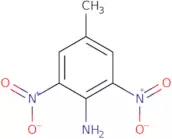
2,6-Dinitro-4-methylaniline
CAS:2,6-Dinitro-4-methylaniline is an amide that has been shown to induce cancer in animals. It has a high affinity for nucleic acids and forms covalent bonds with DNA. 2,6-Dinitro-4-methylaniline is metabolized by the liver and excreted by the kidneys into urine, where it can be detected in urine samples. This compound has been shown to bioconcentrate in organisms and accumulate in tissues as well as activate radiation. The activation of this compound is dose dependent and may be due to its ability to form covalent bonds with DNA.
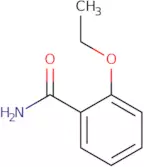
Fórmula:C7H7N3O4Pureza:Min. 95%Cor e Forma:PowderPeso molecular:197.15 g/mol2-Ethoxybenzamide
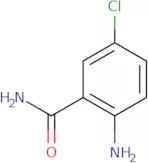
CAS:2-Ethoxybenzamide is a nonsteroidal anti-inflammatory drug that has been shown to inhibit the production of inflammatory prostaglandins. It is structurally similar to ethenzamide, an older drug in this class. 2-Ethoxybenzamide is used for the treatment of pain and inflammation, as well as for other conditions such as gout and rheumatoid arthritis. The molecular formula for 2-ethoxybenzamide is C6H11NO2 and its molecular weight is 169.21 grams per mole. It has a melting point of 75 degrees Celsius and a boiling point of 220 degrees Celsius at atmospheric pressure. This compound can be found in crystalline cellulose, analytical method, water vapor, experimental solubility data, wastewater treatment, ethylmalonic acid, human serum, structural analysis.Fórmula:C9H11NO2Pureza:Min. 95%Cor e Forma:White PowderPeso molecular:165.19 g/mol2-Amino-5-chlorobenzamide
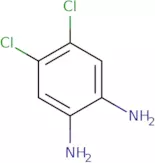
CAS:2-Amino-5-chlorobenzamide is a fluorescence probe that has been shown to react with anthranilic acid, which is a structural component of many active substances. It is used in organic solvents as an indicator for the presence of active oxygen. 2-Amino-5-chlorobenzamide can be used as a linker to connect different molecules and can be activated by dehydrating agents, such as sodium sulfite. This compound has been demonstrated to have a linear response over a wide range of concentrations. The molecular target of 2-amino-5-chlorobenzamide is unknown at this time, but it has been suggested that it may interact with amino acids or proteins. The structural formula for 2-amino-5-chlorobenzamide is C6H4ClN2O2.Fórmula:C7H7ClN2OPureza:Min. 95%Cor e Forma:PowderPeso molecular:170.6 g/mol4,5-Dichloro-1,2-phenylenediamine
CAS:4,5-Dichloro-1,2-phenylenediamine is a cytotoxic agent that can inhibit the enzymes urea amidolyase and fatty acid synthase in tissue culture. This compound also inhibits the production of urea nitrogen and fatty acids in human serum. 4,5-Dichloro-1,2-phenylenediamine may be useful as a cancer treatment because it has been shown to cause leukemia cell death as well as inhibition of t-cell proliferation. The drug may also induce apoptosis by inhibiting DNA synthesis through its reaction with benzimidazole compounds. The basic structure of 4,5-Dichloro-1,2-phenylenediamine is similar to protocatechuic acid and malignant brain tumor cells.
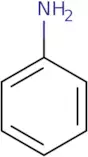
Fórmula:C6H6Cl2N2Pureza:Min. 95%Cor e Forma:PowderPeso molecular:177.03 g/molAniline
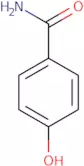
CAS:Aniline is an aromatic amine and is a clear to slightly yellow liquid with a characteristic odor. Aniline is an important precursor in the production of a wide range of industrial chemicals, including polyurethane foams, agricultural chemicals, and dyes. Aniline is also used in the manufacture of pharmaceuticals, rubber processing chemicals, and antioxidants. Due to its widespread industrial use, aniline can be found in various environmental matrices, including water, wastewater, and air.Fórmula:C6H7NPureza:Min. 95%Cor e Forma:Colorless Clear LiquidPeso molecular:93.13 g/mol4-Hydroxybenzamide
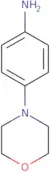
CAS:4-Hydroxybenzamide is a fatty acid with the hydroxyl group at the 4 position. It has been shown to inhibit the activity of human protein by interfering with hydrogen bonding and amide formation. The chemical structures of 4-hydroxybenzamide have been studied by electrochemical impedance spectroscopy (EIS) and found to be a competitive inhibitor of 1-hydroxy-2-naphthoic acid, an adenosine receptor antagonist, and p-hydroxybenzoic acid. This compound has also been shown to be acutely toxic in rats at high doses.Fórmula:C7H7NO2Pureza:90%Cor e Forma:PowderPeso molecular:137.14 g/mol4-Morpholinoaniline
CAS:4-Morpholinoaniline is a synthetic substrate that reacts with hydrochloric acid and sodium nitrite to form the reactive intermediate 4-morpholinonitrosobenzene. The reaction mechanism is proposed to proceed through an initial electron transfer from the substrate to the nitrosobenzene intermediate, followed by protonation of the nitrosobenzene nitrogen atom. The resulting 4-nitrophenyl radical abstracts hydrogen from the substrate to give 4-hydroxyphenyl radical. This radical undergoes a nucleophilic attack on the aromatic ring of the substrate molecule, and cleavage of the disulfide bond in the aromatic ring leads to formation of a cyanohydrin product. Studies have been conducted on rat liver microsomes and hepatitis C virus (HCV) to investigate this reaction mechanism.Fórmula:C10H14N2OPureza:Min. 98.5 Area-%Cor e Forma:Red PowderPeso molecular:178.23 g/mol3-Nitrobenzamide
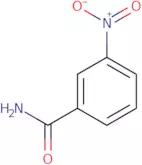
CAS:3-Nitrobenzamide is a substance that inhibits the replication of some viruses. It has been shown to inhibit the polymerase chain reaction and to be active against hepatitis B virus. 3-Nitrobenzamide was also observed to have inhibitory properties against herpes simplex virus type 1 (HSV-1) and HSV-2. The solid form of this compound is stable at room temperature, but may undergo hydrolysis in solution. 3-Nitrobenzamide reacts with water to form nitrous acid, which may cause corrosion of metal surfaces.
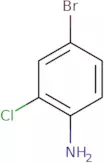
Fórmula:C7H6N2O3Pureza:Min. 95%Cor e Forma:PowderPeso molecular:166.13 g/mol4-Bromo-2-chloroaniline
CAS:4-Bromo-2-chloroaniline (4BCA) is an exciplex that forms in the presence of hydrogen peroxide and chloride ions. It is unreactive with fluconazole and other related molecules, but is able to photoreduce hydrogen peroxide. The molecular mechanism of 4BCA is a result of its ability to form a covalent bond with DNA containing pyrimidine bases. This reaction results in the formation of pyrimidine dimers, which can lead to cell death through the inhibition of DNA synthesis and repair. 4BCA has been shown to be effective against cancer cells at high concentrations, but does not affect healthy cells. The effectiveness against cancer cells may be due to the fact that this exciplex reacts with uv irradiation and irradiation, which leads to a higher concentration of reactive oxygen species (ROS).
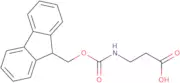
Fórmula:C6H5BrClNPureza:Min. 95%Cor e Forma:PowderPeso molecular:206.47 g/molFmoc-beta-alanine
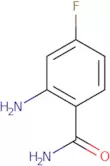
CAS:Fmoc-beta-alanine is a type of amino acid that is found in plants. It has been shown to have biological properties and can be used as an ingredient in food products. Fmoc-beta-alanine is also a chemical ligation agent that can be used for the synthesis of cyclic peptides and polypeptides. The compound has been shown to inhibit chloride ion channels, which may make it useful for the treatment of autoimmune diseases. Fmoc-beta-alanine is natural antibacterial and has been shown to increase the activity of urokinase-type plasminogen activator, which may make it useful for the treatment of cardiovascular diseases. Fmoc-beta-alanine is a sequence of amino acids found in wheat germ, as well as other plant families such as corn and rice. This compound binds to specific receptors and can be synthesized by solid phase synthesis on a resin column.Fórmula:C18H17NO4Pureza:Min. 95%Cor e Forma:PowderPeso molecular:311.33 g/mol2-Amino-4-fluorobenzamide
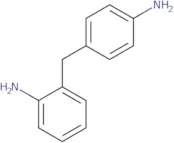
CAS:2-Amino-4-fluorobenzamide is a catalyst that reacts with alcohols and cyclizes them to form quinazolinones. It has been shown to oxidize various alcohols including those with an electron-donating group, such as esters and nitro groups. 2-Amino-4-fluorobenzamide also reacts with electron-deficient alcohols, such as oximes and hydrazines. The mechanism of the oxidative cyclizations is not well understood but it is likely that they are initiated by a nucleophilic attack on the carbonyl carbon atom followed by a concerted or stepwise oxidation of the C=O double bond. The oxidative cyclization reactions are mechanistically similar to those of other catalytic oxidations, such as those used in the industrial production of acetic acid from methanol.Fórmula:C7H7FN2OPureza:Min. 95%Cor e Forma:PowderPeso molecular:154.14 g/mol2-(4-Aminobenzyl)aniline
CAS:2-(4-Aminobenzyl)aniline is a plant-based compound that is biodegradable. It can be applied to cancer cells to inhibit their growth and proliferation. 2-(4-Aminobenzyl)aniline has been shown to cause thyroid cancer in rats, which is the most common form of cancer in humans. The carcinogenic effects of this chemical are due to its ability to react with amines, such as aromatic amines, and form nitrosamines. These carcinogens have been shown to be present in wastewater treatment plants. 2-(4-Aminobenzyl)aniline has also been found to inhibit the growth rate of the variegatus plant, which may be useful for controlling its invasive nature.Fórmula:C13H14N2Pureza:Min. 98 Area-%Cor e Forma:PowderPeso molecular:198.26 g/mol3,5-Dimethoxybenzamide
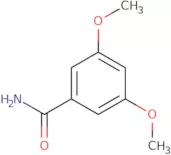
CAS:3,5-Dimethoxybenzamide belongs to the class of quinolone drugs. It is a potentiator of nabilone, which is a synthetic cannabinoid similar to THC. 3,5-Dimethoxybenzamide has been shown to be an electron-deficient compound that reacts with 5-hydroxytryptamine (serotonin) in vitro. This reaction leads to the formation of hydrogen bonds and modifications in the structure of serotonin molecules. 3,5-Dimethoxybenzamide also has grignard reagent activity and can be used as a carboxyamide or amide precursor in organic synthesis.Fórmula:C9H11NO3Pureza:Min. 95%Cor e Forma:PowderPeso molecular:181.19 g/mol3-Amino-4-methoxybenzamide
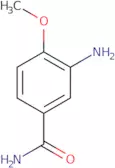
CAS:3-Amino-4-methoxybenzamide (3AMB) is a transcriptional regulator that inhibits the expression of genes encoding for the synthesis of aminoglycoside antibiotics. 3AMB binds to DNA, forming a heteromer with the transcription factor HANATX, which prevents RNA polymerase from binding to DNA. This in turn inhibits gene expression and bacterial growth. 3AMB has been shown to trigger diabetic neuropathy by inhibiting xylitol dehydrogenase, an enzyme required for neuron protection against oxidative stress. The drug also has a high affinity for nucleophiles and can bind to various substrates such as sulfhydryl groups or hydroxyl groups.
Fórmula:C8H10N2O2Pureza:Min. 98%Cor e Forma:Off-White PowderPeso molecular:166.18 g/mol4-tert-Butylaniline
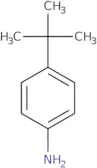
CAS:4-tert-Butylaniline is a chemical compound with the molecular formula C6H7N. It is an organic base that has acidic properties and can be used as an amine. 4-tert-Butylaniline is used in the manufacture of other chemicals, such as herbicides, pesticides, and pharmaceuticals. 4-tert-Butylaniline binds to metal ions such as palladium by hydrogen bonding. This binding increases the reactivity of the metal ion and allows it to catalyze reactions that would otherwise not occur. 4-tert-Butylaniline also has transport properties and binds to replicon cells through adsorption mechanisms.Fórmula:C10H15NPureza:Min. 95%Cor e Forma:Colorless Clear LiquidPeso molecular:149.23 g/mol2-(Trifluoromethoxy)aniline
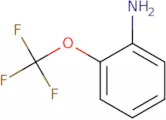
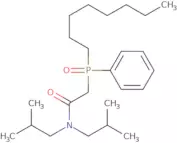
CAS:2-(Trifluoromethoxy)aniline is a heterocyclic aromatic compound that can act as an electrophilic catalyst. It is a strong nucleophile and reacts with various types of nucleophiles. 2-(Trifluoromethoxy)aniline has been used for the synthesis of aliphatic sulfoxides under acidic conditions, including alcohols, phenols, and thiols. The reaction mechanism is often a 1,2-addition of the nucleophile to the carbonyl group of 2-(trifluoromethoxy)aniline. This reaction is catalytic and produces a stable dimerized product. 2-(Trifluoromethoxy)aniline also has mesoporous properties, which allow it to be used in reactions involving alcohols or other polar molecules because they are soluble in the pores.Fórmula:C7H6F3NOPureza:Min. 95%Cor e Forma:Clear LiquidPeso molecular:177.12 g/molN,N-Diisobutyl-2-(octylphenylphosphoryl)acetamide
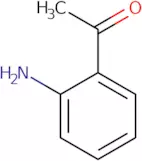
CAS:N,N-Diisobutyl-2-(octylphenylphosphoryl)acetamide is a redox active extractant that is used for the extraction of metals from acidic solutions. It has been shown to have an adsorption mechanism that includes hydrogen bonding and intramolecular hydrogen bonding. N,N-Diisobutyl-2-(octylphenylphosphoryl)acetamide also has a high redox potential and fluorescence properties. This extractant can be used as a metal chelate to extract copper from hydroxide or carbonate solutions. It can also be used in titration calorimetry experiments.Fórmula:C24H42NO2PPureza:Min. 98 Area-%Cor e Forma:White To Off-White SolidPeso molecular:407.57 g/mol2'-Aminoacetophenone
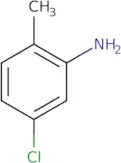
CAS:2'-Aminoacetophenone is a chemical compound that belongs to the class of anthranilate. It is a water-soluble, white solid. 2'-Aminoacetophenone has been shown to have antimicrobial properties against bacteria and fungi. The mechanism of action of this compound is not known, but it may be due to its ability to disrupt mitochondrial function and affect the membrane potential. The stability of 2'-Aminoacetophenone in the presence of water vapor is greater than that observed for other anthranilates.Fórmula:C8H9NOPureza:Min. 95%Cor e Forma:PowderPeso molecular:135.16 g/mol5-Chloro-2-methylaniline
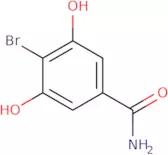
CAS:5-Chloro-2-methylaniline is an organic compound that is a member of the amines class. It has been shown to be genotoxic and carcinogenic in vivo. 5-Chloro-2-methylaniline binds to DNA and inhibits the synthesis of RNA, leading to cell death. It is also toxic to aquatic organisms by inhibiting cellular respiration and causing mutations. 5-Chloro-2-methylaniline has been shown to be genotoxic in vitro and in vivo, with chronic oral toxicity observed at dietary concentrations of 0.1% (10 ppm) in animals. The toxicity of this compound may be due to its ability to form hydrogen chloride when mixed with water or other acids.Fórmula:C7H8ClNPureza:Min. 95%Cor e Forma:Clear LiquidPeso molecular:141.6 g/mol4-Bromo-3,5-dihydroxybenzamide
CAS:4-Bromo-3,5-dihydroxybenzamide is a versatile building block that can be used as a reagent or as an intermediate in the synthesis of other compounds. It can also be used as a research chemical. 4-Bromo-3,5-dihydroxybenzamide has shown to be useful for the synthesis of complex organic compounds and is an excellent starting point for the preparation of novel scaffolds. This compound is also useful for making high quality products.
Fórmula:C7H6BrNO3Pureza:90%Cor e Forma:PowderPeso molecular:232.03 g/mol