Padrões Farmacêuticas
Os padrões farmacêuticos são um conjunto abrangente de materiais de referência essenciais para garantir a segurança, eficácia e qualidade dos produtos farmacêuticos. Esta categoria inclui padrões para ingredientes farmacêuticos ativos (APIs), que são os componentes principais responsáveis pelos efeitos terapêuticos. Além disso, abrange compostos e metabólitos relevantes tanto para a indústria farmacêutica quanto veterinária, fornecendo referências para a medição e análise precisa dessas substâncias. Padrões de controle de nitrosaminas são cruciais para detectar e mitigar nitrosaminas potencialmente prejudiciais em formulações de medicamentos. Padrões de toxicologia ajudam a avaliar a segurança e os potenciais efeitos adversos de compostos farmacêuticos. Além disso, padrões de ativadores e inibidores de enzimas são vitais para pesquisa e desenvolvimento, permitindo estudos precisos de vias bioquímicas e mecanismos de ação de medicamentos. Esses padrões farmacêuticos são ferramentas indispensáveis para conformidade regulatória, controle de qualidade e pesquisa, garantindo que os produtos farmacêuticos atendam a rigorosos critérios de segurança e eficácia.
Subcategorias de "Padrões Farmacêuticas"
- APIs para pesquisa e impurezas(273.774 produtos)
- Activadores e Inibidores de Enzimas(2.827 produtos)
- Nitrosaminas(2.606 produtos)
- Compostos e metabolitos farmacêuticos e veterinários(2.613 produtos)
- Toxicologia(13.652 produtos)
Foram encontrados 7836 produtos de "Padrões Farmacêuticas"
Ordenar por
Pureza (%)
0
100
|
0
|
50
|
90
|
95
|
100
4-Chloro-3-nitrophenacylbromide
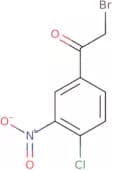
CAS:<p>4-Chloro-3-nitrophenacylbromide is a synthetic compound that has been shown to be effective against cancer cells in vitro. In the presence of light, this substance emits a bright green fluorescence, which is useful for imaging. The synthesis of 4-Chloro-3-nitrophenacylbromide can be achieved by solid phase methods and chemosynthesis. Spirocyclic amines are used as building blocks for the synthesis of this product. This process leads to functionalization strategies with high levels of chirality and drug development.</p>Fórmula:C8H5BrClNO3Pureza:Min. 95%Cor e Forma:PowderPeso molecular:278.49 g/mol1,1'-Dioctadecyl-3,3,3',3'-tetramethylindotricarbocyanine iodide
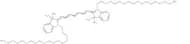
CAS:<p>1,1'-Dioctadecyl-3,3,3',3'-tetramethylindotricarbocyanine iodide (DiI) is a fluorescent dye that exhibits resonance fluorescence. It is used in cell biology to track the movement of lipoprotein and lipid-rich particles in cells. DiI has been shown to activate tumor cells by damaging their DNA and can be used for the treatment of cancer. DiI is also used as an absorber molecule during fluorescence microscopy imaging. The dye's ability to bind to lipoproteins makes it ideal for tracking cholesterol transport through the bloodstream. DiI binds to resolvin D1 and other lipids found in plasma, which can be useful for imaging lipid-rich tumors or atherosclerotic plaques.</p>Fórmula:C63H101IN2Pureza:Min. 95%Cor e Forma:Blue PowderPeso molecular:1,013.39 g/molNeuronostatin-13 (human, canine, porcine) trifluoroacetate salt
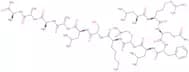
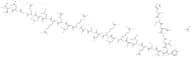
CAS:<p>Please enquire for more information about Neuronostatin-13 (human, canine, porcine) trifluoroacetate salt including the price, delivery time and more detailed product information at the technical inquiry form on this page</p>Fórmula:C64H110N20O16Pureza:Min. 95%Peso molecular:1,415.68 g/mol1,4-Dihydro-2,6-dimethyl-4-(3-nitrophenyl)-3,5-pyridinedicarboxylic acid 3-methyl ester
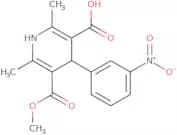
CAS:<p>Lercanidipine is a calcium antagonist that binds to the calcium channels in the membranes of cells, preventing the entry of calcium ions. Lercanidipine is water soluble and can be synthesized using techniques such as elemental analysis and pharmacological techniques. It is also an ionizable drug, which means that its affinity for chloride varies with pH. Lercanidipine has been shown to have strong affinity for erythrocyte membranes and thus has a high selectivity for vascular smooth muscle cells. This drug also has a low toxicity profile and does not affect tissues other than vascular smooth muscle cells.</p>Fórmula:C16H16N2O6Pureza:Min. 95%Cor e Forma:White PowderPeso molecular:332.31 g/molMethyl L-tyrosinate
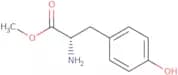
CAS:<p>Methyl-L-tyrosinate is a drug that has been shown to increase the activity of tyrosinase, an enzyme involved in the production of melanin. It also prevents the oxidation of tyrosine and phenylalanine, which are precursors to melanin. Methyl L-tyrosinate has been studied for its potential effects on hepatitis and Parkinson's disease. This drug binds to the hydroxyl group of tyrosinase and inhibits its activity. The inhibition of this enzyme leads to a decrease in melanin synthesis, which may be beneficial for those with vitiligo or other skin disorders where pigment loss is desired. This drug also prevents oxidative carbonylation and functional assays have shown that it has an affinity for potassium ion coordination chemistry.</p>Fórmula:C10H13NO3Pureza:Min. 95%Peso molecular:195.22 g/molBiotinyl-(Gln1)-LHRH trifluoroacetate salt Biotinyl-Gln-His-Trp-Ser-Tyr-Gly-Leu-Arg-Pro-Gly-NH2 trifluoroacetate salt
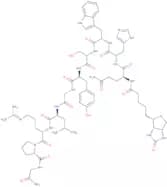
CAS:<p>Please enquire for more information about Biotinyl-(Gln1)-LHRH trifluoroacetate salt Biotinyl-Gln-His-Trp-Ser-Tyr-Gly-Leu-Arg-Pro-Gly-NH2 trifluoroacetate salt including the price, delivery time and more detailed product information at the technical inquiry form on this page</p>Fórmula:C65H92N20O15SPureza:Min. 95%Peso molecular:1,425.62 g/molBiotinyl-Angiotensin I/II (1-7) Biotinyl-Asp-Arg-Val-Tyr-Ile-His-Pro-OH
CAS:<p>Please enquire for more information about Biotinyl-Angiotensin I/II (1-7) Biotinyl-Asp-Arg-Val-Tyr-Ile-His-Pro-OH including the price, delivery time and more detailed product information at the technical inquiry form on this page</p>Fórmula:C51H76N14O13SPureza:Min. 95%Peso molecular:1,125.3 g/molVitamin A palmitate
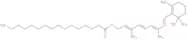
CAS:<p>Vitamin A palmitate is a fat-soluble vitamin that has antioxidant properties. It is available as a supplement in the form of retinol and retinyl palmitate. Vitamin A palmitate is an inactive form of vitamin A that can be converted to retinol in vivo by esterases and other enzymes. The conversion of vitamin A palmitate to retinol may be inhibited by various substances, such as estradiol benzoate. This conversion leads to the formation of free radicals, which cause oxidative injury to cells. Studies have shown that vitamin A palmitate can be toxic for humans because it interferes with the synthesis of mucin, an important constituent of human lungs and airways. Vitamin A palmitate also alters gene expression in some experimental models, leading to changes in cell growth or death.</p>Fórmula:C36H60O2Cor e Forma:Yellow PowderPeso molecular:524.86 g/mol3-Amino-2-nitropyridine
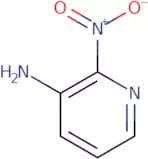
CAS:<p>3-Amino-2-nitropyridine is a heterocyclic compound that is an oxidation product of 2,4,6-trinitrotoluene. 3-Amino-2-nitropyridine is a potent inhibitor of the d4 receptor and has been shown to be active in animal models of cancer and autoimmune diseases. The mechanism of action of this drug is not well understood, but it has been found to inhibit cell proliferation in vitro by binding to nucleophilic sites on the receptor. Nitrobenzoic acid may also contribute to its activity. 3-Amino-2-nitropyridine inhibits inflammatory responses by inhibiting cell proliferation and migration.</p>Fórmula:C5H5N3O2Pureza:Min. 95%Peso molecular:139.11 g/molErythropoietin Mimetic Peptide Sequence 20 trifluoroacetate salt
CAS:<p>Please enquire for more information about Erythropoietin Mimetic Peptide Sequence 20 trifluoroacetate salt including the price, delivery time and more detailed product information at the technical inquiry form on this page</p>Fórmula:C72H99N17O17S2Pureza:Min. 95%Peso molecular:1,538.79 g/molFmoc-Lys(biotinyl)-Wang resin (200-400 mesh)
<p>Please enquire for more information about Fmoc-Lys(biotinyl)-Wang resin (200-400 mesh) including the price, delivery time and more detailed product information at the technical inquiry form on this page</p>Pureza:Min. 95%Tyr-Somatostatin-14
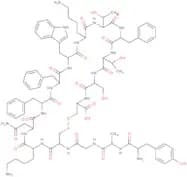
CAS:<p>Please enquire for more information about Tyr-Somatostatin-14 including the price, delivery time and more detailed product information at the technical inquiry form on this page</p>Fórmula:C85H113N19O21S2Pureza:Min. 95%Peso molecular:1,801.05 g/molAcetyl-(D-Lys2, Sar 3)-Melanotropin-Potentiating Factor acetate salt
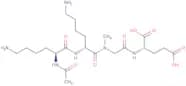
CAS:<p>Acetyl-(D-Lys2, Sar 3)-Melanotropin-Potentiating Factor acetate salt Ac-Lys-D-Lys-Sar-Glu-OH acetate salt is synthesized from a tetrapeptide. It has been shown to be neurotrophic and to stimulate the uptake of dopamine. Acetyl-(D-Lys2, Sar 3)-Melanotropin-Potentiating Factor acetate salt Ac-Lys-D-Lys-Sar-Glu-OH acetate salt has also been shown to be an analog of the growth factor nerve growth factor (NGF) and have similar effects on muscle tissue.</p>Fórmula:C22H40N6O8Pureza:Min. 95%Peso molecular:516.59 g/molN-Stearoyl phytosphingosine
CAS:<p>N-Stearoyl phytosphingosine is a molecule with an ester linkage that is used in the study of physiological function. It has been shown to mimic the effect of tebuconazole, a chemical fungicide, on mitochondrial membrane potential and ATP levels. This compound can be synthesized from fatty acids and hydroxyl groups. The molecule has also been shown to have skin nourishing properties when applied topically to skin cells in vivo.</p>Fórmula:C36H73NO4Pureza:Min. 95%Cor e Forma:White To Off-White SolidPeso molecular:583.97 g/molTetrabromophenyl-porphyrin
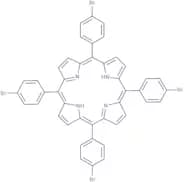
CAS:<p>Tetrabromophenyl-porphyrin (TBP) is a synthetic molecule that interacts with aldehydes in the presence of light. This interaction results in the formation of a phenyl radical and an excited state, which leads to the production of carbon dioxide and water. TBP is used as a catalyst for these reactions because it is more stable than other molecules that are typically used. The catalytic effect of TBP can be studied by means of spectroscopies and microscopy techniques. The crystal x-ray diffraction technique was used to analyze the molecular structure of TBP by determining the distances between atoms in its molecules. It was discovered that TBP has two phenyl groups and four bromine atoms per porphyrin ring. Diffraction techniques were also used to study how light interacts with TBP molecules, showing that they have strong optical properties when adsorbed on surfaces.</p>Fórmula:C44H26N4Br4Pureza:Min. 95%Peso molecular:930.32 g/mol3-Amino-4-methyl-thiophen-2-carboxylic acid methyl ester
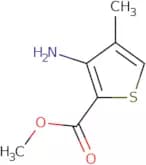
CAS:<p>3-Amino-4-methylthiophen-2-carboxylic acid methyl ester (3AMTC) is a novel compound that has been shown to have antihypertensive activity, as well as other pharmacological actions. 3AMTC is an allosteric modulator of α7 nicotinic acetylcholine receptors, which are found in the central and peripheral nervous system. The efficacy of 3AMTC was evaluated using magnetic resonance spectroscopy to measure the effects on mouse tumor cells. This compound showed no carcinogenic potential, which may be due to its inability to cross the blood brain barrier.</p>Pureza:Min. 95%Peso molecular:171.22 g/molBenzoylhypaconine
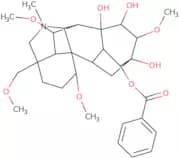
CAS:<p>Benzoylhypaconine is an alkaloid compound, which is a secondary metabolite typically found in certain plant species. It is primarily derived from Aconitum species, a group of plants known for their complex alkaloidal chemistry. The mode of action of benzoylhypaconine involves interactions with various receptors and enzymes in biological systems, reflecting its potential to influence neurotransmission and enzymatic activity.</p>Fórmula:C31H43NO9Pureza:Min. 98 Area-%Cor e Forma:Orange PowderPeso molecular:573.67 g/mol2,6-Dimethylaniline hydrochloride
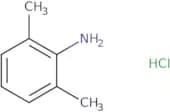
CAS:<p>Ropivacaine Related Compound A is a chemical compound that has not been fully characterized. It is an inhibitor of the enzyme P-hydroxybenzoic acid, which is involved in the synthesis of tyrosine and phenylalanine. Ropivacaine Related Compound A has shown to be potent inducers of the enzyme polymerase chain reaction (PCR) when combined with other chemicals such as potassium peroxydisulfate. The optimum concentration for this chemical compound to inhibit PCR reactions is 50 mM. Ropivacaine Related Compound A may have carcinogenic potential due to its ability to form p-hydroxybenzoic acid and other carcinogenic compounds. This chemical compound has been found to be a good candidate for wastewater treatment due to its low potency and high solubility in water.</p>Fórmula:C8H12ClNPureza:Min. 95%Cor e Forma:PowderPeso molecular:157.64 g/molSecretin (porcine) acetate salt
CAS:Produto Controlado<p>Secretin acetate salt H-His-Ser-Asp-Gly-Thr-Phe-Thr-Ser-Glu-Leu-Ser-Arg-Leu-Arg-Asp-Ser-Ala is a peptide that is secreted by the pancreas in response to the ingestion of food. Secretin stimulates the release of water and bicarbonate from the pancreas, as well as stimulating the gallbladder to contract, which results in increased flow of bile. Secretin also inhibits gastric acid secretion, slows intestinal motility, and stimulates pancreatic enzyme secretion. The amino acid sequence of this peptide is identical to that of leuprolide acetate (Lupron) and goserelin acetate (Zoladex), which are synthetic analogs with similar biological activity. This peptide can be synthesized on a solid phase or in solution phase. Solid phase synthesis involves attaching amino acids</p>Fórmula:C130H220N44O41Pureza:Min. 95%Peso molecular:3,055.41 g/mol1-(4-Nitrophenyl)piperazine
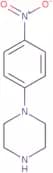
CAS:<p>1-(4-Nitrophenyl)piperazine is a nitro compound with a molecular weight of 147.2. It is soluble in DMSO and ethanol, but not in water. 1-(4-Nitrophenyl)piperazine has the ability to absorb ultraviolet radiation (UV) and it can be used as a UV-absorbing agent in plastics. 1-(4-Nitrophenyl)piperazine can also be used as an intermediate for the synthesis of triazole antifungal agents. The molecule has been shown to have high values at magnetic resonance spectroscopy (NMR). The crystal structure of 1-(4-nitrophenyl)piperazine was determined by x-ray diffraction data and molecular modeling techniques. This molecule's melting point was determined by titration calorimetry, which showed that its melting point is around 195 degrees Celsius.br> 1-(4-Nitrophenyl)piper</p>Fórmula:C10H13N3O2Pureza:Min. 95%Peso molecular:207.23 g/mol