Padrões Farmacêuticas
Subcategorias de "Padrões Farmacêuticas"
- APIs para pesquisa e impurezas(277.208 produtos)
- Activadores e Inibidores de Enzimas(2.829 produtos)
- Nitrosaminas(2.649 produtos)
- Compostos e metabolitos farmacêuticos e veterinários(2.894 produtos)
- Toxicologia(13.378 produtos)
Foram encontrados 8108 produtos de "Padrões Farmacêuticas"
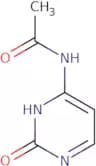
N4-Acetylcytosine
CAS:N4-Acetylcytosine is an inhibitor of serine proteases, glycosidases and nucleosidases. It has been shown to inhibit the replication of a wide range of viruses including HIV, herpes simplex virus type 1, and adenovirus. N4-Acetylcytosine also inhibits the proliferation of cervical cancer cells.
Fórmula:C6H7N3O2Pureza:Min. 95%Cor e Forma:White PowderPeso molecular:153.14 g/molRef: 3D-FA05993
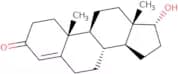
Produto descontinuado17-epi-Testosterone
CAS:Produto ControladoTestosterone is a steroid hormone that is produced in the ovaries and testes. It stimulates the development of male secondary sex characteristics, such as muscle growth and deepening of the voice. 17-epi-Testosterone is a metabolite of testosterone that has been shown to inhibit iron homeostasis and epithelial growth factor production in vitro. The concentration of 17-epi-Testosterone in human serum was found to be significantly lower than the concentration of testosterone using an LC-MS/MS method, which may be due to its affinity for binding proteins or its degradation by liver cells. 17-epi-Testosterone can be used as a marker for hepatocellular carcinoma.
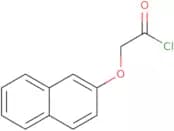
Fórmula:C19H28O2Pureza:Min. 95 Area-%Cor e Forma:PowderPeso molecular:288.42 g/mol(2-Naphthyloxy)acetyl chloride
CAS:(2-Naphthyloxy)acetyl chloride is an inhibitor of alcohol dehydrogenase, which is the enzyme that catalyzes the conversion of ethanol to acetaldehyde. It has been shown to be active against grapevine, but not against the yeast Saccharomyces cerevisiae. (2-Naphthyloxy)acetyl chloride inhibits alcohol dehydrogenase with a potency comparable to hexanol and ethylene glycol. It also inhibits esterases, which may account for its inhibitory effect on vinifera l. (2-Naphthyloxy)acetyl chloride has been shown to be more selective in inhibiting both alcohol and aldehyde dehydrogenases than hexanol or ethylene glycol.
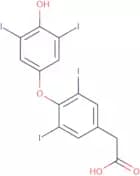
Fórmula:C12H9ClO2Pureza:Min. 95%Cor e Forma:Off-White PowderPeso molecular:220.65 g/mol3,5,3',5'-Tetraiodothyroacetic acid
CAS:3,5,3',5'-Tetraiodothyroacetic acid (T4) is a thyroid hormone that can be found in the blood and has been shown to have angiogenic properties. T4 has been shown to bind to integrin receptors on endothelial cells and stimulate the proliferation of these cells. This hormone also has pro-apoptotic activity, inducing programmed cell death in cancer cells. T4 is used as a model system for studying the molecular pathogenesis of thyroid cancer. T4 is also able to inhibit DNA polymerase activity, which may be responsible for its ability to inhibit tumor growth.
Fórmula:C14H8I4O4Pureza:Min. 95%Cor e Forma:White PowderPeso molecular:747.83 g/molRaltegravir potassium
CAS:Anti-viral; HIV integrase inhibitor
Fórmula:C20H20FKN6O5Pureza:Min. 98 Area-%Cor e Forma:White Off-White PowderPeso molecular:482.51 g/molRef: 3D-FR27670
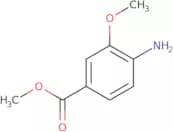
Produto descontinuado4-Amino-3-methoxybenzoic acid methyl ester
CAS:4-Amino-3-methoxybenzoic acid methyl ester is a reactive molecule that has been used as a radiotracer for positron emission tomography (PET). It is also used in the synthesis of oligodeoxynucleotides and hybridization probes. 4-Amino-3-methoxybenzoic acid methyl ester is not soluble in water, but it can be dissolved in organic solvents such as acetone or methanol. This compound has shown to have anticancer activity and may be useful for treating cancers of the brain, breast, colon, lung, prostate, and stomach.Fórmula:C9H11NO3Pureza:Min. 95%Cor e Forma:PowderPeso molecular:181.19 g/molRef: 3D-FA70673
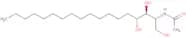
Produto descontinuadoN-Acetyl-phytosphingosine
CAS:N-Acetyl-phytosphingosine is a sphingoid base that functions as a phospholipid constituent of the cell membrane. It participates in the regulation of calcium and lipid metabolism, as well as cell proliferation and differentiation. N-Acetyl-phytosphingosine has been shown to suppress the production of prostaglandin E2, which may be due to its ability to inhibit cyclooxygenases and their downstream products, prostaglandin synthesis. This compound also represses activity of human cancer cells by intercepting the process that leads to prostaglandin synthesis. The anti-inflammatory effect of this molecule is demonstrated by its ability to reduce inflammation in keratinocytes (skin cells) and human keratinocytes.
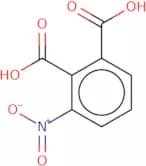
Fórmula:C20H41NO4Pureza:Min. 98 Area-%Cor e Forma:PowderPeso molecular:359.54 g/mol3-Nitrophthalic acid
CAS:3-Nitrophthalic acid is an organic compound that has been used in biological studies. It has been shown to bind to DNA and RNA, which may be due to hydrogen bonding interactions with the nitrogen atoms. 3-Nitrophthalic acid is synthesized by reacting sodium carbonate with trifluoroacetic acid, resulting in a carboxylate group. This compound has photochemical properties and can be used as a photosensitizer for the treatment of certain forms of cancer. 3-Nitrophthalic acid reacts with oxygen and generates singlet oxygen, which results in cellular damage.
Fórmula:C8H5NO6Pureza:Min. 95%Cor e Forma:PowderPeso molecular:211.13 g/molRef: 3D-FN32321
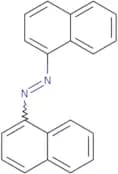
Produto descontinuado1,1'-Azonaphthalene - 80%
CAS:1,1'-Azonaphthalene is a quinoid that produces an azobenzene with a 1,3-dipolar cycloaddition reaction. This azobenzene is used as a model system for the study of enzyme inducers. It acts as an inhibitor of vascular endothelial growth factor (VEGF) and has been shown to inhibit tumor growth in murine hepatoma models. 1,1'-Azonaphthalene also reacts with dimethyl fumarate to form the dichroic compound with high optical activity. The asymmetric synthesis of 1,1'-azonaphthalene is achieved by using catalytic asymmetric hydrogenation with rhodium on carbon as a catalyst. Reaction mechanism studies have revealed that 1,1'-azonaphthalene can be converted into aromatic hydrocarbons by reacting with aliphatic hydrocarbons.
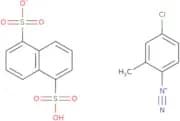
Fórmula:C20H14N2Pureza:Min. 80%Cor e Forma:PowderPeso molecular:282.34 g/molFast red TR salt 1,5-naphthalenedisulfonate
CAS:Fast red TR salt 1,5-naphthalenedisulfonate salt is a reactive, multidrug molecule that binds to DNA and inhibits the synthesis of viral RNA. It also has an antiviral effect on hepatitis and some types of cancer. Fast red TR salt 1,5-naphthalenedisulfonate salt is used in conjunction with other compounds to treat cancerous tumors. The drug is activated by light when it's injected intravenously into the bloodstream, where it can be taken up by cells in the kidney or liver. Fast red TR salt 1,5-naphthalenedisulfonate salt prevents the production of acetylcholine at nerve endings and blocks the transmission of nerve impulses. This drug also prevents the binding of doxorubicin to DNA in tumor cells and blocks tumor cell growth through a process called hybridization. Fast red TR salt 1,5-naphthalenedisulfonate salt is used to create tissue
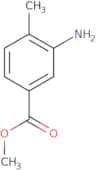
Fórmula:C10H7O6S2•C7H6ClN2Pureza:Min. 95%Cor e Forma:PowderPeso molecular:440.88 g/mol3-Amino-4-methylbenzoic acid methyl ester
CAS:3-Amino-4-methylbenzoic acid methyl ester (3AMB) is an organic compound that is used as a reagent in the synthesis of amides. It can also be used to synthesize various heterocycles by reacting with aldehydes and ketones. 3AMB has been used as a substrate in assays for amines, yielding high yields. The compound's unsymmetrical structure can be attributed to the presence of different substituents on either side of the central carbon atom. 3AMB has been shown to inhibit metal ion enzymes such as dioxygenases and nitric oxide synthases, which are involved in the metabolism of nitric oxide and oxygen respectively. In addition, 3AMB has been shown to have anti-inflammatory properties and may be a potential candidate for use as an anticoagulant or antiplatelet drug.br>br>
br>br>
3AMB isFórmula:C9H11NO2Pureza:Min. 95%Cor e Forma:PowderPeso molecular:165.19 g/mol3-Hydroxy-6,2',4',5'-tetramethoxychalcone
CAS:3-Hydroxy-6,2',4',5'-tetramethoxychalcone (3HTMC) is a fine chemical that is used as a versatile building block in the synthesis of various organic compounds. 3HTMC is soluble in most organic solvents and can be used as an intermediate for the preparation of other organic compounds. This chemical has been shown to be effective in the formation of complex compounds with high quality. 3HTMC is available in bulk quantities at competitive prices.
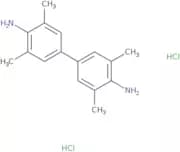
Fórmula:C19H20O6Pureza:Min. 95%Peso molecular:344.36 g/mol3,3',5,5'-Tetramethylbenzidine dihydrochloride dihydrate
CAS:3,3',5,5'-Tetramethylbenzidine dihydrochloride dihydrate is a hydrophilic, non-fluorescent, and water-soluble chemical that is used as an enzyme-linked immunosorbent assay (ELISA) substrate. It has been shown to be reactive with peroxide and hydrogen peroxide in vitro and in vivo. 3,3',5,5'-Tetramethylbenzidine dihydrochloride dihydrate also has peroxidase-like activity when interacting with monomers to form polymers. The monomers are recombinantly human proteins that have been modified to increase the molecule's solubility. This increased solubility increases the interaction of the monomers with oxidants such as hydrogen peroxide or peroxides.
Fórmula:C16H20N2·2HCl·2H2OPureza:Min. 95%Cor e Forma:PowderPeso molecular:349.3 g/molRef: 3D-FT00584
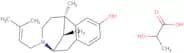
Produto descontinuadoPentazocine lactate
CAS:Produto ControladoPentazocine lactate is an opioid that binds to the kappa-opioid receptor. It has a low potency and is used as an analgesic. Pentazocine lactate has been shown to be effective in the treatment of eosinophilic fasciitis, which is a rare inflammatory disease of the skin and soft tissue. Side effects for this drug include respiratory depression and sedation, constipation, nausea/vomiting, urinary retention, erythema multiforme, pruritus, erythema nodosum, thrombocytopenia, and fever. Pentazocine lactate may also interact with other drugs such as antidepressants or antipsychotics.
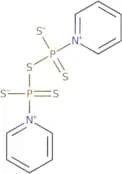
Fórmula:C19H27NO·C3H6O3Pureza:Min. 95%Peso molecular:375.5 g/molPentathiodiphosphorus(V) acid P,P'bis(pyridinium betaine)
CAS:Please enquire for more information about Pentathiodiphosphorus(V) acid P,P'bis(pyridinium betaine) including the price, delivery time and more detailed product information at the technical inquiry form on this page
Fórmula:C10H10N2P2S5Cor e Forma:PowderPeso molecular:380.48 g/molEosin B Spirit Soluble
CAS:Eosin B is a chemical compound that is used as a dye in histology. It has been used in the past as an anti-fungal agent and can be activated by light, which makes it useful for photodynamic therapy treatments. Eosin B is also used in devices such as lasers and phototherapy lamps to activate tissue repair or destroy tissue.
Fórmula:C20H8Br2N2O9Pureza:Min. 95%Cor e Forma:PowderPeso molecular:580.09 g/molRef: 3D-FE52709
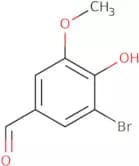
Produto descontinuado5-Bromovanillin
CAS:5-Bromovanillin is an antimicrobial agent that inhibits the growth of bacteria by binding to the enzyme vanillin. It is used as a natural compound, in which it can be found in plants and fruits such as Eugenia caryophyllata and Vanilla planifolia. 5-Bromovanillin has been shown to have a potent inhibitory effect on bacterial growth. The inhibitory effect of this compound is due to its ability to coordinate with the vanillin molecule, forming a complex that blocks the reaction mechanism of the enzyme. This complex also reacts with p-hydroxybenzoic acid, which disrupts the cell membrane and causes leakage of cellular contents. 5-Bromovanillin has been studied using surface methodology and electrochemical impedance spectroscopy (EIS). These studies demonstrated that 5-bromovanillin has a high affinity for methanol solvent and inhibitor molecules, which may contribute to its antimicrobial activity.
Fórmula:C8H7BrO3Pureza:Min. 95%Cor e Forma:Yellow PowderPeso molecular:231.04 g/molRef: 3D-FB10623
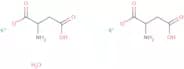
Produto descontinuadoPotassium DL-aspartate hemihydrate
CAS:Potassium DL-aspartate hemihydrate is a versatile building block that can be used as a reagent and as a speciality chemical. It is useful for research and development, as well as for the production of high-quality compounds and intermediates. This compound can be used in organic synthesis reactions and has been shown to be useful in the construction of scaffolds.
Fórmula:C4H7NO4H2O·KPureza:Min. 95%Cor e Forma:White PowderPeso molecular:181.21 g/molRef: 3D-FP43133
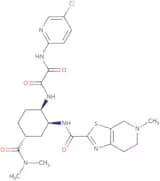
Produto descontinuadoEdoxaban impurity I
CAS:Edoxaban impurity I is a fine chemical that is a useful building block, reagent, and speciality chemical. It is a complex compound that can be used as a reaction component or as an intermediate in the synthesis of other compounds. Edoxaban impurity I has CAS number 1255529-23-7, which identifies it as a high quality and versatile building block.
Fórmula:C24H30ClN7O4SPureza:Min. 95%Peso molecular:548.06 g/mol7-Hydroxy-2-naphthalene sulfonic acid sodium
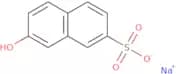
CAS:7-Hydroxy-2-naphthalene sulfonic acid sodium (7HNS) is a fluorescent probe that can be used for the detection of cross-links in collagen and elastin. The sensitivity of this compound is very high, with a detection limit of 1 pmol/ml. 7HNS binds to the lysine residues in collagen and elastin, forming covalent bonds that are detectable by fluorescence. It has been used in the analysis of tissues such as cartilage, bone, skin, and blood vessels.Fórmula:C10H7NaO4SPureza:Min. 93 Area-%Cor e Forma:PowderPeso molecular:246.22 g/mol