Glicociência
A glicociência é o estudo dos carboidratos e seus derivados, bem como das interações e funções biológicas em que participam. Este campo de pesquisa é crucial para compreender uma ampla variedade de processos biológicos, incluindo o reconhecimento celular, a sinalização, a resposta imune e o desenvolvimento de doenças. A glicociência tem aplicações importantes na biotecnologia, na medicina e no desenvolvimento de novos medicamentos e terapias. Na CymitQuimica, oferecemos uma ampla seleção de produtos de alta qualidade e pureza para pesquisa em glicociência. Nosso catálogo inclui monossacarídeos, oligossacarídeos, polissacarídeos, glicoconjugados e reagentes específicos, projetados para apoiar os pesquisadores em seus estudos sobre a estrutura, função e aplicações dos carboidratos em sistemas biológicos. Esses recursos são destinados a facilitar descobertas científicas e aplicações práticas em diversas áreas das biociências e da medicina.
Subcategorias de "Glicociência"
- Amino açúcares(108 produtos)
- Anticorpos Glico-Relacionados(282 produtos)
- Glicolípidos(46 produtos)
- Glicosaminoglicanos (GAGs)(55 produtos)
- Glicosídeos(419 produtos)
- Monossacáridos(6.624 produtos)
- Oligossacarídeos(3.682 produtos)
- Polissacáridos(503 produtos)
Foram encontrados 11046 produtos de "Glicociência"
Ordenar por
Pureza (%)
0
100
|
0
|
50
|
90
|
95
|
100
4-Methoxyphenyl-D-ribofuranoside
<p>4-Methoxyphenyl-D-ribofuranoside is a monosaccharide that is used in the synthesis of oligosaccharides and polysaccharides. It is a synthetic compound that can be fluorinated, methylated, or glycosylated. The chemical formula for 4-methoxyphenyl-D-ribofuranoside is C6H8O5. The molecular weight of 4-methoxyphenyl-D-ribofuranoside is 184.12 g/mol. This product does not contain any hazardous chemicals and can be custom synthesized to meet your needs.</p>Pureza:Min. 95%2-C-(2,3,4,6-Tetra-O-acetyl-a-D-glucopyranosyl) ethyne
CAS:2-C-(2,3,4,6-Tetra-O-acetyl-a-D-glucopyranosyl) ethyne is a custom synthesis that has been modified with fluorination. It is a monosaccharide sugar with a CAS number of 1236069-71-8. This chemical is also known as Oligo(2,3,4,6-tetraacetyl aD glucopyranosyl) ethyne. The chemical is used in the synthesis of oligosaccharides and polysaccharides.Fórmula:C16H20O9Pureza:Min. 95%Peso molecular:356.32 g/molSucrose - USP
CAS:<p>Consumed in large amounts around the world as a food ingredient. Other applications of sucrose include its use in surfactants (esters), polyurethanes (polyols), plastics (alkyds) to produce dextrans (Leuconostoc mesenteroides fermentation) and ethanol (Saccharomyces cerevisiae fermentation).</p>Fórmula:C12H22O11Pureza:Min. 95%Cor e Forma:White/Off-White SolidPeso molecular:342.3 g/molAmyl 2-acetamido-3,4,6-tri-O-acetyl-2-deoxy-b-D-glucopyranoside
CAS:<p>Amyl 2-acetamido-3,4,6-tri-O-acetyl-2-deoxy-b-D-glucopyranoside is a fluorinated carbohydrate that has been synthesized by glycosylation. This compound is a complex carbohydrate with a high purity and custom synthesis. It is an oligosaccharide that has undergone the click modification and methylation of the sugar. The carbonyl group on the sugar was modified to produce methyl ester or methoxymethyl ether of the sugar in order to provide stability against degradation.</p>Fórmula:C19H31NO9Pureza:Min. 95%Peso molecular:417.45 g/molMycophenolic acid phenolic b-D-glucoside
CAS:<p>Mycophenolic acid phenolic b-D-glucoside is a high purity custom synthesis that can be modified to suit customer requirements. It is a complex carbohydrate with a methyl group, fluorine atom, and glycosylation. The chemical name for Mycophenolic acid phenolic b-D-glucoside is CAS No. 55533-52-3. This product is also known as Glycosylation, Oligosaccharide, sugar, Synthetic, Fluorination, Custom synthesis, Methylation, Monosaccharide, Polysaccharide, saccharide. Click modification or Modification.</p>Fórmula:C23H30O11Pureza:Min. 95%Peso molecular:482.48 g/mol4-Toluoyl 2,3-di-O-benzyl-4,6-O-benzylidene-α-D-thiomannopyranoside
CAS:<p>4-Toluoyl 2,3-di-O-benzyl-4,6-O-benzylidene-a-D-thiomannopyranoside is a modification of the sugar, Mannose. The chemical structure is similar to that of D-Mannose with the exception that one oxygen atom has been replaced with a fluorine atom. This structural change in the sugar's backbone imparts a higher degree of water solubility and a lower affinity for proteins. 4-Toluoyl 2,3-di-O-benzyl-4,6 -O -benzylidene -a -D -thiomannopyranoside is used as an artificial sweetener and flavor enhancer in food products.</p>Fórmula:C34H34O5SPureza:Min. 95%Peso molecular:554.7 g/molEthyl 3-O-allyl-4,6-O-benzylidene-2-O-levulinoyl-b-D-thioglucopyranoside
Ai Product Descriptions 50 CreativePureza:Min. 95%2-Pyridyl 2,3,4,6-tetra-O-acetyl-b-D-thioglucopyranoside
CAS:2-Pyridyl 2,3,4,6-tetra-O-acetyl-b-D-thioglucopyranoside is a custom synthesis of a monosaccharide with a polysaccharide. This compound is used in the modification of saccharides by fluorination and methylation. It also has click modification, which is the addition of an acetate to a glycosyl acceptor. The CAS number for this compound is 105120-89-6.Fórmula:C19H23NO9SPureza:Min. 95%Peso molecular:441.45 g/molAstragaloside II
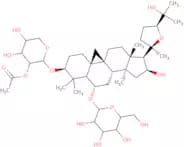
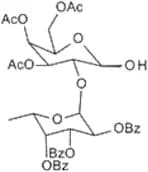
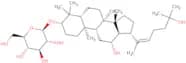
CAS:<p>Astragaloside II is a natural compound that has been shown to have anti-inflammatory effects in vitro and in vivo. Astragaloside II inhibits the production of inflammatory mediators by inhibiting phosphodiesterase and cyclooxygenase pathways. It also has a matrix effect on the cells, which may be due to its ability to activate protein kinase C. This compound also has an analytical method, which consists of HPLC with UV detection at 210 nm.</p>Fórmula:C43H70O15Pureza:Min. 95%Cor e Forma:White To Off-White SolidPeso molecular:827.01 g/mol3,4,6-Tri-O-acetyl-2-O-(2,3,4-tri-O-benzoyl-a-L-fucopyranosyl)-D-galactopyranose
<p>3,4,6-Tri-O-acetyl-2-O-(2,3,4-tri-O-benzoyl-a-L-fucopyranosyl)-D-galactopyranose (TFP) is a fluorinated carbohydrate synthesized by the reaction of 3,4,6 trihydroxyacetophenone with 2,3,4 trihydroxypentanediol and acetyl chloride. TFP is a complex carbohydrate that can be used to modify proteins and glycoproteins. The methylation of TFP has been shown to decrease the binding affinity between lectins and glycoproteins.</p>Fórmula:C39H40O16Pureza:Min. 95%Peso molecular:764.73 g/mol2,3,4,6-Tetra-O-acetyl-b-D-glucopyranosyl-(N2-Fmoc)-L-Asparagine
CAS:<p>2,3,4,6-Tetra-O-acetyl-b-D-glucopyranosyl-(N2-Fmoc)-L-Asparagine is a bifunctional compound that is used as an intermediate in the synthesis of other compounds. It is a white solid that can be purified by recrystallization from hot water.</p>Fórmula:C33H36N2O14Pureza:Min. 95%Peso molecular:684.65 g/molk-Carraheptaose tetrasulfate tetrasodium salt
<p>k-carrageenan derived heptasaccharide tetrasulfate+(3-6 anhydrogalactose)</p>Fórmula:C42H62O45S4Na4Pureza:Min. 95%Peso molecular:1,507.14 g/molGala1-3Galb1-4GlcNAca1-HDPE
Gala1-3Galb1-4GlcNAca1-HDPE is a high purity, custom synthesis sugar. The monosaccharide Gala is modified by Click chemistry to form the glycosylation and then fluorinated to create the fluorination modification. The glycosylation is then methylated and finally modified with a saccharide. This product has CAS No.Fórmula:C60H116N3PO22Pureza:Min. 95%Peso molecular:1,262.54 g/molUDP-4-azido-4-deoxy-D-glucose
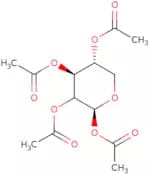
CAS:UDP-4-azido-4-deoxy-D-glucose is an analogue of UDP-glucose with an azide group at the 4 position. In the presence of α-lactalbumin, UDP-4-azido-4-deoxy-D-glucose show pronounced inhibition of lactose synthesis in a concentration dependent manner.Pureza:Min. 95%1,2,3,4-Tetra-O-acetyl-b-D-arabinopyranose
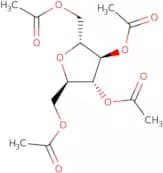
CAS:<p>1,2,3,4-Tetra-O-acetyl-b-D-arabinopyranose is a custom synthesis of a carbohydrate. It is a tetra acetylated form of arabinopyranose that has been fluorinated. The fluorination process increases the reactivity of the sugar and allows for it to be glycosylated or methylated. This sugar can be used in the synthesis of oligosaccharides and complex carbohydrates. These can be used as sweeteners or functional food additives.</p>Fórmula:C13H18O9Pureza:Min. 95%Peso molecular:318.28 g/mol2,5-Anhydro-D-mannitol tetraacetate
CAS:2,5-Anhydro-D-mannitol tetraacetate (2,5-AMT) is a medicament that belongs to the group of tetraacetates. It is used as an oral preparation and has been shown to be effective in treating acute myeloid leukemia. 2,5-AMT is an analog of D-mannitol and it can be used for the treatment of cancer. 2,5-AMT has anticancer activity that is due to its ability to inhibit the growth of tumor cells by inhibiting the synthesis of proteins necessary for cell division. It also inhibits the production of fibrous tissue in chronic pancreatitis and fibrosis. This drug may cause allergic reactions such as skin rashes or lip swelling.Fórmula:C14H20O9Pureza:Min. 95%Peso molecular:332.3 g/mol2-Acetamido-2-deoxy-3-O-(b-D-gluco-4-enepyranosyl uronic acid)-6-sulfo-D-galactopyranose disodium salt
<p>This is a custom synthesis of a complex carbohydrate. The CAS number, polysaccharide, modification, saccharide and methylation are all listed. This is a high purity product that has been fluorinated and synthesized with a click modification. It is glycosylated and modified with methyl groups. This product is made from sugar, which is also listed.</p>Fórmula:C14H19NO14S·2NaPureza:Min. 95%Peso molecular:503.34 g/molHyaluronate biotin - Molecular Weight - 50kDa
<p>Hyaluronate biotin is a complex carbohydrate that contains both a saccharide and a polysaccharide. The saccharide is usually linked to the backbone of the polysaccharide via glycosylation.</p>Pureza:Min. 95%D-Mannose-3-13C
CAS:Please enquire for more information about D-Mannose-3-13C including the price, delivery time and more detailed product information at the technical inquiry form on this pageFórmula:C6H12O6Pureza:Min. 95%Peso molecular:181.15 g/molBenzyl 2-acetamido-3,4,6-tri-O-acetyl-2-deoxy-a-D-galactopyranoside
CAS:<p>Benzyl 2-acetamido-3,4,6-tri-O-acetyl-2-deoxy-a-D-galactopyranoside is a custom synthesis of a complex carbohydrate. It reacts with the terminal hydroxyl group of an oligosaccharide to form an ether bond and also has fluorescent properties.</p>Fórmula:C21H27NO9Pureza:Min. 95%Peso molecular:437.44 g/moliso-Lacto-N-neooctaose
CAS:<p>Iso-lacto-N-neooctaose is a prebiotic oligosaccharide that can be found in breast milk. Iso-lacto-N-neooctaose is a carbohydrate molecule with a high degree of polymerisation that is resistant to digestion by human enzymes, which means it reaches the gut microbiota where it can stimulate the growth of beneficial bifidobacteria. Iso-lacto-N-neooctaose has been shown to have bioactive properties in humans and infants, including antihypertensive effects, antiulcerogenic effects, and immunomodulatory effects. Studies have also shown that this compound may help prevent colorectal cancer by increasing the population of bifidobacteria in the colon.</p>Fórmula:C54H91N3O41Pureza:Min. 95%Peso molecular:1,438.3 g/molNefopam glucuronide
<p>Nefopam is a compound that has been used as an analgesic and antipyretic. It is structurally related to the benzodiazepine class of drugs, but is not chemically equivalent to any other known drug. Nefopam has a low therapeutic index and can cause severe toxic effects in overdose. The most common adverse effects of nefopam are dizziness, drowsiness, headache, nausea and vomiting. An overdose can lead to death by respiratory paralysis or cardiac arrest.</p>Fórmula:C23H27NO7Pureza:Min. 95%Peso molecular:429.46 g/molN-(2-Fluoroacetyl)-D-glucosamine
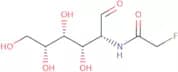
CAS:N-(2-Fluoroacetyl)-D-glucosamine is a fluorinated derivative of D-glucosamine that has been used as a substrate in biochemical studies of glycosyltransferases. It has been found to be synthesized by lactobacillus acidophilus, which is an acidic bacterium that inhabits the human stomach and intestine. The biological properties of N-(2-fluoroacetyl)-D-glucosamine have not yet been studied in depth, but it has shown potential as a nonsteroidal anti-inflammatory drug.Fórmula:C8H14FNO6Pureza:Min. 95%Peso molecular:239.2 g/mol2-Deoxy-D- arabino- hexonic acid calcium
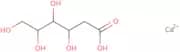
CAS:2-Deoxy-D-arabino-hexonic acid calcium is a fluorinated monosaccharide with a molecular weight of 348.09 g/mol. It can be used for the synthesis of oligosaccharides, glycosylations, and polysaccharides. Click modification, methylation, sugar modification are all possible modifications for this compound. This product has been custom synthesized by our company and is available in high purity.Fórmula:C6H12O6·xCaPureza:Min. 95%3-Deoxy-1,2:5,6-di-O-isopropylidene-a-D-glucofuranose
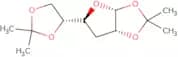
CAS:<p>3-Deoxy-1,2:5,6-di-O-isopropylidene-a-D-glucofuranose is an oligosaccharide that belongs to the group of polysaccharides. It is a methylated saccharide with a high degree of purity and can be custom synthesized for use as a carbohydrate in pharmaceuticals. 3-Deoxy-1,2:5,6-di-O-isopropylidene-a-D-glucofuranose is used in the synthesis of glycosylations and has been shown to have antiviral activity against Epstein Barr virus by inhibiting viral protein synthesis.</p>Fórmula:C12H20O5Pureza:Min. 95%Peso molecular:244.29 g/mol16a-Hydroxyestrone 16-b-D-glucuronide
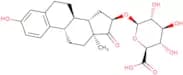
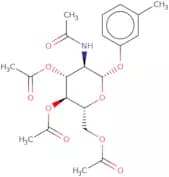
CAS:16a-Hydroxyestrone 16-b-D-glucuronide is a conjugate of the hydroxyestrone and glucuronic acid. It is a metabolite of estradiol, which is the most potent estrogen produced by the human body. The compound has been found in urine, saliva, and breast milk. 16a-Hydroxyestrone 16-b-D-glucuronide is an inactive steroid that can be conjugated with glucuronic acid to form a water soluble molecule that can be excreted in the urine or bile.Fórmula:C24H30O9Pureza:Min. 95%Peso molecular:462.49 g/mol3-Methylphenyl 2-acetamido-3,4,6-tri-O-acetyl-2-deoxy-b-D-glucopyranoside
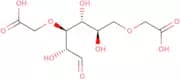
CAS:3-Methylphenyl 2-acetamido-3,4,6-tri-O-acetyl-2-deoxy-b-D-glucopyranoside is a synthetic chemical compound. It has been shown to have antiviral activity and inhibit the growth of bacteria.Fórmula:C21H27NO9Pureza:Min. 95%Peso molecular:437.44 g/mol3,6-Di-O-Carboxymethyl-D-glucose
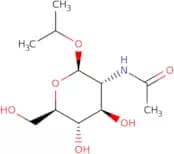
CAS:<p>3,6-Di-O-Carboxymethyl-D-glucose is a methylated sugar that is synthesized from D-glucose. It is a white powder that is soluble in water and has a molecular weight of 586.06 g/mol. 3,6-Di-O-Carboxymethyl-D-glucose can be used for the synthesis of oligosaccharides and glycosylations. It can also be used as an intermediate for the production of fluorinated saccharides, which are useful for click chemistry modifications. 3,6-Di-O-Carboxymethyl-D-glucose can be custom synthesized to meet specific requirements.</p>Fórmula:C10H16O10Pureza:Min. 95%Peso molecular:296.23 g/molIsopropyl 2-acetamido-2-deoxy-b-D-glucopyranoside
CAS:<p>Isopropyl 2-acetamido-2-deoxy-b-D-glucopyranoside is a chromatographic agent used in liquid chromatography. It is a reaction product of polysaccharides and fatty acids, which are extracted from fruits. Isopropyl 2-acetamido-2-deoxy-b-D-glucopyranoside has been shown to inhibit the growth of typhimurium and other viruses in cell culture. The safety profile of this compound has not been established in humans and should be tested before use in vivo.</p>Fórmula:C11H21NO6Pureza:Min. 95%Peso molecular:263.29 g/molBenzyl 2-acetamido-2,4-dideoxy-4-fluoro-a-D-glucopyranose
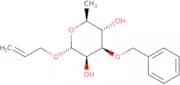
CAS:<p>This high-purity custom synthesis is a sugar that is modified with Click chemistry. It is fluorinated, glycosylated, and has been synthesized using methylation and polysaccharide modification. In addition to being an oligosaccharide and monosaccharide, this carbohydrate is also a complex carbohydrate.</p>Fórmula:C15H20FNO5Pureza:Min. 95%Peso molecular:313.32 g/molAllyl 3-O-benzyl-a-L-rhamnopyranoside
CAS:<p>Allyl 3-O-benzyl-a-L-rhamnopyranoside is an oligosaccharide that is a modification of the disaccharide, allyl 3-O-benzyl-a-D-galactopyranoside. Allyl 3-O-benzyl-a-L-rhamnopyranoside has been synthesized from D-(+)-glucose and L-(+)-rhamnose. The compound has a molecular weight of 756.40 g/mol. It is a white to off white powder that is soluble in water, but insoluble in ethanol at low concentrations. It can be used as a carbohydrate or sugar for research purposes.</p>Fórmula:C16H22O5Pureza:Min. 95%Peso molecular:294.35 g/molMethyl 2-deoxy-a-D-ribofuranoside diacetate
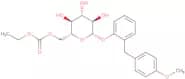
<p>Methyl 2-deoxy-a-D-ribofuranoside diacetate is a custom synthesis that is used for modification of natural and synthetic saccharides. This compound can be fluorinated, methylated, or modified with the click reaction. It can also be used to synthesize oligosaccharides and polysaccharides. Methyl 2-deoxy-a-D-ribofuranoside diacetate has been used as a monosaccharide and in glycosylation reactions. The CAS number is 5892-77-8 and it has the molecular formula C11H19NO9.</p>Pureza:Min. 95%2-(4-Methoxybenzyl)phenyl6-O-(ethoxycarbonyl)-β-D-glucopyranoside
CAS:Canagliflozin is a type of antidiabetic agent that is used to treat patients with type 2 diabetes. This drug works by decreasing the reabsorption of glucose in the kidneys, which increases the excretion of glucose, and thus reduces blood sugar levels. Canagliflozin also lowers blood pressure and has been shown to reduce cholesterol levels. It is an inhibitor of SGLT-1, a transporter protein in the kidney that is responsible for renal glucose reabsorption. The use of canagliflozin has been studied in animal models, where it was found to significantly increase glomerular filtration rate (GFR) and decrease blood pressure. It is recommended that canagliflozin be taken together with other anti-diabetic medications, such as insulin or metformin, due to its potential side effects on GFR and blood pressure.Fórmula:C23H28O9Pureza:Min. 95%Peso molecular:448.46 g/mol(2R,4R)-2-[L-Xylo-tetrahydroxybut-1-yl]-1,3-thiazolidine-4-carboxylic acid
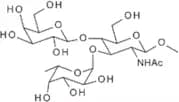
CAS:<p>(2R,4R)-2-[L-Xylo-tetrahydroxybut-1-yl]-1,3-thiazolidine-4-carboxylic acid is a methylated saccharide that can be used for the synthesis of glycosides and other carbohydrate derivatives. (2R,4R)-2-[L-Xylo-tetrahydroxybut-1-yl]-1,3-thiazolidine-4-carboxylic acid has been shown to react with various reagents such as iodine and bromine. This product has been synthesized by Click modification.</p>Fórmula:C8H15NO6SPureza:Min. 95%Peso molecular:253.27 g/molLewis X trisaccharide methyl glycoside
CAS:<p>Lewis X is a glycoprotein found on the surface of red blood cells and is composed of a trisaccharide that is covalently attached to the protein. It is expressed in the cells of all individuals, but at different levels depending on their blood group. Lewis X is an antigen for monoclonal antibody, which recognizes it by binding to its sugar residues. The antibody can be used to detect Lewis X-expressing cells in the blood and for cancer diagnosis. Antibodies against Lewis X can also be used to inhibit tumor growth by enhancing natural killer cell activity and killing tumor cells.</p>Fórmula:C21H37NO15Pureza:Min. 95%Cor e Forma:PowderPeso molecular:543.52 g/mol6-O-tert-Butyldiphenylsilyl-D-galactal
CAS:<p>6-O-tert-Butyldiphenylsilyl-D-galactal is a glycosylated compound that is used as a starting material for the synthesis of various natural products. It is prepared by glycosylation of 6-bromo-1,2,3,4,5,6-hexahydroxydiphenylsulfide with D-galactose in the presence of potassium carbonate and triethylamine. The product was purified by recrystallization from ethyl acetate and n-butanol.</p>Pureza:Min. 95%1-O-Methyl-β-D-galactopyranoside
CAS:1-O-Methyl-beta-D-galactopyranoside is a monosaccharide sugar, which is a natural product of the degradation of plant cell walls. It is found in the blood of humans and other animals. 1-O-Methyl-beta-D-galactopyranoside has been shown to be an important reactive oxygen species (ROS) scavenger, which can protect cells from oxidative damage by reacting with ROS and converting them into less harmful molecules. 1-O-Methyl-beta-D-galactopyranoside binds to lectins and oligosaccharides, which are carbohydrate structures on the surface of cells that are involved in cellular recognition. This binding process may lead to uptake of 1OmBG by cells, which may be due to its ability to form hydrogen bonds with the hydroxyl group on polysaccharides such as polysaccharides in the plasma membrane or glycoproteinsFórmula:C7H14O6Pureza:Min. 98.0 Area-%Peso molecular:194.19 g/molRef: 3D-M-3591
1kgA consultar100gA consultar250gA consultar500gA consultar2500gA consultar-Unit-kgkgA consultarGQ1b-Ganglioside ammonium
CAS:<p>GQ1b ganglioside (ammonium salt) has a core tetrasaccharide structure (Galβ1,3GalNAcβ1,4Galβ1,4Glc) with two sialic acids (NeuAc) linked α2,3/α2,8 to the inner galactose residue, two sialic acids (NeuAc) linked α2,3/α2,8 to the terminal galactose residue, and ceramide linked β to position 1 on the reducing terminal glucose residue (Ledeen, 2009). Anti-GQ1b ganglioside antibody is associated with Miller Fisher syndrome and is also found in patients with related conditions that may share the same pathogenic mechanism, such as, Bickerstaff brainstem encephalitis. Thus, the measurement of anti-GQ1b antibody in suspected cases of Miller Fisher syndrome is a useful diagnostic marker (Paparounas, 2004). It has been found that GQ1b ganglioside contributes to synaptic transmissions and synapse formation. Low concentrations of GQ1b ganglioside, evoked dopamine (DA) release from laboratory tissues (Chen, 2018).</p>Fórmula:C106H182N6O56·xNH4Pureza:Min. 95%L-[5-13C]Xylose
CAS:Please enquire for more information about L-[5-13C]Xylose including the price, delivery time and more detailed product information at the technical inquiry form on this pageFórmula:C5H10O5Pureza:Min. 95%Peso molecular:151.12 g/molMethyl salicylate b-D-O-glucuronide methyl ester
CAS:Methyl salicylate b-D-O-glucuronide methyl ester is a glycosylated and fluorinated compound that is structurally similar to natural monosaccharides. It can be synthesized with high purity and custom modifications, such as Click chemistry. Methyl salicylate b-D-O-glucuronide methyl ester has been used in the synthesis of oligosaccharides, saccharides, and polysaccharides.Fórmula:C15H18O9Pureza:Min. 95%Peso molecular:342.3 g/molMethyl 2,6-anhydro-3-deoxy-D-lyxo-hept-2-enonimidate
CAS:Methyl 2,6-anhydro-3-deoxy-D-lyxo-hept-2-enonimidate is a sugar molecule. It is an example of a complex carbohydrate and consists of saccharide units that are linked together in a glycosylation reaction. Methyl 2,6-anhydro-3-deoxy-D-lyxo-hept-2-enonimidate can be synthesized by the methylation of monosaccharides or by the glycosylation of polysaccharides. This compound can be custom synthesized to meet your specifications.Fórmula:C8H13NO5Pureza:Min. 95%Peso molecular:203.19 g/mol2,3:4,5-Di-O-isopropylidene-b-D-fructopyranose-D12
Produto Controlado2,3:4,5-Di-O-isopropylidene-b-D-fructopyranose (2,3:4,5-di-OIPF) is a synthetic sugar that has been fluorinated and methylated. 2,3:4,5-Di-OIPF can be used as a building block for the synthesis of oligosaccharides or polysaccharides. It can also be modified with an acetal group to form an acetal sugar.Fórmula:C12H8D12O6Pureza:Min. 95%Peso molecular:272.35 g/molBenzyl 2,3,4-tri-O-acetyl-4-nitromethyl-b-D-arabinopyranose
CAS:<p>Benzyl 2,3,4-tri-O-acetyl-4-nitromethyl-b-D-arabinopyranose is a water soluble, white solid that is a glycosylation product of Benzyl 2,3,4-tri-O-acetyl b D arabinopyranose and 4 nitrobenzaldehyde. It can be used for the modification of polysaccharides and as an intermediate in the synthesis of oligosaccharides. This compound has been shown to be effective in inhibiting the growth of Mycobacterium tuberculosis and Mycobacterium avium complex.</p>Fórmula:C19H23NO10Pureza:Min. 95%Peso molecular:425.39 g/mol2,5-Dideoxystreptamine dihydrochloride
CAS:<p>2,5-Dideoxystreptamine dihydrochloride is a compound that has been investigated as an antibiotic. This chemical inhibits the growth of microorganisms by inhibiting their protein synthesis, which is required for cell division. 2,5-Dideoxystreptamine dihydrochloride was first isolated from Streptomyces griseus and has been shown to have high levels of activity against Bacillus subtilis and Micrococcus lysodeikticus.</p>Pureza:Min. 95%3,5:6,7-Di-O-isopropylidene-D-glycero-D-gulo-heptonic acid-γ-lactone
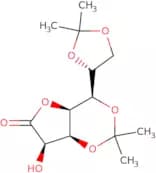
CAS:3,5:6,7-Di-O-isopropylidene-D-glycero-D-gulo-heptonic acid-gamma-lactone is a synthetic sugar that has been modified with methyl groups. The chemical can be used in the synthesis of saccharides and polysaccharides. It is also possible to use this chemical as a click modification agent for proteins or other biomaterials. This product has a CAS number of 6605-22-7 and can be synthesized in high purity. The product is fluorinated and complex carbohydrates.Fórmula:C13H20O7Pureza:Min. 95%Peso molecular:288.29 g/mol4-Methoxyphenyl-2,3,5-tri-O-benzoyl-D-ribofuranoside
<p>Modification of glycosylation is a process that can be used to alter the properties or characteristics of a carbohydrate. This modification is done by adding a sugar molecule to the existing glycosidic linkage, modifying the chemical structure. Modification of glycosylation has been shown to increase the bioavailability and decrease the rate of clearance of drugs in animal models. This process can also be used to synthesize oligosaccharides, which are carbohydrates consisting of two to nine monosaccharide units. Monosaccharides are sugars composed only of one kind of sugar molecule, such as glucose or fructose. Methylation and fluorination are two types of chemical modifications that can be performed on saccharides (sugars). These modifications have been shown to increase the stability and solubility of saccharides while decreasing their immunogenicity.</p>Pureza:Min. 95%a-L-Rhamnopyranosyl bromide tribenzoate
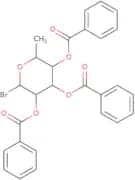
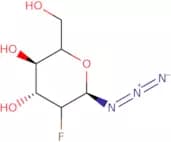
CAS:<p>a-L-Rhamnopyranosyl bromide tribenzoate is a methylated saccharide that can be used in the synthesis of oligosaccharides and polysaccharides. It is a fluorinated compound, which can be used in click chemistry and has been shown to have anti-inflammatory properties. a-L-Rhamnopyranosyl bromide tribenzoate has been shown to inhibit the growth of cancer cells by inhibiting protein synthesis. This methylation product is water soluble and is available as a white powder at high purity. It can also be used in glycosylation reactions as well as custom syntheses.</p>Pureza:Min. 95%2-Deoxy-2-fluoro-b-D-galactopyranosyl azide
CAS:2-Deoxy-2-fluoro-b-D-galactopyranosyl azide is a synthetic modification of the sugar 2,3,4,6-tetraacetamido-2,3,4,6-tetraazido-b-D-galactopyranose. It is used as a chemical probe for the study of glycosylation reactions and carbohydrate synthesis. 2-Deoxy-2-fluoro b D galactopyranosyl azide has been shown to be an efficient reagent for the methylation of saccharides. This compound is also used in the modification of polysaccharides. Methylation reactions are often used to prepare modified carbohydrates that are difficult to synthesize by other methods. These compounds can be used as chemical probes for studying glycosylation reactions and carbohydrate synthesis.Fórmula:C6H10FN3O4Pureza:Min. 95%Peso molecular:207.16 g/molPseudoginsenoside Rh2
CAS:<p>Pseudoginsenoside Rh2 is a bioactive compound, which is a derivative of ginsenosides found in Panax ginseng. It is specifically extracted from the plant's root, known for its rich saponin content. Pseudoginsenoside Rh2 functions by interacting with various cellular pathways, influencing apoptosis, and cell cycle regulation. The mechanism of action involves modulation of signaling pathways, including PI3K/Akt and MAPK, which are crucial in controlling cell growth and survival.</p>Fórmula:C36H62O8Pureza:Min. 95%Peso molecular:622.87 g/mol1,3-o-Dibenzyl-N-acetyl-β-D-glucosamine 4,6-diacetate
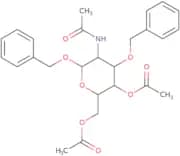
CAS:<p>Please enquire for more information about 1,3-o-Dibenzyl-N-acetyl-β-D-glucosamine 4,6-diacetate including the price, delivery time and more detailed product information at the technical inquiry form on this page</p>Fórmula:C26H31NO8Pureza:Min. 95%Peso molecular:485.5 g/molR,S-Flurbiprofen-acyl-b-D-glucuronide
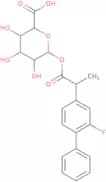
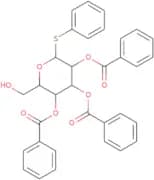
CAS:<p>R,S-Flurbiprofen-acyl-b-D-glucuronide is a custom synthesis of an oligosaccharide that has been modified by fluorination and methylation. This saccharide is synthesized from R,S-flurbiprofen using the click modification. It is a polysaccharide with glycosylation at the sugar level. The carbohydrate chain also contains monosaccharides and complex carbohydrates.</p>Fórmula:C21H21FO8Pureza:Min. 95%Peso molecular:420.39 g/molPhenyl 2,3,4-tri-O-benzoyl-b-D-thiogalactopyranoside
CAS:<p>Phenyl 2,3,4-tri-O-benzoyl-b-D-thiogalactopyranoside is a methylation product of b-D-thiogalactopyranoside. It has CAS No. 139608-11-0 and a molecular weight of 536.2. This compound is an Oligosaccharide with a molecular formula of C8H8O7 and a molecular weight of 432.1. Phenyl 2,3,4-tri-O-benzoyl-b-D-thiogalactopyranoside is also known as Methyl 3,4-(Benzoyloxy)galactoside or Methyl 3,4-(Benzoic acid)galactoside. This compound is soluble in water and ethanol and has the appearance of a white to off white powder at room temperature.</p>Pureza:Min. 95%Isopropyl 2,3,4,6-tetra-O-benzyl-b-D-glucopyranoside
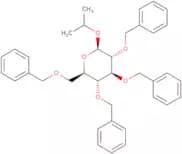
CAS:<p>Isopropyl 2,3,4,6-tetra-O-benzyl-b-D-glucopyranoside is a synthetic glycosylation product. It can be used as a building block for the synthesis of oligosaccharides and sugar derivatives. The product is available in custom synthesis and can be fluorinated to create new compounds. Isopropyl 2,3,4,6-tetra-O-benzyl-b-D-glucopyranoside can also be methylated to create new compounds. This product is mainly used in the preparation of saccharides and polysaccharides. It has a purity level of more than 99% and is not modified with any other functional groups.</p>Fórmula:C37H42O6Pureza:Min. 95%Peso molecular:582.73 g/mol1,2,4,6-Tetra-O-acetyl-3-O-benzyl-b-D-glucopyranose
CAS:<p>Hypromellose is a polymer that is made from cellulose. It is used as an excipient in pharmaceutical formulations, such as tablets and capsules. Hypromellose can also be used as a food additive for thickening, stabilizing, and suspending. It has a molecular weight of about 20000 Daltons and may have the following side effects: mild gastrointestinal discomfort, diarrhea, nausea, or vomiting.</p>Fórmula:C21H26O10Pureza:Min. 95%Cor e Forma:PowderPeso molecular:438.43 g/molMethyl 3,6-dideoxy-a-D-arabino-hexopyranoside
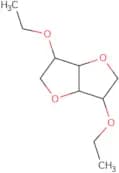
CAS:<p>Methyl 3,6-dideoxy-a-D-arabino-hexopyranoside is a fluorinated sugar analog. It is a monosaccharide that has been synthesized and modified to include an amine group for the purpose of glycosylation. Methyl 3,6-dideoxy-a-D-arabino-hexopyranoside has CAS number 6154-71-8 and can be found in the Polysaccharides category. The compound is soluble in water, ethanol, methanol, acetone, ethyl acetate and chloroform. Methyl 3,6-dideoxy-a-D-arabino-hexopyranoside has a molecular weight of 392.5 grams per mole and a density of 1.3 grams per cubic centimeter. Methyl 3,6 -dideoxy -a -D -arabino -hexopyranoside is</p>Fórmula:C7H14O4Pureza:Min. 95%Peso molecular:162.19 g/mol1,4:3,6-Dianhydro-2,5-di-O-ethyl-D-glucitol
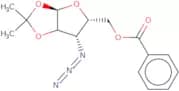
CAS:<p>1,4:3,6-Dianhydro-2,5-di-O-ethyl-D-glucitol (1,4:3,6-DDG) is a synthetic monosaccharide that has been modified with fluorination. It is a complex carbohydrate that can be used in the synthesis of glycosylations and polysaccharides. The chemical modification of 1,4:3,6-DDG with fluorination results in its increased stability under acidic conditions. This product is custom synthesized to meet the requirements of our clients.</p>Pureza:Min. 95%3-Azido-5-O-benzoyl-3-deoxy-1,2-O-isopropylidene-a-D-ribofuranose
<p>3-Azido-5-O-benzoyl-3-deoxy-1,2-O-isopropylidene a D-ribofuranose (3ABI) is a synthetic monosaccharide that can be synthesized via a custom synthesis. 3ABI is an oligosaccharide that has the ability to modify glycosylation and polysaccharide synthesis. The fluorination of this sugar provides it with high purity and stability. 3ABI has been shown to have a CAS number of 44793-23-2.</p>Fórmula:C15H17N3O5Pureza:Min. 95%Peso molecular:319.31 g/molDidesmethylsibutamine D-glucuronide
<p>Didesmethylsibutamine D-glucuronide is a custom synthesis, complex carbohydrate, Oligosaccharide, CAS No. that is modified with saccharide and Methylation. It is synthesized with Carbohydrate and sugar to produce a high purity product. It also has the following modifications: Fluorination, Synthetic.</p>Pureza:Min. 95%Hydroxy pioglitazone (M-IV) b-D-glucuronide
CAS:<p>Hydroxy pioglitazone (M-IV) b-D-glucuronide is a synthetic sugar that can be modified to produce a variety of derivatives. It is also known as M-IV, which stands for methylated IV, and has the following chemical structure:</p>Fórmula:C25H28N2O10SPureza:Min. 95%Peso molecular:548.56 g/molGlufosfamide
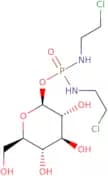
CAS:<p>Glufosfamide is a cytotoxic drug that is used in the treatment of some types of cancer. It is a prodrug that requires conversion to its active form, glufosfamid, by esterase enzymes before it can exert its genotoxic effects. Glufosfamide has shown to be active against platinum-resistant ovarian cancer and solid tumours. This drug also has been shown to inhibit the growth of prostate cancer cells and miapaca-2 cells, which are derived from pancreatic cancer. Glufosfamide has been found to have low toxicity in mice, but there may be adverse reactions when combined with other drugs such as erythromycin or ketoconazole.</p>Fórmula:C10H21Cl2N2O7PPureza:Min. 95%Peso molecular:383.16 g/molEthyl 2-deoxy-2-phthalimido-b-D-thioglucopyranoside
CAS:<p>Ethyl 2-deoxy-2-phthalimido-b-D-thioglucopyranoside is a synthetic, custom synthesis carbohydrate that is modified with fluorine. Ethyl 2-deoxy-2-phthalimido-b-D-thioglucopyranoside is a polysaccharide that has been shown to have high purity and good stability in solution. This compound is used as a versatile building block for the synthesis of glycosides and other saccharides. Ethyl 2-deoxy-2-phthalimido-b-D-thioglucopyranoside can be modified by methylation or glycosylation to produce different derivatives. It can also be used for the synthesis of complex carbohydrates, such as oligosaccharides and saccharides.</p>Pureza:Min. 95%6'-Sulpho Lewisa-BSA
<p>6'-Sulpho Lewisa-BSA is a carbohydrate that has been modified with sulphur and fluorine. It is used as a fluorescence probe for the detection of carbohydrates in solutions, such as glycoproteins, glycopeptides, and glycolipids. 6'-Sulpho Lewisa-BSA is a complex carbohydrate that can be synthesized from the reaction of d-glucose and D-alanine. It can also be custom synthesized to suit the needs of the customer. This product is high purity and can be methylated or glycosylated. 6'-Sulpho Lewisa-BSA also has been modified by click chemistry to incorporate fluorescent groups at specific sites on the sugar chain.</p>Pureza:Min. 95%1-Chloro-2-deoxy-3,4-di-O-toluoyl-D-ribopyranose
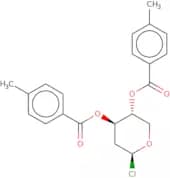
CAS:1-Chloro-2-deoxy-3,4-di-O-toluoyl-D-ribopyranose is a custom synthesis of a complex carbohydrate. It is an Oligosaccharide and Polysaccharide that has been modified using methylation and glycosylation. The saccharide has also been fluorinated and the synthetic product is highly pure with CAS No. 516511-18-5. 1-Chloro-2,3,4,-diO-(1'-chloroethylidene) -D-[alpha] -ribopyranose is a sugar that can be used in many different applications including pharmaceuticals, agrochemicals, and biotechnology.Fórmula:C21H21ClO5Pureza:Min. 95%Cor e Forma:White to off-white solid.Peso molecular:388.84 g/mol3-Azido-2,3-dideoxy-D-ribose
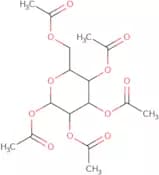
CAS:<p>3-Azido-2,3-dideoxy-D-ribose is a boron trifluoride etherate that has significant activity against the anomers of d-mannitol. It can be used as a stereoselective synthesis of the triflate on the corresponding anomer. Triflate is prepared by reaction with trifluoromethanesulfonic acid chloride and then reacted with sodium azide in ethanol to yield 3-azido-2,3-dideoxy-D-ribose. The product can be purified by recrystallization from acetic acid and water or by extraction with chloroform. This compound is also extracted from boric acid and dioxane using aqueous sodium hydroxide solution.</p>Pureza:Min. 95%Penta-O-acetyl-a-L-idopyranose
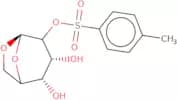
CAS:<p>Penta-O-acetyl-a-L-idopyranose is a monosaccharide that is synthesized from D-glucose and acetic anhydride. It has been modified with methylation, fluorination, and saccharide modification. Penta-O-acetyl-a-L-idopyranose is soluble in water, methanol, ethanol, and acetone. This compound has been shown to be useful for glycosylation reactions as well as click chemistry. CAS No. 16299-15-3.</p>Fórmula:C16H22O11Pureza:Min. 95%Cor e Forma:PowderPeso molecular:390.34 g/mol1,6-Anhydro-2-O-p-toluenesulfonyl-b-D-glucopyranose
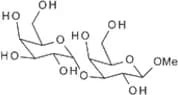
CAS:<p>1,6-Anhydro-2-O-p-toluenesulfonyl-b-D-glucopyranose is a synthetic sugar that is used in glycosylation reactions. It has high purity and is available for custom synthesis. The compound is primarily used as a substrate for Click chemistry modifications to the anomeric carbon. It has been shown to effectively inhibit the growth of bacteria by binding to DNA gyrase, preventing the formation of covalent bonds that are required for bacterial cell division.</p>Fórmula:C13H16O7SPureza:Min. 95%Peso molecular:316.33 g/molMethyl 3-O-(a-D-galactopyranosyl)-b-D-galactopyranoside
Methyl 3-O-(a-D-galactopyranosyl)-b-D-galactopyranoside is a fluorinated methylated carbohydrate. It is an oligosaccharide with a sugar backbone. The sugar in the molecule is a monosaccharide, which is attached to other sugars through glycosylation. Methyl 3-O-(a-D-galactopyranosyl)-b-D-galactopyranoside has been synthesized and can be custom synthesized for specific requirements. It has high purity and can be obtained with a variety of modifications, such as fluorination to increase its stability. This compound can be used in a variety of applications, including the treatment of tuberculosis infections and cancer.Fórmula:C13H24O11Pureza:Min. 95%Cor e Forma:White to off-white solid.Peso molecular:356.32 g/molGala1-3Galb1-4(6-deoxyGlcNAc)-HSA
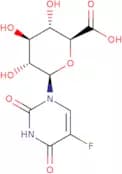
<p>Gala1-3Galb1-4(6-deoxyGlcNAc)-HSA is a custom synthesis of a complex carbohydrate. It is an oligosaccharide with CAS No. and Polysaccharide that has been modified by Methylation, Glycosylation, and Click modification. Carbohydrate is one of the most important macronutrients for human health, as it provides energy and cell building blocks. Sugar (e.g., glucose) is the simplest form of carbohydrate, while saccharide refers to chains of sugar molecules. Gala1-3Galb1-4(6-deoxyGlcNAc)-HSA has been fluorinated and synthesized with high purity in order to be used as a drug delivery system. This drug can be used to treat various diseases such as diabetes mellitus type I or II, cancer, or HIV/AIDS.</p>Pureza:Min. 95%5-Fluorouracil N-b-D-glucuronide
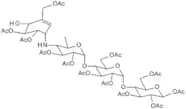
CAS:<p>5-Fluorouracil N-b-D-glucuronide is the major metabolite of 5-fluorouracil. It is mainly excreted in urine and bile, and has a high blood level. The glucuronide conjugate of 5-fluorouracin is hydrolyzed by beta-glucuronidase to generate 5-fluorouridine, which can be reabsorbed into the cell to form cytotoxic 5-fluoro uridine triphosphate. This process inhibits protein synthesis, leading to cell death. The half life of 5FU glucuronide is short and it needs to be constantly replaced with new doses. It has also been shown that levels of 5FU glucuronide are higher in tissues than in plasma, which may explain its inhibitory effect on tumors.</p>Fórmula:C10H11FN2O8Pureza:Min. 95%Peso molecular:306.2 g/molAcarbose tridecaacetate
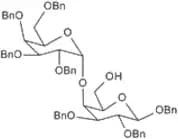
CAS:<p>Acarbose tridecaacetate is a bacterial extract that has been shown to inhibit the growth of various strains of bacteria. This extract was extracted from the fields and contains aluminum oxide impurities. Acarbose tridecaacetate has shown efficacy in seed culture and actinomyces, which are two types of bacteria. The sequence of this extract has been determined using aluminum oxide. Acarbose tridecaacetate is soluble in a variety of solvents, including organic solvents and solvents. It can be purified by chromatography to remove any bulk drug or organic solvent that may be present.</p>Fórmula:C51H69NO31Pureza:Min. 95%Cor e Forma:White PowderPeso molecular:1,192.08 g/mol1,2,3-Tri-O-benzyl-4-O-(2,3,4,6-tetra-O-benzyl-a-D-galactopyranosyl)-b-D-galactopyranoside
<p>1,2,3-Tri-O-benzyl-4-O-(2,3,4,6-tetra-O-benzyl-a-D-galactopyranosyl)-b-D-galactopyranoside is an oligosaccharide with a galactosamine residue at the nonreducing end. It is a triacylglycerol that has been methylated and fluorinated. This product can be used as a sugar for synthesis of complex carbohydrates or for modification of monosaccharides. The high purity of this product makes it suitable for use in pharmaceuticals and other applications requiring high purity.</p>Fórmula:C61H64O11Pureza:Min. 95%Peso molecular:973.15 g/molN-(2-Deoxy-D-glucopyranosyl)-S-nitroso-N-acetyl-D,L-pencillamine
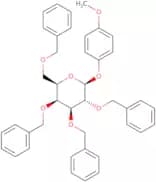
CAS:<p>N-(2-Deoxy-D-glucopyranosyl)-S-nitroso-N-acetyl-D,L-pencillamine is a custom synthesis of an Oligosaccharide. It is an unmodified saccharide with a CAS No. 188849-82-3. The chemical formula for this compound is C12H14N2O9 and its molecular weight is 368.24 g/mol. This compound has been synthesized using the Click modification, methylation, and fluorination techniques. N-(2-Deoxy-D-glucopyranosyl)-S-nitroso-N acetyl D,L pencillamine has a purity level of 95% or greater. This product has not been glycosylated or carbamoylated and does not contain any sugar moieties.</p>Fórmula:C13H23N3O8SPureza:Min. 95%Peso molecular:381.4 g/mol4-Methoxyphenyl 2,3,4,6-tetra-O-benzyl-β-D-galactopyranoside
CAS:4-Methoxyphenyl 2,3,4,6-tetra-O-benzyl-b-D-galactopyranoside is a matrix assisted laser desorption/ionization (MALDI) probe that is used for the detection of esophageal cancer. This probe has been shown to be resistant to non-Hodgkin's lymphoma and dna–dna hybridization. The type strain of this agent was found in a clinical sample from an esophagus biopsy. 4MPBGP has also been shown to have coagulation and waveform properties.Fórmula:C41H42O7Pureza:Min. 95%Peso molecular:646.77 g/molTri-b-GalNAc-C12-alkyne
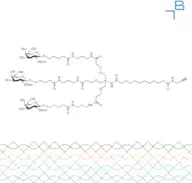
Tri-b-GalNAc-C12-alkyne, also known as trebler GalNAc alkyne, is a multivalent N-acetylgalactosamine (GalNAc) compound with high-affinity to bind to the asialoglycoprotein receptor (ASGPR) found on the surface of hepatocytes in the liver. This trivalent GalNAc derivative contains a C12 alkyne linker and has been extensively studied for its potential in targeted delivery of siRNA conjugates to liver tissue. The multivalent presentation of GalNAc moieties significantly enhances the binding avidity to ASGPR making it an attractive ligand for liver-specific targeting. Researchers have reported successful conjugation of tri-b-GalNAc-C12-alkyne to various therapeutic payloads, such as small interfering RNAs (siRNAs), to facilitate their selective uptake by hepatocytes and enable targeted gene silencing in the liver.Fórmula:C76H13N11O29Pureza:Min. 95%Peso molecular:1,664.92 g/mol5-(S-2-Phenyl-pyrrolidine)-1-yl-5-deoxy-1,2-isopropylidene-a-D-xylofuranose
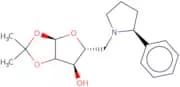
CAS:<p>The compound is a custom synthesis of 5-(S-2-Phenyl-pyrrolidine)-1-yl-5-deoxy-1,2-isopropylidene-a-D-xylofuranose. The compound is modified with fluorination, methylation, and monosaccharide. The compound has been synthesized using click chemistry for the modification of oligosaccharides and saccharides. The CAS No. for this compound is 1014404-87-5. This carbohydrate is a complex carbohydrate that has the ability to modify glycosylation and sugar structures in cells.</p>Fórmula:C18H25NO4Pureza:Min. 95%Peso molecular:319.4 g/mol3-O-(2,3,4,6-Tetra-O-benzyl-a-D-glucopyranosyl)-1,2,4,6-tetra-O-acetyl-b-D-glucopyranose
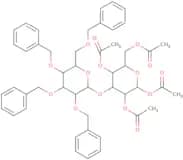
CAS:<p>3-O-(2,3,4,6-Tetra-O-benzyl-a-D-glucopyranosyl)-1,2,4,6-tetra-O-acetyl-b-D-glucopyranose is an oligosaccharide that has been modified with a click modification. This compound is a complex carbohydrate and it is synthesized from a monosaccharide. 3-O-(2,3,4,6-Tetra-O-benzyl-a-D--glucopyranosyl)-1,2,4,6-- tetra--O--acetyl--b--D--glucopyranose is used in methylation reactions.</p>Fórmula:C48H54O15Pureza:Min. 95%Peso molecular:870.93 g/mol(1R,3S,4R,8S)-3-Acetoxy-1-acetoxymethyl-8-benzloxy-2,6-dioxabicyclo[3,2,1]octane
CAS:(1R,3S,4R,8S)-3-Acetoxy-1-acetoxymethyl-8-benzloxy-2,6-dioxabicyclo[3,2,1]octane is a modification of a complex carbohydrate. It is synthesized by the methylation and glycosylation of the monosaccharide (1R,3S,4R,8S)-3-acetoxy-1-acetoxymethylcyclohexanecarboxylic acid. This product has a CAS number of 229469-37-8 and is available in high purity with 98% to 99% purity. This product can be used as an ingredient in pharmaceuticals or other chemical products.Fórmula:C18H22O7Pureza:Min. 95%Peso molecular:350.36 g/mol1,2,3,4-Tetra-O-acetyl-a-L-rhamnopyranose
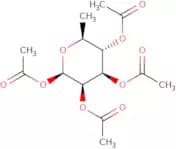
CAS:1,2,3,4-Tetra-O-acetyl-a-L-rhamnopyranose is a modified carbohydrate with the general structure of an oligosaccharide. It is a synthetic compound that has been modified with methylation and glycosylation. The purity of this product is high and it can be synthesized to order. This product has a CAS number of 27821-11-0 and can be found in the Carbohydrate section.Fórmula:C14H20O9Pureza:Min. 95%Peso molecular:332.3 g/molMethyl 4-O-methyl-D-glucopyranosyluronate
<p>Methyl 4-O-methyl-D-glucopyranosyluronate is a fungal metabolite that is produced by the reaction of armillaria with methyl 4-O-methyl-D-glucopyranoside. Methyl 4-O-methylglucuronyluronate has been shown to have an esterase activity, which can hydrolyze esters and linkages in the cell wall of fungi. This enzyme has been shown to have kinetic parameters that are different for different substrates. The catalytic site of this enzyme has also been found to be glutamic acid, which plays a role in the synthesis and degradation of proteins. Methyl 4-O-methylglucuronyluronate has been found to be insoluble in water and is not active against bacteria.</p>Fórmula:C8H14O7Pureza:Min. 95%Peso molecular:222.2 g/mol4,5-O-Isopropylidene-b-D-fructopyranose
CAS:<p>4,5-O-Isopropylidene-b-D-fructopyranose is a fluorinated monosaccharide that is synthesized by the glycosylation of an aldonic acid with an appropriate sugar. It is soluble in water and many organic solvents. 4,5-O-Isopropylidene-b-D-fructopyranose can be used to synthesize a variety of oligosaccharides and polysaccharides. This product has been modified with methyl groups at various positions on the sugar ring. The chemical name for this product is 4,5-O-[2-(1,1,3,3,-tetramethylbutyl)phenoxy]isopropylidene b-[2-(2,2,6,6,-tetramethylpiperidiniumoxy)ethoxy] D-[beta]-D -fructopyran</p>Fórmula:C9H16O6Pureza:Min. 95%Peso molecular:220.22 g/molAllyl 4,6-O-benzylidene-a-L-glucopyranoside
<p>Allyl 4,6-O-benzylidene-a-L-glucopyranoside is a glycosylation agent that is used in the synthesis of oligosaccharides. It is a synthetic compound that can be modified to produce complex carbohydrates. Allyl 4,6-O-benzylidene-a-L-glucopyranoside has been shown to be effective for the fluorination and methylation of sugar chains. It also has high purity and CAS number, which makes it an excellent choice for custom synthesis.</p>Pureza:Min. 95%Tri-b-GalNAc-b-alanine-PEG3-azide
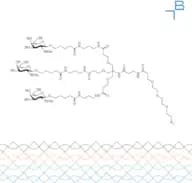
<p>This molecule leverages three terminal beta-GalNAc (N-acetylgalactosamine) sugars for efficient binding to asialoglycoprotein receptors (ASGPR) expressed on liver cells (hepatocytes). The presence of the linker (beta-alanine) and the spacer (PEG3) influences the pharmacokinetics of the conjugate. The key functional group is the terminal azide, which allows for conjugation to various payloads containing alkyne groups and facilitates the development of targeted conjugates for hepatocyte delivery. Upon binding to ASGPR, tri-b-GalNAc-b-alanine-PEG3-azide conjugates are rapidly taken up by hepatocytes via endocytosis, enabling researchers to deliver therapeutic cargo (drugs, siRNA) specifically to the liver.</p>Fórmula:C73H130N14O32Pureza:Min. 95%Peso molecular:1,715.9 g/molH-Type 2-APE-HSA
<p>H-Type 2-APE-HSA is a custom synthesis, modification, and fluorination of monosaccharides. This molecule has been modified with methyl groups, which are essential for the metabolism of carbohydrates. H-Type 2-APE-HSA is an oligosaccharide that contains saccharide units that have glycosylation. H-Type 2-APE-HSA is a complex carbohydrate that contains a number of different sugars in its structure.</p>Pureza:Min. 95%Methyl 4-O-[4,6-O-benzylidene)-b-D-galactopyranosyl] b-D-glucopyranoside
CAS:<p>Methyl 4-O-[4,6-O-benzylidene)-b-D-galactopyranosyl] b-D-glucopyranoside is a synthetic sugar with a high purity and custom synthesis. It has been modified by fluorination, methylation, glycosylation, and click modification. This product can be used as a pharmaceutical ingredient for the treatment of tuberculosis.</p>Fórmula:C20H28O11Pureza:Min. 95%Peso molecular:444.43 g/molMethyl b-neuraminic acid methyl ester
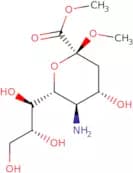
CAS:<p>Methyl b-neuraminic acid methyl ester is a synthetic monosaccharide that is used for the synthesis of oligosaccharides and polysaccharides. Methylation of this compound provides a convenient way to introduce fluorine atoms into saccharides, which can be used for click chemistry reactions. Methyl b-neuraminic acid methyl ester is also used in the synthesis of glycosylated proteins, as it can be easily hydrolyzed by enzymes such as sialidase and neuraminidase. This product is sold at high purity and custom synthesis.</p>Fórmula:C11H21NO8Pureza:Min. 95%Peso molecular:295.29 g/molTri-b-GalNAc-b-alanine-PEG3-maleimide
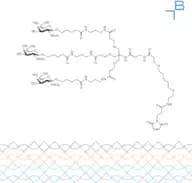
Tri-b-GalNAc-b-Ala-PEG3-MAL contains three terminal beta-N-acetylgalactosamine (GalNAc) sugars arranged in a trivalent configuration, facilitating high-affinity binding to the asialoglycoprotein receptor (ASGPR) expressed on hepatocyte surfaces. The crucial functional group is a terminal maleimide (MAL) moiety, enabling chemoselective bioconjugation with biomolecules harboring thiol (-SH) groups. This strategy allows for site-specific conjugation under mild conditions, valuable for developing targeted conjugates in disciplines like targeted drug delivery and antibody-drug conjugate (ADC) development for hepatocellular carcinoma.Fórmula:C80H137N13O35Pureza:Min. 95%Peso molecular:1,841.01 g/molGanglioside-Total
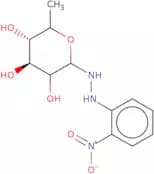
CAS:Please enquire for more information about Ganglioside-Total including the price, delivery time and more detailed product information at the technical inquiry form on this pagePureza:Min. 95%Fucose 2-nitrophenylhydrazone
<p>Fucose 2-nitrophenylhydrazone is a custom synthesis that is a modification of fucose. It has been used in methylation, click modification, and fluorination. This compound has been shown to be effective in the synthesis of oligosaccharides and polysaccharides. Fucose 2-nitrophenylhydrazone has also been used as an intermediate for the synthesis of saccharides such as monosaccharide and sugar.</p>Fórmula:C12H17N3O6Pureza:Min. 95%Peso molecular:299.111741,6-O-[(1R,2R)-1,2-Dimethoxy-1,2-dimethyl-1,2-ethanediyl]-3,4-O-[(1S,2S)-1,2-dimethoxy-1,2-dimethyl-1,2-ethanediyl]-5-benzoate-myo-i nositol
CAS:<p>1,6-O-[(1R,2R)-1,2-Dimethoxy-1,2-dimethyl-1,2-ethanediyl]-3,4-O-[(1S,2S)-1,2-dimethoxy-1,2-dimethyl-1,2-ethanediyl]-5-benzoate is an oligosaccharide with a complex structure. This chemical is fluorinated at the 1 and 6 positions of the glucose molecule. It has a total of 18 monosaccharides and two methyl groups. Its CAS number is 1068088-78-7. It has been shown to be synthesized by modifying the sugars with methylation or other chemical modifications. The molecular weight is 586.</p>Fórmula:C25H36O11Pureza:Min. 95%Peso molecular:512.55 g/molDihydrozeatin-9-glucoside
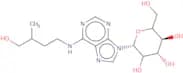
CAS:<p>Dihydrozeatin-9-glucoside is a conjugate of the natural product dihydrozeatin and glucose. The glucoside has been found to inhibit the growth of plants, which may be due to its ability to bind to polyclonal antibodies. Dihydrozeatin-9-glucoside is also an immunogen that has been shown to produce monoclonal antibodies in tissue culture. It has been used for immunoaffinity chromatography and as a biochemical marker for plant tissue cultures. Dihydrozeatin-9-glucoside binds to wheat leaf cells and inhibits their growth, making it a potential tool for the study of plant cell death.</p>Fórmula:C16H25N5O6Pureza:Min. 95 Area-%Cor e Forma:White PowderPeso molecular:383.4 g/molDecyl a- D- glucopyranoside
CAS:<p>Decyl a- D- glucopyranoside is a synthetic, custom-synthesized carbohydrate and sugar that is used in the synthesis of oligosaccharides. This compound is also used in the synthesis of saccharides and glycosylations. Decyl a- D- glucopyranoside has high purity and can be modified with fluorination, methylation, or glycosylation to produce desired products.</p>Fórmula:C16H32O6Pureza:Min. 95%Peso molecular:320.42 g/mol2,3:5,6-Di-O-isopropylidene-D-talonoic acid-1,4-lactone
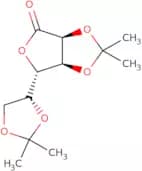
CAS:<p>2,3:5,6-Di-O-isopropylidene-D-talonoic acid-1,4-lactone is a glycosylation product of D-talonic acid. It is a synthetic compound that is fluorinated and methylated. 2,3:5,6-Di-O-isopropylidene-D-talonoic acid-1,4-lactone is soluble in water and has low toxicity. The structure of this compound is complex carbohydrate consisting of saccharide units linked by glycosidic bonds. It can be used to modify proteins or other biomolecules by click chemistry. This compound has CAS number 23262-80-8 and should be stored at -20°C.</p>Fórmula:C12H18O6Pureza:Min. 95%Cor e Forma:PowderPeso molecular:258.27 g/molThyroxine acyl-b-D-glucuronide
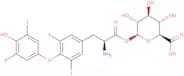
CAS:<p>Thyroxine acyl-b-D-glucuronide is a synthetic, modified thyroxine that has been modified with a saccharide moiety. The saccharide moiety is an oligosaccharide containing glucose, mannose and galactose residues. This product is a sugar with the molecular formula C24H40O14. Thyroxine acyl-b-D-glucuronide is soluble in water and alcohol. It has a molecular weight of 562.5 g/mol and a melting point of 230°C.</p>Fórmula:C21H19I4NO10Pureza:Min. 95%Peso molecular:952.99 g/mol4,5,6-Tri-O-benzyl-3-benzyloxymethyl-octa-1,7-dien-3-ol
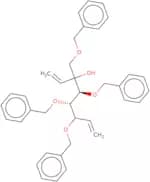
<p>4,5,6-Tri-O-benzyl-3-benzyloxymethyl-octa-1,7-dien-3-ol is an oligosaccharide that is synthesized by the modification of a simple sugar with two benzyloxymethyl groups. It can be used as a carbohydrate in pharmaceuticals and other applications.</p>Fórmula:C37H40O5Pureza:Min. 95%Peso molecular:564.71 g/molD-Mannose- 1, 2- 13C2
CAS:<p>D-Mannose- 1, 2- 13C2 is a synthetic sugar that has been modified with a fluorination reaction. D-Mannose-1,2- 13C2 is used for the synthesis of glycosylations and oligosaccharides. This product is available in high purity and custom synthesis. CAS No. 141789-26-6</p>Pureza:Min. 95%Peso molecular:182.14 g/molDiosmetin-d3-3'-O-glucuronide
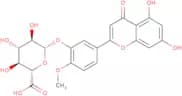
CAS:<p>Diosmetin-d3-3'-O-glucuronide is a synthetic sugar derivative that is used as a building block for the synthesis of oligosaccharides and polysaccharides. Diosmetin-d3-3'-O-glucuronide can be fluorinated and methylated, which makes it useful for click chemistry reactions, because it can be easily modified to create new structures. This product is available in high purity with custom synthesis options.</p>Fórmula:C22H17D3O12Pureza:Min. 95%Peso molecular:479.4 g/molp-Coumaroyl-b-D-glucose
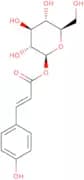
CAS:<p>P-Coumaroyl-b-D-glucose is a flavanone that belongs to the class of flavonoids. It is an intermediate in the synthesis of many other flavonoids, such as apigenin, labiatae, and rhamnetin. P-Coumaroyl-b-D-glucose has been shown to downregulate the expression of genes encoding proteins involved in the biosynthesis of proanthocyanidins and anthocyanins. This compound also induces apoptosis by binding to the mitochondria membrane and increasing reactive oxygen species production. P-Coumaroyl-b-D-glucose can be used as a marker for phenylpropanoid metabolism in plants.</p>Fórmula:C15H18O8Pureza:Min. 95%Cor e Forma:White PowderPeso molecular:326.3 g/molMethyl 2-deoxy-D-threo-pentofuranoside
CAS:<p>Methyl 2-deoxy-D-threo-pentofuranoside is a synthetic monosaccharide that has been modified by fluorination. It can be used for the synthesis of oligosaccharides and complex carbohydrates. Methyl 2-deoxy-D-threo-pentofuranoside can also be used for glycosylation, methylation, or click modification reactions. This product is available in high purity and will not contain any impurities.</p>Pureza:Min. 95%D-Mannono-D-lactam
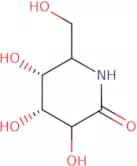
CAS:D-Mannono-D-lactam is a synthetic, sugar-based molecule. The compound is an antibiotic that inhibits bacterial growth by binding to the 50S ribosomal subunit of bacteria. It is active against a wide range of Gram-positive and Gram-negative bacteria, including methicillin resistant Staphylococcus aureus (MRSA), as well as Mycobacterium tuberculosis and Mycobacterium avium complex. D-Mannono-D-lactam has shown antiinflammatory properties, which may be due to its inhibition of prostaglandin synthesis.Fórmula:C6H11NO5Pureza:Min. 95%Cor e Forma:White SolidPeso molecular:177.16 g/mol










![(2R,4R)-2-[L-Xylo-tetrahydroxybut-1-yl]-1,3-thiazolidine-4-carboxylic acid](/_next/image/?url=https%3A%2Fstatic.cymitquimica.com%2Fproducts%2F3D%2Fthumb-webp%2FMX01046.webp&w=3840&q=75)


![L-[5-13C]Xylose](/_next/image/?url=https%3A%2Fstatic.cymitquimica.com%2Fproducts%2F3D%2Fthumb-webp%2FDUA50664.webp&w=3840&q=75)








![(1R,3S,4R,8S)-3-Acetoxy-1-acetoxymethyl-8-benzloxy-2,6-dioxabicyclo[3,2,1]octane](/_next/image/?url=https%3A%2Fstatic.cymitquimica.com%2Fproducts%2F3D%2Fthumb-webp%2FMA10599.webp&w=3840&q=75)


![Methyl 4-O-[4,6-O-benzylidene)-b-D-galactopyranosyl] b-D-glucopyranoside](/_next/image/?url=https%3A%2Fstatic.cymitquimica.com%2Fproducts%2F3D%2Fthumb-webp%2FOM30780.webp&w=3840&q=75)
![1,6-O-[(1R,2R)-1,2-Dimethoxy-1,2-dimethyl-1,2-ethanediyl]-3,4-O-[(1S,2S)-1,2-dimethoxy-1,2-dimethy…](/_next/image/?url=https%3A%2Fstatic.cymitquimica.com%2Fproducts%2F3D%2Fthumb-webp%2FMD16693.webp&w=3840&q=75)