


Glicociência
A glicociência é o estudo dos carboidratos e seus derivados, bem como das interações e funções biológicas em que participam. Este campo de pesquisa é crucial para compreender uma ampla variedade de processos biológicos, incluindo o reconhecimento celular, a sinalização, a resposta imune e o desenvolvimento de doenças. A glicociência tem aplicações importantes na biotecnologia, na medicina e no desenvolvimento de novos medicamentos e terapias. Na CymitQuimica, oferecemos uma ampla seleção de produtos de alta qualidade e pureza para pesquisa em glicociência. Nosso catálogo inclui monossacarídeos, oligossacarídeos, polissacarídeos, glicoconjugados e reagentes específicos, projetados para apoiar os pesquisadores em seus estudos sobre a estrutura, função e aplicações dos carboidratos em sistemas biológicos. Esses recursos são destinados a facilitar descobertas científicas e aplicações práticas em diversas áreas das biociências e da medicina.
Subcategorias de "Glicociência"
- Amino açúcares(108 produtos)
- Anticorpos Glico-Relacionados(282 produtos)
- Glicolípidos(46 produtos)
- Glicosaminoglicanos (GAGs)(55 produtos)
- Glicosídeos(419 produtos)
- Monossacáridos(6.624 produtos)
- Oligossacarídeos(3.682 produtos)
- Polissacáridos(503 produtos)
Foram encontrados 11046 produtos de "Glicociência"
Ordenar por
Pureza (%)
0
100
|
0
|
50
|
90
|
95
|
100
(2R, 3S, 4R) -4-Acetamido- 3 benzhydryloxybis(trimethylsilyloxy)silyloxy - 2- [( benzhydryloxybis(trimethylsilyloxy)silyloxy) methyl ] - 1- benzyl- pyrrolidine
(2R, 3S, 4R) -4-Acetamido- 3 benzhydryloxybis(trimethylsilyloxy)silyloxy - 2- [( benzhydryloxybis(trimethylsilyloxy)silyloxy) methyl ] - 1- benzyl- pyrrolidine is a modification of an oligosaccharide. It is a high purity, custom synthesis and synthetic. This compound has CAS No., Monosaccharide, Methylation, Glycosylation, Polysaccharide, sugar and Fluorination.Pureza:Min. 95%Salicylic acid D-glucuronide
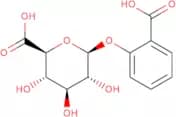
CAS:<p>Salicylic acid D-glucuronide is the major metabolite of aspirin, which is formed by hydrolysis of acetylsalicylic acid. It has been demonstrated to have anti-inflammatory and analgesic effects. Salicylic acid D-glucuronide is excreted in urine and can be detected in human serum. The formation rate of this metabolite varies with the individual's age, sex, and kidney function.<br>Salicylic acid D-glucuronide can be formed in vitro using hydrochloric acid and acetylsalicylic acid as substrates. This reaction is catalyzed by the enzyme uridine diphosphate glucuronyltransferase (UGT). Salicylic acid D-glucuronide has been shown to form covalent adducts with hydroxyl groups from other molecules in vivo and in vitro, including proteins (e.g., albumin) and DNA bases (e.g.,</p>Fórmula:C13H14O9Pureza:Min. 95%Cor e Forma:PowderPeso molecular:314.24 g/molMethyl 2,3-di-O-acetyl-4,6-O-benzylidene-a-D-galactopyranoside
CAS:Methyl 2,3-di-O-acetyl-4,6-O-benzylidene-a-D-galactopyranoside is a custom synthesis of a complex carbohydrate that can be modified with a methyl group on the C2 position. This compound has been fluorinated and glycosylated in the laboratory. This product has high purity and is insoluble in water.Fórmula:C18H22O8Pureza:Min. 95%Peso molecular:366.37 g/molTert.Butyl 2-deoxy-4,5-O-isopropylidene-D-gluconate(mannonate)
Tert.Butyl 2-deoxy-4,5-O-isopropylidene-D-gluconate(mannonate) is an oligosaccharide that is synthesized from D-mannose and D-glucuronic acid. It has a high purity and is custom synthesized to meet customer requirements. Tert.Butyl 2-deoxy-4,5-O-isopropylidene-D-gluconate(mannonate) has been modified with fluorine, methylation and click chemistry for various purposes.Pureza:Min. 95%2-Amino- 2- deoxy- 3- O- methyl-D- glucose
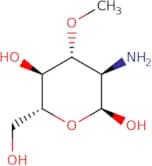
CAS:2-Amino-2-deoxy-3-O-methyl-D-glucose is a modified sugar that has been synthesized by the methylation of D-glucose. This product is often used as a building block in glycosylation, which is the process of adding sugars to proteins or polysaccharides. The modification of this carbohydrate makes it resistant to hydrolysis and oxidation reactions, making it suitable for use in pharmaceuticals and other applications. 2-Amino-2-deoxy-3-O-methyl-D-glucose can be fluorinated to produce 2-(Fluoro)amino 2 deoxy 3 O methyl D glucose, which has been shown to have antihypertensive effects in rats with high blood pressure. This product can also be modified with click chemistry to produce 2-[(Azidomethyl)amino]-2 deoxy 3 O methyl D glucose, which can be usedFórmula:C7H15NO5Pureza:Min. 95%Peso molecular:193.2 g/mol(+)-pinoresinol-b-D-glucoside
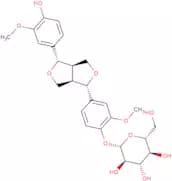
CAS:<p>(+)-Pinoresinol-b-D-glucoside is a fluorinated, monosaccharide that is synthetically produced by glycosylation. It can also be modified using methylation and click chemistry. The chemical formula for (+)-pinoresinol-b-D-glucoside is C10H14O8. It has a molecular weight of 288.24 g/mol and an empirical formula of (C10H14O8)2. The CAS number for this compound is 69251-963. This product is in the Carbohydrate family and has a purity level of >99%.</p>Fórmula:C26H32O11Pureza:Min. 95%Cor e Forma:PowderPeso molecular:520.53 g/molHeptakis-(6-azido-6-deoxy)-b-cyclodextrin
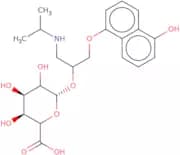
CAS:This beta-cyclodextrin (β-CD) derivative is an azido-functionalized cyclic oligosaccharide composed of seven glucose units, characterized by a hydrophilic exterior and a lipophilic cavity (bigger than α-CD and smaller than γ-CDs), which allows it to encapsulate various guest molecules. This structural feature facilitates its use in multiple applications, including pharmaceuticals, food enhancement, and cosmetics. In the pharmaceutical industry, it enhances the solubility and stability of poorly water-soluble drugs, improving their bioavailability and efficacy while also masking unpleasant tastes. The food sector utilizes it as a stabilizer for flavors, colors, and nutrients, extending shelf life by protecting sensitive ingredients from degradation. In cosmetics, it serves as a complexing agent for fragrances and active components, ensuring their stability and controlled release. Its use expands to many other fields, including nanotechnology for drug delivery systems, environmental remediation for extracting organic pollutants, textiles for slow-release fragrances, and analytical chemistry for chiral separation.Fórmula:C42H63N21O28Pureza:Min. 95%Cor e Forma:White PowderPeso molecular:1,310.07 g/mol5'-Hydroxypropranolol-b-D-glucuronoside
5'-Hydroxypropranolol-b-D-glucuronoside is a synthetic glycosylate of 5'-hydroxypropranolol. It can be modified with fluorine, methyl or click chemistry. The chemical name is O-(2,3,4,5-tetrafluorobenzoyl)glycine and the CAS number is 878183-10-6. This compound has a molecular weight of 471.8 g/mol and an empirical formula of C14H9F5NO5. It can be used in the synthesis of oligosaccharides and polysaccharides.Fórmula:C22H29NO9Pureza:Min. 95%Peso molecular:451.47 g/molL-Arabinaric acid dipotassium salt
CAS:<p>L-Arabinaric acid dipotassium salt is a custom synthesis of an L-arabinaric acid, which is a monosaccharide that is found in the cell wall of bacteria. This compound has been modified to be resistant to fluorination, methylation, and click chemistry. The modification process includes the use of Oligosaccharides, saccharides, and polysaccharides as well as glycosylation and sugar. L-Arabinaric acid dipotassium salt can also be used for the synthesis of complex carbohydrates.</p>Fórmula:C5H6K2O7Pureza:Min. 98 Area-%Cor e Forma:PowderPeso molecular:256.29 g/mol(3S,4S, 5S) -4,5-O-Isopropylidene-3-O-tert.butyldimethylsilyl-1- nonyl-3, 4, 5- piperidinetriol
<p>The following is a description of the product that was generated by a professional copywriter.</p>Pureza:Min. 95%Methyl 2,3,4-tri-O-methyl-α-D-glucopyranoside
CAS:<p>Methyl 2,3,4-tri-O-methyl-α-D-glucopyranoside is a synthetic monosaccharide that has been fluorinated with bromine. The synthetic process for this compound is click chemistry, which involves the use of copper and a chiral ligand. Methyl 2,3,4-tri-O-methyl-α-D-glucopyranoside is an example of a carbohydrate modification. It is also an oligosaccharide that contains three monosaccharides.<br>Methyl 2,3,4-tri-O-methyl-α-D-glucopyranoside can be used in glycosylation or methylation reactions due to its high purity and custom synthesis. This compound can also be used as an Oligosaccharide due to its saccharide composition.</p>Fórmula:C10H20O6Pureza:Min. 95%Cor e Forma:PowderPeso molecular:236.26 g/mol1,6-Anhydro-2-azido-3-O-benzoyl-4-O-(2,3-di-O-benzyl-6-methyl-b-D-glucopyranuronosyl)-b-D-glucopyranose
<p>1,6-Anhydro-2-azido-3-O-benzoyl-4-O-(2,3-di-O-benzyl-6-methyl-b-Dglucopyranosyl)-bDglucopyranose is a custom synthesis that is an oligosaccharide with a molecular weight of 672.1 Da. It is a complex carbohydrate that has been modified to include saccharides and sugars, with the addition of methylation and glycosylation. This molecule has been fluorinated for the purpose of synthesizing a synthetic molecule.</p>Pureza:Min. 95%(1R) -1- [(2S, 3R,4S) -4-(Acetylamino)methyl-N-butyl-3- hydroxy- 1- azetidinyl] -1, 2- ethanediol
(1R) -1- [(2S, 3R,4S) -4-(Acetylamino)methyl-N-butyl-3- hydroxy- 1- azetidinyl] -1, 2- ethanediol is a synthetic glycoside that has been modified with fluorine. It has a number of applications in the synthesis of saccharides and polysaccharides for use as pharmaceuticals or food additives.Pureza:Min. 95%Poly-D-galacturonic acid methyl ester
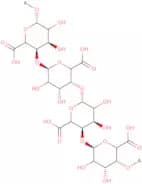
CAS:Poly-D-galacturonic acid methyl ester (PDGME) is a natural compound that has been shown to possess anti-inflammatory and anti-diabetic properties. PDGME has been shown to increase the expression of pro-apoptotic proteins in mouse macrophages, as well as inhibit the activity of toll-like receptor 4, which may be due to its ability to induce caspase-independent cell death. PDGME also inhibits the growth of Clostridium difficile and other bacteria by inhibiting their enzyme activities. PDGME is water soluble and can be used as a reagent for biochemical studies.Pureza:Min. 98 Area-%Cor e Forma:White Off-White PowderMethyl 2,3,4-tri-O-benzyl-6-O-tert-butyldimethylsilyl-a-D-glucopyranoside
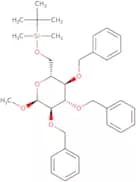
CAS:<p>Methyl 2,3,4-tri-O-benzyl-6-O-tert-butyldimethylsilyl-a-D-glucopyranoside is a glycosylation product of the glucopyranoside. It is a highly pure compound that is custom synthesized to suit the specific needs of customers. The synthesis includes fluorination, methylation and monosaccharide modification. This product has been shown to be useful in click chemistry and protein glycosylation studies.</p>Fórmula:C34H46O6SiPureza:Min. 95%Peso molecular:578.83 g/mol1,2:4,5-Di-O-isopropylidene-D-glycero-D-manno-heptitol
<p>1,2:4,5-Di-O-isopropylidene-D-glycero-D-manno-heptitol is a synthetic monosaccharide that can be used as a methylation substrate. The compound can be custom synthesized and has been shown to have good purity. It is found in polysaccharides and saccharides and can be modified with fluorination. This product is a complex carbohydrate with high purity and can serve as an intermediate for the synthesis of oligosaccharides and polysaccharides.</p>Pureza:Min. 95%Methyl-β-D-thiogalactopyranoside
CAS:<p>Methyl-beta-D-thiogalactopyranoside is a monosaccharide that is a member of the galactose family. It can be found in some foods, such as dairy products or soybean milk. Methyl-beta-D-thiogalactopyranoside has been shown to promote lactose transport in cells. This compound is also used as a diagnostic marker for certain types of cancers and can be used to study sugar transport in cells. Methyl-beta-D-thiogalactopyranoside has been shown to inhibit the enzyme activity of phosphatases and may be used for research purposes as a control for other experiments.</p>Fórmula:C7H14O5SPureza:Min. 98.0 Area-%Peso molecular:210.25 g/molRef: 3D-M-4440
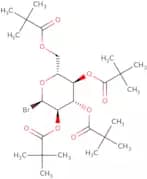
5gA consultar10gA consultar25gA consultar50gA consultar2500mgA consultar-Unit-ggA consultar2,3,4,6-Tetra-O-pivaloyl-a-D-glucopyranosyl bromide - stabilised with CaCO3
CAS:Intermediate in the synthesis of dapagliflozinFórmula:C26H43BrO9Pureza:Min. 95%Cor e Forma:White To Off-White SolidPeso molecular:579.52 g/molN-Acetyl-D-glucosamine-3-O-sulphate sodium
<p>N-Acetyl-D-glucosamine-3-O-sulphate sodium (NADG) is a type of high purity, monosaccharide that is synthesized from D-glucosamine and sulphuric acid. NADG is a synthetic carbohydrate that can be used in the synthesis of complex carbohydrates. It has been modified to contain fluorine atoms at the 3rd and 4th carbon positions. This modification prevents NADG from being hydrolyzed by aminoglycosides such as kanamycin and neomycin, which are used in chemotherapy treatment.</p>Fórmula:C8H15NO9S•NaPureza:Min. 95%Cor e Forma:PowderPeso molecular:324.25 g/mol(2S, 3S, 4R) -3- [[[(2S, 3S, 4R) - 3- Azido- 4- [[[(1, 1- dimethylethyl) dimethylsilyl] oxy] methyl] - 1- (phenylmethyl) - 2- azetid inyl] carbonyl] amino] - 4- [[[(1, 1- dimethylethyl) dimethylsilyl] oxy] methyl] - 1- (phenylmethyl) -2- azetidinecarb
<p>The synthesis starts with a commercially available, methyl-protected, phenyl-protected 2-azetidinecarboxylic acid. The carbonyl group is then converted to an amide by reaction with ammonia in the presence of a base (such as triethylamine) and an appropriate coupling agent (such as HOBt). The amide is then deprotected by treatment with hydrochloric acid to give the desired product. This compound has not been characterized fully yet but it is expected to be a complex carbohydrate.</p>Pureza:Min. 95%





![(1R) -1- [(2S, 3R,4S) -4-(Acetylamino)methyl-N-butyl-3- hydroxy- 1- azetidinyl] -1, 2- ethanediol](/_next/image/?url=https%3A%2Fstatic.cymitquimica.com%2Fproducts%2F3D%2Fthumb-webp%2FMA163406.webp&w=3840&q=75)


![(2S, 3S, 4R) -3- [[[(2S, 3S, 4R) - 3- Azido- 4- [[[(1, 1- dimethylethyl) dimethylsilyl] oxy] methy…](/_next/image/?url=https%3A%2Fstatic.cymitquimica.com%2Fproducts%2F3D%2Fthumb-webp%2FMA163462.webp&w=3840&q=75)