Glicociência
A glicociência é o estudo dos carboidratos e seus derivados, bem como das interações e funções biológicas em que participam. Este campo de pesquisa é crucial para compreender uma ampla variedade de processos biológicos, incluindo o reconhecimento celular, a sinalização, a resposta imune e o desenvolvimento de doenças. A glicociência tem aplicações importantes na biotecnologia, na medicina e no desenvolvimento de novos medicamentos e terapias. Na CymitQuimica, oferecemos uma ampla seleção de produtos de alta qualidade e pureza para pesquisa em glicociência. Nosso catálogo inclui monossacarídeos, oligossacarídeos, polissacarídeos, glicoconjugados e reagentes específicos, projetados para apoiar os pesquisadores em seus estudos sobre a estrutura, função e aplicações dos carboidratos em sistemas biológicos. Esses recursos são destinados a facilitar descobertas científicas e aplicações práticas em diversas áreas das biociências e da medicina.
Subcategorias de "Glicociência"
- Amino açúcares(108 produtos)
- Anticorpos Glico-Relacionados(282 produtos)
- Glicolípidos(46 produtos)
- Glicosaminoglicanos (GAGs)(55 produtos)
- Glicosídeos(419 produtos)
- Monossacáridos(6.624 produtos)
- Oligossacarídeos(3.682 produtos)
- Polissacáridos(503 produtos)
Foram encontrados 11046 produtos de "Glicociência"
Ordenar por
Pureza (%)
0
100
|
0
|
50
|
90
|
95
|
100
Monofucosyl (1-2)-iso-lacto-N-octaose II
<p>Monofucosyl (1-2)-iso-lacto-N-octaose II is an oligosaccharide that is found in human milk</p>Pureza:Min. 95%D-Glucose-13C6
CAS:D-Glucose-13C6 is a complex carbohydrate, which is composed of a glucose molecule with one carbon atom labeled as C6. It is used to study the structure of carbohydrates and their interactions with proteins. D-Glucose-13C6 also has applications in the study of diseases such as Alzheimer's disease, Parkinson's disease, diabetes mellitus type 2, and cancer. In addition, this molecule can be used to measure plasma glucose concentrations in humans or animals. D-Glucose-13C6 is not active against bacteria such as Pseudomonas aeruginosa or Escherichia coli. The synthesis of D-glucose-13C6 requires anhydrous dextrose and unlabeled glucose.Fórmula:C6H12O6Pureza:Min. 98 Area-%Cor e Forma:White PowderPeso molecular:186.11 g/molLewis A tetrasaccharide
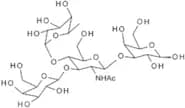
CAS:Lewis A tetrasaccharide is a glycosylated oligosaccharide with the following chemical structure: The Lewis A tetrasaccharide is a carbohydrate that has been modified with fluorination and methylation. This modification has been shown to increase its stability in aqueous environments. The Lewis A tetrasaccharide may be used as a synthetic monosaccharide for custom synthesis. It is also used as an intermediate for the synthesis of glycosylated oligosacscharsides.Fórmula:C26H45NO20Pureza:90%Cor e Forma:White PowderPeso molecular:691.64 g/molMethyl 4-O-methyl-β-D-xylopyranoside
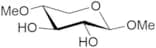
CAS:A useful xylose building blockFórmula:C7H14O5Pureza:Min. 95%Cor e Forma:PowderPeso molecular:178.18 g/mol1,2,3,4-Tetra-O-benzoyl-6-O-triisopropylsilyl-b-D-glucopyranose
1,2,3,4-Tetra-O-benzoyl-6-O-triisopropylsilyl-b-D-glucopyranose is a synthetic compound that belongs to the class of carbohydrates. It is a high purity custom synthesis that can be modified with fluorination, glycosylation, methylation, and modification. This product has CAS number 541087-49-0. 1,2,3,4-Tetra-O-benzoyl-6-O-triisopropylsilyl-b -D -glucopyranose is used in the synthesis of oligosaccharides and monosaccharides.Fórmula:C46H54O10SiPureza:Min. 95%Peso molecular:795.02 g/molD-Lactal
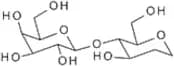
CAS:<p>D-Lactal is a dibutyltin oxide that is used in the synthesis of n-acetyllactosamine, disaccharides and trisaccharides. D-Lactal has been shown to have high resistance to chloride ion, which is one of the most common reagents for cleavage. It can also be used as a synthetic precursor for other glycoside derivatives by reacting with triflic acid or trisaccharide. Triflic acid and trisaccharide react with chloride to form a stereoselective glycosidic bond. D-Lactal is also able to bind lectins, carbohydrate chemistry and carbohydrate chemistry reagents.</p>Fórmula:C12H20O9Pureza:Min. 95%Cor e Forma:White/Off-White SolidPeso molecular:308.28 g/mol1,3-O-Benzylidene-D-arabitol
CAS:<p>1,3-O-Benzylidene-D-arabitol is a methylated sugar that is used in the synthesis of complex carbohydrates. It is produced by the modification of a 1,3-O-benzylidene-D-ribitol. It has a CAS number of 70831-50-4 and can be custom synthesized to meet your needs. This product is available in high purity with a 99% yield.</p>Fórmula:C12H16O5Pureza:Min. 95%Cor e Forma:White/Off-White SolidPeso molecular:240.25 g/mol1,3-O-Benzylidene-4-O-t-butyl-dimethylsilyl-D-threitol
CAS:1,3-O-Benzylidene-4-O-t-butyl-dimethylsilyl-D-threitol is a synthetic carbohydrate that is structurally similar to D-threitol. It has a molecular weight of 323.07 and it has a melting point of 210°C. The CAS number for this compound is 652979-92-5. This compound has been modified with fluorination, methylation, and click chemistry. 1,3-O-Benzylidene-4-O-t -butyl dimethylsilyl D threitol has been used as a substrate for glycosylation reactions with oligosaccharides and polysaccharides in order to produce complex carbohydrates.Fórmula:C17H28O4SiPureza:Min. 95%Peso molecular:324.49 g/molN-Acetylmuramyl-L-alanyl-D-isoglutamine hydrate
CAS:Muramyl dipeptide is a component of the bacterial cell wall and is found in mycobacteria, mycoplasmas, spirochetes, and gram-positive bacteria. Muramyl dipeptide has been shown to induce the activation of macrophages and other cells by stimulating toll-like receptor 4. It also has significant cytotoxicity against various cancer cells, as well as potent inducers of ubiquitin ligases. The use of muramyl dipeptide in vitro was shown to inhibit replication of HIV-1 virus in human lymphocytes. This agent has also been used for the treatment of bowel disease.Fórmula:C19H32N4O11·xH2OPureza:Min. 96 Area-%Cor e Forma:PowderPeso molecular:492.48 g/molHepta-O-acetylrutinose
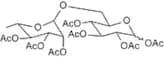
CAS:<p>Hepta-O-acetylrutinose is a synthetic monosaccharide that is fluorinated. It can be used in the synthesis of oligosaccharides, polysaccharides, and glycosylations. Hepta-O-acetylrutinose has been shown to be useful in click chemistry and other modifications due to its reactive groups. The CAS number for this compound is 29202-64-0.</p>Fórmula:C26H36O17Pureza:(%) Min. 95%Cor e Forma:White PowderPeso molecular:620.57 g/molMethyl 2,3,4,6-tetra-O-benzyl-b-D-thiogalactopyranoside
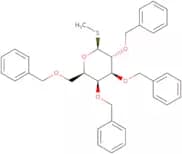
CAS:<p>Methyl 2,3,4,6-tetra-O-benzyl-b-D-thiogalactopyranoside is a synthetic monosaccharide that has been modified with fluorination and glycosylation. It is a product of the click reaction, which is a chemical modification that involves the formation of an aziridine and an alkene in one step. This product has been used for the synthesis of oligosaccharides and complex carbohydrates.</p>Fórmula:C35H38O5SPureza:Min. 95%Cor e Forma:PowderPeso molecular:570.74 g/molBlood Group H type III trisaccharide-PAA-biotin
Blood group antigen conjugated to spacer and biotinPureza:Min. 95%Cor e Forma:White Off-White PowderPeso molecular:586.6 g/molUrsodeoxycholic acid acyl-β-D-glucuronide
CAS:Ursodeoxycholic acid acyl-b-D-glucuronide (UDCA) is a synthetic bile acid that is used to treat liver diseases such as cirrhosis, primary biliary cirrhosis and cholelithiasis. UDCA inhibits the enzyme 7α-hydroxylase in the liver, which converts cholesterol into bile acids. This prevents the formation of lithocholic acid from cholesterol and the accumulation of lipids in the liver. UDCA also suppresses inflammatory cytokines and oxidative stress by inhibiting NF-κB activation.Supplied as the sodium saltFórmula:C30H48O10Pureza:Min. 95%Cor e Forma:PowderPeso molecular:568.7 g/mol3-Azido-3-deoxy-1,2:5,6-di-O-isopropylidene-a-D-glucofuranose
CAS:<p>3-Azido-3-deoxy-1,2:5,6-di-O-isopropylidene-a-D-glucofuranose is a synthetic sugar that has been modified by Fluorination, Monosaccharide, Synthetic, Oligosaccharide, complex carbohydrate, CAS No. 13964-23-3 and Glycosylation. It is also a Polysaccharide with modifications of Click modification and Methylation. 3A3DG can be used to modify the sugar content of glycoproteins and glycolipids in order to study their role in cellular processes such as transcriptional regulation and apoptosis. This product is available for custom synthesis in quantities from milligrams to kilograms.</p>Fórmula:C12H19N3O5Pureza:Min. 95%Cor e Forma:Yellow PowderPeso molecular:285.3 g/molPolydextrose
CAS:<p>Polydextrose is a synthetic polymer of glucose. It is a food ingredient classified as soluble fibre by the U.S. Food and Drug Administration (FDA) as well as Health Canada, as of April 2013. It is frequently used to increase the non-dietary fibre content of food, to replace sugar, and to reduce calories and fat content. It is a multi-purpose food ingredient synthesized from dextrose (glucose), plus about 10 percent sorbitol and 1 percent citric acid. Its E number is E1200. It was approved by FDA in 1981.</p>Pureza:Min. 95%Cor e Forma:Powder1,4-Dideoxy-1,4-imino-D-mannitol HCl
CAS:1,4-Dideoxy-1,4-imino-D-mannitol HCl is a custom synthesis, modification and fluorination of mannitol. This compound is synthesized by the click modification of a monosaccharide and oligosaccharide. It is a saccharide with an average molecular weight of 584.45 g/mol. 1,4-Dideoxy-1,4-imino-D-mannitol HCl has been used to study glycosylation and sugar binding in carbohydrate research. CAS No.: 114976-76-0Fórmula:C6H13NO4·HClPureza:Min. 95%Cor e Forma:PowderPeso molecular:199.63 g/molPhenyl 2-azido-2-deoxy-b-D-selenofucopyranoside
<p>Phenyl 2-azido-2-deoxy-b-D-selenofucopyranoside is a carbohydrate with the CAS number 54519-52-8. It is a custom synthesis that is available in high purity and can be methylated, glycosylated and click modified. Phenyl 2-azido-2-deoxy-b-D-selenofucopyranoside is an oligosaccharide that has been fluorinated, which makes it stable at higher temperatures. This product is used as a synthetic building block for complex carbohydrates and saccharides.</p>Pureza:Min. 95%L-Rhamnose monohydrate - high purity
CAS:<p>L-Rhamnose monohydrate is a sugar that is found in plants, animals, and bacteria. It is a component of polysaccharides like cellulose and hemicellulose. L-Rhamnose monohydrate has been shown to stimulate the growth of probiotic bacteria like Lactobacillus acidophilus in vitro. It also has antiviral properties against the herpes simplex virus type 1 (HSV-1). The antiviral activity may be due to its ability to inhibit viral replication by interfering with the synthesis of viral DNA and RNA. L-Rhamnose monohydrate may also have anti-inflammatory effects due to its ability to inhibit prostaglandin synthesis through inhibition of cyclooxygenase enzyme activity. This product has applications as a dietary supplement and ingredient in functional foods or beverages.</p>Fórmula:C6H12O5•H2OPureza:Min. 98.0 Area-%Cor e Forma:PowderPeso molecular:182.17 g/molHesperetin 3'-O-b-D-glucuronide
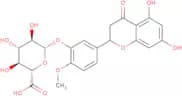
CAS:<p>Hesperetin 3'-O-b-D-glucuronide is a natural product that is synthesized by glycosylation of hesperidin with 3,4,5-trihydroxybenzoic acid. It is a synthetic and complex carbohydrate that can be modified to include fluorination, monosaccharide, oligosaccharide, methylation, and click modification. Hesperetin 3'-O-b-D-glucuronide can also be used in the synthesis of polysaccharides with glycosylations. This product has high purity and can be custom synthesized for customers.</p>Fórmula:C22H22O12Pureza:Min. 95%Cor e Forma:Slightly Yellow PowderPeso molecular:478.4 g/mol2-Acetamido-1,3,4,6-tetra-O-acetyl-2-deoxy-a-D-galactopyranose
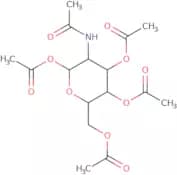
CAS:<p>2-Acetamido-1,3,4,6-tetra-O-acetyl-2-deoxy-a-D-galactopyranose is a chemical that belongs to the class of plant growth regulators. It is a white to off white crystalline powder that has an odorless taste and can be mixed with water or other liquids. The substance is soluble in water and ethanol and has a pH of 7. It is used as an additive for soil mixtures in horticulture and agriculture. 2AATGAP can also be used as a module for research purposes in vitro.</p>Fórmula:C16H23NO10Pureza:Min. 95%Cor e Forma:White To Off-White SolidPeso molecular:389.36 g/mol