Glicociência
A glicociência é o estudo dos carboidratos e seus derivados, bem como das interações e funções biológicas em que participam. Este campo de pesquisa é crucial para compreender uma ampla variedade de processos biológicos, incluindo o reconhecimento celular, a sinalização, a resposta imune e o desenvolvimento de doenças. A glicociência tem aplicações importantes na biotecnologia, na medicina e no desenvolvimento de novos medicamentos e terapias. Na CymitQuimica, oferecemos uma ampla seleção de produtos de alta qualidade e pureza para pesquisa em glicociência. Nosso catálogo inclui monossacarídeos, oligossacarídeos, polissacarídeos, glicoconjugados e reagentes específicos, projetados para apoiar os pesquisadores em seus estudos sobre a estrutura, função e aplicações dos carboidratos em sistemas biológicos. Esses recursos são destinados a facilitar descobertas científicas e aplicações práticas em diversas áreas das biociências e da medicina.
Subcategorias de "Glicociência"
- Amino açúcares(108 produtos)
- Anticorpos Glico-Relacionados(282 produtos)
- Glicolípidos(46 produtos)
- Glicosaminoglicanos (GAGs)(55 produtos)
- Glicosídeos(419 produtos)
- Monossacáridos(6.624 produtos)
- Oligossacarídeos(3.682 produtos)
- Polissacáridos(503 produtos)
Foram encontrados 11046 produtos de "Glicociência"
Ordenar por
Pureza (%)
0
100
|
0
|
50
|
90
|
95
|
100
Benzyl b-D-glucopyranoside
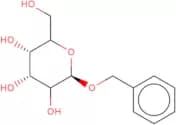
CAS:<p>Benzyl b-D-glucopyranoside is an organic solvent that can be used in chromatography. It is a disaccharide that consists of benzyl alcohol and glucose. Benzyl b-D-glucopyranoside has been shown to have inhibitory activities against glycosidation and β-amyrin synthesis, as well as other biochemical techniques. This compound has also been shown to have carbohydrate antigen activity, which may be due to its benzyl group.</p>Fórmula:C13H18O6Pureza:Min. 95%Cor e Forma:White Off-White PowderPeso molecular:270.28 g/mol3,4,6-Tri-O-acetyl-2-azido-2-deoxy-β-D-galactopyranosyl trichloroacetimidate
CAS:3,4,6-Tri-O-acetyl-2-azido-2-deoxy-beta-D-galactopyranosyl trichloroacetimidate is a custom synthesis that has been modified with fluorination and methylation. It is a monosaccharide containing the sugar galactose and it can be found in a saccharide or polysaccharide. This compound was synthesized using click chemistry.Fórmula:C14H17Cl3N4O8Pureza:Min. 95 Area-%Peso molecular:475.67 g/mol2,3,6,2',3',6',2'',3'',4'',6''-Deca-O-acetyl-a-D-maltotriosyl bromide
2,3,6,2',3',6',2'',3'',4'',6''-Deca-O-acetyl-a-D-maltotriosyl bromide is an acetylated and fluorinated oligosaccharide that has been prepared by a click reaction. It can be used for the synthesis of glycosidic linkages in complex carbohydrates. This product is available as a custom synthesis.Pureza:Min. 95%1-Amino-2,5-anhydro-1-deoxy-D-mannitol
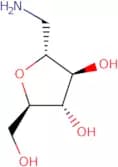
CAS:<p>1-Amino-2,5-anhydro-1-deoxy-D-mannitol is an amino sugar that is synthesized by reductive amination of d-fructose and nitrous acid. It has been shown to be a substrate for the transporter protein, which transports it into the cell. 1-Amino-2,5-anhydro-1-deoxy-D-mannitol has been used in the synthesis of arylamines with nitrous acid as a reducing agent. This process has been used to study the stereospecificity of reductive amination.</p>Fórmula:C6H13NO4Pureza:Min. 95%Cor e Forma:PowderPeso molecular:163.17 g/mol4-Methoxyphenyl 4-O-{4-O-[[3-O-(2,4-di-O-[3,4,6-tri-O-Ac-2-PhthN-β-D-Glc)-3,6-di-O-Bn-α-D-Man]-4,6-O-benzylidene-β-D-Glc]]-3,6-di-O- Bn-2-PhthN-β-D-Glc}-3-O-Bn-6-O-(tri-O-Bn-α-L-Fuc)-2-PhthN-β-D-Glc
<p>4-Methoxyphenyl 4-O-[4-O-(3,4,6-tri-O-acetyl-2,4,6-trimethylbenzoyl)-b-D-glucopyranosyl]-3,6-di-O-[α-(1→2)-bromoacetamido]-b-D-glucopyranoside is a complex carbohydrate which belongs to the group of glycosides. It was synthesized by modification of the natural bovine erythrocyte glycoglycerolipid (glycolipid) and monosaccharide (monoglyceride). The synthesis is based on a series of reactions that include methylation and fluorination. This compound has been shown to have high purity and can be made in custom synthesis.</p>Fórmula:C156H154N4O46Pureza:Min. 95%Peso molecular:2,820.89 g/mol2-Methyl-(3,6-di-O-acetyl-4-O-(2,3,4,6-tetra-O-acetyl-β-D-glucopyranosyl)-1,2-dideoxy-α-D-glucopyrano)-[2,1-d]-2-oxazoline
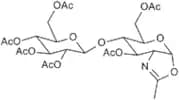
<p>A carbohydrate that is a modification of the saccharide, oligosaccharide, sugar, or fluorinated carbons. It is a complex carbohydrate that is synthesized from monosaccharides. This compound has an acetylated glucopyranosyl group and a methylated glucopyranosyl group that are attached by an acetal linkage. The compound can be modified with click chemistry to produce a desired product.</p>Fórmula:C26H35NO16Pureza:Min. 95%Peso molecular:617.55 g/molChitobiose dihydrochloride
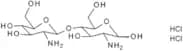
CAS:<p>Chitobiose is a dimer formed by beta-1,4-linked glucosamine units.<br>It is also the repeated dimer of chitin, a polysaccharide.</p>Fórmula:C12H24N2O9·2HClPureza:Min. 98 Area-%Cor e Forma:White PowderPeso molecular:413.25 g/mol3-Deoxygalactosone
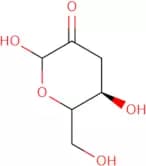
CAS:<p>3-Deoxygalactosone is a reactive compound that is formed by the reaction of glyoxal and galactose. The glyoxal molecule reacts with the hydroxyl group on the galactose to form a new aldehyde, which can then react with another molecule of glyoxal or galactose to form 3-deoxygalactosone. 3-Deoxygalactosone has been shown to have health effects in clinical studies. It also has been shown to decrease the dry weight of rats fed a high-fat diet. This compound also is an intermediate in the formation of 5-hydroxymethylfurfural, which is produced during the Maillard reaction between sugars and amino acids. 3-Deoxygalactosone binds to proteins, forming hydrogen bonds with amino acid side chains and affecting their biological function.</p>Fórmula:C6H10O5Pureza:90%Cor e Forma:Yellow PowderPeso molecular:162.14 g/mol1,2,3,4,6-Penta-O-acetyl-b-D-galactopyranose
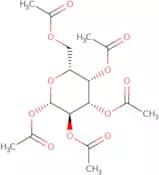
CAS:1,2,3,4,6-Penta-O-acetyl-b-D-galactopyranose, also known as beta-D-galactose pentaacetate, has high chemical stability and long shelf life. This protected form of galactose is a key building block of any chemical synthesis of galactose-containing oligosaccharides or glycoconjugates. In the presence of Lewis acids it can be used as a glycosyl donor to make simple glycosides. In order to perform more complex galactosylations it can be converted into more reactive donors, such as glycosyl halides or thioglycosides.Fórmula:C16H22O11Pureza:Min. 98 Area-%Cor e Forma:White Off-White PowderPeso molecular:390.34 g/mol1-Naphthyl 2-acetamido-2-deoxy-b-D-galactopyranose
<p>1-Naphthyl 2-acetamido-2-deoxy-b-D-galactopyranose is a modified carbohydrate that is used in the synthesis of polysaccharides. It is a high purity, custom synthesized monosaccharide that has been fluorinated and methylated. This chemical can be glycosylated or click modified to produce saccharides with desired properties.</p>Pureza:Min. 95%D-Glucosamine 6-phosphate
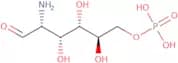
CAS:<p>D-Glucosamine 6-phosphate is a non-essential amino acid that belongs to the group of nucleotide sugar phosphates. It is a metabolite of the sugar D-glucose and it plays an important role in the energy metabolism of bacteria, plants, and animals. It has been shown to have anti-cancer effects on prostate cancer cells. D-Glucosamine 6-phosphate inhibits methyltransferase activity by binding to the enzyme's active site. This inhibition prevents DNA synthesis, leading to cell death. The structural analysis has been done using NMR spectroscopy on d-arabinose as a model substrate.</p>Fórmula:C6H14NO8PPureza:Min. 98 Area-%Cor e Forma:White PowderPeso molecular:259.15 g/molN-Acetyl-D-glucosamine 2-epimerase
CAS:<p>N-Acetyl-D-glucosamine 2-epimerase is an enzyme that catalyzes the conversion of N-acetyl D-glucosamine to N-acetyl D-mannosamine. This enzyme is a recombinant protein. It has been shown to be active against bacterial cells and has been used as a target for antibodies in research. The enzyme is insoluble at high concentrations, so it must be refolded before use. It is active in a denatured form, but can be made inactive by heat or other denaturing agents such as urea, guanidine hydrochloride, or sodium dodecyl sulfate (SDS). Refolding strategies include dilution, dialysis, or adsorption onto a solid support such as agarose beads.<br>!--</p>Pureza:Min. 95%Cor e Forma:Grey to brown solid.L-Fucitol
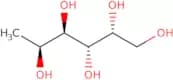
CAS:<p>L-Fucitol is a sugar that is found in the form of D-arabinose and D-xylitol. It is used in flow systems for the detection of herpes simplex virus type 1 (HSV1) glycoproteins and can be used to measure xylitol dehydrogenase activity. L-Fucitol has been shown to inhibit the growth of bacteria that are resistant to penicillin, ampicillin, and erythromycin. L-Fucitol also inhibits enzymes such as galactocerebrosidase, which breaks down galactocerebroside, a myelin constituent. This inhibition leads to accumulation of galactitol, an inhibitor of oligosaccharide synthesis. L-Fucitol also inhibits enzyme activities such as glycosidases and glycosyltransferases, which affect metabolic profiles by inhibiting the breakdown or synthesis of sugars. L-Fucitol is a monosac</p>Fórmula:C6H14O5Pureza:Min. 95%Cor e Forma:White Off-White PowderPeso molecular:166.17 g/molMethyl (2,3-di-O-benzyl-4-O-methyl-α,β-D-glucopyranoside)uronate
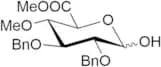
CAS:A protected glucuronide which is an anomeric mixture.Fórmula:C22H26O7Pureza:Min. 95%Cor e Forma:PowderPeso molecular:402.44 g/molD-Glucosamine sulfate
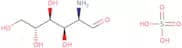
CAS:<p>D-Glucosamine sulfate is a pharmacological agent that has been shown to have activity against oxidative injury in vitro and in vivo. It inhibits the production of reactive oxygen species and lipid peroxidation, which are believed to be responsible for the development of liver disease. D-Glucosamine sulfate has also been shown to have activity against infectious diseases, with a particular focus on the inhibition of Toll-like receptor 4 signaling. The polymerase chain reaction (PCR) technique was used to detect the expression of glucosamine synthetase and other genes encoding enzymes that synthesize glucosamine in Mycobacterium tuberculosis. This drug may also be useful for treatment of inflammatory diseases such as rheumatoid arthritis, as it has been shown to inhibit prostaglandin synthesis, which is involved in the inflammatory response.</p>Fórmula:C6H13NO5•H2SO4Pureza:Min. 95%Cor e Forma:White PowderPeso molecular:277.25 g/mol1-Deoxy-L-mannitol
CAS:<p>1-Deoxy-L-mannitol is an effective oral hypoglycemic agent that has been used in the treatment of diabetes. It is a sugar alcohol with a chemical structure similar to glucose and erythritol. 1-Deoxy-L-mannitol is absorbed by the small intestine and enters the bloodstream after being hydrolyzed by pancreatic enzymes. It inhibits fatty acid synthesis, which leads to decreased levels of acetyl coenzyme A and increased levels of carnitine, leading to activation of fatty acid oxidation in liver cells. This drug also inhibits phosphatase activity, which leads to decreased production of glycerophosphate from triphosphate. This process results in an increase in intracellular pH and a decrease in plasma glucose concentration. The use of 1-deoxy-L-mannitol for the treatment of diabetes was first reported by George Cahill and his colleagues at Harvard University in 1967. It was shown that this drug could reduce blood sugar</p>Fórmula:C6H14O5Pureza:Min. 95%Cor e Forma:PowderPeso molecular:166.17 g/mol2,3,6,2',3',4',6'-Hepta-O-acetyl-a-D-cellobiosyl bromide
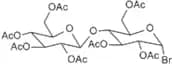
CAS:<p>2,3,6,2',3',4',6'-Hepta-O-acetyl-a-D-cellobiosyl bromide is a naturally occurring trisubstituted steroidal glycoside. It is insoluble in water and activated by chloride ions. 2,3,6,2',3',4',6'-Hepta-O-acetyl-a-D-cellobiosyl bromide has been shown to have antiviral properties in mammalian tissue cultures. This compound also has potential use as an ingredient in skin care products due to its ability to inhibit the production of fatty acids that are essential for the replication of viruses.<br>2,3,6,2',3',4',6'-Hepta-O-acetyl-a-D-cellobiosyl bromide can be found in microalgae and food composition as a nutrient.</p>Fórmula:C26H35BrO17Pureza:Min. 95%Cor e Forma:White PowderPeso molecular:699.45 g/mol3-(b-D-Mannopyranosyl)-D-rhamnose
<p>3-(b-D-Mannopyranosyl)-D-rhamnose is a custom synthesized carbohydrate that is modified by fluorination. It is also a complex carbohydrate with an Oligosaccharide, sugar, and a Monosaccharide. 3-(b-D-Mannopyranosyl)-D-rhamnose has high purity and can be used for methylation, glycosylation, or Click modifications. Click modification is an organic chemistry technique that uses a copper ion to add chemical groups to the surface of molecules. This provides access to new functionalities, such as increased solubility or stability in organic solvents.</p>Pureza:Min. 95%1-Deoxy-D-xylulose - Aqueous solution
CAS:<p>1-Deoxy-D-xylulose is a potent inhibitor of the enzyme xylulokinase, which catalyses the first step in the metabolism of D-xylulose to form 5-phosphate. This prevents the conversion of D-xylulose to xylitol and inhibits body formation. The 1-deoxy--D-xylulose molecule has been shown to bind selectively to sodium citrate by x-ray diffraction data. Sodium citrate is an antimicrobial agent used for food preservation and as a preservative in pharmaceuticals. It also has been shown to control enzyme activities that are involved in infectious diseases such as malaria, tuberculosis, and leprosy.<br>1-Deoxy--D--xylulose is one of many high purity steviol glycosides that have been identified as potential drug targets for inhibiting body formation or growth.</p>Fórmula:C5H10O4Pureza:Min. 97 Area-%Cor e Forma:Clear LiquidPeso molecular:134.13 g/molIron sucrose
CAS:<p>Iron sucrose is a sucrose-iron complex that is administered intravenously for the treatment of bowel disease and iron deficiency. Iron sucrose has been shown to have potent inducers of oxidative injury, which may be due to the formation of reactive oxygen species. Iron sucrose has also been shown to increase cellular transformation and congestive heart failure in mice. Long-term toxicity studies have not been conducted.</p>Fórmula:C12H22O11FePureza:Min. 95%Cor e Forma:Brown PowderPeso molecular:398.14

![4-Methoxyphenyl 4-O-{4-O-[[3-O-(2,4-di-O-[3,4,6-tri-O-Ac-2-PhthN-β-D-Glc)-3,6-di-O-Bn-α-D-Man]-4,6…](/_next/image/?url=https%3A%2Fstatic.cymitquimica.com%2Fproducts%2F3D%2Fthumb-webp%2FOM11013.webp&w=3840&q=75)