Glicociência
A glicociência é o estudo dos carboidratos e seus derivados, bem como das interações e funções biológicas em que participam. Este campo de pesquisa é crucial para compreender uma ampla variedade de processos biológicos, incluindo o reconhecimento celular, a sinalização, a resposta imune e o desenvolvimento de doenças. A glicociência tem aplicações importantes na biotecnologia, na medicina e no desenvolvimento de novos medicamentos e terapias. Na CymitQuimica, oferecemos uma ampla seleção de produtos de alta qualidade e pureza para pesquisa em glicociência. Nosso catálogo inclui monossacarídeos, oligossacarídeos, polissacarídeos, glicoconjugados e reagentes específicos, projetados para apoiar os pesquisadores em seus estudos sobre a estrutura, função e aplicações dos carboidratos em sistemas biológicos. Esses recursos são destinados a facilitar descobertas científicas e aplicações práticas em diversas áreas das biociências e da medicina.
Subcategorias de "Glicociência"
- Amino açúcares(108 produtos)
- Anticorpos Glico-Relacionados(282 produtos)
- Glicolípidos(46 produtos)
- Glicosaminoglicanos (GAGs)(55 produtos)
- Glicosídeos(419 produtos)
- Monossacáridos(6.622 produtos)
- Oligossacarídeos(3.682 produtos)
- Polissacáridos(503 produtos)
Foram encontrados 11042 produtos de "Glicociência"
Ordenar por
Pureza (%)
0
100
|
0
|
50
|
90
|
95
|
100
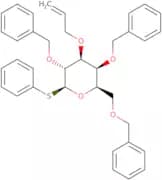
Phenyl 3-O-Allyl-2,4,6-tri-O-benzyl-b-D-thiogalactopyranoside
CAS:<p>Phenyl 3-O-Allyl-2,4,6-tri-O-benzyl-b-D-thiogalactopyranoside (PTAG) is a modified glycosylated monosaccharide which has been synthesized by the Click Reaction. The synthesis of PTAG was achieved by the reaction between 2,3,4,6-tetra O-benzyl bD thiogalactopyranose and benzylic alcohol. PTAG is an oligosaccharide with a molecular weight of 1,000 Da and consists of six glucopyranose units. It can be used as a building block in the synthesis of complex carbohydrates.</p>Fórmula:C36H38O5SPureza:Min. 95%Cor e Forma:White Off-White PowderPeso molecular:582.75 g/mol3-O-(2-Acetamido-2-deoxy-a-D-galactopyranosyl)-D-galactopyranose
CAS:<p>3-O-(2-Acetamido-2-deoxy-a-D-galactopyranosyl)-D-galactopyranose is an endothelial cell growth factor that is generated by the enzymatic activity of galactosyltransferase. It binds to lectin, glycan, and monoclonal antibodies. This molecule has been shown to have biological properties that are related to cancer and immunology. 3-O-(2-Acetamido-2-deoxy-a-D-galactopyranosyl)-D-galactopyranose may be used as a glycolipid marker in blood group typing and in the detection of cervical cancer cells.</p>Fórmula:C14H25NO11Pureza:Min. 95%Cor e Forma:White PowderPeso molecular:383.33 g/mol1-Deoxy-3,4-O-isopropylidene-L-tagatose
<p>1-Deoxy-3,4-O-isopropylidene-L-tagatose is a synthetic sugar that is modified by the addition of a fluorine atom at the 1 position. This modification prevents the enzyme glycosidase from cleaving this sugar and releasing glucose. 1DILT can be used to produce glycans with different structures, including complex carbohydrates. The CAS number for this product is 7062-93-5.</p>Pureza:Min. 95%6-Deoxy-3,5-O-benzylidene-D-gulonolactone
6-Deoxy-3,5-O-benzylidene-D-gulonolactone is a Methylated Oligosaccharide that is custom synthesized for your needs. It has CAS No. and is available in high purity with a Click modification to the sugar as well as Fluorination. This product is also a Carbohydrate, which is a Polysaccharide and Saccharide that can be used in many applications such as medical research, food production, or industrial processes. 6-Deoxy-3,5-O-benzylidene-D-gulonolactone is made from Monosaccharides and Sugars and can be modified to meet your needs.Pureza:Min. 95%N-Hexanoyl-D-glucosamine
CAS:<p>N-Hexanoyl-D-glucosamine is a hexose sugar that is a component of the glycosaminoglycan heparin. It is structurally related to acetylglucosamine and n-acetylglucosamine, which are also components of heparin. N-Hexanoyl-D-glucosamine can be synthesized by the injection of propionylated D-glucose into animal tissues. The biosynthesis of this compound is impaired in animals with diabetes mellitus.</p>Fórmula:C12H23NO6Pureza:(%) Min. 98%Cor e Forma:White PowderPeso molecular:277.31 g/molChlorhexidine digluconate - 20% aqueous solution
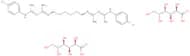
CAS:<p>Bisbiguanide antiseptic and disinfectant used in topical antibacterial products</p>Fórmula:C34H54Cl2N10O14Pureza:190 To 210 G/LCor e Forma:Clear LiquidPeso molecular:897.76 g/molIsorhamnetin 3-glucoside-7-rhamnoside
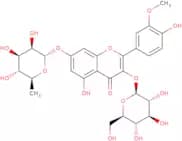
CAS:<p>Isorhamnetin 3-glucoside-7-rhamnoside is a type of flavonoid that is found in plants and has the chemical formula C14H12O5. It is a glycoside that is converted to its aglycone, rhamnetin, in the body. Isorhamnetin 3-glucoside-7-rhamnoside has shown potential as an antiinflammatory agent by inhibiting the ubiquitin proteasome pathway and Cox2 inhibitory activity. It also inhibits protease activity and can be used to treat inflammatory diseases such as arthritis. Isorhamnetin 3-glucoside-7-rhamnoside is synergistic with other molecules, so it can be used to prevent or treat inflammation when combined with other drugs.</p>Fórmula:C28H32O16Pureza:Min. 95%Cor e Forma:White PowderPeso molecular:624.54 g/molLaminaritriose hendecaacetate
<p>Fully acetylated laminaritriose</p>Fórmula:C40H54O27Pureza:Min. 95%Peso molecular:966.84 g/molN-[2-(3'-Nitrophenylacetonitrile)]-2,3,4,6-tetra-O-pivaloyl-D-glucopyranoside
<p>N-[2-(3'-Nitrophenylacetonitrile)]-2,3,4,6-tetra-O-pivaloyl-D-glucopyranoside is a high purity custom synthesis sugar. It is synthesized through Click modification and fluorination. This chemical has been used as a building block for glycosylation and methylation. The CAS number is 95825-78-8.</p>Fórmula:C34H49N3O11Pureza:Min. 95%Peso molecular:675.77 g/mol7-Deoxy-1,2:4,5-di-O-isopropylidene-L-glycero-D-gluco-heptitol
<p>7-Deoxy-1,2:4,5-di-O-isopropylidene-L-glycero-D-glucoheptitol is a high purity synthetic compound that can be custom synthesized to order. It is a white powder with a molecular weight of 264.27 grams per mole and is soluble in water and DMSO. The CAS No. for this compound is 2206188-76-3. It has been fluorinated at the C2 position and has been modified with a click chemistry reaction to create an oligosaccharide or polysaccharide. This product is available for purchase from our store at www.sigmaaldrichchemicals.com/7deoxy1,2:4,5diOisopropylideneLglyceroDglucoheptitol</p>Pureza:Min. 95%6-O-Sulfated Lewis X - 90%
<p>6-O-Sulfated Lewis X is a complex carbohydrate that contains a 6-sulfated Lewis X monosaccharide. It has been synthesized to have a high purity and stability. 6-O-Sulfated Lewis X is soluble in water and can be used as a synthetic building block for the synthesis of saccharides, polysaccharides, and oligosaccharides. The compound has been modified to have fluorination at the C6 position.</p>Fórmula:C20H35NO18SPureza:Min. 95%Cor e Forma:PowderPeso molecular:609.55 g/molTridecyl β-D-maltopyranoside
CAS:<p>Tridecyl beta-D-maltopyranoside is a synthetic saccharide that has been modified with fluorination and methylation. The carbohydrate can be used in the synthesis of glycosylated proteins. The product is available for custom synthesis, and it is offered in high purity form.</p>Fórmula:C25H48O11Pureza:Min. 97 Area-%Peso molecular:524.64 g/molSedoheptulose anhydride monohydrate
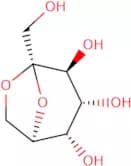
CAS:<p>Sedoheptulose anhydride is a derivative of sedoheptulose, a seven-carbon atoms carbohydrate.</p>Fórmula:C7H12O6·H2OPureza:Min. 90 Area-%Cor e Forma:White PowderPeso molecular:210.18 g/mol2,3-O-Isopropylidene-L-ribonic acid-1,4-lactone
CAS:<p>2,3-O-Isopropylidene-L-ribonic acid-1,4-lactone is a fluorinated glycoside that can be used as a monosaccharide or modified to form an oligosaccharide. It is synthesized by the addition of fluorine to an alpha position of D-ribose, followed by lactonization. This product has been shown to have high purity and can be used as a sugar substitute in foods. This compound has been used for the synthesis of saccharides with click modification and oligosaccharides with polymerization.</p>Fórmula:C8H12O5Pureza:Min. 95%Cor e Forma:PowderPeso molecular:188.18 g/molMono-6-O-(p-toluenesulfonyl)-β-cyclodextrin
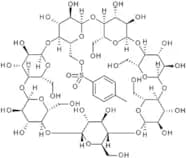
CAS:<p>This beta-cyclodextrin (β-CD) derivative is a functionalized cyclic oligosaccharide composed of seven glucose units, characterized by a hydrophilic exterior and a lipophilic cavity (bigger than α-CD and smaller than γ-CDs), which allows it to encapsulate various guest molecules. This structural feature facilitates its use in multiple applications, including pharmaceuticals, food enhancement, and cosmetics. In the pharmaceutical industry, it enhances the solubility and stability of poorly water-soluble drugs, improving their bioavailability and efficacy while also masking unpleasant tastes. The food sector utilizes it as a stabilizer for flavors, colors, and nutrients, extending shelf life by protecting sensitive ingredients from degradation. In cosmetics, it serves as a complexing agent for fragrances and active components, ensuring their stability and controlled release. Its use expands to many other fields, including nanotechnology for drug delivery systems, environmental remediation for extracting organic pollutants, textiles for slow-release fragrances, and analytical chemistry for chiral separation.</p>Fórmula:C49H76O37SPureza:Min. 85 Area-%Cor e Forma:PowderPeso molecular:1,289.17 g/molDextran 6, MW 5,500 to 7,500
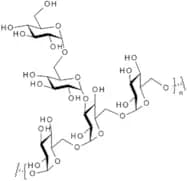
CAS:<p>Dextran is α-(1,6)-linked α-D-glucan with α-(1,3)-linked glucose branch points produced by fermentation of Leuconostoc mesenteroides via the action of the enzyme dextransucrase on sucrose. The main use for native dextran is as an extender in blood transfusions and products having a range of sharp cut-off molecular weights are produced commercially for this and other applications. A complex of iron with dextran, known as iron dextran, is used as a source of iron for baby piglets which are often anaemic at birth.</p>Cor e Forma:White Powder2-Acetamido- 2- deoxy- 3, 6- di- O- methyl-D- glucose
CAS:<p>2-Acetamido- 2- deoxy- 3, 6- di- O- methyl-D- glucose is a carbohydrate that has been modified with fluorine. The molecular weight of the compound is 348.14 g/mol. This product was synthesized by custom synthesis and has high purity. It can be used in glycosylation and click chemistry to modify saccharides, oligosaccharides, monosaccharides, or polysaccharides. Methylation of this product can also be done using reductive amination. Click modification is a reaction between an azide group on one molecule and an alkyne group on another molecule, which produces a 1,3,5 triazole ring containing two new chemical bonds. Polysaccharide refers to carbohydrates that are long chains of monosaccharides linked together by glycosidic bonds.</p>Fórmula:C10H19NO6Pureza:Min. 95%Peso molecular:249.26 g/molMethyl 3-O-[(6-O-b-D-galactopyranosyl)-b-D-galactopyranosyl]-b-D-galactopyranoside
<p>Methyl 3-O-[(6-O-b-D-galactopyranosyl)-b-D-galactopyranosyl]-b-D-galactopyranoside is a white crystalline powder that is soluble in water. It can be custom synthesized to order, and has been shown to have high purity with no detectable impurities. This product can be used in Click chemistry, fluorination, glycosylation, or synthesis of complex carbohydrates. The CAS number for this product is <br>56919-86-4.</p>Fórmula:C19H34O16Pureza:Min. 95%Peso molecular:518.46 g/molEthyl 2-deoxy-2-trichloroacetamido-b-D-thioglucopyranoside
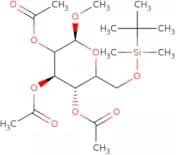
<p>Ethyl 2-deoxy-2-trichloroacetamido-b-D-thioglucopyranoside is a modified sugar which is synthesized by reacting an ethyl glycoside with trichloroacetonitrile. This product is a white, crystalline powder that can be used in the synthesis of complex carbohydrates and saccharides, as well as other chemical modifications such as fluorination and methylation. It has been shown to have high purity and custom synthesis capabilities.</p>Pureza:Min. 95%Methyl 2,3,4-tri-O-acetyl-6-O-tert-butyldimethylsilyl-a-D-galactopyranoside
CAS:<p>Methyl 2,3,4-tri-O-acetyl-6-O-tert-butyldimethylsilyl-a-D-galactopyranoside is a synthetic glycosylated peptide that contains a 6FAM reactive group for labeling. It is a high purity product with no impurities and can be used for the fluorination of saccharides. It has a CAS number of 594841-23-3 and can be custom synthesized to meet your needs. This product is typically used as an intermediate in the synthesis of polysaccharides and oligosaccharides.</p>Fórmula:C19H34O9SiPureza:Min. 95%Peso molecular:434.56 g/mol




![N-[2-(3'-Nitrophenylacetonitrile)]-2,3,4,6-tetra-O-pivaloyl-D-glucopyranoside](/_next/image/?url=https%3A%2Fstatic.cymitquimica.com%2Fproducts%2F3D%2Fthumb-webp%2FMN08451.webp&w=3840&q=75)



![Methyl 3-O-[(6-O-b-D-galactopyranosyl)-b-D-galactopyranosyl]-b-D-galactopyranoside](/_next/image/?url=https%3A%2Fstatic.cymitquimica.com%2Fproducts%2F3D%2Fthumb-webp%2FOM10181.webp&w=3840&q=75)