Glicociência
A glicociência é o estudo dos carboidratos e seus derivados, bem como das interações e funções biológicas em que participam. Este campo de pesquisa é crucial para compreender uma ampla variedade de processos biológicos, incluindo o reconhecimento celular, a sinalização, a resposta imune e o desenvolvimento de doenças. A glicociência tem aplicações importantes na biotecnologia, na medicina e no desenvolvimento de novos medicamentos e terapias. Na CymitQuimica, oferecemos uma ampla seleção de produtos de alta qualidade e pureza para pesquisa em glicociência. Nosso catálogo inclui monossacarídeos, oligossacarídeos, polissacarídeos, glicoconjugados e reagentes específicos, projetados para apoiar os pesquisadores em seus estudos sobre a estrutura, função e aplicações dos carboidratos em sistemas biológicos. Esses recursos são destinados a facilitar descobertas científicas e aplicações práticas em diversas áreas das biociências e da medicina.
Subcategorias de "Glicociência"
- Amino açúcares(108 produtos)
- Anticorpos Glico-Relacionados(282 produtos)
- Glicolípidos(46 produtos)
- Glicosaminoglicanos (GAGs)(55 produtos)
- Glicosídeos(419 produtos)
- Monossacáridos(6.622 produtos)
- Oligossacarídeos(3.682 produtos)
- Polissacáridos(503 produtos)
Foram encontrados 11041 produtos de "Glicociência"
Ordenar por
Pureza (%)
0
100
|
0
|
50
|
90
|
95
|
100
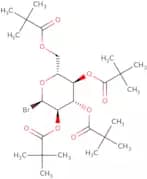
2,3,4,6-Tetra-O-pivaloyl-a-D-glucopyranosyl bromide - stabilised with CaCO3
CAS:<p>Intermediate in the synthesis of dapagliflozin</p>Fórmula:C26H43BrO9Pureza:Min. 95%Cor e Forma:White To Off-White SolidPeso molecular:579.52 g/mol2-Acetamido-3-O-(2,3,4,6-tetra-O-acetyl-b-D-galactopyranosyl)-4,6-di-O-acetyl-2-deoxy-a-D-galactopyranosyl-Fmoc-L-serine tert-butyl ester
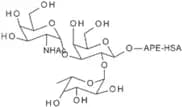
CAS:<p>The 2-acetamido-3-O-(2,3,4,6-tetra-O-acetyl-b-D-galactopyranosyl)-4,6-di-O-acetyl-2 deoxy -a D galactopyranosyl Fmoc L serine tert butyl ester is a custom synthesis of an oligosaccharide. It is a saccharide with a polysaccharide that is glycosylated and has a sugar at the end. This carbohydrate can be used for Modification, Fluorination, Methylation, Monosaccharide, Synthetic purposes.</p>Fórmula:C48H60N2O21Pureza:Min. 95%Peso molecular:1,000.99 g/molBlood group A trisaccharide-APE-HSA
<p>Core antigen ABO trisaccharide conjugated to HSA via an aminophenyl ethyl spacer</p>Pureza:Min. 95%3,6-Di-O-acetyl-a-cyclodextrin
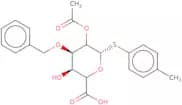
<p>Alpha-cyclodextrin (α-CD) derivative with a hydrophilic exterior and lipophilic cavity (smaller than β-CDs and γ-CDs) to allocate certain guest molecules. This structural characteristic enables applications in molecular encapsulation, solubility enhancement, and stabilization across multiple industries. In pharmaceuticals, it serves as a drug delivery vehicle, enhancing the bioavailability and stability of active ingredients. The food industry utilizes it as a stabilizer for flavors, colors, and nutrients, as well as a functional ingredient for its effects on lipid metabolism. In cosmetics, it acts as a complex agent for fragrances and active components. Its applications extend to analytical chemistry for chiral separation and to materials science for developing smart materials and nanosystems.</p>Fórmula:C60H84O42Pureza:Min. 95%Peso molecular:1,477.28 g/mol4-Methylphenyl 2-O-acetyl-3-O-benzyl-b-D-thioglucuronide
<p>4-Methylphenyl 2-O-acetyl-3-O-benzyl-β-D-thioglucuronide is a modification of the oligosaccharide, carbohydrate complex carbohydrate. It is synthesized by custom synthesis. This product has CAS No. and is a monosaccharide, methylation and glycosylation. The molecular weight of this product is 676.4 Da and it contains no other functional groups except for a fluorine atom in its structure.</p>Fórmula:C22H24O7SPureza:Min. 95%Peso molecular:432.49 g/mol2-Acetamido-2,4-dideoxy-4-fluoro-D-glucopyranose
CAS:<p>2-Acetamido-2,4-dideoxy-4-fluoro-D-glucopyranose (2ADFG) is a glycosaminoglycan that inhibits the biosynthesis of glycosaminoglycans by binding to the enzyme UDP-N-acetylglucosamine 2-epimerase. It is used in cellular control experiments to determine if cells are hepatocytes or not. This compound binds to glycosaminoglycans and prevents them from being synthesized, which leads to cell death. The binding of 2ADFG also results in a decrease in cellular protein synthesis and an increase in cellular lysosomal activity.</p>Fórmula:C8H14FNO5Pureza:Min. 95%Peso molecular:223.2 g/molHeparin disaccharide III-A disodium salt
CAS:<p>Heparin disaccharide III-A is a synthetic heparin that is modified with the addition of a sugar molecule. Heparin disaccharide III-A disodium salt (HDS) is a high purity, custom synthesized product and has been fluorinated to improve its stability. HDS has been shown to be an effective inhibitor of glycosylation in bacteria cells, leading to decreased production of bacterial enzymes and proteins. It also inhibits protein synthesis by preventing the methylation of ribosomes and reducing the number of saccharides available for glycosylation. The HDS molecule is composed of two sugars: N-acetylglucosamine and D-glucuronic acid. This compound also has anti-inflammatory properties due to its ability to inhibit prostaglandin synthesis.</p>Fórmula:C14H19NO14SNa2Pureza:Min. 95%Cor e Forma:White PowderPeso molecular:503.34 g/mol2-C-Methyl-D-ribono-1,4-lactone
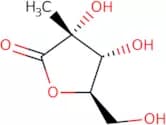
CAS:<p>2-C-Methyl-D-ribono-1,4-lactone is a ketose which is formed from the thermal rearrangement of d-xylose. It has been shown to be an acceptor for episulfide and an 1-deoxy-d-ribulose. 2-C-Methyl-D-ribono-1,4-lactone has been found to yield dimethylamine when heated with magnesium. This compound can be ion exchanged with calcium and magnesium. 2CMR was first synthesized by the reaction of L(+) lactic acid with dimethylamine in the presence of magnesium chloride. The product was purified by crystallization from water, yielding a white powder that melts at 230°C.</p>Fórmula:C6H10O5Pureza:Min. 95%Cor e Forma:White Clear LiquidPeso molecular:162.14 g/mol1-Kestose
CAS:<p>1-Kestose is a trisaccharide composed of fructose and sucrose molecules (Collins, 2006) and occurs in sugar cane, honey, and maple syrup, where it is formed by enzymatic action. As the main group of fructooligosaccharides, kestoses share similar physiological effects with other fructooligosaccharides. Kestoses have shown potential in promoting the growth of probiotics including Faecalibacterium prausnitzii and Bifidobacterium to a higher degree than other fructooligosaccharides. Thus, the production of kestoses using food-grade microorganisms may be beneficial to their application in the food industry (Ni, 2021).</p>Fórmula:C18H32O16Pureza:Min. 98 Area-%Cor e Forma:White Yellow PowderPeso molecular:504.44 g/mol4'-Hydroxypropanolol D-glucuronide D5
Produto Controlado<p>4'-Hydroxypropanolol D-glucuronide D5 is a custom synthesis.</p>Fórmula:C22H24NO9D5Pureza:Min. 95%Peso molecular:456.51 g/mol3-Deoxy-D-manno-2-octulosonic acid ammonium
CAS:<p>3-Deoxy-D-manno-2-octulosonic acid ammonium is a bioreactor that is used in the delipidation of fatty acids. It is one of the most effective natural compounds for removing lipids, and it has been shown to be effective in reducing the levels of galactose and cholesterol. 3-Deoxy-D-manno-2-octulosonic acid ammonium has also been shown to be an effective antigen that can be used as a marker for various microorganisms, such as typhimurium, enterobacter, and lettuce.</p>Fórmula:C8H17NO8Pureza:Min. 95 Area-%Cor e Forma:White PowderPeso molecular:255.22 g/molMethyl-β-cyclodextrin - 7 to 14 degree of substitution
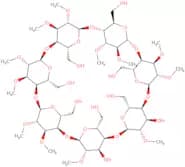
CAS:<p>This beta-cyclodextrin (β-CD) derivative is a functionalized cyclic oligosaccharide composed of seven glucose units, characterized by a hydrophilic exterior and a lipophilic cavity (bigger than α-CD and smaller than γ-CDs), which allows it to encapsulate various guest molecules. This structural feature facilitates its use in multiple applications, including pharmaceuticals, food enhancement, and cosmetics. In the pharmaceutical industry, it enhances the solubility and stability of poorly water-soluble drugs, improving their bioavailability and efficacy while also masking unpleasant tastes. The food sector utilizes it as a stabilizer for flavors, colors, and nutrients, extending shelf life by protecting sensitive ingredients from degradation. In cosmetics, it serves as a complexing agent for fragrances and active components, ensuring their stability and controlled release. Its use expands to many other fields, including nanotechnology for drug delivery systems, environmental remediation for extracting organic pollutants, textiles for slow-release fragrances, and analytical chemistry for chiral separation.</p>Fórmula:C56H98O35Cor e Forma:PowderPeso molecular:1,331.36 g/mol2-Amino-2-deoxy-3-O-(b-D-glucopyranuronosyl)-D-galactopyranose monohydrate
CAS:<p>2-Amino-2-deoxy-3-O-(b-D-glucopyranuronosyl)-D-galactopyranose monohydrate is a glycoside that is found in the testes. It has inhibitory properties on oligosaccharides and can be used to study the structure of glycoconjugates. 2-Amino-2-deoxy-3-O-(b-D-glucopyranuronosyl)-D-galactopyranose monohydrate has been shown to inhibit the enzyme hydrolase, which is involved in glycoprotein synthesis. 2ADOGP has also been shown to bind to human serum albumin, an abundant protein in human blood plasma that transports lipids, hormones, and other molecules throughout the body. This binding results in a decrease in the serum concentration of 2ADOGP after administration.</p>Fórmula:C12H21NO11H2OCor e Forma:Off-White PowderPeso molecular:373.31 g/molMaltulose monohydrate
CAS:<p>Occurs by epimerisation of maltose and transglucosylation</p>Fórmula:C12H22O11·H2OPureza:Min. 95%Cor e Forma:White PowderPeso molecular:360.32 g/molPeonidin-3-O-galactoside chloride
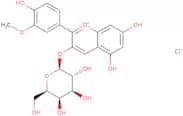
CAS:<p>Peonidin-3-O-galactoside chloride is a natural product that can be found in many plants, such as the genus Peonia, and is also commonly found in wine. It has been shown to inhibit pancreatic lipase in vitro and may have potential as a dietary supplement. The surface methodology used to study the interaction of protocatechuic acid with caco-2 cells was efficient and showed the ability of this compound to interact with fatty acids. This interaction could be related to its health effects, which have been studied using cell culture methods. The dietary intake of protocatechuic acid has been shown to reduce blood pressure in rats, but it is unclear if this effect would occur in humans because of the lack of a suitable animal model for human studies.</p>Fórmula:C22H23O11·ClPureza:Min. 95%Cor e Forma:PowderPeso molecular:498.86 g/molp-Lacto-N-hexaose
CAS:<p>Neutral hexasasaccharide naturally present in human breast milk</p>Fórmula:C40H68N2O31Pureza:Min. 95%Cor e Forma:PowderPeso molecular:1,072.96 g/molBlood group B hexasaccharide type I
<p>Gala1-3(Fuca1-2)Galb1-3GlcNAcb1-3Galb1-4Glc (B antigen hexasaccharide Type I)</p>Fórmula:C38H65NO30Pureza:Min. 90 Area-%Cor e Forma:PowderPeso molecular:1,015.91 g/molEthyl b-D-galactopyranoside
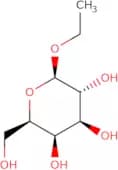
CAS:<p>Ethyl b-D-galactopyranoside is a galactosylated glycoside that can be synthesized by the transfer of an acetyl group from ethyl alcohol to a sugar. It has antibacterial activity and is used in solvents as a stabilizer. The chemical structure of this compound consists of two benzene rings with an -OH group on one end, which are linked together by a covalent bond. The spacing between these two benzene rings is important for the stability of this compound, and it will break down when there is not enough space for the electron clouds to interact with each other. Ethyl b-D-galactopyranoside has been shown to be effective against tuberculosis bacteria, Mycobacterium tuberculosis, and Mycobacterium avium complex.</p>Fórmula:C8H16O6Cor e Forma:White PowderPeso molecular:208.21 g/molD-Altrose
CAS:<p>D-Altrose is an alpha-hydroxy acid that is synthesized from D-arabinose and trifluoroacetic acid. It has been shown to be a substrate for the synthesis of oligosaccharides, which are important in carbohydrate chemistry. This molecule can also be used as a reagent in the preparation of carbohydrates with a specific configuration at C2. One use of this product is in generating analytical methods that can distinguish between D-altrose and D-arabinose by monitoring the ratio of hydrogen fluoride to carbonyl group signals. D-Altrose may also be used in asymmetric synthesis, where it is a useful chiral building block for the construction of galacturonic acid derivatives.</p>Fórmula:C6H12O6Pureza:Min. 98 Area-%Cor e Forma:White PowderPeso molecular:180.16 g/molD-Fructose 1-phosphate disodium salt
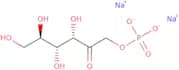
CAS:<p>D-Fructose 1-phosphate disodium salt is a high purity, custom synthesis sugar compound. It has CAS No. 71662-09-4 and Click modification. Fluorination and glycosylation are the two modifications that can be done on this product. This product is an oligosaccharide and it is a monosaccharide with saccharide as its complex carbohydrate.</p>Fórmula:C6H11Na2O9PPureza:Min. 90 Area-%Cor e Forma:White PowderPeso molecular:304.1 g/mol