Glicociência
Subcategorias de "Glicociência"
- Amino açúcares(108 produtos)
- Anticorpos Glico-Relacionados(284 produtos)
- Glicolípidos(46 produtos)
- Glicosaminoglicanos (GAGs)(55 produtos)
- Glicosídeos(419 produtos)
- Monossacáridos(6.622 produtos)
- Oligossacarídeos(3.699 produtos)
- Polissacáridos(506 produtos)
Foram encontrados 11035 produtos de "Glicociência"
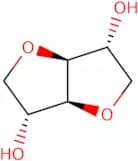
1, 4:3, 6- Dianhydro-D- iditol
CAS:1,4:3,6-Dianhydro-D-iditol is an organic compound. It is the L-enantiomer of 1,4:3,6-dianhydro-L-iditol. This compound can be used as a substrate for the cytochrome P450 system and soluble guanylate cyclase. 1,4:3,6-Dianhydro-D-iditol has been shown to have an inhibitory effect on both tissues and guanylate cyclase in vitro. This compound also inhibits the production of reactive oxygen species by oxidases.Fórmula:C6H10O4Pureza:Min. 95%Peso molecular:146.14 g/mol(1S) -1- [(2S, 3R) - 3- Hydroxy- 1- azetidinyl] -1, 2- ethanediol hydrochloride
CAS:(1S) -1- [(2S, 3R) - 3- Hydroxy- 1- azetidinyl] -1, 2- ethanediol hydrochloride is a custom synthesis that has been modified with fluorination, methylation, and monosaccharide modification. It is a synthetic compound that has been developed for use in the synthesis of oligosaccharides and saccharides. This product also has CAS No. 1338054-24-2 and is listed as Polysaccharide, Glycosylation, sugar, Carbohydrate, complex carbohydrate.Fórmula:C5H11NO3·HClPureza:Min. 95%Peso molecular:169.61 g/molN- [[(2R, 3R, 4S) - 4- [(Acetyloxy) methyl] - 3- (phenylmethoxy) - 1- (phenylmethyl) - 2- azetidinyl] methyl] -acetamide
CAS:N-[[(2R, 3R, 4S) - 4- [(Acetyloxy) methyl] - 3- (phenylmethoxy) - 1- (phenylmethyl) - 2- azetidinyl] methyl] -acetamide is a modified carbohydrate with the molecular formula C14H19NO5. This product is a white to off-white crystalline solid, which can be used in the synthesis of various carbohydrates and sugars. It has been shown that this compound has good solubility in water and DMSO. N-[[(2R, 3R, 4S) - 4- [(Acetyloxy) methyl] - 3- (phenylmethoxy) - 1- (phenylmethyl) - 2- azetidinyl] methyl] -acetamide is an acetamide derivative of N-[2-(acetoxymethyl)-1-[3-(4′′′′′′′′′′Fórmula:C23H28N2O4Pureza:Min. 95%Peso molecular:396.48 g/mol2-13C-a-D-Mannose-1-phosphate dipotassium salt
2-13C-a-D-Mannose-1-phosphate dipotassium salt is a custom synthesis of a complex carbohydrate. It is a monosaccharide that can be used as a substrate for glycosylation, methylation, or click modification. This product is available in high purity and good quality.
Pureza:Min. 95%(2R, 3S, 4R) -4-Acetamido- 3 benzhydryloxybis(trimethylsilyloxy)silyloxy - 2- [( benzhydryloxybis(trimethylsilyloxy)silyloxy) methyl ] - 1- benzyl- pyrrolidine
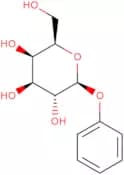
(2R, 3S, 4R) -4-Acetamido- 3 benzhydryloxybis(trimethylsilyloxy)silyloxy - 2- [( benzhydryloxybis(trimethylsilyloxy)silyloxy) methyl ] - 1- benzyl- pyrrolidine is a modification of an oligosaccharide. It is a high purity, custom synthesis and synthetic. This compound has CAS No., Monosaccharide, Methylation, Glycosylation, Polysaccharide, sugar and Fluorination.Pureza:Min. 95%Phenyl b-D-galactopyranoside
CAS:Phenyl b-D-galactopyranoside is a glycoside of galactose. It is used as an antigen and cross-linking agent in the preparation of monoclonal antibodies to human serum proteins. Phenyl b-D-galactopyranoside has been shown to be a potent inhibitor of protein synthesis in cells from primary tumors, and it has been found to decrease the rate of tumor growth in mice. This compound also inhibits the growth of certain bacteria, including methicillin-resistant Staphylococcus aureus (MRSA), Mycobacterium tuberculosis, and Mycobacterium avium complex. The mechanism by which phenyl b-D-galactopyranoside inhibits bacterial growth is not well understood.Fórmula:C12H16O6Pureza:Min. 98 Area-%Cor e Forma:PowderPeso molecular:256.25 g/mol(Hydroxypropyl)methyl cellulose - Viscocity 80-120 cP, 2 % in H2O (20 °C)
CAS:Hydroxypropyl methylcellulose (HPMC or hypromellose) is a semisynthetic, inert and viscoelastic polymer that is used as eye drops and as semi-synthetic substitute for tear-films. When applied, a hypromellose solution acts to swell and absorb water, by increasing the thickness of the tear-film, resulting in decreased eye irritation. In addition to its use in ophthalmic liquids, hypromellose has been used as an excipient in oral tablet and capsule formulations, where, depending on the grade, it functions as controlled-release agent. It is also used as a binder and as a component of tablet coatings. Hypromellose in aqueous solution, unlike methylcellulose, exhibits thermal gelation properties. HPMC is approved as a food additive, emulsifier, thickening and suspending agent, and as an alternative to animal gelatin (Codex Alimentarius code (E number) is E464).Cor e Forma:White Powder2-Amino- 2- deoxy- 3, 4- di- O- methyl-D- glucose
CAS:2-Amino- 2-deoxy-3,4-di-O-methyl-D-glucose is a sugar that belongs to the group of carbohydrates. It has been custom synthesized and modified with fluorine and methyl groups. This product is available in high purity, which can be used as a building block for glycosylation or click modification.Fórmula:C8H17NO5Pureza:Min. 95%Peso molecular:207.22 g/mol4-O-Methyl-alpha-D-glucurono-beta-D-xylan
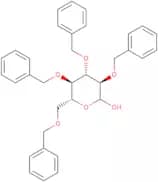
CAS:4-O-Methyl-alpha-D-glucurono-beta-D-xylan is produced by the hydrolysis of xylan. It can be used in studies to find new soluble chromogenic substrates for the assay of xylanases and glucanases.Cor e Forma:Powder2,3,4,6-Tetra-O-benzyl-D-glucopyranose
CAS:2,3,4,6-Tetra-O-benzyl-D-glucopyranose is a selectively protected intermediate, where the anomeric 1-O-hydroxyl group is free. This hemiacetal has been used successfully as an intermediate for glucosylation couplings, where it was converted into 2,3,4,6-tetra-O-benzyl-D-glucopyranose trichloroacetimidate using trichloroacetonitrile in the presence of a base such as potassium carbonate and DBU. Importantly, this imidate donor with no neighbouring participating groups is commonly used for the selective formation of α-glucosides. 2,3,4,6-tetra-O-benzyl-D-glucopyranose can also be oxidized to the lactone, or reduced to give the open chain form. Additionally, 2,3,4,6-tetra-O-benzyl-D-glucopyranose can be used for the preparation of glucono-1,5-lactone hydrazine, which was used, in-turn, to form a glucosylidene-spirocyclopropane.
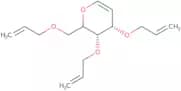
Fórmula:C34H36O6Pureza:Min. 97 Area-%Cor e Forma:White PowderPeso molecular:540.65 g/mol3,4,6-Tri-O-allyl-D-glucal
CAS:3,4,6-Tri-O-allyl-D-glucal is a custom synthesis of a complex carbohydrate. It is an Oligosaccharide and Polysaccharide that can be modified by methylation and glycosylation. The product is a Modification of saccharides that has been shown to have Methylation, Glycosylation, Carbohydrate and Click modification. 3,4,6-Tri-O-allyl-D-glucal has CAS No. 434327-45-4 and is available in High purity with Fluorination.Fórmula:C15H22O4Pureza:Min. 95%Peso molecular:266.33 g/molCanagliflozin
CAS:Canagliflozin is a drug that has been approved for the treatment of type 2 diabetes. It is an inhibitor of sodium glucose transporter 2 (SGLT2) and reduces blood glucose levels by increasing urinary glucose excretion. Canagliflozin has been shown to have cardiac effects, which may be due to its ability to increase serum natriuretic peptide levels and decrease heart rate. This drug has also been shown to reduce cardiovascular disease activity in patients with type 2 diabetes. Canagliflozin is not active against c. glabrata, but it does inhibit SGLT1 in this organism.Fórmula:C24H25FO5SPureza:Min. 95%Cor e Forma:PowderPeso molecular:444.52 g/molGlucosamine sulfate potassium chloride
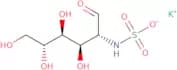
CAS:Glucosamine sulfate potassium chloride is a reaction solution that contains glucosamine and hydrochloric acid. It is used in the treatment of osteoarthritis and related diseases, as well as for the prevention of cardiovascular disease. Glucosamine sulfate potassium chloride has been shown to reduce pain and improve the clinical response in patients with osteoarthritis. The synergic effect of glucosamine sulfate potassium chloride may be due to its ability to inhibit the degradation of collagen by hydrochloric acid. This drug also increases the production of glycoside derivatives from glucose, which are important for basic protein synthesis. Glucosamine sulfate potassium chloride can be used as a dietary supplement for infants, who have fatty acid deficiencies.Fórmula:(C6H14NO5)2SO4•(KCl)2Pureza:Min. 95%Peso molecular:605.52 g/mol1,2:4,5-Di-O-cyclohexylidene-b-D-fructopyranose
CAS:1,2:4,5-Di-O-cyclohexylidene-b-D-fructopyranose is a modification of the natural carbohydrate 1,2:4,5-di-O-isopropylidene-b-D-fructopyranose. It is an oligosaccharide composed of three units of b-D-fructofuranose linked by α-(1,2) and β-(1,4) glycosidic bonds. The methylation and glycosylation of this saccharide can be customized to produce a wide range of products with different properties. 1,2:4,5 Di O cyclohexylidene b D fructopyranose can be used in applications such as pharmaceuticals and agrochemicals.
The molecular formula for this compound is C10H14O8 and its CAS number is 18608-92-9.Fórmula:C18H28O6Pureza:Min. 95%Peso molecular:340.41 g/mol1,6-Anhydro-b-D-galactopyranose
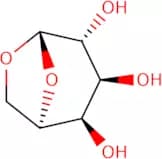
CAS:Used for preparation of biologically active compoundsFórmula:C6H10O5Pureza:Min. 97 Area-%Cor e Forma:White Off-White PowderPeso molecular:162.14 g/molD-Ribose
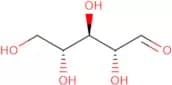
CAS:D-ribose (Rib) is an aldopentose, a component of RNA and a constituent of numerous cofactors, and certain vitamins. (Collins, 2006). Ribose is a component of bacterial polysaccharides found in Salmonella (Lindberg, 1990). Ribosylation leads to the production of significant amounts of advanced glycation end products, both extracellularly and intracellularly, it may be involved in cell dysfunction and subsequent cognitive impairments (Wei, 2012).
Fórmula:C5H10O5Pureza:Min. 98 Area-%Cor e Forma:White Off-White PowderPeso molecular:150.13 g/molIndole-3-acetyl β-D-glucopyranose
CAS:Indole-3-acetyl b-D-glucopyranose is a synthetic substrate that is used in the enzyme catalysis of indole glucosyl transferase. This enzyme catalyzes the reaction between indole and D-glucose to form an acetylated glucose. The gene product for this enzyme has a low expression in tissues, but high expression in plants. The gene product for this enzyme has been shown to be involved in plant physiology, where it may play a role in population growth.Fórmula:C16H19NO7Pureza:Min. 95%Peso molecular:337.33 g/molMethyl 4,6-O-benzylidene-2-deoxy-a-D-glucpyranosid-3-ulose
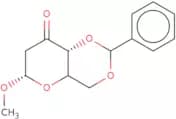
CAS:Methyl 4,6-O-benzylidene-2-deoxy-a-D-glucpyranosid-3-ulose is a custom synthesis of a complex carbohydrate. It is an Oligosaccharide with a Polysaccharide backbone. The modification of the saccharide is Methylation and Glycosylation. Click chemistry was used to introduce fluorine atoms into the sugar ring. The Carbohydrate is a sugar, which is a chemical compound that consists of carbon, hydrogen and oxygen atoms. It has high purity and fluoroination at the C1 position. This synthetic product can be used in various applications such as food additives, pharmaceuticals, or agrochemicals.Fórmula:C14H16O5Pureza:Min. 95%Peso molecular:264.27 g/molExopolysaccharide - from Bacillus polymixa
Bacterial exopolysaccharide from gram negative Bacillus polymixa
Fórmula:C23H36O18Pureza:Min. 95%Cor e Forma:PowderPeso molecular:600.52 g/molBenzyl 2-acetamido-4,6-O-benzylidene-2-deoxy-α-D-muramic acid
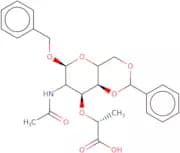
CAS:Benzyl 2-acetamido-4,6-O-benzylidene-2-deoxy-a-D-muramic acid is an analog of benzyl 2-acetamido-4,6-O-benzylidene-2,3,5,6 tetra deoxy a -D muramic acid. It is activated by ethyl bromoacetate and can be conjugated with various biological molecules such as proteins or peptides. The biological properties of this compound have been studied in bioassays. This analog has shown to have anticancer effects and also has anorectic effects in rats. It also inhibits the growth of cancer cells that are resistant to other anticancer drugs. Benzyl 2 acetamido 4,6 O benzylidene 2 deoxy a D muramic acid has also been shown to inhibit pancreatic tumor growth in mice without causing any toxicity to the pancreas.br> BenzFórmula:C25H29NO8Pureza:Min. 95%Cor e Forma:PowderPeso molecular:471.5 g/mol

![(1S) -1- [(2S, 3R) - 3- Hydroxy- 1- azetidinyl] -1, 2- ethanediol hydrochloride](/_next/image/?url=https%3A%2Fstatic.cymitquimica.com%2Fproducts%2F3D%2Fthumb-webp%2FMH163414.webp&w=3840&q=75)
![N- [[(2R, 3R, 4S) - 4- [(Acetyloxy) methyl] - 3- (phenylmethoxy) - 1- (phenylmethyl) - 2- azetidin…](/_next/image/?url=https%3A%2Fstatic.cymitquimica.com%2Fproducts%2F3D%2Fthumb-webp%2FMA163471.webp&w=3840&q=75)