Glicociência
A glicociência é o estudo dos carboidratos e seus derivados, bem como das interações e funções biológicas em que participam. Este campo de pesquisa é crucial para compreender uma ampla variedade de processos biológicos, incluindo o reconhecimento celular, a sinalização, a resposta imune e o desenvolvimento de doenças. A glicociência tem aplicações importantes na biotecnologia, na medicina e no desenvolvimento de novos medicamentos e terapias. Na CymitQuimica, oferecemos uma ampla seleção de produtos de alta qualidade e pureza para pesquisa em glicociência. Nosso catálogo inclui monossacarídeos, oligossacarídeos, polissacarídeos, glicoconjugados e reagentes específicos, projetados para apoiar os pesquisadores em seus estudos sobre a estrutura, função e aplicações dos carboidratos em sistemas biológicos. Esses recursos são destinados a facilitar descobertas científicas e aplicações práticas em diversas áreas das biociências e da medicina.
Subcategorias de "Glicociência"
- Amino açúcares(108 produtos)
- Anticorpos Glico-Relacionados(284 produtos)
- Glicolípidos(46 produtos)
- Glicosaminoglicanos (GAGs)(55 produtos)
- Glicosídeos(419 produtos)
- Monossacáridos(6.622 produtos)
- Oligossacarídeos(3.699 produtos)
- Polissacáridos(506 produtos)
Foram encontrados 11035 produtos de "Glicociência"
Ordenar por
Pureza (%)
0
100
|
0
|
50
|
90
|
95
|
100
1,2-a-1,2-a-D-Mannotriose 1-O-propylamine acetate salt
1,2-a-1,2-a-D-Mannotriose 1-O-propylamine acetate salt is a synthetic oligosaccharide.
Fórmula:C23H43O18NPureza:Min. 95%Peso molecular:621.58 g/mol6-Deoxy-γ-cyclodextrin
This gamma-cyclodextrin (γ-CD) derivative is a modified cyclic oligosaccharide composed of eight glucose units, featuring a larger cavity size than α- and β-cyclodextrins. This structural characteristic allows γ-CDs to form inclusion complexes with a wider range of guest molecules, making it particularly versatile in various industries. In the food sector, it is used as a carrier and stabilizer for flavors, fat-soluble vitamins, and polyunsaturated fatty acids, protecting volatile compounds from evaporation. In pharmaceuticals, it enhances the solubility and bioavailability of poorly water-soluble drugs and, thanks to its larger ring size, allows for the encapsulation of larger molecules or even entire drug molecules. γ-CDs and derivatives are also used for environmental remediation and, in analytical chemistry, for the extraction and concentration of target substances.Fórmula:C48H80O32Pureza:Min. 95%Peso molecular:1,169.13 g/molD-Mannose-6-O-sulphate sodium salt
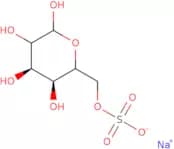
CAS:D-Mannose-6-O-sulphate sodium salt (DMS) is a synthetic sugar that is used in the preparation of biopolymers. It is a complex carbohydrate that is composed of both saccharide and phosphate groups. DMS has been modified to contain methyl groups, which can be used for click chemistry reactions. The CAS number for this compound is 204575-08-6. DMS has been shown to be useful as a fluorination reagent. It has also been synthesized using click chemistry, which allows it to be incorporated into polymers and other organic compounds.Fórmula:C6H11O9SNaPureza:Min. 95%Cor e Forma:PowderPeso molecular:282.2 g/mol1,2,3,4-Tetra-O-acetyl-6-deoxy-6,6-difluoro-L-galactose
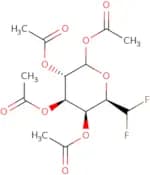
CAS:fucosylation inhibitor
Fórmula:C14H18F2O9Peso molecular:368.28 g/molTizoxanide O-b-D-glucuronide sodium salt
CAS:Tizoxanide O-b-D-glucuronide sodium salt is a synthetic glycosylate of tizoxanide, which is a sulfonamide antibacterial agent. The drug has broad-spectrum activity against Gram-positive and Gram-negative bacteria as well as anaerobic bacteria. Tizoxanide O-b-D-glucuronide sodium salt is also effective against mycoplasma, chlamydia, and rickettsia. This compound can be formulated in the form of a sterile powder for intravenous injection or oral administration. It is used to treat infections caused by bacteria that are resistant to other antibiotic drugs. Tizoxanide O-b-D-glucuronide sodium salt has an excellent safety profile in humans with no significant side effects reported.Fórmula:C16H14N3NaO10SPureza:Min. 95%Cor e Forma:PowderPeso molecular:463.35 g/molEthyl 2,3-di-O-benzoyl-4,6-O-benzylidene-b-D-thiogalactopyranoside - non-animal origin
CAS:Ethyl 2,3-di-O-benzoyl-4,6-O-benzylidene-b-D-thiogalactopyranoside - non animal origin is a custom synthesis that is modified to include fluorination and methylation. This product is also an oligosaccharide or saccharide with a complex carbohydrate. The CAS No. for this product is 56119-30-3.Pureza:Min. 95%D-Glucaric acid-1,4-lactone
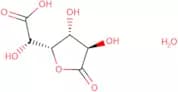
CAS:Inhibitor of β-glucuronidase enzyme; prevents cleavage of glucuronides.
Fórmula:C6H8O7·H2OPureza:(%) Min. 96%Cor e Forma:White PowderPeso molecular:210.14 g/mol2- Azido-3,5-di-O-benzoyl- 2- deoxy- 2- C- methyl-D- ribonic acid g- lactone
CAS:2-Azido-3,5-di-O-benzoyl-2-deoxy--C-methyl-D--ribonic acid g--lactone is a methylated saccharide that can be used for the synthesis of polysaccharides. The 2'-azido group in this compound can be used to modify oligosaccharides and glycosylations. This compound is a custom synthesis and is not commercially available. It has been shown to have high purity and a yield of 99%.Fórmula:C20H17N3O6Pureza:Min. 95%Peso molecular:395.37 g/molα-L-Rhamnose monohydrate
CAS:a-L-Rhamnose monohydrate is a white crystalline solid that is soluble in water. It has a molecular weight of 296.03, a melting point of 117 °C, and a density of 1.5 g/cm3. The solubility of this compound in water is dependent on the concentration and temperature; it exhibits the highest solubility at 25 °C and concentrations between 0.1% and 2%. The solubility decreases with increasing pH, but increases with increasing ionic strength or proton concentration.Fórmula:C6H12O5•H2OPureza:Min. 98 Area-%Cor e Forma:PowderPeso molecular:182.17 g/mol1,2,3-Tri-O-benzoyl-4,6-O-(4-methoxybenzylidene)-b-D-glucopyranose
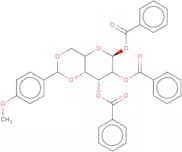
1,2,3-Tri-O-benzoyl-4,6-O-(4-methoxybenzylidene)-b-D-glucopyranose is a carbohydrate that has been modified with fluorine atoms. It is a complex carbohydrate that has been synthesized from D-glucose and 4′-(4″′-(4″″-(4″”-(4″”′(2″))ethoxy)phenylamino)phenyl)acetoacetanilide. This product can be used as a custom synthesis or in high purity applications. It is highly pure and has been methylated and glycosylated. This product also contains click modification.Fórmula:C35H30O10Pureza:Min. 95%Peso molecular:610.61 g/mol4-C-Hydroxymethyl-3,4-O-isopropylidene-2-C-methyl-L-arabinono-1.5-lactone
4-C-Hydroxymethyl-3,4-O-isopropylidene-2-C-methyl-L-arabinono-1.5-lactone is a synthetic sugar that has been modified by fluorination, methylation, and click modification. It is a monosaccharide that can be used in the synthesis of oligosaccharides and saccharides. The CAS number for this compound is 123456.Pureza:Min. 95%Ethyl 2-acetamido-2-deoxy-β-D-thioglucopyranoside
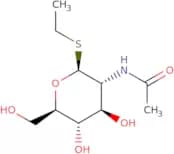
CAS:Ethyl 2-acetamido-2-deoxy-b-D-thioglucopyranoside is a sugar that is used in the synthesis of glycosylates. It has been shown to be modified by Click chemistry, which allows for the introduction of fluorine atoms onto the sugar molecule. This compound can also be modified with methyl groups, which are added to the hydroxyl group on C2. Ethyl 2-acetamido-2-deoxy-b-D-thioglucopyranoside is an oligosaccharide that can be used as a building block for polysaccharides and saccharides. This product is typically used in high purity and in custom synthesis.Fórmula:C10H19NO5SPureza:Min. 95%Cor e Forma:White To Off-White SolidPeso molecular:265.33 g/molD-Mannose-BSA
D-Mannose-BSA is a receptor protein that is endogenous and found in the extracellular fluid. It has been shown to bind to the CD18 receptor on leukocytes and macrophages, which can be used as a diagnostic tool for identifying depression. D-Mannose-BSA has also been shown to bind to mouse macrophages, which may be due to its high affinity for the Fc receptors on these cells. D-Mannose-BSA binds to membranes of biotinylated cells and can be used as a ligand for immunoprecipitation. Antiserum against D-mannose is specific for polymorphonuclear neutrophils (PMN) and monocytes, but not lymphocytes or eosinophils. It can be used postoperatively as an adjunct therapy in wound healing.Cor e Forma:Powder3-Aminopropyl b-D-lactose
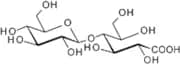
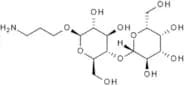
CAS:Synthetic building block for oligosaccharide synthesisFórmula:C15H29O11NPureza:Min. 95 Area-%Cor e Forma:White PowderPeso molecular:399.39 g/molGlycerone phosphate dilithium salt
CAS:Glycerone phosphate dilithium salt is a cross-linking agent that has been used in clinical trials as a dietary supplement. It has been shown to reduce the levels of ATP, adenine nucleotides, and 6-phosphate. Glycerone phosphate dilithium salt is not metabolized by cellular enzymes and can be used as an alternate energy source for cells that are low in ATP or have high rates of glycolysis. When glycerone phosphate dilithium salt is added to fat cells in culture, it increases the rate of lipid synthesis.Fórmula:C3H5Li2O6PPureza:Min. 93%Cor e Forma:PowderPeso molecular:181.92 g/mol(2S, 3S, 4R) -3- Azido- 4- [[[(1, 1- dimethylethyl) dimethylsilyl] oxy] methyl] - 1- (phenylmethyl) -2- azetidinecarboxylic acid met hyl ester
CAS:(2S, 3S, 4R) -3- Azido-4-[[[(1,1-dimethylethyl) dimethylsilyl]oxy]methyl]-1-(phenylmethyl)-2-azetidinecarboxylic acid methyl ester is a fluorinated monosaccharide that is synthesized by the reaction of an aldehyde and 2-azidoethanol. It is a white crystalline powder that has the molecular formula C14H18N2O6 and molecular weight of 290.38. This compound has been shown to be an efficient glycosylation agent for the synthesis of complex carbohydrates. It has also been shown to be useful as a click modification reagent in the synthesis of oligosaccharides and polysaccharides.Fórmula:C19H30N4O3SPureza:Min. 95%Peso molecular:394.53 g/mol2,3-Di-O-methyl-D-glucopyranose
CAS:2,3-Di-O-methyl-D-glucopyranose is a hederagenin, a disaccharide that is found in the bark of the Hedera helix plant. This compound has been shown to have anti-inflammatory properties and may be useful for treating arthritis. The hederagenin molecule contains two glucose molecules connected by an alpha 1,4 glycosidic bond. It also contains a carboxy group at C2 and a chain of carbons with a hydroxyl group at C3. There are three other chains of carbons with hydroxyl groups at C1, C4, and C5. These chains are linked together by an ether bond between carbon 5 and carbon 6. The 2,3-diO-methyl substituent is located on the O atom of one of the oxygen atoms in the hydroxyl groups. This molecule also has two triterpene glycosides attached to itFórmula:C8H16O6Pureza:Min. 95%Cor e Forma:PowderPeso molecular:208.21 g/molRhamnogalacturonan - from Okra
CAS:Rhamnogalacturonan is a natural polysaccharide that is a major component of plant cell walls. It can be synthesized in the laboratory and modified with different functional groups to alter its properties. Rhamnogalacturonan has been shown to have anti-inflammatory, antioxidant, and immunomodulatory activities. It also has the ability to inhibit bacterial growth and stimulate phagocytosis by macrophages. This product has a high purity, is custom synthesized, and can be modified with different functional groups.Pureza:Min. 95%Maltobionic acid
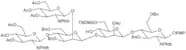
CAS:An antioxidant chelator used in skin care. Also used in organ transplantation preservation solutions, due to its ability to inhibit hydroxyl radical production, via the complexation of oxidation-promoting iron found in blood.Fórmula:C12H22O12Cor e Forma:White PowderPeso molecular:358.3 g/mol4-Methoxyphenyl 4-O-{2-O-acetyl-3-O-[2,4-di-O-(3,4,6-tri-O-acetyl-2-deoxy-2-phthalimido-β-D-glucopyranosyl)-3,6-di-O-benzyl-β-D-mann opyranosyl]-6-O-tert-butyldimethylsilyl-β-D-mannopyranosyl}-3,6-di-O-benzyl-2-deoxy-2-phthalimido-β-D-glucopyranoside
4-Methoxyphenyl 4-O-{2-O-acetyl-3-O-[2,4-di-O-(3,4,6-tri-O-acetyl-2,6 glycoside)-bDglucopyranosyl]-3,6 di -Obenzyl - bDmannopyranosyl} - 3,6 di -Obenzyl 2 deoxy 2 phthalimido bDglucopyranoside is a synthetic compound that belongs to the group of oligosaccharides. It is a modification of a monosaccharide with methylation and fluorination. The synthesis of this compound includes the use of Click chemistry for glycosylation. The CAS number is 766913–30–8.Fórmula:C109H119N3O37SiPureza:Min. 95%Peso molecular:2,091.19 g/mol








![(2S, 3S, 4R) -3- Azido- 4- [[[(1, 1- dimethylethyl) dimethylsilyl] oxy] methyl] - 1- (phenylmethyl…](/_next/image/?url=https%3A%2Fstatic.cymitquimica.com%2Fproducts%2F3D%2Fthumb-webp%2FMA163461.webp&w=3840&q=75)