Glicociência
A glicociência é o estudo dos carboidratos e seus derivados, bem como das interações e funções biológicas em que participam. Este campo de pesquisa é crucial para compreender uma ampla variedade de processos biológicos, incluindo o reconhecimento celular, a sinalização, a resposta imune e o desenvolvimento de doenças. A glicociência tem aplicações importantes na biotecnologia, na medicina e no desenvolvimento de novos medicamentos e terapias. Na CymitQuimica, oferecemos uma ampla seleção de produtos de alta qualidade e pureza para pesquisa em glicociência. Nosso catálogo inclui monossacarídeos, oligossacarídeos, polissacarídeos, glicoconjugados e reagentes específicos, projetados para apoiar os pesquisadores em seus estudos sobre a estrutura, função e aplicações dos carboidratos em sistemas biológicos. Esses recursos são destinados a facilitar descobertas científicas e aplicações práticas em diversas áreas das biociências e da medicina.
Subcategorias de "Glicociência"
- Amino açúcares(108 produtos)
- Anticorpos Glico-Relacionados(282 produtos)
- Glicolípidos(46 produtos)
- Glicosaminoglicanos (GAGs)(55 produtos)
- Glicosídeos(419 produtos)
- Monossacáridos(6.622 produtos)
- Oligossacarídeos(3.682 produtos)
- Polissacáridos(503 produtos)
Foram encontrados 11041 produtos de "Glicociência"
Ordenar por
Pureza (%)
0
100
|
0
|
50
|
90
|
95
|
100
6-O-Trityl-D-mannopyranose
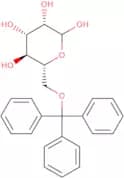
CAS:<p>6-O-Trityl-D-mannopyranose is a modified sugar that has been synthesized for use as a glycosylation agent. It is an O-glycoside of mannose and is usually used in the synthesis of complex carbohydrates. 6-O-Trityl-D-mannopyranose can be fluorinated, methylated, or click modified to produce desired derivatives. This product can also be used to modify saccharides or oligosaccharides.</p>Fórmula:C25H26O6Pureza:Min. 95%Cor e Forma:PowderPeso molecular:422.47 g/mol2,3,6-Tri-O-acetyl-4-O-(2,3,6-tri-O-acetyl-4-O-(2,3,4,6-tetra-O-acetyl-a-D-glucopyranosyl)-a-D-glucopyranosyl)-a-D-glucopyranosyl br omide
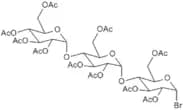
<p>2,3,6-Tri-O-acetyl-4-O-(2,3,6-tri-O-acetyl-4-O-(2,3,4,6-tetra-O-acetylaDglucopyranosyl)-aDglucopyranosyl)-aDglucopyranosyl bromide is a hexasaccharide that mimics the natural structure of deacetylated β1→4 glucans. It has been synthesized by electrochemical reduction of acetobromoglucose and coupling with glycomimetics. 2,3,6 Tri O acetyl 4 O (2 3 6 tri O acetyl 4 O (2 3 4 6 tetra O acetyl a D glucopyranos yl) a D glucopyranos yl) a D glucopyranos yl bromide is an anomeric mixture of diastereoisomers</p>Fórmula:C38H51BrO25Pureza:Min. 95%Peso molecular:987.7 g/molCarboxymethyl cellulose sodium - Viscosity 700-1500 mPa·s
CAS:<p>Food additive; soil suspension polymer in detergents; thickening agent</p>Pureza:Min. 95%3’-Sialyl lewis A intermediate
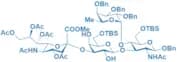
<p>It is a protected tetrasaccharide intermediate of 3-sialyl-lewis (3'-SLa or sLeA), a tumor-associated carbohydrate antigen.</p>Fórmula:C80H112N2O26Si2Peso molecular:1,573.91 g/mol3,4,6-Tri-O-acetyl-2-deoxy-2-phthalimido-b-D-glucopyranosyl fluoride
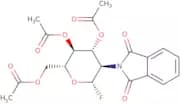
CAS:<p>3,4,6-Tri-O-acetyl-2-deoxy-2-phthalimido-b-D-glucopyranosyl fluoride is a synthetic glycoside that has been synthesized by the click modification of a fluorinated saccharide. The compound has an acetyl group at C3 and C6 positions with an OCH3 group at the C4 position. This compound has been used in glycosylation reactions to modify the carbohydrate moiety of peptides and proteins. It has also been used in research on complex carbohydrate chemistry.</p>Fórmula:C20H20FNO9Pureza:Min. 95%Peso molecular:437.37 g/mol2-O-(a-D-Mannopyranosyl)-D-mannopyranose
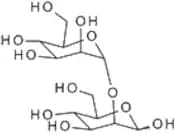
CAS:<p>Synthesized by the action of zinc chloride on tetra-O-acetylmannose and 1-chloro-3,4,6- tri-0-acetylmannose. Isolated from partial acetolysates of baker's yeast mannan and Saccharomyces rouxii mannan.</p>Fórmula:C12H22O11Pureza:Min. 95 Area-%Cor e Forma:White PowderPeso molecular:342.3 g/mol(5S, 8S, 9R) -8- [(4R) - 2, 2- Dimethyl- 1, 3- dioxolan- 4- yl] - 9- hydroxy- 2, 2- dimethyl- 1, 3, 7- trioxaspiro[4.4] nonan- 6- on e
<p>(5S, 8S, 9R) -8- [(4R) - 2, 2- Dimethyl- 1, 3- dioxolan- 4- yl] - 9- hydroxy- 2, 2- dimethyl- 1, 3, 7- trioxaspiro[4.4] nonan- 6- on e is a fluorinated monosaccharide that is synthetically derived. It has been used in glycosylation and polysaccharide synthesis and can be modified with methylation or Click chemistry. This compound is a sugar with CAS number 100741-42-2.</p>Pureza:Min. 95%(1R) -1- [(2S, 3R) - 3- Hydroxy- 1- ((4-methoxyphenyl)methyl) - 2- azetidinyl] -1, 2- ethanediol
<p>(1R) -1- [(2S, 3R) - 3- Hydroxy- 1- ((4-methoxyphenyl)methyl) - 2- azetidinyl] -1, 2- ethanediol is a sugar compound that can be methylated and modified to make other compounds. The compound's CAS number is 440636-00-0. This product is a carbohydrate that can be used as a modification for saccharides and polysaccharides. It can also be used as a glycosylation agent or an Oligosaccharide. This product is available in high purity and custom synthesis with the desired modifications.</p>Pureza:Min. 95%2,3,4,6-Tetra-O-pivaloyl-D-glucopyranosyl azide
CAS:<p>2,3,4,6-Tetra-O-pivaloyl-D-glucopyranosyl azide is an oligosaccharide that has been modified for use in the synthesis of complex carbohydrates. It is synthesized through a methylation reaction and then click chemistry. The resulting product is a high purity chemical that can be used to modify saccharides or sugars. 2,3,4,6-Tetra-O-pivaloyl-D-glucopyranosyl azide is a white crystalline solid with CAS No. 1251910-91-4.</p>Fórmula:C26H43N3O9Pureza:Min. 95%Cor e Forma:White SolidPeso molecular:541.63 g/mol2-C-Hydroxymethyl-D-ribose
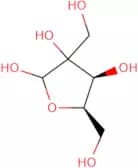
CAS:<p>2-C-Hydroxymethyl-D-ribose is a sugar that has been found in the cell wall of Mycobacterium tuberculosis. It is also found in some other bacteria, such as Streptomyces coelicolor. 2-C-Hydroxymethyl-D-ribose may be involved in the synthesis of glycan and may have a role in the molybdenum cofactor biosynthesis pathway. This molecule has been shown to have acidic properties, which are most likely due to its hydroxyl groups. The 13C NMR spectrum for this compound shows three peaks at δ H = 138.2, 144.3, and 154.5 ppm corresponding to the ribofuranoside moiety. The skeleton of this molecule was rationalized by attaching an acetaldehyde group to the 2'-hydroxyl group on position C2 of ribose, which is consistent with the observed 13C NMR spectrum. This molecule has</p>Fórmula:C6H12O6Pureza:(Hplc) Min. 98%Cor e Forma:White PowderPeso molecular:180.16 g/molD-Cellotetraose tetradecaacetate
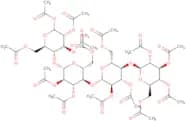
CAS:<p>D-Cellotetraose tetradecaacetate is a complex carbohydrate that consists of a single sugar, D-cellotetraose. It is made up of four glucose molecules attached to each other by glycosidic bonds. The modification of this carbohydrate can be done by methylation and glycosylation. The synthesis of this molecule can be custom-made, as it is not found in nature. This product is high purity and has a CAS number: 83058-25-7.</p>Fórmula:C52H70O35Pureza:Min. 98 Area-%Cor e Forma:PowderPeso molecular:1,255.09 g/molSN-38 tri-O-acetyl-b-D-glucuronic acid methyl ester
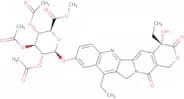
CAS:<p>SN-38 tri-O-acetyl-b-D-glucuronic acid methyl ester is a synthetic sugar that has been modified to contain a fluorine atom. It is used in the synthesis of oligosaccharides and glycosylation reactions. SN-38 tri-O-acetyl-b-D-glucuronic acid methyl ester is a high purity product with no detectable impurities. This compound can be custom synthesized to meet your needs.</p>Fórmula:C35H36N2O14Pureza:Min. 95%Peso molecular:708.67 g/mol4-Deoxy-4-fluoro-D-glucosamine
<p>4-Deoxy-4-fluoro-D-glucosamine is a carbohydrate that is used as an inhibitor of the enzyme l1210. This enzyme is required for the biosynthesis of the glycoprotein on the surface of some types of leukemia cells. 4-Deoxy-4-fluoro-D-glucosamine has been shown to be effective in inhibiting leukemia cell growth, and in some cases it has been shown to induce tumor regression. It inhibits protein synthesis by binding to the enzymes responsible for this process.</p>Pureza:Min. 95%1,4-β-D-Xylotriitol
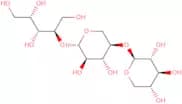
CAS:<p>1,4-B-D-Xylotriitol is a synthetic carbohydrate that has been modified with fluorine. The use of the methylation reaction enables the synthesis of oligosaccharides with up to six glucose units. This product is available in high purity and can be custom synthesized to meet specific needs. 1,4-B-D-Xylotriitol is used for glycosylation reactions and may be useful for modifying carbohydrates and saccharides.</p>Fórmula:C15H28O13Pureza:Min. 95%Peso molecular:416.38 g/molEthyl 2,3,4,6-tetra-O-acetyl-a-D-thiogalactopyranoside
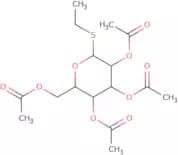
CAS:<p>Ethyl 2,3,4,6-tetra-O-acetyl-a-D-thiogalactopyranoside is a compound that belongs to the group of natural products. It has been shown to be an inhibitor of retrotransposons and retroviruses. This effect may be due to its ability to inhibit the enzymatic activity of reverse transcriptase, which is needed for the synthesis of viral RNA. The compound also inhibits stoloniferum, a plant pathogen that causes phytophthora root rot. Ethyl 2,3,4,6-tetra-O-acetyl-a-D-thiogalactopyranoside can induce epigenetic modifications in human malignant cells and may have potential as a chemotherapeutic agent for malignant melanoma cells.</p>Fórmula:C16H24O9SPureza:Min. 95%Cor e Forma:PowderPeso molecular:392.42 g/molHyaluronate rhodamine - Molecular Weight - 10kDa
<p>Hyaluronate rhodamine is a fluorescent dye that is used in molecular biology to visualize the distribution of intracellular glycoconjugates. It is a water-soluble, cationic dye that binds to negatively charged saccharides and glycosaminoglycans. The dye fluoresces when bound to these molecules, making it useful for detecting the distribution of glycoproteins in cells. Hyaluronate rhodamine can be used as a marker for carbohydrate-rich tissues such as cartilage, synovial fluid, and vitreous humor. This dye can also be used to detect glycoconjugates on the surface of cells and in extracellular spaces.</p>Pureza:Min. 95%Methyl 3,5-di-O-(p-chlorobenzoyl)-2-deoxy-b-D-ribofuranoside
<p>Methyl 3,5-di-O-(p-chlorobenzoyl)-2-deoxy-b-D-ribofuranoside is a synthetic oligosaccharide. It has been synthesized by the modification of the glycosylation site on an existing saccharide with a methyl group and fluorination at the 3’ position. This molecule is a monosaccharide with a p-chlorobenzoyl group attached to its 2’ position.</p>Pureza:Min. 95%1,2,3,4,6-Penta-O-acetyl-b-D-glucopyranose
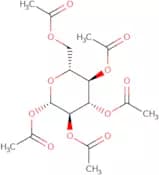
CAS:<p>1,2,3,4,6-Penta-O-acetyl-b-D-glucopyranose, also known as beta-D-glucose pentaacetate, has high chemical stability and long shelf life. This protected form of glucose is a key building block of any chemical synthesis of glucose-containing oligosaccharides or glycoconjugates. In the presence of Lewis acids it can be used as a glycosyl donor to make simple glycosides. In order to perform more complex glycosylations, it can be converted into more reactive donors, such as glycosyl halides or thioglycosides. Beta-D-glucose pentaacetate is also used as a food additive and flavouring agent.</p>Fórmula:C16H22O11Pureza:Min. 97.5 Area-%Cor e Forma:White PowderPeso molecular:390.34 g/molGloboisotetraose
CAS:<p>a1-3 linked isomer of globotetraose</p>Fórmula:C26H45NO21Pureza:Min. 90%Cor e Forma:PowderPeso molecular:707.63 g/molL-Talose
CAS:<p>L-Talose is a type of sugar that is found in plants and animals. It is a stereoselective, synthetic carbohydrate with the chemical formula C12H24O11. L-Talose has an anhydrous dextrose equivalent (DE) of 180. L-Talose is synthesized from D-glucal and D-talonol by a recombinant protein. The immobilization process has been shown to be successful for the production of L-talose as it prevents the loss of product due to adsorption on the surface of the reactor. Molecular modeling was used to determine that L-talose binds to carbonyl groups more strongly than other types of molecules. Anhydrous dextrose was shown to be an effective acceptor for L-talose because it reacts with hydroxyl groups at room temperature and pressure conditions. The nmr spectra show that the hydroxyl group interacts with hydrogen bonding and coordinate covalent bonding</p>Fórmula:C6H12O6Pureza:Min. 95%Cor e Forma:PowderPeso molecular:180.16 g/mol

![(5S, 8S, 9R) -8- [(4R) - 2, 2- Dimethyl- 1, 3- dioxolan- 4- yl] - 9- hydroxy- 2, 2- dimethyl- 1, 3…](/_next/image/?url=https%3A%2Fstatic.cymitquimica.com%2Fproducts%2F3D%2Fthumb-webp%2FMD170671.webp&w=3840&q=75)
![(1R) -1- [(2S, 3R) - 3- Hydroxy- 1- ((4-methoxyphenyl)methyl) - 2- azetidinyl] -1, 2- ethanediol](/_next/image/?url=https%3A%2Fstatic.cymitquimica.com%2Fproducts%2F3D%2Fthumb-webp%2FMH163535.webp&w=3840&q=75)