Glicociência
A glicociência é o estudo dos carboidratos e seus derivados, bem como das interações e funções biológicas em que participam. Este campo de pesquisa é crucial para compreender uma ampla variedade de processos biológicos, incluindo o reconhecimento celular, a sinalização, a resposta imune e o desenvolvimento de doenças. A glicociência tem aplicações importantes na biotecnologia, na medicina e no desenvolvimento de novos medicamentos e terapias. Na CymitQuimica, oferecemos uma ampla seleção de produtos de alta qualidade e pureza para pesquisa em glicociência. Nosso catálogo inclui monossacarídeos, oligossacarídeos, polissacarídeos, glicoconjugados e reagentes específicos, projetados para apoiar os pesquisadores em seus estudos sobre a estrutura, função e aplicações dos carboidratos em sistemas biológicos. Esses recursos são destinados a facilitar descobertas científicas e aplicações práticas em diversas áreas das biociências e da medicina.
Subcategorias de "Glicociência"
- Amino açúcares(108 produtos)
- Anticorpos Glico-Relacionados(282 produtos)
- Glicolípidos(46 produtos)
- Glicosaminoglicanos (GAGs)(55 produtos)
- Glicosídeos(419 produtos)
- Monossacáridos(6.624 produtos)
- Oligossacarídeos(3.682 produtos)
- Polissacáridos(503 produtos)
Foram encontrados 11046 produtos de "Glicociência"
Ordenar por
Pureza (%)
0
100
|
0
|
50
|
90
|
95
|
100
6'-(D-[UL-13C6]Galactosyl)lactose
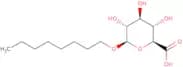
CAS:<p>Galactosyllactose attenuated NF-κB inflammatory signaling in human intestinal epithelial cells and in human immature intestine. Thus, galactosyllactoses are strong anti-inflammatory agents in human colostrum and early milk, contributing to innate immune modulation. This product has a 13C heavy-label and so can be used in applications such as metabolic tracing and quantitative mass spectrometry.</p>Fórmula:C6C12H32O16Pureza:Min. 90 Area-%Peso molecular:510.39 g/molOctyl D-glucuronic acid
CAS:<p>Octyl D-glucuronic acid is a glycosylation agent that can be used to modify the surface of proteins and polymers. It is an oligosaccharide that contains eight glucose molecules linked by beta 1-4 glycosidic bonds. Octyl D-glucuronic acid has been shown to have a high purity, with no detectable impurities or contaminants. The modification of proteins and polymers with this molecule has been shown to increase their stability and resistance to environmental factors such as moisture, heat, pH changes, and light exposure. It also increases the hydrophilicity of the modified material and can be used for click chemistry reactions using azide or alkyne functional groups.<br>Octyl D-glucuronic acid is commercially available from Sigma Aldrich in different grades: Technical Grade (TG), Analytical Grade (AG), Pharmaceutical Grade (PG).</p>Fórmula:C14H26O7Pureza:Min. 95%Cor e Forma:PowderPeso molecular:306.36 g/mol3'-(D-[UL-13C6]Galactosyl)lactose
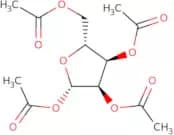
CAS:<p>Galactosyllactose attenuated NF-κB inflammatory signaling in human intestinal epithelial cells and in human immature intestine. Thus, galactosyllactoses are strong anti-inflammatory agents in human colostrum and early milk, contributing to innate immune modulation. This product has a 13C heavy-label and so can be used in applications such as metabolic tracing and quantitative mass spectrometry.</p>Fórmula:C6C12H32O16Pureza:Min. 90 Area-%Cor e Forma:PowderPeso molecular:510.46 g/mol1,2,3,5-Tetra-O-acetyl-β-D-ribofuranose
CAS:<p>Important resource for RNA- and DNA-related syntheses including ribosylation</p>Fórmula:C13H18O9Pureza:Min. 95%Cor e Forma:White PowderPeso molecular:318.28 g/molOctyl b-D-glucuronic acid
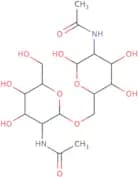
CAS:<p>Octyl b-D-glucuronic acid is a custom synthesis of an oligosaccharide with a high purity. It is a modification of a carbohydrate, which is a complex carbohydrate. This product has been synthesized by methylation and glycosylation. Octyl b-D-glucuronic acid has many applications in the chemical industry due to its fluoroquinolone resistance and its high purity. This product is used as an excipient in pharmaceuticals, foods, and cosmetics.</p>Fórmula:C14H26O7Pureza:Min. 95%Cor e Forma:PowderPeso molecular:306.36 g/mol2-Acetamido-6-O-(2-acetamido-2-deoxy-a-D-galactopyranosyl)-2-deoxy-D-galactopyranose
CAS:<p>2-Acetamido-6-O-(2-acetamido-2-deoxy-a-D-galactopyranosyl)-2-deoxy-D-galactopyranose is an n-acetylated disaccharide (naturally occurring) that is a glycosidic bond between the two sugars, n-acetyl D galactosamine and 2,3,4,6 tetraacetamido 2 deoxy D galactose. This compound has an acetamide residue in place of a hydroxyl group on the second carbon atom of the sugar. The linkage between these two sugars is a glycosidic bond. In its natural form, this molecule can be found in mammalian cells and bacterial cell walls.</p>Fórmula:C16H28N2O11Pureza:Min. 95%Peso molecular:424.4 g/mol1- Deoxy- 2, 3:4, 5:6, 7- Tris- O- (1- methylethylidene) -D- glycero- D- gulo- heptitol
CAS:<p>1-Deoxy-2,3:4,5:6,7-Tris-O-(1-methylethylidene)-D-glycero-D-guloheptitol is a high purity custom synthesis sugar that can be modified with fluorination and glycosylation. This product is synthesized from monosaccharides and saccharides. It has the CAS No. 1801528-80-2 and molecular weight of 354.25 g/mol. 1,2,3,4,5,6,7 -Tris (1 methylethylidene) -D glycero D gulo heptitol is a complex carbohydrate that is used in the synthesis of oligosaccharides and monosaccharides.</p>Pureza:Min. 95%4-Methylphenyl b-D-galactopyranoside
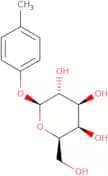
CAS:<p>4-Methylphenyl b-D-galactopyranoside is a custom synthesis, modification, fluorination, methylation and monosaccharide. It is also an oligosaccharide and polysaccharide. The CAS number for this compound is 3150-22-9. 4-Methylphenyl b-D-galactopyranoside has a molecular weight of 534.37 g/mol and a chemical formula of C14H14O6. This compound is used in the production of complex carbohydrates with saccharides.</p>Fórmula:C13H18O6Pureza:Min. 95%Cor e Forma:PowderPeso molecular:270.28 g/mol(3R, 5R) -1-Benzyl-3, 4, 5- piperidinetriol hydrochloride
<p>(3R, 5R) -1-Benzyl-3, 4, 5- piperidinetriol hydrochloride is a synthetic compound that is used for the production of oligosaccharides and saccharides. This molecule is a part of the glycosylation reaction and has been modified to produce a variety of carbohydrate products. The CAS number for this compound is 6078-73-5 and it can be synthesized in various lengths. The chemical name for this compound is (3R, 5R)-1-(benzyloxycarbonyl)-3,4,5-piperidinetriol hydrochloride.</p>Pureza:Min. 95%Anthrose - ethylene diamine-N6-hydroxylhexanoic acid linker
<p>Anthrose is a high purity, custom synthesis, and oligosaccharide. It can be modified with fluorination, glycosylation, and methylation. Anthrose is used for the synthesis of complex carbohydrate.</p>Pureza:Min. 95%1,3,4,6-Tetra-O-acetyl-2-azido-2-deoxy-D-glucopyranose
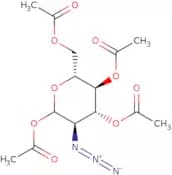
CAS:<p>1,3,4,6-Tetra-O-acetyl-2-azido-2-deoxy-D-glucopyranose is a small molecule that binds to the D1 protein of the glycolytic enzyme phosphofructokinase and inhibits enzymatic activity. This inhibitor is used in diagnostic procedures to identify mutations in the gene encoding for this protein, which is associated with familial and sporadic aneurysms. The inhibitor is also used to study the pathogenic mechanism of aneurysms. 1,3,4,6-Tetra-O-acetyl-2-azido-2-deoxy--D--glucopyranose has been shown to inhibit cell nuclei polymerase in vitro and prevents cell division in vivo.</p>Fórmula:C14H19N3O9Pureza:Min. 95 Area-%Cor e Forma:White PowderPeso molecular:373.32 g/molHyaluronate rhodamine - Molecular Weight - 50kDa
<p>Hyaluronate Rhodamine is a molecule that has been modified with a fluorescent dye. Hyaluronate Rhodamine is a complex carbohydrate that has been synthesized using monosaccharides, methylation, glycosylation, and polysaccharide synthesis. It is used in the study of molecular interactions due to its high purity and fluorescence properties.</p>Pureza:Min. 95%4,6-O-Benzylidene-D-maltose
CAS:<p>4,6-O-Benzylidene-D-maltose is an oligosaccharide that is a high purity custom synthesis. It has a Click modification and can be synthesized using the Fluorination and Glycosylation reaction. 4,6-O-Benzylidene-D-maltose is soluble in water and ethanol, but insoluble in ether. This product is listed as CAS No. 93417-41-5 and has a Methylation modification. 4,6-O-Benzylidene-D-maltose is also found in saccharides, carbohydrates, and complex carbohydrates.</p>Fórmula:C19H26O11Pureza:Min. 95%Cor e Forma:PowderPeso molecular:430.4 g/mol1-Deoxy-1-nitro-D-galactitol
CAS:<p>1-Deoxy-1-nitro-D-galactitol is a methoxide that exhibits mutagenic activity. It reacts with nitromethane to form an intermediate, which then reacts with sodium methoxide to produce the final product. This product can be used as a precursor for other compounds.</p>Fórmula:C6H13NO7Pureza:Min. 95%Peso molecular:211.17 g/molL-Arabonic acid-1,4-lactone
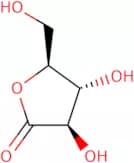
CAS:<p>L-Arabonic acid-1,4-lactone (LL) is the product of the reaction between L-arabinose and trifluoroacetic acid. LL is an enantiomer of D-arabinose and has a pK a of 6.5, which makes it a weak base. This compound has been shown to be a hydroxyl group donor in human liver and is also used as a chaperone for protein folding.</p>Fórmula:C5H8O5Pureza:Min. 95%Cor e Forma:White PowderPeso molecular:148.11 g/molMethyl 2,3-O-isopropylidene-5-O-p-toluenesulfonyl-β-D-ribofuranoside
CAS:<p>Methyl 2,3-O-isopropylidene-5-O-p-toluenesulfonyl-b-D-ribofuranoside is a nucleoside that is used to synthesize nucleoside derivatives. It is also used as a reagent for the alkylation of thiols, alcohols, and phenols. This compound can be prepared from 5'-methylthioadenosine by treatment with sodium methoxide in methanol. Methyl 2,3-O-isopropylidene-5-O-p-toluenesulfonyl-b-D ribofuranoside is soluble in water and has a melting point of about 165°C.</p>Fórmula:C16H22O7SPureza:Min. 95%Cor e Forma:PowderPeso molecular:358.41 g/molα-Chloralose
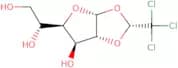
CAS:<p>Anesthetic used in laboratory animal studies; pesticide</p>Fórmula:C8H11Cl3O6Pureza:Min. 95%Cor e Forma:PowderPeso molecular:309.53 g/molk-Carrahexaitol trisulfate trisodium salt
<p>k-carrageenan derived hexasaccharide alcohol trisulfate+(3-6 anhydrogalactose)</p>Fórmula:C36H55O37S3Na3Pureza:Min. 95%Peso molecular:1,244.97 g/molUlvan
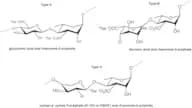
CAS:<p>Ulvans are structural polysaccharides present in the cell walls of green algae such as Ulva armoricana, Ulva rotondata, Ulva rigida, Ulva lacterca and Ulva pertusa. They are highly sulphated and contain rhamnose 3-sulphate, xylose, xylose 2-sulphate, glucuronic acid and iduronic acid residues. Ulvan has several potentially valuable functionalities such as gel formation for agricultural and food applications and possible anticoagulant, antioxidant, antihyperlipidemic and antitumor activities for pharmaceutical applications.<br>The image was kindly provided by Prof Mike Guiry from Cork who runs ‘The Seaweed Site’.</p>Cor e Forma:PowderAllyl 2-O-benzoyl-3-O-benzyl-a-L-rhamnopyranoside
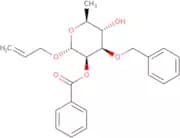
CAS:<p>Allyl 2-O-benzoyl-3-O-benzyl-a-L-rhamnopyranoside is a complex carbohydrate that can be used in the synthesis of saccharides and polysaccharides. It has been modified by methylation, glycosylation, and carbamylation. The CAS number for this product is 940274-21-5.</p>Fórmula:C23H26O6Pureza:Min. 95%Peso molecular:398.46 g/mol
![6'-(D-[UL-13C6]Galactosyl)lactose](/_next/image/?url=https%3A%2Fstatic.cymitquimica.com%2Fproducts%2F3D%2Fthumb-webp%2FOG15067.webp&w=3840&q=75)


![3'-(D-[UL-13C6]Galactosyl)lactose](/_next/image/?url=https%3A%2Fstatic.cymitquimica.com%2Fproducts%2F3D%2Fthumb-webp%2FOG15068.webp&w=3840&q=75)