Glicociência
A glicociência é o estudo dos carboidratos e seus derivados, bem como das interações e funções biológicas em que participam. Este campo de pesquisa é crucial para compreender uma ampla variedade de processos biológicos, incluindo o reconhecimento celular, a sinalização, a resposta imune e o desenvolvimento de doenças. A glicociência tem aplicações importantes na biotecnologia, na medicina e no desenvolvimento de novos medicamentos e terapias. Na CymitQuimica, oferecemos uma ampla seleção de produtos de alta qualidade e pureza para pesquisa em glicociência. Nosso catálogo inclui monossacarídeos, oligossacarídeos, polissacarídeos, glicoconjugados e reagentes específicos, projetados para apoiar os pesquisadores em seus estudos sobre a estrutura, função e aplicações dos carboidratos em sistemas biológicos. Esses recursos são destinados a facilitar descobertas científicas e aplicações práticas em diversas áreas das biociências e da medicina.
Subcategorias de "Glicociência"
- Amino açúcares(108 produtos)
- Anticorpos Glico-Relacionados(282 produtos)
- Glicolípidos(46 produtos)
- Glicosaminoglicanos (GAGs)(55 produtos)
- Glicosídeos(419 produtos)
- Monossacáridos(6.624 produtos)
- Oligossacarídeos(3.682 produtos)
- Polissacáridos(503 produtos)
Foram encontrados 11046 produtos de "Glicociência"
Ordenar por
Pureza (%)
0
100
|
0
|
50
|
90
|
95
|
100
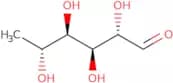
D-Rhamnose
CAS:<p>Chiral-pool sugar used to mirror syntheses based on natural L-Rha</p>Fórmula:C6H12O5Pureza:Min. 97 Area-%Cor e Forma:White PowderPeso molecular:164.16 g/molDermatan sulphate sodium
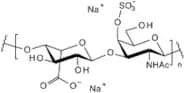
CAS:<p>Dermatan sulphate is a glycosaminoglycan found in skin, blood vessels, heart valves, tendons, aorta, spleen and brain and is usually isolated from pig skin or beef lung tissue. The disaccharide repeat unit is composed of L-iduronic acid and N-acetyl-galactosamine-4-sulphate linked β-(1,3) and β-(1,4). There are also small amounts of D-glucuronic acid.</p>Cor e Forma:PowderPeso molecular:1,526.03 g/molMethyl 3-O-(2-acetamido-2-deoxy-b-D-glucopyranosyl)-b-D-galactopyranoside
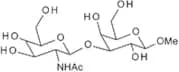
CAS:Substrate for b-6-GlcNAc-transferaseFórmula:C15H27NO11Pureza:Min. 97 Area-%Cor e Forma:White PowderPeso molecular:397.38 g/molGalacturonan DP5 sodium salt
<p>Sodium Pentagalacturonate, (β-1,4 sodium Pentagalacturonate) is derived from pectin or pectic acid, by enzymatic or partial acid hydrolysis (Combo, 2012). It is used inâ¯galacturonic acidâ¯metabolism research as a substrate to identify, differentiate, and characterize endo- and exopolygalacturonase(s), and gluconase(s) (Jayani, 2005). The addition of very short fragments of homogalacturonan, tri-galacturonate, tetra-galacturonate, and penta-galacturonate oligosaccharides, restore development in dark-grown, de-etiolated seedling mutants, suggesting that they are unable to generate de-methylesterified pectin fragments. A model of spatiotemporally separated photoreceptive and signal-responsive cell types has been proposed, that contains overlapping subsets of the regulatory network of light-dependent seedling development (Sinclair, 2017).</p>Pureza:(Hpaec-Pad) Min. 65%Cor e Forma:Powder4-Methoxyphenyl 2,3,6-tri-O-acetyl-4-O-(2,4,6-tri-O-acetyl-3-O-allyl-β-D-galactopyranosyl)-β-D-glucopyranoside
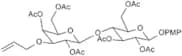
4-Methoxyphenyl 2,3,6-tri-O-acetyl-4-O-(2,4,6-tri-O-acetyl-3-O-allyl bDgalactopyranosyl)-bDglucopyranoside is a modification of an oligosaccharide. It is a high purity and custom synthesis. This product can be found under CAS No. 807827-28-0.Fórmula:C34H44O18Pureza:Min. 95%Peso molecular:740.7 g/mol2-Deoxy-2-fluoro-D-arabinofuranose
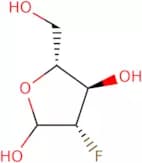
CAS:<p>2-Deoxy-2-fluoro-D-arabinofuranose is a purine nucleoside that is used in the diagnosis and treatment of herpes simplex virus infection. It inhibits viral replication by competitively inhibiting acycloguanosine, an enzyme that catalyzes the conversion of 2’-deoxyguanosine to deoxyadenosine. 2-Deoxy-2-fluoro-D-arabinofuranose has been shown to be active against cancer cells and can be used as chemotherapeutic agent. This drug may also be used for the diagnosis of cancer by detecting the presence of activated T cells in patients with tumor necrosis factor α (TNFα) receptor gene polymorphism.</p>Fórmula:C5H9FO4Pureza:Min. 95%Cor e Forma:PowderPeso molecular:152.12 g/molEthyl 3-O-benzyl-4,6-O-benzylidene-2-O-levulinoyl-b-D-thioglucopyranoside
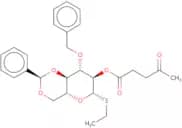
CAS:Ethyl 3-O-benzyl-4,6-O-benzylidene-2-O-levulinoyl-b-D-thioglucopyranoside is a custom synthesis that belongs to the group of carbohydrates. It is a complex carbohydrate with an oligosaccharide and polysaccharide side chain. The saccharide contains a methylated and glycosylated benzene ring attached to the oxygen atom of glucose at position C1, which then has an acetate group that is attached to it. The glycosylation of this molecule is methylated at the C2 position, which is a rare modification that has not been studied extensively. This molecule also has a fluorinated acetate group at the C3 position on the glucose ring. This product is high purity and synthetic in origin.Fórmula:C27H32O7SPureza:Min. 95%Cor e Forma:PowderPeso molecular:500.6 g/mol1,4-β-D-Mannopentaose
CAS:<p>Isolated from ivory-nut mannan hydrolysates</p>Fórmula:C30O26H52Pureza:Min. 95%Cor e Forma:PowderPeso molecular:828.72 g/mol1,4-β-D-Xylohexaose
CAS:1,4-beta-D-xylohexaose is a sugar that belongs to the group of xylooligosaccharides. It is an enzymatic inactivator that binds to the enzyme hydrolase family. Xylooligosaccharides are found in plant cell walls, where they can be used as a carbon source by termites. 1,4-beta-D-xylohexaose has been shown to be most active against neutral ph, but it is not active against acidic ph. The enzyme hydrolase family is inhibited by binding with 1,4-beta-D-xylohexaose and this prevents hydrolysis of carbohydrates, which includes glycosidic bonds.br>br> 1,4-beta-D-xylohexaose has also been shown to be beneficial for sustainable agriculture practices as it inhibits enzymes that break down xylooligosaccharidesFórmula:C30H50O25Pureza:Min. 95%Cor e Forma:PowderPeso molecular:810.7 g/mol3-O-Methyl-α-D-glucopyranose
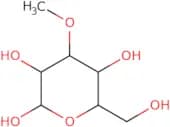
CAS:3-O-Methyl-α-D-glucopyranose is a synthetic, fluorinated monosaccharide. This compound is a custom synthesis, and it can be used as an intermediate in glycosylation reactions. 3-O-Methyl-α-D-glucopyranose is typically used for the modification of polysaccharides by methylation or fluorination. It also has potential applications in the production of high purity sugar compounds.Fórmula:C7H14O6Pureza:Min. 95%Peso molecular:194.18 g/molMethyl 2,3,4-tri-O-methyl-β-D-galactopyranoside
CAS:A methyl protected galactosideFórmula:C10H20O6Pureza:Min. 95%Cor e Forma:PowderPeso molecular:236.26 g/molMaltodextrin oligosaccharides - DP10 to DP40
<p>Produced from starch; white hygroscopic spray-dried powder; easily digestible</p>Cor e Forma:PowderPropofol-4-Hydroxy-1-D-glucuronide
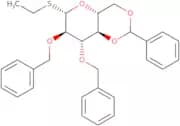
<p>Propofol-4-Hydroxy-1-D-glucuronide is a modification of propofol, which is commonly used as an intravenous anesthetic. It is a synthetic compound that can be custom synthesized by adding the sugar group to propofol. Propofol-4-Hydroxy-1-D-glucuronide has been shown to be a high purity and pure oligosaccharide with a CAS number. It also contains methylated and glycosylated saccharides.</p>Fórmula:C18H26O8Pureza:Min. 95%Peso molecular:370.39 g/molEthyl 2,3-di-O-benzyl-4,6-O-benzylidene-b-D-thioglucopyranoside
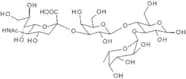
CAS:Ethyl 2,3-di-O-benzyl-4,6-O-benzylidene-b-D-thioglucopyranoside is a glycosylated monosaccharide. It is synthesized by the reaction of 1,2,3,4,6-pentaacetyl bromohexose with benzaldehyde and thioglycolic acid. The product is purified by recrystallization. This compound has a CAS number of 141263-01-6 and can be custom synthesized to meet your needs.Fórmula:C29H32O5SPureza:Min. 95%Cor e Forma:PowderPeso molecular:492.63 g/mol3-O-(a-L-Fucopyranosyl)-4-O-(3-sialyl-b-D-galactopyranosyl)-D-glucose
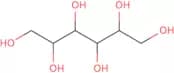
3-O-(a-L-Fucopyranosyl)-4-O-(3-sialyl-b-D-galactopyranosyl)-D-glucose is a modification of the complex carbohydrate, oligosaccharide, monosaccharide, and polysaccharide. It is synthesized by methylation of glucose and glycosylation with sialic acid. The product has a CAS number and a high purity level. This product is an example of a synthetic oligosaccharide that has been fluorinated. The product can be used as an additive or preservative in food products.Fórmula:C29H49NO23Pureza:Min. 95%Peso molecular:779.71 g/molD-Talitol
CAS:<p>D-Talitol is a drug that is used to treat eye disorders and chronic pulmonary diseases. It belongs to the class of drugs called xylitol dehydrogenase inhibitors. D-Talitol inhibits the enzyme xylitol dehydrogenase, which converts xylitol into a different sugar called sorbitol. Sorbitol accumulates in certain parts of cells, such as the mitochondria, and can disrupt cellular processes by inhibiting oxidative phosphorylation and glycolysis. In addition, there are other effects of sorbitol accumulation that may lead to mitochondrial dysfunction, including inhibition of protein synthesis, induction of apoptosis (cell death), and inhibition of cell proliferation. D-Talitol has been shown to inhibit the growth of chronic kidney cells in culture by interfering with cellular metabolism in mitochondria.<br>A kinetic study has also shown that D-Talitol inhibits b-raf activity at concentrations that are not cytotoxic. This suggests that D-Talitol may be useful for</p>Fórmula:C6H14O6Pureza:Min. 98 Area-%Cor e Forma:White PowderPeso molecular:182.17 g/mol1L-Epi-2-inosose
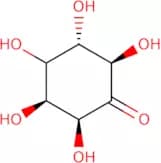
CAS:<p>1-L-Epi-2-inosose is a natural compound that has been found to have broad-spectrum antimicrobial activity. This substance is a product of the hemocyte's enzymatic conversion of L-epinephrine into 1,2,3,4,5,6-hexahydroxyisoquinoline (1L-Epi). 1L-Epi is also synthesized in vitro from epinephrine by the enzyme dehydrogenase. In addition to its antimicrobial activity, 1L-Epi has been shown to be a potent proliferation inhibitor for human cells and to be effective against gram negative bacteria.</p>Fórmula:C6H10O6Pureza:Min. 95%Cor e Forma:PowderPeso molecular:178.14 g/mol5-Azido-5-deoxy-2,3-O-isopropylidene-D-gulono-1,4-lactone
5-Azido-5-deoxy-2,3-O-isopropylidene-D-gulono-1,4-lactone is a carbohydrate that has been modified by the addition of an azide group. Carbohydrates are complex carbohydrates that consist of monosaccharides linked together to form polysaccharides. They are sugar molecules that act as a source of energy for living organisms. 5-Azido-5-deoxy-2,3-O-isopropylidene -D gulono 1,4 lactone is a monosaccharide which can be methylated and glycosylated with other sugars to form a polysaccharide. It is also fluorinated and saccharide. This compound belongs to CAS No. 144948–71–8 and has the molecular formula C6H8N2O7F9O6.Pureza:Min. 95%2, 5- Anhydro- 6- azido- 3, 6- dideoxy- L -arabino- hexonic acid methyl ester
CAS:2,5-Anhydro-6-azido-3,6-dideoxy-L-arabino-hexonic acid methyl ester (ADAEM) is a modified sugar that can be used as a building block for oligosaccharides and polysaccharides. ADAEM is a monosaccharide with six hydroxyl groups. This modification of the sugar molecule prevents it from participating in glycosidic bond formation. ADAEM has been shown to be resistant to enzymatic degradation and has high purity. It is also stable at high temperatures and pH ranges.Fórmula:C7H11N3O4Pureza:Min. 95%Peso molecular:201.18 g/molUlvan - Ulva rotondata-Autumn
CAS:<p>Ulvans are structural polysaccharides present in the cell walls of green algae such as Ulva armoricana, Ulva rotondata, Ulva rigida, Ulva lacterca and Ulva pertusa. They are highly sulphated and contain rhamnose 3-sulphate, xylose, xylose 2-sulphate, glucuronic acid and iduronic acid residues. Ulvan has several potentially valuable functionalities such as gel formation for agricultural and food applications. It has also an anticoagulant, antioxidant, antihyperlipidemic and antitumor activities that are attractive for pharmaceutical applications.<br>The image was kindly provided by Prof Mike Guiry from Cork who runs ‘The Seaweed Site’.</p>Pureza:Min. 95%